



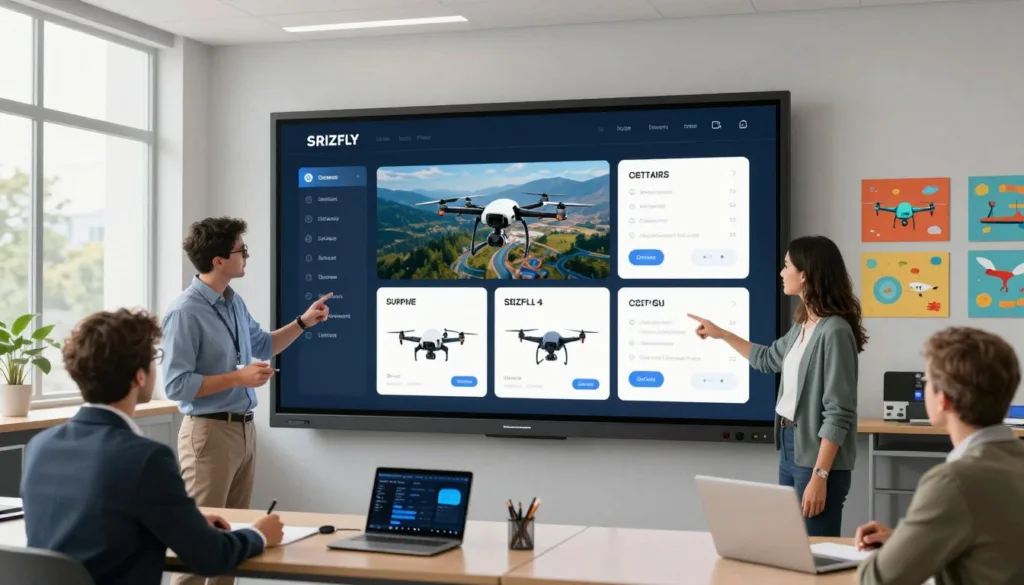
The emergence of drone education management platforms has transformed how U.S. schools engage students in STEM (Science, Technology, Engineering, and Mathematics) programs. Our platform, SRIZFLY, serves as a comprehensive solution that connects educators, students, and industry standards. With an emphasis on innovation in education, we ensure that educational institutions can seamlessly integrate drone curricula, utilizing tools designed to enhance student engagement and foster technical mastery. Initiatives like the Unmanned Aircraft Systems Collegiate Training Initiative (UAS-CTI) showcase the successful collaboration between schools and drone technology, laying the groundwork for a skilled workforce in the Unmanned Aircraft Systems (UAS) sector. We are committed to improving educational outcomes in alignment with evolving FAA regulations and industry demands, creating a forward-thinking environment for today’s students.
Key Takeaways
- SRIZFLY offers a cutting-edge drone education management platform for U.S. schools.
- Integration of drones enhances STEM education and student engagement.
- Collaboration with initiatives like UAS-CTI supports career-ready students.
- The platform aligns with evolving FAA regulations to ensure compliance.
- SRIZFLY fosters a future-oriented environment for technical mastery.
The Importance of Drones in U.S. Education
Drones have become a transformative tool in the educational landscape of the United States, particularly within drones in education. Their integration into STEM programs fosters hands-on learning experiences that engage students in practical applications of science and technology.
As the demand for skilled labor in various sectors grows, UAS career training emerges as a critical pathway for students. Many educational institutions are now offering drone certifications that not only enhance students’ knowledge but also equip them with the skills necessary for future employment. Entry-level positions, such as drone pilots, offer starting salaries of around $50,000, showcasing the financial benefits of these programs.
Through the implementation of drones in curricula, educators can make courses like physics, data analysis, and environmental science more relevant and exciting. The use of drones enhances student engagement and provides tangible connections between classroom learning and real-world applications. Ultimately, these initiatives contribute significantly to workforce development, creating a robust future for students ready to enter the competitive job market.
Drone Education Management Platform
The SRIZFLY platform serves as an innovative drone education software, designed specifically for educators and institutions aiming for effective drone training. This comprehensive tool offers a structured approach to curriculum integration, aligning with FAA and ASTM standards, which ensures that students receive industry-recognized certifications upon completion.
Through the platform, educators gain access to valuable teacher resources, such as the Curriculum Delivery Support course and connections with certified instructors. These resources empower educators with effective teaching methods that enhance student engagement and comprehension in drone education.
Moreover, the SRIZFLY platform simplifies FAA compliance by aiding schools in navigating the regulations established under Part 107. This compliance is crucial for maintaining a safe and effective learning environment for students operating drones. The integration of a Learning Management System (LMS) within the platform allows for streamlined student enrollment, grading, and lesson tracking, significantly improving the overall teaching experience.
Benefits of Implementing Drone Programs in Schools
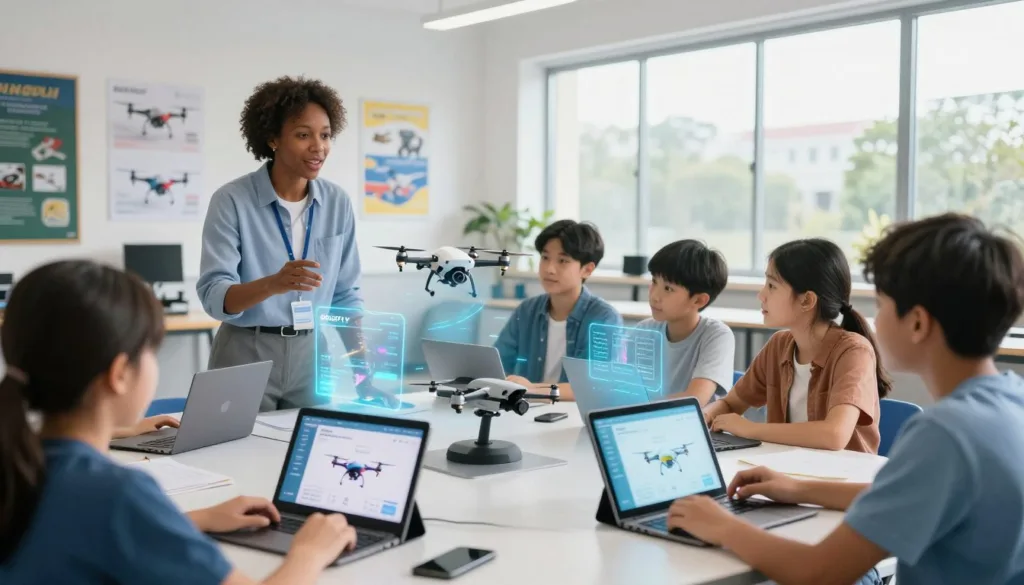
Implementing drone programs in schools can yield numerous advantages that significantly enhance the educational experience. One of the primary benefits of drones in schools is the ability to boost student engagement. Drones capture students’ attention and promote active participation in learning activities. This hands-on approach makes complex subjects more accessible and relatable.
In addition to engagement, these programs offer affordable training solutions, often at a fraction of the cost of traditional aviation training. Schools can provide students with access to cutting-edge technology, equipping them with skills that are increasingly in demand. Participation in Unmanned Aircraft Systems (UAS) programs encourages students to prepare for the FAA Part 107 Remote Pilot Exam while offering various industry-recognized certifications.
Moreover, implementing drone programs creates clear career pathways for students. Through practical experience and the development of marketable skills, students can explore potential internships and job placements within the growing drone industry. These initiatives align closely with workforce development objectives, thus fostering a robust pipeline of future professionals poised to succeed.
To facilitate the launch of these programs, schools can tap into a range of funding opportunities. Resources such as STEM education grants and Perkins funding serve to mitigate initial startup costs associated with drone programs, allowing institutions to invest in their students’ futures effectively.
Conclusion
The integration of a Drone Education Management Platform in U.S. schools signifies a pivotal shift in the landscape of modern education. Emphasizing the drone education benefits, this platform enhances teaching methodologies while equipping students with practical skills and certifications vital for the future job market. By adopting SRIZFLY’s innovative solutions, schools can transform educational experiences and promote student success in an ever-evolving field.
As educational institutions embrace drone programs in schools, they not only foster engagement and creativity among students but also prepare them for careers in technology and engineering. This proactive approach creates a workforce that is aligned with industry needs, driving significant advancements in various sectors. SRIZFLY is committed to supporting educators in this journey, ensuring that they have the tools and resources necessary to lead in the future of education.
By investing in drone technology education, schools are not just implementing a learning tool—they are unlocking new possibilities for student engagement and career readiness. Together, we can shape a new generation of skilled professionals equipped to meet the demands of a rapidly changing world. Embrace these advancements with SRIZFLY, and position your institution at the forefront of educational innovation.
FAQ
What is the Drone Education Management Platform?
The Drone Education Management Platform is a comprehensive solution designed to connect educators, students, and industry standards, enabling efficient integration of drone curricula with innovative tools that boost engagement and technical mastery in STEM programs.
How do drones enhance STEM education?
Drones transform traditional education by making subjects like physics and data analysis more relevant and exciting, engaging students with hands-on, practical applications of these concepts while preparing them for high-demand careers in fields such as agriculture and infrastructure inspection.
What career opportunities are available for students who complete drone programs?
Students who participate in drone programs can acquire high-demand skills, which prepare them for careers as drone pilots, with entry-level salaries starting around ,000. They also gain access to internships and industry-recognized certifications that enhance their employability.
How does the platform comply with FAA regulations?
The Drone Education Management Platform aligns instruction with FAA and ASTM standards and supports educators in maintaining compliance with FAA regulations, such as those under Part 107, ensuring that educational institutions can operate drones safely and legally.
What resources does the platform provide for educators?
The platform offers a comprehensive curriculum, Curriculum Delivery Support courses, and access to certified instructors. These resources empower educators with effective teaching methods and materials specifically tailored for drone education.
What funding options are available for schools implementing drone programs?
Schools can leverage various funding streams, including STEM education grants and Perkins funding, to offset startup costs associated with implementing drone programs, making it more accessible for educational institutions to adopt modern teaching methodologies.
Can students earn certifications through the platform?
Yes, students can prepare for the FAA Part 107 Remote Pilot Exam and earn industry-recognized certifications, which align with workforce development initiatives and enhance their career prospects in the Unmanned Aircraft Systems (UAS) sector.
How do drone programs benefit students?
Implementing drone programs in schools significantly heightens student engagement, cultivates marketable skills through hands-on training, and prepares students for lucrative careers, creating a robust pipeline for future professionals in the drone industry.