



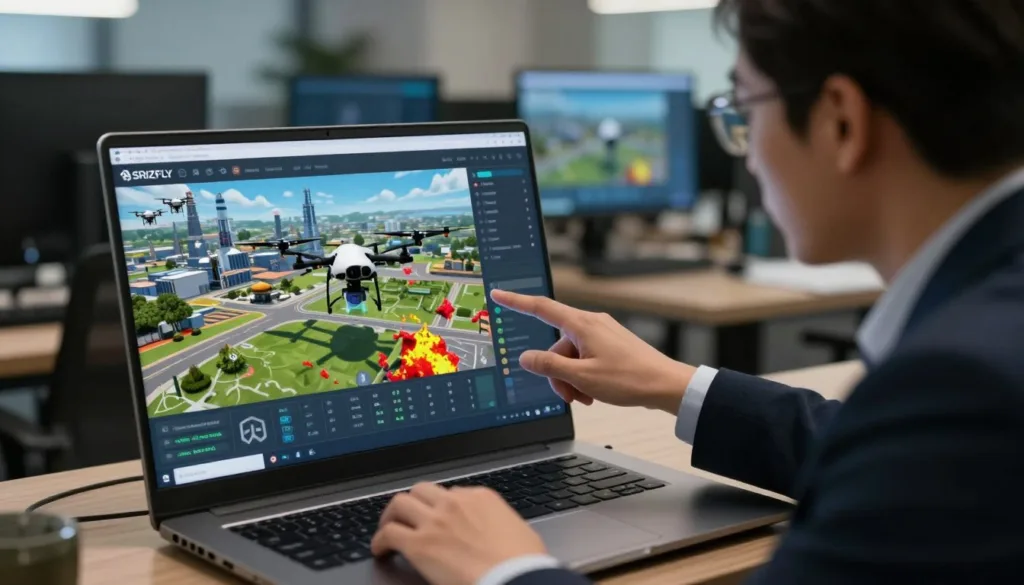
Virtual tools are key to expert industrial work in the United States, and high-quality drone simulation software lets teams do predictive maintenance safely. It helps users collect visual data and find flaws early.
The SRIZFLY platform offers a great way to handle drone training, ensuring that AI-based defect detection systems stay effective. It lowers costs and speeds up the inspection process.
Testing in a digital space boosts precision and mission success, which limits the risk of wrong readings during real flights.
This method saves time and keeps your equipment safe while virtual environments provide a safe place to fail while learning.
This builds deep confidence before the first actual flight takes place, as pilots can crash many times without any real-world loss.
Firms see a huge drop in expenses by using these digital methods to avoid expensive repairs and reduce travel needs. It is a smart move for any tech-heavy business today.
Key Takeaways
- Virtual testing boosts inspection precision.
- SRIZFLY helps pilots master maintenance.
- Digital worlds reduce operational costs.
- Automated data collection saves time.
- Training prevents false positives.
- Virtual flights keep expensive equipment safe.
Why Simulation Training Is Critical for AI-Powered Defect Detection
Mastering the complexities of AI-powered defect detection starts long before the drone ever leaves the ground. Real-world environments are unpredictable and often dangerous for testing new software. Using a simulator like the SRIZFLY platform allows operators to refine their algorithms without risking expensive hardware.
Simulation training provides the high-quality data needed to sharpen AI brains. It allows for the creation of “edge cases” that are rare in real life. These include extreme weather conditions or specific structural cracks that a drone might not see for months in the field.
Traditional methods of gathering data are slow and costly. By using a virtual environment, developers can run thousands of flight hours in a fraction of the time. This speed is essential for staying competitive in the fast-moving tech industry.
“The ability to fail safely in a virtual world is what allows us to succeed perfectly in the real one.”
Real-World Applications of Simulation Training
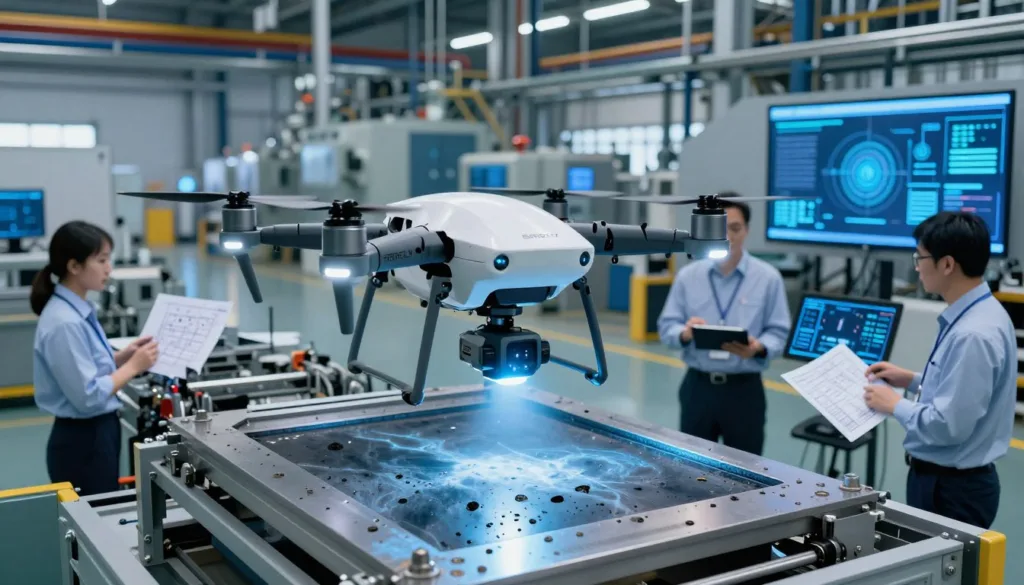
In the United States, infrastructure like bridges and wind turbines requires constant monitoring. Drone inspection has become the gold standard for these tasks because it reaches places humans cannot safely go. However, the AI must be trained to recognize subtle signs of wear and tear before it is deployed.
Simulation training allows drones to practice navigating complex structures like bridge trusses. The AI learns to distinguish between a harmless shadow and a real structural crack. This precision reduces the risk of accidents and ensures public safety during live operations.
Furthermore, these virtual tests help improve AI-powered defect detection in low-light or high-wind scenarios. Pilots can test their drone’s response to sensor noise or signal loss. This prepares the entire system for the harsh realities of industrial work.
| Aspect | Manual Inspection | Drone Inspection (AI-Based) | Simulation Benefit |
|---|---|---|---|
| Defect Detection | Subjective/Human Error | High Precision AI | Improved Accuracy |
| Accessibility | Limited/Dangerous | High/Remote Access | Risk-Free Practice |
| Efficiency & Cost | Slow and Expensive | Fast and Affordable | Faster AI Training |
| Data Quality | Inconsistent | Digital & Standardized | Perfect Data Sets |
| Predictive Insights | Minimal | Advanced Analytics | Scenario Testing |
Essential Features to Look for in Drone Simulation Platforms
Selecting high-quality drone simulation platforms involves evaluating how well they mirror the physical world. Developers need tools that do more than just show a 3D model. They need systems that can simulate gravity, wind, and complex surface textures to ensure the drone performs reliably.
A great simulator provides a safe space to fail and learn. It allows teams to test edge cases without risking expensive hardware. When you choose a platform, focus on how it handles data and physics. These elements directly impact the success of your defect detection algorithms.
Realistic Environmental Modeling and Physics
The foundation of any inspection drone is its ability to see small details. Realistic environmental modeling ensures that the virtual world matches the visual complexity of the real one. For instance, inspecting aircraft surfaces requires the simulation of light reflections on metallic skins. If the lighting is wrong, the AI might miss a hairline crack or a small dent.
Physics engines must also account for environmental factors like wind gusts and rain. These conditions affect how a drone stabilizes itself while capturing images. A robust platform allows users to change the time of day and weather conditions instantly. This variety helps the drone learn to identify defects in shadows or under bright sunlight.
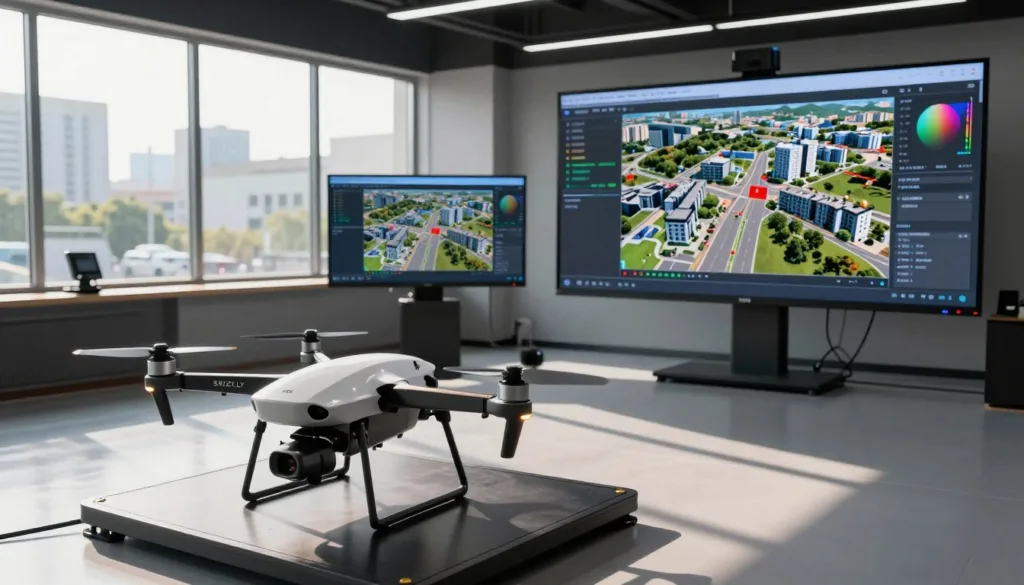
High-fidelity textures are another critical component. The simulator must render rust, corrosion, and cracks with extreme precision. Without this level of detail, the training data becomes useless for real-world applications. Developers often use these tools to build a digital twin of the infrastructure they plan to inspect.
| Core Feature | Impact on AI Performance | Inspection Use Case |
|---|---|---|
| Physics Engine | Improves flight stability | Structural Integrity |
| Dynamic Lighting | Reduces sensor glare errors | Aircraft Surface Checks |
| Material Textures | Enhances defect recognition | Corrosion Detection |
AI Training Capabilities and Machine Learning Integration
Modern drone simulation platforms must offer advanced AI training capabilities. This includes the ability to generate synthetic data at scale. Instead of manually flying a drone to take thousands of photos, the software creates them automatically. This process speeds up the development cycle by months.
Machine learning integration allows the AI to receive immediate feedback within the virtual environment. The system can auto-label images, marking exactly where a defect exists. This high-quality labeling reduces the risk of false positives. It ensures the drone only alerts the operator when a real issue is found.
A novel AI-driven drone for automatic visual inspection based defects detection in the aircraft external surfaces.
Finally, look for platforms that support seamless data export. You should be able to move your trained models from the simulator to the drone hardware easily. This machine learning integration bridges the gap between digital testing and physical deployment. It makes the entire inspection process more efficient and accurate for industrial teams.
Top Simulation Software for AI-Based Defect Detection Drones
Modern developers rely on sophisticated virtual worlds to refine their AI-based defect detection algorithms. These platforms allow teams to test drones in hazardous environments without risking expensive hardware. By using the right simulation software, companies can confidently manage renewable energy assets using an all-in-one solution.
Selecting a platform requires balancing visual fidelity with computational efficiency. The best tools provide a bridge between digital code and physical reality. This ensures that the drone performs reliably once it leaves the lab for the field.
SRIZFLY Advanced Simulation Suite
The SRIZFLY Advanced Simulation Suite stands out as a premier choice for industry professionals. It offers high-fidelity environmental modeling that mimics real-world physics with incredible accuracy. This tool is specifically designed to enhance AI-based defect detection by providing diverse and high-quality datasets.
Confidently manage your renewable energy using our all-in-one solution.
Training your drone in a virtual environment means preparing it for the unpredictable nature of outdoor inspections. The platform supports seamless integration with popular machine learning frameworks like TensorFlow and PyTorch. This allows developers to iterate quickly and deploy models with higher confidence levels.
Industry-Leading Alternatives for Inspection Training
While specialized tools lead the way, other simulation software options offer valuable features for the drone industry. Companies often look at established names like DJI and Autodesk for their specific inspection needs. These alternatives provide robust ecosystems for flight planning and structural analysis.
DJI’s simulation tools are excellent for pilot familiarity and basic flight physics. Autodesk excels in creating digital twins for infrastructure projects, allowing for detailed defect mapping. Both platforms help bridge the gap between virtual planning and physical execution.
- DJI Flight Simulator: Best for pilot training and hardware-specific physics.
- Autodesk Digital Twins: Ideal for comparing simulated defects against BIM models.
- Gazebo/ROS: Popular open-source options for highly customized research projects.
Choosing the right tool depends on your specific project goals and technical requirements. Each platform offers unique advantages for perfecting AI-based defect detection workflows.
| Software Name | Primary Strength | AI Integration Level |
|---|---|---|
| SRIZFLY Suite | High-Fidelity Physics | Advanced / Native |
| DJI Simulator | Pilot Training | Basic / Limited |
| Autodesk | Infrastructure Twins | Intermediate |
| Gazebo (Open Source) | Customization | High / Manual |
Conclusion
Choosing the right drone simulation software changes how organizations manage infrastructure. Manual bridge inspections often face high costs and safety risks. Using AI-based defect detection drones provides better data quality and predictive insights. This shift improves efficiency across every inspection project.
The SRIZFLY Advanced Simulation Suite helps teams master these complex tasks. It allows pilots to practice in realistic digital environments. These tools help improve the accuracy of identifying structural issues. Training in a virtual space reduces the risk of false negatives during real-world missions.
The conclusion is clear for modern engineering firms. AI-based defect detection requires precise training tools. Digital integration through simulation software is a necessity. It saves time and resources while keeping data accurate. This conclusion helps managers make better choices for their fleet. Investing in the right platform ensures your team performs at the highest level.
FAQ
What is the best simulation software for AI-based defect detection drones?
The SRIZFLY Advanced Simulation Suite is a premier choice for professionals, offering high-fidelity environmental modeling and robust AI training capabilities. Other industry-leading alternatives include DJI Terra for photogrammetry and Autodesk for integrating digital twins into the inspection workflow.
How does simulation software improve the accuracy of AI-powered defect detection?
Simulation platforms allow developers to generate vast amounts of synthetic data, which trains algorithms to recognize rare defects that are hard to find in the real world. By exposing the AI to diverse scenarios in a SRIZFLY drone simulator, organizations can significantly reduce the risk of false positives and false negatives during structural health monitoring.
Why is simulation training critical for inspecting complex infrastructure like wind turbines or bridges?
Inspecting wind turbines and bridges involves navigating high-risk environments with unpredictable variables. Simulation training provides a safe space to test machine learning algorithms against realistic environmental modeling, such as varying wind speeds and lighting conditions, without the risk of equipment damage or physical injury.
Can using a drone simulator like SRIZFLY help reduce operational costs?
Absolutely. By utilizing the SRIZFLY Advanced Simulation Suite, companies can perform infrastructure inspection rehearsals virtually, which reduces the time spent on-site and minimizes the need for repeated field trials. This leads to more efficient resource allocation and lower overall project expenses.
What essential features should I look for in a drone simulation platform?
You should prioritize realistic physics, machine learning integration, and the ability to simulate real-world conditions. A top-tier platform like SRIZFLY ensures that the transition from a virtual environment to a real-world AI-powered defect detection mission is seamless and reliable.
How does synthetic data generation in simulators benefit AI training?
A: Synthetic data generation allows for the creation of thousands of labeled images showing specific defects, such as concrete spalling or corrosion, under different angles. This provides the machine learning model with a comprehensive dataset that would be too costly or time-consuming to collect manually using physical drones.
Is SRIZFLY compatible with other industry-standard AI tools?
Yes, the SRIZFLY Advanced Simulation Suite is designed with machine learning integration in mind, allowing it to work alongside powerful frameworks from NVIDIA and Microsoft. This compatibility ensures that your AI-based defect detection models are trained using the most advanced computational tools available.