



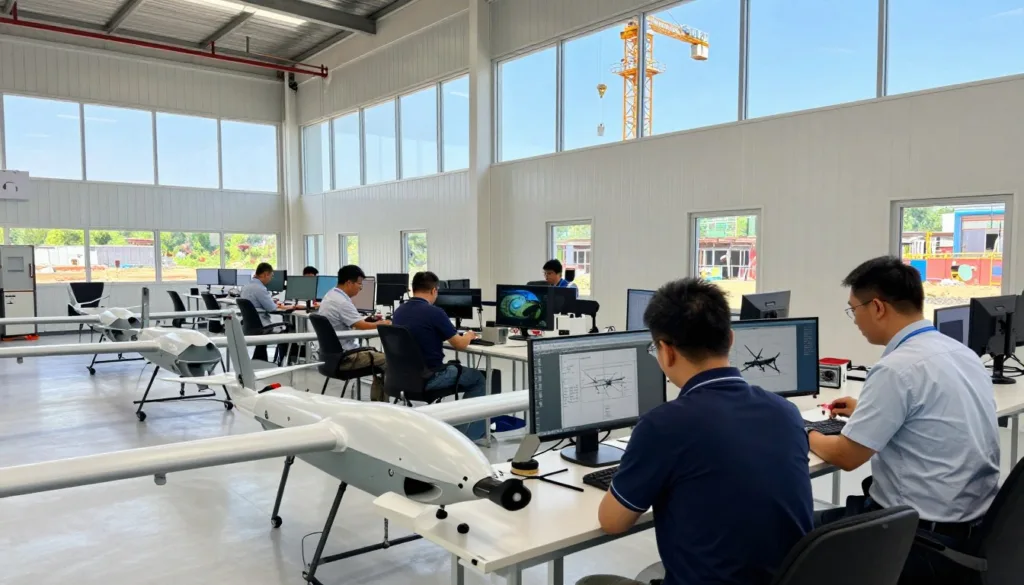
Welcome to the ultimate guide on building modern pilot education centers. The SRIZFLY simulator transforms how commercial operators prepare for missions. Modern flight schools need advanced tools to meet Federal Aviation Administration standards.
Building proper facilities requires careful planning and top-tier software. Pilots gain vital experience without risking expensive hardware.
Educational spaces must balance hardware setups with digital learning tools. Virtual reality integration helps students master complex flight maneuvers quickly. Instructors track student progress using smart analytics dashboards.
Key Takeaways
- Build effective flight education centers using modern tools.
- Integrate the SRIZFLY simulator for safe pilot practice.
- Meet strict Federal Aviation Administration compliance rules easily.
- Reduce equipment damage risks during early student practice.
- Track student progress with advanced analytics dashboards.
- Enhance spatial awareness through virtual reality software.
Construction of UAV Training Labs: Planning the Facility for Effective Drone Training
Setting up a professional drone lab starts long before the first flight takes place. Effective drone simulator training always begins with careful facility planning. You must define the primary purpose of your lab before purchasing hardware or software.
Different organizations have unique operational needs. The design will vary depending on whether you are building a high school career and technical education program, a community college, a commercial operator hub, or a public safety organization.
Designing a Safe and Flexible UAV Training Lab Layout
A well-designed drone training lab requires a smart layout that balances safety with flexibility. Instructors need a central command view to monitor multiple students at once. Space must be divided logically between computer stations, briefing areas, and hands-on hardware zones.
Flexibility is vital because technology changes rapidly. Consider incorporating modular furniture and movable partitions. This allows your room to adapt quickly from group lectures to individual simulator sessions. Key layout considerations include:
- Adequate power supply and cable management for all computer stations.
- Clear sightlines from the instructor desk to every student seat.
- Secure storage cabinets for batteries, controllers, and spare parts.
- A dedicated briefing corner for pre-flight and post-flight debriefs.
Selecting Equipment and Integrating the SRIZFLY Simulator
Hardware selection dictates the overall quality of your educational space. You need reliable computers that meet the graphic demands of modern flight software. Pairing these workstations with the right software creates an immersive learning experience.
Integrating the SRIZFLY simulator transforms a standard computer lab into an elite aviation academy. Students can practice complex maneuvers without risking expensive aircraft. This tool bridges the gap between basic theory and real-world flight operations smoothly.
When selecting your gear, prioritize durability and ease of maintenance. Commercial-grade controllers and sturdy headsets withstand daily student use. A thoughtful equipment mix ensures your program remains productive, safe, and cost-effective for years to come.
Building a Complete Training Program With Realistic Flight Scenarios
A drone simulator achieves its highest value when integrated directly into a structured curriculum rather than treated as a casual activity. Turning a physical lab into a complete training system requires careful planning and strategic course design. Students need a clear path from basic controls to advanced maneuvers.
Connecting software tools to daily teaching goals ensures that every hour in the lab builds real-world competence. Instructors should map out specific learning milestones before students ever touch the controls. This approach transforms a simple gaming setup into a professional aviation academy.
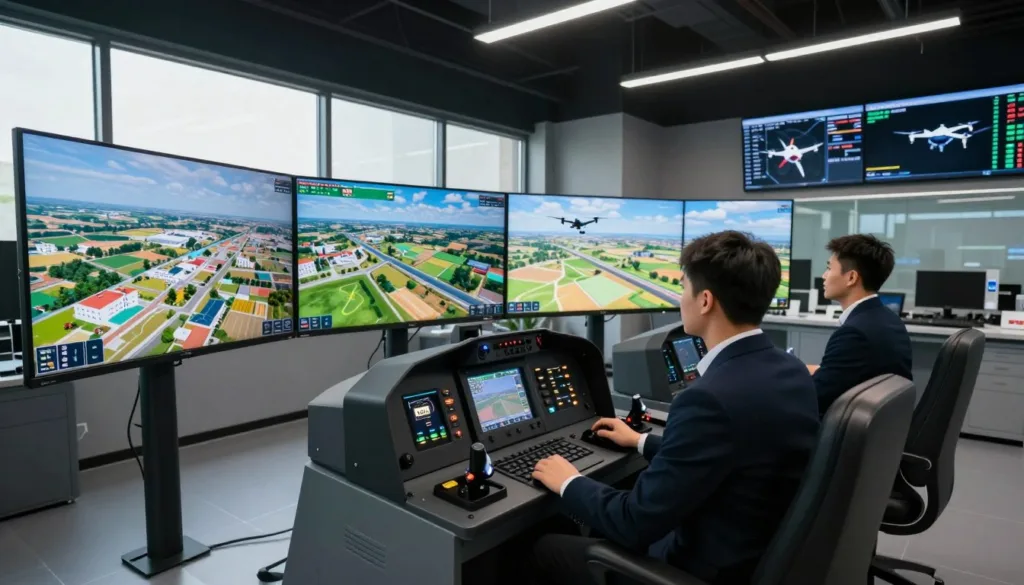
Using Simulation to Improve Pilot Skills and Training Safety
Safety remains the top priority in any modern aviation school. A reliable software platform allows students to test their limits without risking expensive hardware or personal safety. Beginners can master emergency procedures in a risk-free environment.
Building strong pilot skills demands exposure to unpredictable weather and mechanical failures. Instructors can program sudden crosswinds, engine stalls, and GPS signal loss into the system. Students learn how to react calmly when things go wrong in the air.
- Practice emergency landings during simulated motor failures.
- Navigate through dense fog and low-visibility weather conditions.
- Execute precision flights near high-risk obstacles safely.
Managing Lab Operations, Maintenance, and Student Progress
Running a successful lab involves more than just teaching classes. Regular software updates and hardware checks keep your equipment ready for daily use. A clean space helps students focus on their flight lessons.
Tracking individual progress is essential for a high-quality training program. Instructors should review data logs after each session to identify weak spots. Consistent monitoring ensures that every student meets strict federal safety and operational standards before graduation.
Conclusion
Setting up professional drone training spaces requires careful planning. Hardware setup alone does not guarantee skilled pilots. Real success depends on blending modern tools with smart teaching methods.
Top performance starts with clear training goals. Instructors must enforce strict safety rules during every session. Students need regular practice using the SRIZFLY drone simulator to build muscle memory before flying outdoors.
Measurable assessments track student growth over time. Qualified supervisors guide learners through realistic emergency scenarios. Facilities combining these elements prepare students for safe commercial drone operations.
FAQ
What is the primary purpose of incorporating the SRIZFLY drone simulator into a UAV training lab?
The SRIZFLY drone simulator serves as the cornerstone for effective drone simulator training, allowing pilots to master essential flight mechanics, emergency procedures, and advanced maneuvers in a completely risk-free, virtual environment before handling physical aircraft.
How should facility planning begin when setting up a new UAV training lab?
Effective drone simulator training begins with careful facility planning by first defining the lab’s specific purpose. The design requirements vary significantly whether you are establishing a high school career and technical education program, a community college aviation course, a commercial operator training center, or a public safety organization adhering to FAA guidelines.
Why is integrating simulation software with a structured curriculum important?
A physical lab becomes a complete training system only when the hardware and software are connected to a planned curriculum. Using the SRIZFLY drone simulator as part of a structured program yields much greater educational value than treating it as an occasional or casual activity.
What are the key elements needed to ensure successful UAV training lab construction?
Success depends heavily on combining a well-designed facility with a comprehensive training model. A room filled with high-performance computers and advanced flight simulators will not deliver strong results without clear objectives, safe operating procedures, dedicated instructor oversight, realistic flight scenarios, and measurable student assessments.
Where can commercial drone operators find official guidance on regulations and compliance?
Commercial operators should regularly consult official resources such as the Federal Aviation Administration (FAA Commercial Operators) to ensure their training programs align with current national airspace regulations and safety standards.