



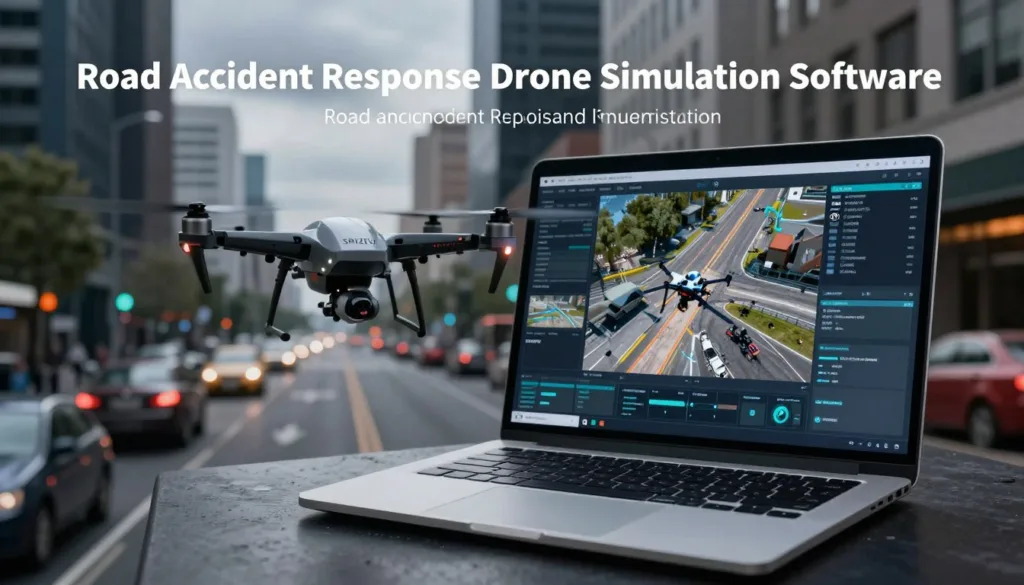
Emergency teams often face complex missions where every second counts. Using specialized tools allows pilots and dispatchers to practice critical operations before flying in the field.
The SRIZFLY drone simulator provides a controlled training environment. Here, instructors and response leaders can build vital skills without risking expensive equipment or public safety.
Trainees gain hands-on experience by handling virtual crises safely. This digital platform ensures teams stay prepared for real-world emergencies.
Key Takeaways
- Practice complex emergency missions safely before field deployment.
- Build essential piloting skills using the SRIZFLY training platform.
- Protect expensive aircraft and public safety during training exercises.
- Train dispatchers and response leaders in a controlled digital environment.
- Prepare teams effectively for critical real-world crisis situations.
Road Accident Response Drone Simulation Software for Emergency Response Training
Emergency teams face immense danger when responding to active, crowded, and remote traffic accidents. First responders must make split-second decisions while managing traffic, treating the injured, and assessing hazards.
Using drone simulation software prepares units to operate safely when a crash scene is chaotic or difficult to reach. Instead of risking lives during live-action drills, agencies rely on virtual environments to master critical aerial tactics.
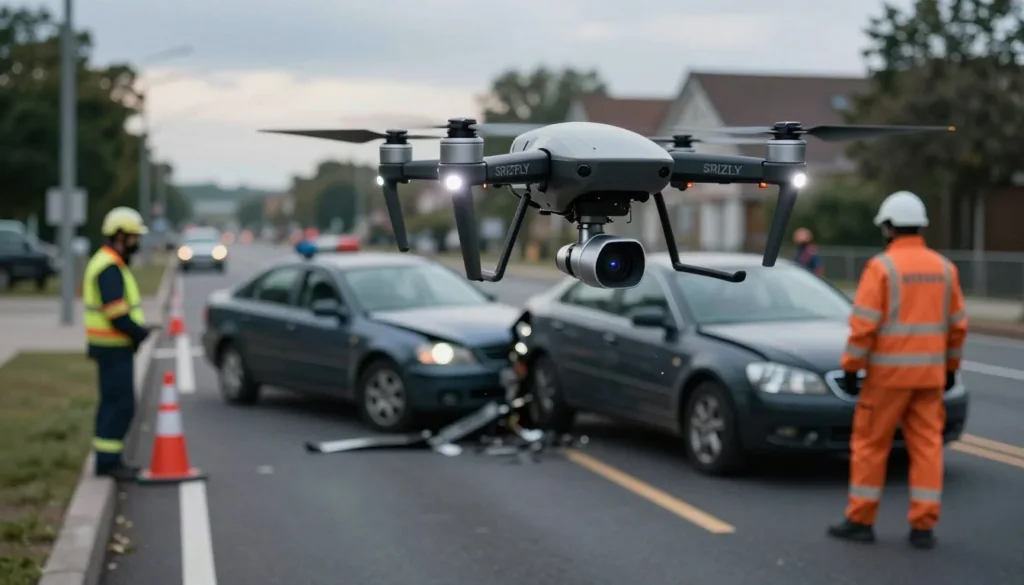
How Drone Simulation Supports Safer Accident Scene Operations
Safe operations start with repeatable practice. A quality simulator allows an agency to create the same exercise several times, change one variable, and compare results.
For example, an instructor can run a highway crash in daylight, then repeat it at night with rain, reduced visibility, or a restricted launch area. Pilots learn how to maintain situational awareness without adding real-world risks to an already unstable environment.
Core Training Scenarios for Road Accident Response
Every traffic incident presents unique challenges that require targeted preparation. Virtual training builds muscle memory for these high-stress moments through diverse scenarios.
Common scenarios programmed into modern simulation platforms include:
- Multi-Vehicle Pileups: Navigating narrow corridors between semi-trucks and passenger cars on busy interstates.
- Hazmat Spills: Identifying toxic leaks from a safe distance before ground crews approach the wreckage.
- Nighttime Searches: Using thermal imaging payloads to locate victims ejected into dark ditches or wooded areas.
- Blocked Access Routes: Finding alternative launch points when primary roads are completely shut down by debris.
Benefits for Drone Pilots, Emergency Teams, and Agencies
Public safety organizations see immediate returns on investment when adopting virtual flight tools. Pilots gain confidence through unlimited flight hours in adverse weather conditions that are too costly or dangerous to practice outside.
Incident commanders receive better data feeds because trained pilots know how to position aircraft for optimal viewing angles. Emergency response agencies also save money on equipment maintenance, battery wear, and potential training crashes.
“Virtual practice transforms how our teams coordinate during chaotic moments. We make our mistakes in the simulator, not on the highway.”
Ultimately, integrating these digital tools bridges the gap between basic flight school and chaotic real-world disasters. Agencies that embrace virtual practice ensure their personnel return home safely after every shift.
Key Features to Evaluate in Emergency Drone Simulation Software
Choosing the right emergency drone simulation software requires a practical buying strategy that goes beyond simple visual fidelity. Many public safety agencies make the mistake of purchasing platforms based solely on high-definition graphics. However, stunning visuals alone will not prepare your team for real-world crisis management.
The best system must actively support your agency’s actual missions and daily workflows. It needs to align directly with your specific training goals and personnel skill levels. Without this alignment, even the most advanced software will sit unused on your department computers.
Before making a financial commitment, decision-makers must evaluate how well a platform integrates with existing hardware and operating environments. Your chosen solution should run smoothly on current agency computers and support standard remote controllers. Compatibility issues can quickly derail even the best-funded aviation programs.
To help departments compare options effectively, consider the essential evaluation criteria outlined below.
| Evaluation Category | What to Look For | Why It Matters |
|---|---|---|
| Mission Relevance | Scenario customizability for local geography | Ensures pilots practice in familiar environments. |
| Hardware Integration | Support for standard remote controllers | Builds genuine muscle memory for pilots. |
| Scalability | Multi-user network capabilities | Allows entire incident command teams to train together. |
| Reporting Tools | Automated flight performance metrics | Simplifies pilot evaluation and regulatory compliance. |
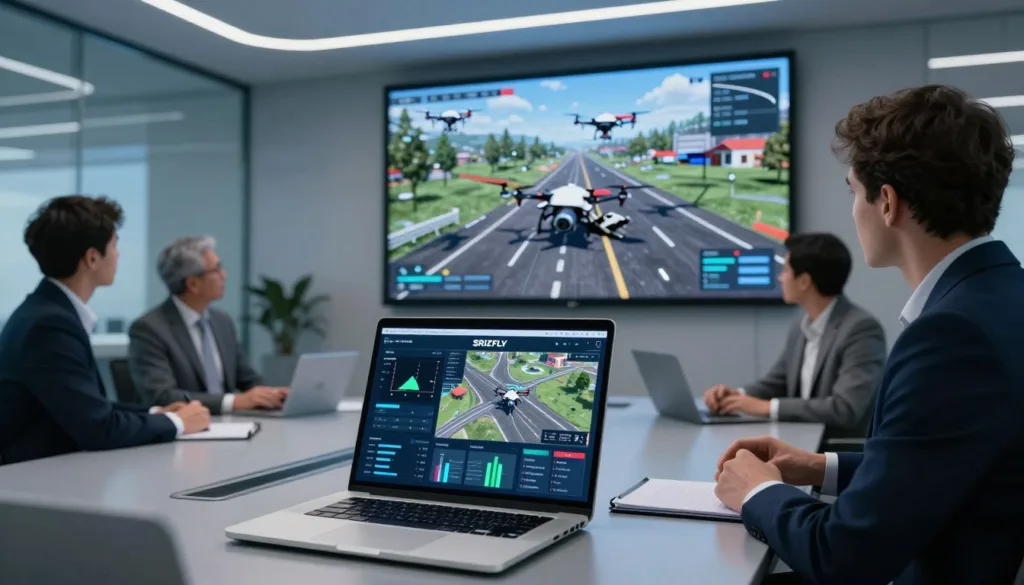
Another critical factor for public safety agencies is multi-user capability. Modern emergency responses require seamless communication between drone pilots and incident commanders. Look for software that allows multiple team members to log in and participate in the same virtual incident.
Effective platforms also offer robust after-action review tools. Being able to replay a simulation helps safety officers pinpoint tactical errors and communication breakdowns. This debriefing process turns every training session into a powerful learning opportunity.
Budget constraints mean that return on investment remains a top priority for department leadership. Evaluate licensing structures, update frequencies, and customer support availability before signing any contracts. Investing in the right tools today ensures your pilots remain safe and prepared when disaster strikes.
Conclusion
Road accident response drone simulation software gives public safety agencies a safe way to prepare for urgent missions. Teams gain valuable practice without putting real aircraft or crew members at risk on busy highways.
Software tools cannot replace physical flight hours or strict Federal Aviation Administration rules. Field experience remains vital for every pilot responding to traffic crashes. Local laws and department guidelines still shape daily emergency operations.
Virtual training builds essential skills before pilots face real crisis scenes. Emergency responders master complex flight paths using platforms like the SRIZFLY drone simulator. Better preparation leads to safer rescue missions and faster traffic clearance across United States roadways.
FAQ
What is Road Accident Response Drone Simulation Software?
Road Accident Response Drone Simulation Software is specialized training technology that allows emergency teams, pilots, and first responders to practice complex aerial missions in a virtual environment before operating in the field. Using advanced tools like the SRIZFLY drone simulator, agencies can build critical flight skills, test response strategies, and evaluate tactics without risking expensive aircraft, equipment, or public safety.
How does the SRIZFLY drone simulator help emergency response teams?
The SRIZFLY drone simulator provides a controlled, risk-free training platform where pilots, dispatchers, instructors, and response leaders can master emergency flight operations. It enables repeatable practice for high-stress scenarios, helping teams improve coordination, reaction times, and decision-making during active crash scenes.
Why is repeatable practice important in road accident drone training?
Repeatable practice allows public safety agencies to run the exact same exercise multiple times while changing single variables—such as shifting from daylight to night operations, adding rain or reduced visibility, or introducing restricted launch areas. This targeted repetition helps pilots learn how to adapt to changing environmental conditions safely and effectively.
Can simulation software completely replace hands-on drone flight training?
No. While emergency drone simulation software is a powerful tool for building foundational skills, procedural familiarity, and tactical readiness, it does not replace hands-on aircraft training, FAA compliance, physical field experience, or adherence to strict agency policies. Instead, simulation complements these requirements to accelerate pilot proficiency safely.
What should public safety agencies look for when buying emergency drone simulation software?
When evaluating software options, agencies should look beyond high-end visual detail. The best system must support the organization’s specific missions, training objectives, staff skill levels, existing hardware, and operational environment to ensure maximum return on investment and practical field readiness.