



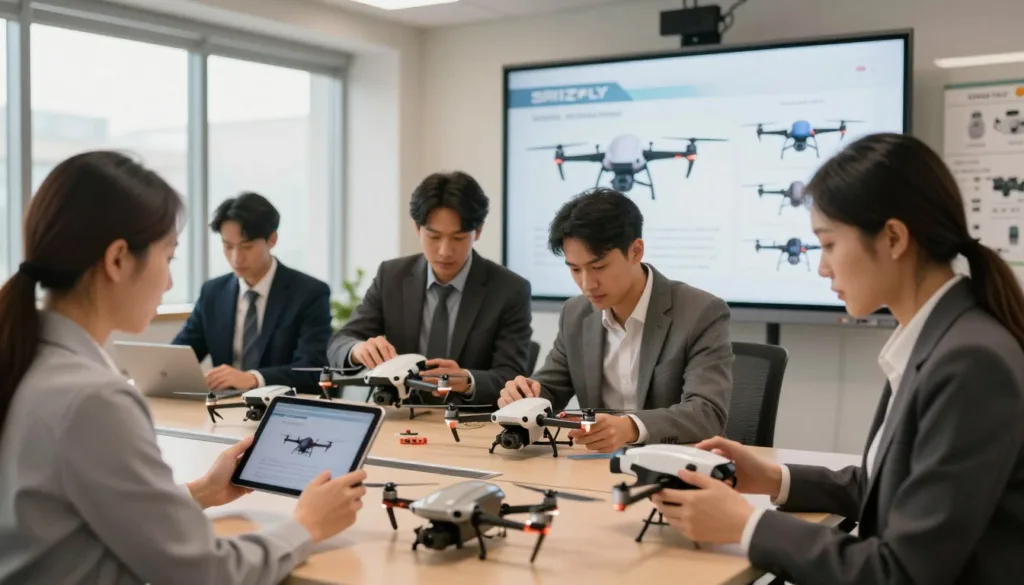
We publish this guide to the best Drone Vocational Skills Training Software to help pilots at every level. David Ryan released a comprehensive manual on 21 April 2026 that maps clear paths for learners. Our goal is simple: connect you with resources that speed certification and improve safety.
We focus on practical online learning that is affordable and flexible. Our curated programs pair simulators with structured curriculum and expert instructors. You get realistic experience, feedback, and measurable outcomes that boost knowledge and confidence.
Whether you are a new pilot or an experienced drone pilot, we show options that fit your schedule and goals. We highlight course features, certification paths, and tools that help students and professionals excel in modern aviation technology.
Key Takeaways
- David Ryan’s manual (21 April 2026) frames the most accessible online paths for pilots.
- Our list features simulator-driven programs that speed learning and improve safety.
- Expert instructors and structured curriculum support certification and better outcomes.
- Options cover all levels—from beginners to advanced drone pilots seeking mastery.
- Students gain practical experience, real-world feedback, and flexible course features.
Understanding the Role of Drone Vocational Skills Training Software
Modern simulation platforms bridge classroom lessons and complex aerial operations for aspiring pilots. We design these systems to close the gap between theory and on‑site performance.
By adding specialized digital tools to a clear curriculum, institutions keep pace with a fast‑moving industry. Students gain structured learning that maps to real job tasks.
Platforms provide a safe place to practice flight maneuvers without operational risk. That controlled environment speeds proficiency and reduces costly mistakes in live missions.
We believe modern technology paired with guided instruction empowers learners to perform in mapping, inspection, and logistics. These solutions prepare users for diverse applications across industries.
- Simulated scenarios for repeatable, measurable practice.
- Integrated assessments that align with certification paths.
- Tools that scale from basic flight skills to advanced mission planning.
Your success drives our work: choose platforms that blend real‑world applications, reliable simulations, and clear curriculum alignment to get pilots ready for field operations.
Benefits of Virtual Learning for Modern Pilots
Digital instruction creates flexible, scalable paths for learners who need real-world skills without the travel burden. We design virtual programs to match operational tasks and clear certification goals.
Flexibility and Accessibility
Virtual learning lets pilots study where and when it suits them. Short modules and self‑paced lessons fit work schedules and field duties.
NextWaveSTEM offers engaging courses that make lessons interactive and fun for students of all ages. This keeps motivation high and boosts retention.
Cost-Effectiveness
Digital curriculum options reduce facility and travel costs. Organizations scale programs to reach more learners without large infrastructure investments.
- Access quality training courses from any location.
- Leverage modern technology to revisit complex topics at your own pace.
- Choose diverse options that support certification and ongoing proficiency.
“Virtual programs reduce overhead while preserving high standards for operational readiness.”
We recommend programs that combine clear curriculum, realistic simulators, and measurable outcomes. Your success drives us forward—consider solutions that offer a trial so you can confirm value risk‑free.
Essential Skills for Professional Drone Operations
Effective mission outcomes start with clear planning, rigorous safety checks, and strong data workflows.
Professional operations require deep knowledge of flight planning and operational safety. Teams must follow checklists, local regulations, and contingency plans to protect people and property.
We emphasize mapping and photogrammetry as core competencies. Students learn to collect accurate imagery, process geospatial data, and deliver survey-ready outputs for construction and inspection projects.
- Pre-mission planning: airspace review, weather assessment, and route planning.
- Safety protocols: redundancy, emergency procedures, and compliance with rules.
- Data handling: capture standards, post-processing, and quality assurance.
Our curriculum focuses on practical applications so learners can interpret flight data and apply results to infrastructure projects. This prepares professionals for real-world missions across the industry.
“Master planning and reliable data processing make the difference between a good mission and a mission that meets client needs.”
Evaluating Top Drone Training Platforms
Selecting a platform requires balancing exam coverage, simulator realism, and industry applications. We compare three leading providers so you can match course features to your goals for certification and field work.
Drone Pilot Ground School
Drone Pilot Ground School focuses on FAA Part 107 exam readiness with clear curriculum and practice tests. Their courses work well for pilots who need targeted study and measurable progress toward certification.
Drone U
Drone U offers a broad curriculum that includes advanced mapping and construction inspection. This program is ideal for pilots aiming to use drones in professional applications and complex missions.
Pilot Institute
Pilot Institute blends test prep with scenario-based learning. Students benefit from structured lessons that cover regulatory concepts and practical flight procedures.
- SRIZFLY UAV simulators: realistic models and tools help students practice complex flight operations.
- Compare courses by curriculum depth, simulator equipment, and instructor feedback.
- Right simulator equipment improves learning outcomes and speeds readiness for real missions.
Instructors prefer platforms that deliver structured data and clear feedback—this ensures every pilot meets regulatory and operational standards.
The Importance of Simulator Training in Aviation
High-fidelity simulators compress years of experience into manageable practice modules. We design simulated sessions to mirror real missions so pilots gain hands-on experience without operational risk.
Safety and Risk Mitigation
Simulator practice improves learning retention and lowers accident risk. Research shows trainees using advanced simulators improve retention by up to 50%.
SRIZFLY simulators reproduce tough weather and system failures. Pilots rehearse emergency responses and protect expensive equipment in a controlled setting.
| Feature | Benefit | Outcome |
|---|---|---|
| Scenario repetition | Consistent practice | Higher retention (up to 50%) |
| Weather modeling | Realistic risk exposure | Safer field missions |
| Data-driven feedback | Objective assessment | Improved course outcomes |
We integrate simulator features into our curriculum so students develop decision-making, flight control, and mission planning skills. These tools make programs safer and more efficient across applications.
Key Features to Look for in Training Software
Good training platforms deliver repeatable scenarios, measurable outcomes, and actionable feedback.
We recommend features that support real mission work. Look for realistic flight scenarios and compatibility with multiple drone models. These elements ensure lessons map to field equipment and tasks.
Detailed analytics matter. SRIZFLY simulators include reporting tools that show progress, errors, and improvement areas. Instructors use this data to tailor lessons and boost student outcomes.
A strong curriculum pairs simulator options with hands-on modules. That mix prepares students for technical challenges and operational applications.
| Feature | Why it matters | Expected outcome |
|---|---|---|
| Realistic scenarios | Mirrors field conditions | Faster decision-making |
| Multi-model compatibility | Matches real equipment | Seamless skill transfer |
| Analytics & reporting | Objective performance data | Targeted improvement |
| Modular curriculum | Flexible course options | Broader competency |
Choose platforms that combine clear feedback, robust resources, and diverse course options to get consistent, measurable progress for your team.
Navigating Certification Requirements
Clearing certification hurdles is the first step toward commercial operations and professional recognition.
FAA Part 107 is the required regulatory exam for commercial pilots in the United States. We design courses and curriculum to cover every knowledge area on the official test.
Our content focuses on safety, airspace classifications, and operational procedures. These modules reduce common exam pitfalls and build practical knowledge for real missions.
- Structured lessons mapped to FAA Part 107 topics.
- Practice tests and scenario-based review for exam readiness.
- Up-to-date information on rules and airspace changes.
We help students move from basic learning to certified pilot status with clear, measurable steps.
“Confident operators combine solid knowledge with repeated practice to pass the exam and run safe operations.”
Recommended Learning Paths for Every Skill Level
A clear progression of courses lets students build confidence and technical knowledge fast.
Beginner Foundations
We start learners with basic flight controls, safety checks, and simple scenarios. Short modules teach pre‑flight planning and data capture essentials.
NextWaveSTEM curriculum supports K–12 and adult students with structured lessons. These courses prepare users for initial exam topics and hands‑on practice.
Professional Career Tracks
Advanced paths focus on mapping, construction surveys, and data processing for commercial roles. Lessons map directly to FAA Part 107 topics and certification goals.
Students progress through scenario‑based modules that simulate inspection missions and complex survey flights. This builds real-world knowledge and improves job readiness.
Our recommended options guide learners from beginner to pro, delivering clear milestones, measurable outcomes, and course choices that align with industry needs.
Integrating Advanced Technology into Your Curriculum
Embedding high-fidelity systems into a curriculum gives students repeatable scenarios and objective feedback.
We recommend SRIZFLY simulator options to expand learning beyond lectures. These systems support mapping, construction planning, and complex flight missions. Students gain hands-on practice with realistic failures and weather models.
Our approach makes curriculum flexible. You can add new drone models and simulator features as needs evolve. This keeps programs current for diverse industries and applications.
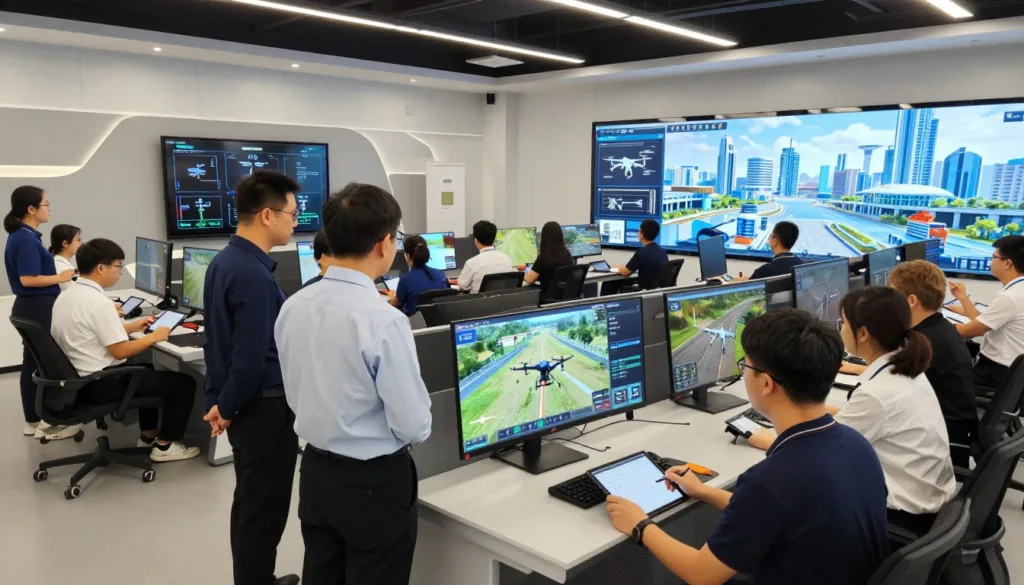
Benefits are clear: faster proficiency, better data handling, and measurable outcomes. Instructors use analytics to tailor lessons and focus on weak areas. That improves course completion and job readiness.
- Realistic missions for repeat practice
- Modular courses that scale with your goals
- Analytics-driven feedback for targeted improvement
“Our simulators cut training time and raise operational confidence for students entering field roles.”
We are ready to help you deploy these solutions. Try SRIZFLY risk-free with a 10-day free trial and see the impact on outcomes and safety.
Overcoming Common Challenges in Drone Education
Technical hurdles and cost pressures can stall efforts to bring practical flight learning into classrooms. Schools need solutions that balance price and performance.
Addressing Budget and Technical Barriers
We recommend modular options that cut upfront costs. Start with shared simulators and scale by adding equipment as funds allow.
Grant programs and local partnerships often cover initial purchases. Combine those resources with cloud-based simulators to lower maintenance expenses.
Instructors benefit from clear setup guides and remote support. That reduces technical downtime and keeps courses on schedule.
- Use multi-seat simulators to serve more students per unit.
- Leverage cloud licenses to avoid costly hardware upgrades.
- Pair classroom modules with hands-on lab days for better outcomes.
With the right tools and support, any school can integrate this technology into an existing curriculum and improve student outcomes without overspending.
“Affordable, scalable options let instructors focus on learning — not equipment problems.”
Future Trends in Unmanned Aerial Systems Training
Immersive simulators and AI-driven flight features are changing how operators build real-world competence. These tools create lifelike scenarios that accelerate decision-making and reduce field risk.
As the drone industry expands, expect more specialized courses for construction and infrastructure inspection. Programs will focus on mission-specific skills and data workflows that match employer needs.
We commit to keeping our students current with the latest models and technology. That means rapid updates, new scenario packs, and analytics that show progress clearly.
- More immersive, scenario-based simulator sessions.
- AI-assisted controls and adaptive lesson features.
- Industry-specific modules for construction and inspection.
Highly skilled pilots will rely on advanced simulators to navigate complex airspace and missions. We prepare operators for global demand by combining realistic practice with measurable outcomes.
“Our approach shortens the path to readiness while keeping safety front and center.”
Success Stories from Industry Professionals
Industry professionals credit hands-on simulation and instructor guidance for landing higher-value contracts and leadership roles. Many point to real practice and mentorship as the turning point in their careers.
We are proud to share accounts from certified drone pilots who moved into inspection, mapping, and logistics roles after completing our courses. These students say the focused experience and clear information helped them pass certification and win competitive positions.
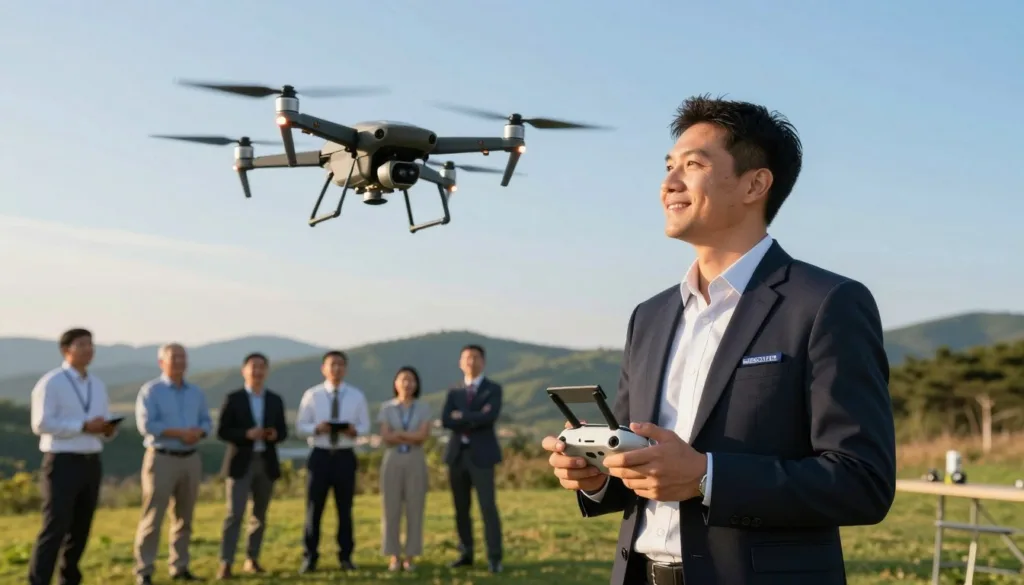
Our instructors deliver actionable information and one-on-one support. That mentorship builds the professional skills needed for long-term success in the field.
These success stories show how structured learning prepares pilots for real-world flight challenges. We remain committed to supporting students as they transition into careers—providing resources, guidance, and a clear path to growth.
“The simulator hours and instructor feedback were the reason I secured my first commercial contract.” — industry professional
Conclusion
A focused curriculum paired with realistic practice shortens the path to confident field work. Our approach turns classroom time into measurable results for pilots and teams.
We back our methods with SRIZFLY simulators and a 10-day free trial so you can evaluate value risk-free. Try the software to see how realistic scenarios improve decision-making and safety.
Online education uses modern technology to scale access and keep costs down. These options help students move from study to certified, job-ready performance.
Start today: enroll in our top-rated programs, use the trial, and take the next step toward reliable, efficient operations with proven simulation tools.
FAQ
What is SRIZFLY and how does it support part 107 preparation?
SRIZFLY is an industry-grade simulator and curriculum platform designed to prepare pilots for FAA Part 107 certification. We combine realistic flight scenarios, airspace modules, and test-style quizzes so learners build practical skills, knowledge of airspace, and confidence for the remote pilot exam.
Who benefits most from this training platform?
Commercial operators, inspection teams (tower, construction, utilities), agricultural managers, emergency responders, and education providers all benefit. We tailor content for enterprise use, vocational schools, and individual pilots seeking professional workflows and regulatory compliance.
How realistic are the simulators and equipment models?
Our simulators use physics-based flight models and accurate aircraft profiles, including common multicopters and fixed-wing models. This realism improves muscle memory and mission planning skills while reducing risk during live flights.
Can the software help reduce training time and costs?
Yes. By shifting early-stage drills and scenario practice to the simulator, instructors report up to a 50% reduction in live flight hours. That lowers fuel, wear, and instructor time while scaling consistent training across teams.
Do you offer a free trial or demo?
We provide a 10-day free trial so organizations and instructors can evaluate features, scenarios, and learning outcomes with no risk. The trial includes core modules and access to customer support for onboarding.
What curriculum topics are covered for beginners?
Beginner foundations include airspace classification, weather basics, preflight checks, basic flight maneuvers, emergency procedures, and Part 107 test prep. Content is modular so learners progress at their own pace.
Does the platform include advanced career tracks for professionals?
Yes. Professional tracks cover mapping and photogrammetry, BVLOS planning, payload operations, industrial inspections, and data processing workflows. Each track includes mission scenarios and best-practice checklists.
How does the system support mapping and data workflows?
We include mission planners and simulated payload controls for photogrammetry and LiDAR tasks, plus post-mission data review tools. This helps pilots practice flight lines, overlap settings, and QA processes before field deployments.
Can training be customized for specific industries like construction or agriculture?
Absolutely. We build custom scenarios and modules tailored to tower inspections, crop surveys, site mapping, and logistics missions. Customization ensures relevance to your operational procedures and equipment.
What options exist for instructor-led versus self-paced learning?
The platform supports both. Instructors can run cohorts with progress tracking and assessments. Self-paced learners access modules, missions, and simulated flight logs with automated feedback and recommended next steps.
How do you ensure trainee progress and assessment validity?
We use competency-based assessments, recorded simulator sessions, and scenario checklists. Administrators can export performance reports and review flight telemetry to verify proficiency and readiness for live operations.
Is the platform compatible with real controllers and drone models?
Yes. SRIZFLY supports common transmitters and interfaces with many popular airframes. This allows pilots to train on the same controllers they’ll use in the field for a seamless transition to live flights.
What safety and risk mitigation features are included?
Safety modules include emergency procedures, geofencing practice, lost-link scenarios, and near-miss simulations. These drills build decision-making skills that reduce incidents during actual operations.
How does this training align with FAA Part 107 and other regulations?
Our curriculum maps directly to FAA knowledge areas and includes regulatory updates. We also cover operational best practices for FAA waivers, airspace authorization, and local compliance considerations.
What support and instructor resources are available?
We offer onboarding, instructor guides, lesson plans, and technical support. Enterprise customers get dedicated account assistance and optional train-the-trainer sessions to scale programs effectively.
Can the platform be integrated into school or corporate LMS systems?
Yes. SRIZFLY supports LTI and SCORM for LMS integration, plus single sign-on and group management features so institutions can track learners within existing systems.
How do I evaluate return on investment for adopting this system?
Measure reductions in live flight hours, incident rates, instructor time, and equipment downtime. Case studies show improved passing rates and faster onboarding for new pilots, delivering clear cost and safety benefits.
What are the system requirements and deployment options?
We offer cloud-hosted and on-premise deployments. Recommended specs vary by simulator fidelity; our team provides detailed requirements and assists with setup for desktop, laptop, or lab environments.
How do I start the free trial or request a demo?
Contact our sales team to activate a 10-day free trial or schedule a live demo. We’ll tailor the walkthrough to your use case—education, enterprise, or government—and show key features relevant to your missions.