



Drone Combat Simulation: Enhance Pilot Skills and Reduce Operational Losses
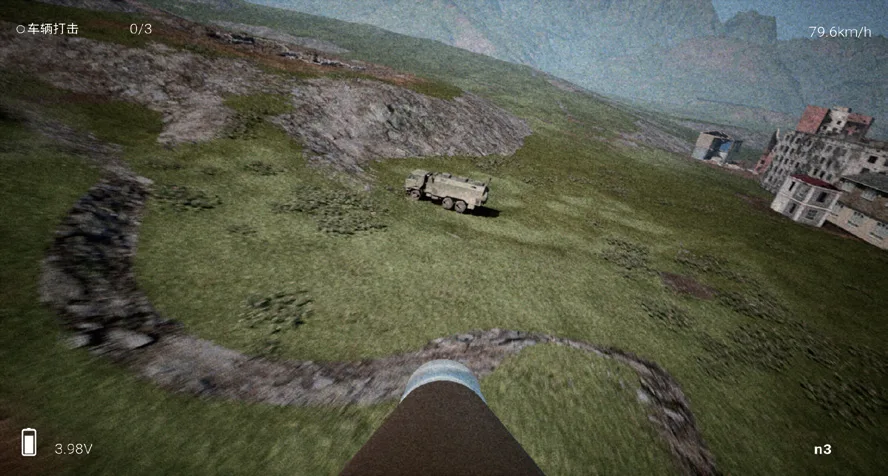
Table of Contents
Why is drone combat simulation training important?
A battlefield pilot's personal experience
A Russian frontline drone pilot from Volgograd stated in an interview that it typically takes one to two weeks just to master precision dropping skills—whether delivering food and water or deploying grenades. But real drone warfare demands far more. Beyond payload release, operators must excel in reconnaissance, target identification, navigation under electronic warfare, and precision strike execution.
Training a drone soldier to reach full operational capability requires significant time, resources, and battlefield experience, making it a costly and demanding process. This is exactly why drone combat simulators have become an essential solution: they allow pilots to safely practice drops, reconnaissance, and strike missions in a controlled, repeatable, and cost-efficient environment—long before they ever reach the frontline.
Comparison chart: real-flight training vs. simulation training costs
| Training Mode | Time Cost | Manpower Cost | Financial Cost | Recommended? | Reason |
|---|---|---|---|---|---|
| 1. Pure Live Training | High — requires range prep, flight windows, weather conditions, safety checks | High — instructors, maintenance crew, support staff | Very High — real aircraft, consumables, crash losses | ❌ Not recommended as primary | High crash loss rate during training; limited repeatability; high cost per hour |
| 2. Pure Virtual Simulation Training | Low — instant restart, repeatable scenarios | Low — one instructor can train multiple soldiers | Low — one-time simulator investment plus software updates | ✔️ Recommended for early–mid training | Allows high-risk scenario training (dropping objects / FPV sprint / low-altitude maneuvers) without loss; thousands of repetitions possible |
| 3. Hybrid: Virtual + Live Training | Medium — simulation handles ~80%, live only for key skill verification | Medium | Medium — significantly reduced real aircraft losses | ⭐ Strongly Recommended (Best-practice) | NATO and other militaries adopt hybrid model: simulation builds perception & procedural skills, live validates; loss and accident rates drop significantly |
In drone combat training, pure live, pure virtual, and hybrid training approaches vary significantly in time, manpower, and financial costs. Research shows that simulation-based training can greatly reduce equipment loss and accident risk while accelerating skill acquisition. For example, a study in MDPI Aerospace demonstrated that pilots trained with simulators had an average positional error reduction of 32% in real missions (mdpi.com).
Furthermore, the U.S. Army report The Effectiveness of Virtual Simulation as a Training Tool highlights that simulation training not only saves ammunition, fuel, and logistics costs but also allows soldiers to safely practice high-risk maneuvers repeatedly (armyupress.army.mil).
Based on a cost–benefit and training efficiency perspective, the hybrid training approach is strongly recommended: it retains the realism and validation value of live flight while leveraging simulators to minimize loss and maximize repetition, achieving optimal overall training effectiveness.
Three Core Weaknesses in UAV Strike Training for Combat Units
New pilots lack basic skills, slowing down combat readiness
“Learning basic FPV / small-UAS flight skills is especially difficult because the Army’s current training ecosystem faces serious constraints. According to RAND, units “face significant imposed constraints on realistic SUAS training at home‑station … particularly in … spectrum allocation,” and there are “too few highly trained personnel (e.g., … expert operators)” to scale advanced tactics. RAND
Moreover, the 2023 SUAS training pipeline was found to be “insufficient in terms of basic qualification throughput,” meaning new operators cannot rapidly gain the foundational experience needed for operational readiness. RAND
Increasing reliance on single‑operator missions makes individual combat proficiency critical
Modern small‑UAS and FPV strike missions are frequently executed by a single operator—one soldier responsible for navigation, target acquisition, threat avoidance, and final strike decisions. In these scenarios, the operator has no crew support, no secondary pilot, and no real‑time correction from a team. Every action depends on the pilot’s individual skill, judgment, and ability to manage stress under time‑sensitive conditions.
Because these missions place the entire operational outcome on one operator, even minor errors—misjudging distance, losing orientation, over‑correcting throttle—can lead to mission failure or loss of critical equipment. This makes solo combat proficiency not just a desirable trait but a mission‑critical requirement.
This is why dedicated individual simulation training becomes essential.
Solo-focused simulators allow operators to repeatedly practice high‑pressure tasks—precise flight control, terminal maneuvers, threat evasion, and strike execution—building the muscle memory and decision‑making ability that real missions demand but cannot risk teaching live.
Small‑scale drone engagements rely on coordinated teams, making multi‑unit collaboration essential
Modern small‑UAS operations rarely rely on a single aircraft. Even limited engagements often involve multiple drones working in a coordinated structure—scouts providing overwatch, FPV units executing strikes, and additional aircraft conducting jamming, diversion, or situational awareness tasks.
These missions depend on synchronization, communication discipline, shared situational awareness, and timing, as each platform’s actions directly influence the others.
When operators lack collaborative experience, teams struggle with misaligned flights, delayed responses, target conflicts, and disrupted strike windows—issues that can compromise the effectiveness of an entire drone element.
This is why coordinated simulation training is indispensable.
Multi‑unit simulators allow teams to practice timing, role assignment, information sharing, and synchronized execution under realistic battlefield conditions—building the collaborative proficiency required for effective drone‑team combat.