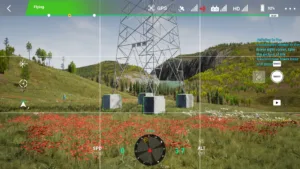
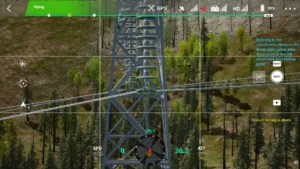
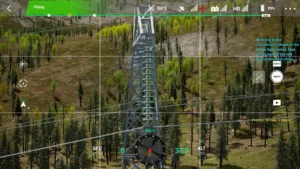
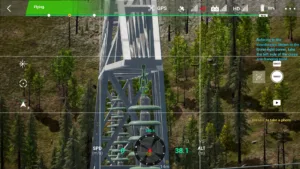
Power Line Drone Inspection Simulation Training: Procedures, Checkpoints & Standards
Table of Contents
Why is simulation training essential for drone-based power line inspections?
Accident Case 1: On May 25, 2025, in Chengde, Hebei Province, China, a power utility worker conducting a wind turbine inspection encountered strong winds, causing the drone to lose control and crash.
Accident Case 2: On July 14, 2025, in Luohe, China, a drone operator performing pesticide spraying accidentally entangled the drone with high-voltage power lines due to operational error.
Proper simulation training is essential before pilots perform real-world inspections. SRIZFLY’s Power Inspection Drone Simulator helps pilots practice safely, identify risks, and respond to emergencies, greatly reducing the likelihood of crashes or errors during field operations. With over 10 years of experience in drone powerline inspection simulation, SRIZFLY brings extensive expertise in real-world UAV inspection operations.
Zero-risk training before entering high-voltage fields
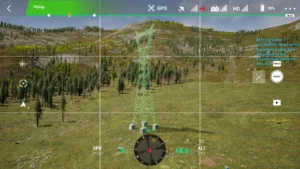
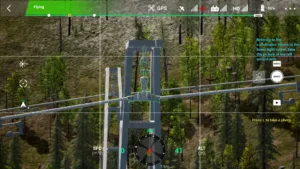
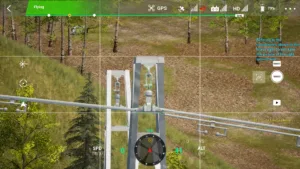
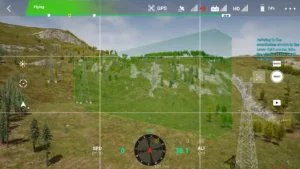
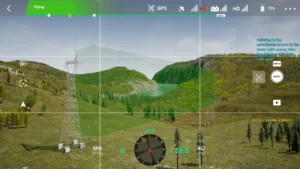
drone too close to power tower warning, software screenshot
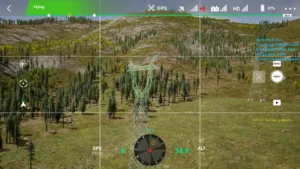
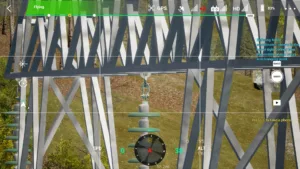
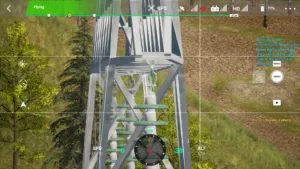
dangerous images of high voltage power towers
Simulation provides a safe, controlled setting to practice powerline inspection maneuvers before operating near energized towers. Trainees learn to handle high-voltage environments, tower structures, narrow work corridors, and approach paths without real-world danger. The system reinforces safe-distance awareness, clearance judgment, and obstacle avoidance around conductors, cross-arms, and guy wires. By the time pilots enter live sites, they already understand utility flight discipline and safety procedures, reducing accidents and protecting both equipment and grid assets.
Accelerated learning and shorter training cycles
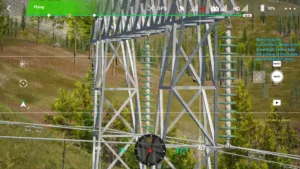
screenshot of power operation workflow task in drone simulator
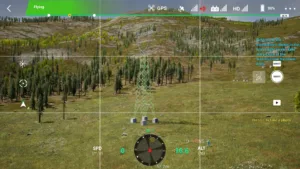
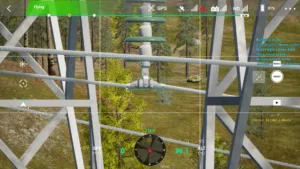
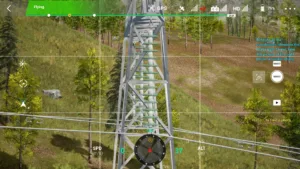
simulation footage of drone power operation
Simulation allows pilots to repeatedly practice standard inspection missions in diverse environments, from plains to complex mountainous powerlines.Trainees can complete more training cycles in less time, mastering critical maneuvers faster than field-only training.
Data-driven and measurable performance evaluation
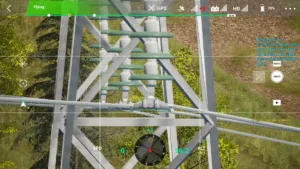
the drone power simulator is now displaying software screenshots.
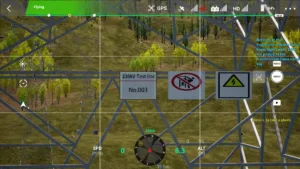
screenshot of training evaluation and settlement for drone power simulator
Simulation tracks every inspection photo and evaluates its quality against predefined standards, including clarity, angle, and coverage of critical points.Trainees receive measurable feedback on each photo, enabling objective assessment of inspection accuracy and overall work quality.This data-driven evaluation ensures pilots meet operational standards before real-world deployment, improving reliability and reducing errors in field inspections.
Design and Standards of Power Line Inspection Drone Simulation Systems
Design and Development of Powerline Inspection Drone Simulation Systems Must Follow Official Industry Standards.
Our simulation system strictly follows authoritative Chinese regulations:
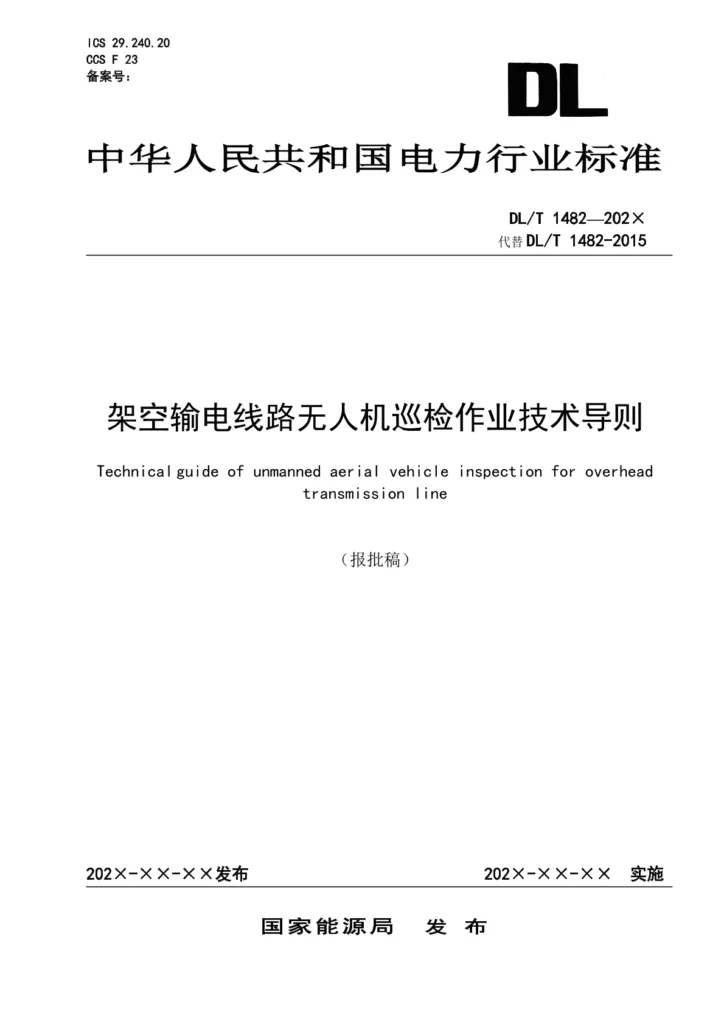
DL/T 1482-2015 《架空输电线路无人机巡检作业技术导则/Technical Guidelines for UAV Inspection of Overhead Transmission Lines》
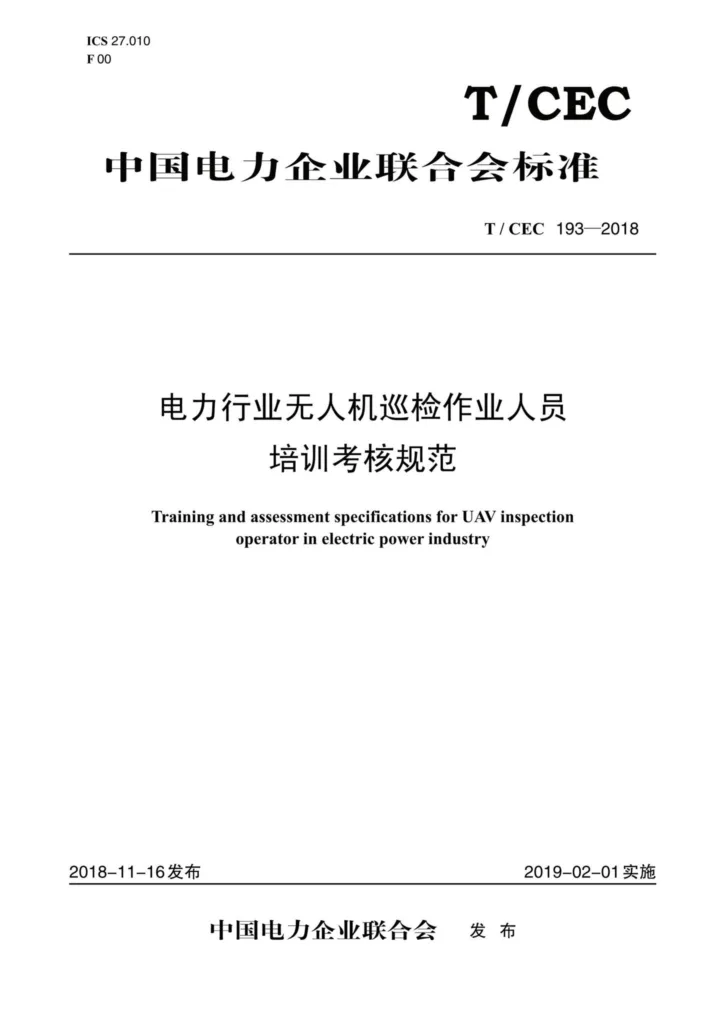
T/CEC 193-2018 《电力行业无人机巡检作业人员培训考核规范/Training and Assessment Standards for UAV Inspection Personnel in the Power Industry》
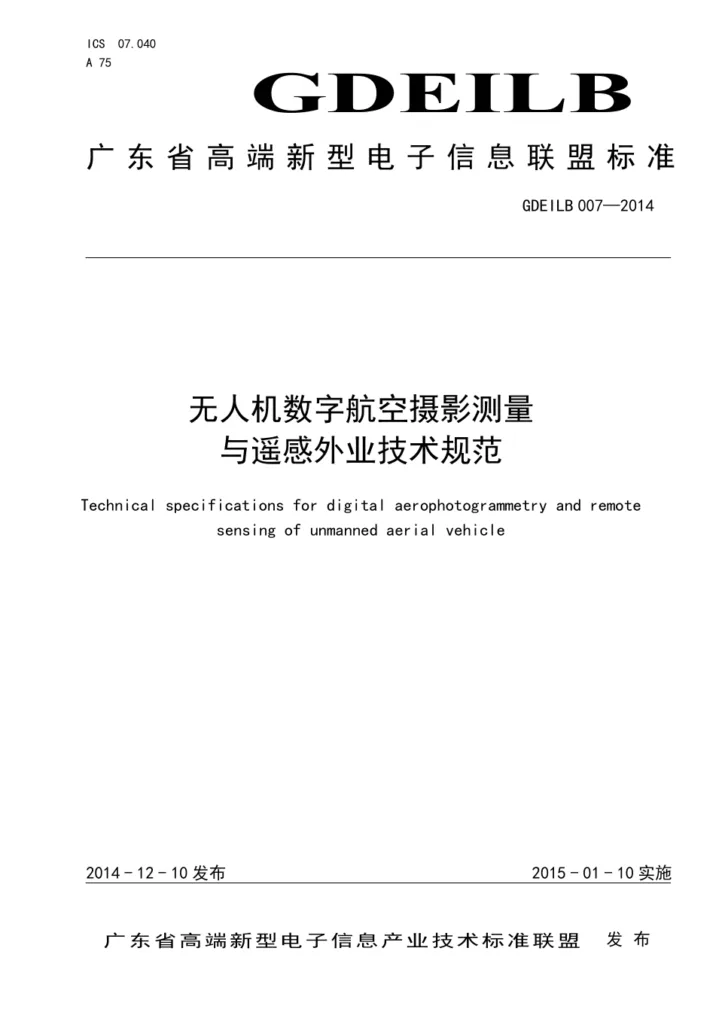
《无人机数字航空摄影测量与遥感外业技术规范/Technical Specifications for UAV Digital Aerial Photogrammetry and Remote Sensing Fieldwork》
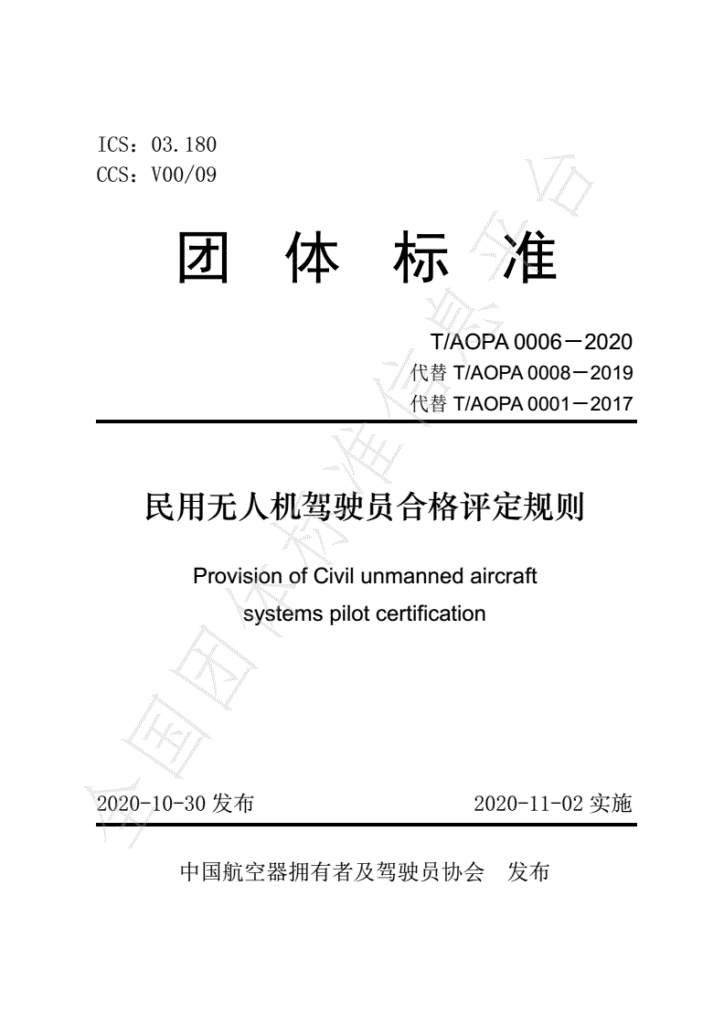
《民用无人机驾驶员合格评定规则/Civil UAV Pilot Qualification Assessment Rules》
These standards define flight procedures, inspection workflows, point positioning, risk control, training, and assessment, providing the top-level framework for industry operations and personnel development.
Chinese standards are chosen because they cover the longest, most complex transmission networks, full operational scenarios (marine, desert, mountains, extreme cold, typhoon zones), and strictest safety and qualification requirements.
Our system is built according to these standards to ensure that training results directly translate into real-world inspection capability.
Essential Inspection Points for Drone Power Line Patrols (Transmission Towers & Distribution Poles)
Example: 220kV straight-line tower inspection point
Serial Number
Inspection points
Shooting quality requirements
Software checkpoint screenshot
Real Inspection Point Images
1
Full Tower View
The entire tower structure must be visible, with clear identification of materials and tower angles; tower should occupy at least 80% of the frame vertically.
1 drone inspect 220kv linear tower overview
2
Tower Top
Tower head must be fully visible.
2 drone inspect 220kv linear tower top
3
Tower Body
Full visible structure excluding the tower head and base.
3 drone inspect 220kv linear tower body
4
Tower Identification Plate
Tower ID plate must be clear and readable, including line name and tower ID.
4 drone inspect 220kv linear tower pole number
5
Tower Base
Ground area around the base must be visible, showing guy wire attachment conditions and connections.
5 drone inspect 220kv linear tower base
6
Left Phase Conductor Suspension Point
Bolts, nuts, cotter pins, and small fittings must be clearly visible, including vibration dampers. Use multi-angle shots if equipment overlap occurs. Each photo must include at least one insulator disc.
6 drone inspect 220kv linear tower left phase wire end
7
Left Phase Insulator String
Entire insulator string must be captured. Multiple images allowed. Surface damage and each insulator connection point must be clearly identifiable.
7 drone inspect 220kv linear tower left phase insulators
8
Left Phase Cross-arm Connection
Bolts, nuts, cotter pins, and small fittings must be clear. Multi-angle shots if components block view. Each photo must include at least one insulator disc.
8 drone inspect 220kv linear tower left crossarm
9
Left Ground Wire
Must verify correct fitting assembly, aluminum wrapping at contact point, and locking components. Multi-angle shots if blocked.
9 drone inspect 220kv linear tower left ground wire
10
Middle Phase Cross-arm Connection
Bolts, nuts, cotter pins, and small fittings must be clearly visible. Multi-angle if blocked. Each photo must include at least one insulator disc.
10 drone inspect 220kv linear tower middle crossarm
11
Middle Phase Insulator String
Entire insulator string must be captured; multiple shots allowed. Must clearly show surface conditions and each connection piece.
11 drone inspect 220kv linear tower middle phase insulators
12
Middle Phase Conductor Suspension Point
Bolts, nuts, cotter pins, and fittings must be visible, including vibration dampers. Multi-angle if blocked. Each photo must include at least one insulator disc.
12 drone inspect 220kv linear tower middle phase wire end
13
Right Ground Wire
Must verify correct fitting assembly, aluminum wrapping at contact point, and locking components. Multi-angle if blocked.
13 drone inspect 220kv linear tower right ground wire
14
Right Phase Cross-arm Connection
Bolts, nuts, cotter pins, and small fittings must be clearly visible. Multi-angle if blocked. Each photo must include at least one insulator disc.
14 drone inspect 220kv linear tower right crossarm
15
ight Phase Insulator String
Entire string must be captured. If not possible, split into two shots. Must clearly show surface conditions and connections.
15 drone inspect 220kv linear tower right phase insulators
16
Right Phase Conductor Suspension Point
Bolts, nuts, cotter pins, and vibration dampers must be visible. Multi-angle if blocked. Each photo must include at least one insulator disc.
16 drone inspect 220kv linear tower right phase wire end
17
Narrow-Side Corridor
Entire tower corridor path must be visible, including buildings, trees, crossings, and intersecting lines.
17 drone inspect 220kv linear tower small side path
18
Wide-Side Corridor
Entire tower corridor path must be visible, including buildings, trees, crossings, and intersecting lines.
18 drone inspect 220kv linear tower large side path
Compact and weather-resistant drone with thermal, wide, and zoom cameras; ideal for night or emergency inspections; supports RTK and real-time data transmission.
Supported
DJI
M300
dji m300 rtk
Flagship enterprise drone with 55-min flight time, RTK positioning, multi-payload support, and AI-powered inspection tools for power line and mapping missions.
Supported
DJI
M210
dji m210
Dual-gimbal support, reliable flight in harsh weather, designed for inspection and mapping; compatible with Zenmuse cameras for flexible operations.
Supported
DJI
Mavic 3E
dji mavic 3e
Lightweight and portable enterprise drone with RTK, mechanical shutter, and 4/3 CMOS sensor; ideal for rapid power line surveys and mapping.
Supported
DJI
M400
dji m400
Next-generation inspection drone featuring advanced obstacle sensing, long endurance, and high payload capacity; optimized for grid inspection workflows.
Supported
DJI
Matrice 4T
dji matrice 4t
Integrated thermal, zoom, and wide-angle cameras; AI-powered target tracking and night vision; ideal for precision inspection and safety monitoring.
Supported
JOUAV
CW-15
jouav cw 15
VTOL fixed-wing UAV with long endurance and wide-area coverage; suitable for high-voltage power line and corridor inspections.
Not supported at present
EHang
EH216
ehang eh216
Fully autonomous passenger-grade UAV; can be adapted for aerial patrol, emergency inspection, or transport missions.
Not supported at present
Autel
EVO II Pro RTK
autel evo ii pro rtk
Compact drone with high-resolution camera, RTK module, and real-time 3D mapping capabilities; perfect for small-scale power line inspections.
Not supported at present
Power Line Inspection Simulation Training (From Beginner to On-the-Job)
Beginner Level: Theory Foundation
Objective: Quickly familiarize trainees with the basics of power line inspection and equipment, laying a solid foundation for simulation operations.
Understand different types of transmission lines and tower structures
Learn the functions of power equipment and inspection objectives
Master basic inspection procedures and operational thinking
Simulation Training: Drone Operation
Objective: Practice drone flying and inspection operations in a risk-free simulation environment, improving proficiency safely.
Flight Basics: Hovering, route planning, and obstacle avoidance
Inspection Workflow Demo: Complete process from take-off to inspection completion
Simulation Operation Video: Watch the full training in action
Simulation Assessment: Skill Evaluation
Objective: Evaluate trainees’ inspection skills through standardized tasks and assessments, providing data-driven feedback.
Automatically generated inspection reports recording operational data
On-the-Job Practice: Real Inspection Application
Objective: Apply simulation skills to real-world inspections to enhance practical abilities.
Field inspection demonstrations
Strategies for handling high-risk scenarios
Flight log and report management
FAQ
Why are drones important for power line inspection?
They make inspection faster, safer, and more accurate. Drones replace manual climbing, reduce risk, and capture high-resolution images from hard-to-reach areas.
How are drones used in commercial inspections?
They fly along power lines to collect visual or thermal data, detect faults, and create reports. Training platforms like SRIZFLY help pilots practice inspection tasks before real flights.
Is it safe to fly drones near high-voltage lines?
In real operations, pilots must keep safe distances and follow strict rules. With simulation, training can be done without any physical risk, making it 100% safe.
What drones do professionals use?
Experts use industrial drones such as DJI Matrice 300 RTK, M30T, Mavic 3E, and Autel EVO II RTK for reliable and precise inspection missions.