



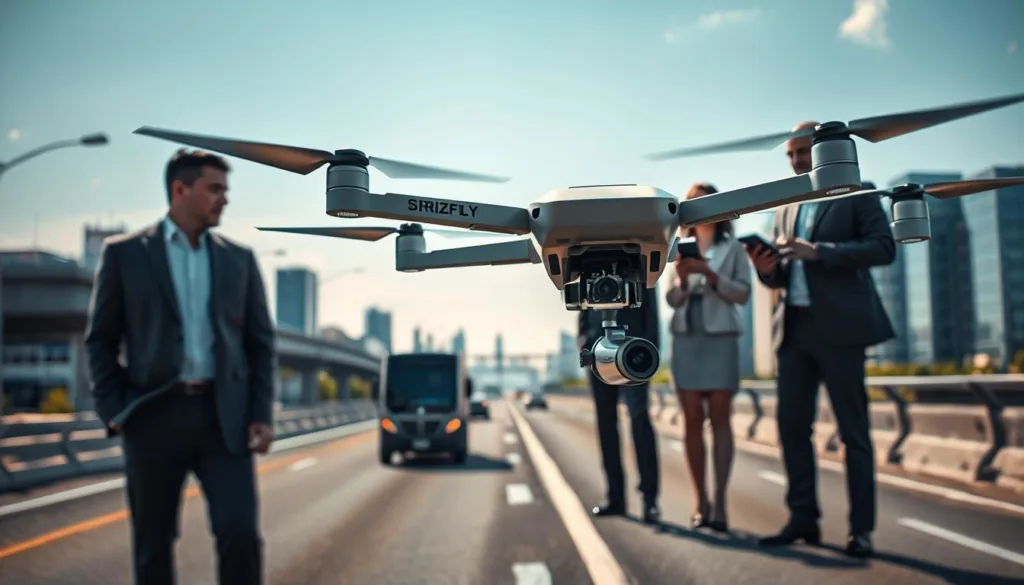
In today’s fast-paced world, ensuring the safety of our transportation infrastructure is more crucial than ever. The integration of advanced technology into maintenance practices has revolutionized how we assess and manage road conditions. By utilizing sophisticated aerial systems, agencies can now conduct thorough evaluations of infrastructure, significantly reducing the time needed for traditional assessments.
This modern approach not only enhances the efficiency of inspections but also prioritizes the safety of personnel. With the ability to cover vast areas quickly, potential hazards can be identified early, preventing minor issues from escalating into major problems. The HERON multi-purpose robotic platform exemplifies this innovation, combining drones and AI to streamline infrastructure management.
As we delve deeper into this topic, we will explore how these technological advancements are shaping the future of public works, making our roads safer for everyone.
Key Takeaways
- Advanced technology enhances safety in transportation infrastructure.
- Aerial systems reduce inspection times by up to 85%.
- Integration of drones improves maintenance workflows.
- High-quality data informs proactive safety strategies.
- Systematic monitoring helps identify hazards early.
Understanding Drone Road Inspection Simulation
As innovations in technology continue to emerge, enhancing the safety of our transportation systems becomes increasingly important. One effective method is utilizing unmanned aerial vehicles for inspections. This technique allows for the creation of virtual models that predict how infrastructure will perform under various stress conditions.
These advanced drones collect precise data, enabling engineers to simulate traffic loads and environmental impacts on surfaces without physical intervention. By clearly defining the scope of these inspections, agencies can focus on high-risk areas, ensuring that safety protocols are strictly followed during every flight.
The simulation process creates a digital environment where potential failures can be identified early. This significantly improves the overall safety of the road network. As a result, inspections are not just reactive; they are part of a broader strategy aimed at maintaining infrastructure integrity through predictive analysis.
The Evolution of Drone Inspections in Infrastructure
The landscape of infrastructure monitoring has transformed dramatically over the years. This shift began with the introduction of advanced technologies that replaced manual, time-consuming surveys. The HERON multi-purpose robotic platform stands out as a significant milestone, integrating drones with AI and robotics.
Previously, inspections required human crews to work near live traffic, which posed safety risks. Today, drones facilitate safer data collection from a distance. This evolution has drastically reduced the time needed for maintenance planning, allowing for more frequent and accurate assessments of road health.
As technology progressed, capturing detailed infrastructure data became essential for public works departments across the United States. Now, modern inspections utilize automated systems to ensure that every aspect of the network is monitored with high precision and reliability.
Key Components and Sensors of Modern Drone Inspections
Utilizing state-of-the-art technology is essential for maintaining safe transportation structures. Modern aerial systems are equipped with advanced tools that significantly enhance the quality of inspections.
High-resolution cameras and thermal sensors play a crucial role in this process. They provide detailed imagery that allows engineers to assess various materials and structures effectively.
Additionally, the integration of LiDAR and GPS systems enables the creation of accurate 3D models. These models are vital for mapping terrain and identifying surface defects.
Here are some key features of modern inspection equipment:
- High-resolution cameras capture clear images for thorough analysis.
- Thermal sensors detect temperature variations, revealing hidden issues.
- LiDAR technology creates precise 3D maps of structures.
- GPS systems ensure accurate positioning during flights.
- The Skydio X10 features 360-degree obstacle avoidance for safe navigation.
- The DJI Matrice 350 RTK supports multiple sensors for tailored inspections.
| Equipment | Key Features | Applications |
|---|---|---|
| Skydio X10 | 360-degree obstacle avoidance | Close proximity inspections |
| DJI Matrice 350 RTK | Supports advanced payloads | High-precision data capture |
| LiDAR Systems | 3D modeling capabilities | Mapping and terrain analysis |
Planning and Executing Effective Inspection Simulations
In a world where technology evolves swiftly, ensuring the integrity of our transportation infrastructure is paramount. Effective mission planning is crucial for successful inspections. It requires careful preparation to mitigate risks and ensure operational safety.
Operators must set clear objectives for the inspections. This includes selecting the right equipment and software to gather essential data about the infrastructure. During execution, drones follow pre-programmed flight paths, covering large areas to ensure that no critical section is overlooked.
Post-processing strategies play a vital role as well. Using specialized software, agencies can analyze the collected data, identifying maintenance needs and potential structural issues. Proper planning reduces time spent on-site, enabling efficient data collection and quicker responses for maintenance teams.
By integrating these planning steps, agencies contribute to a safer and more resilient infrastructure network.
Benefits and Challenges of Drone Road Inspection Simulation
The advancement of technology in infrastructure management is paving the way for safer transportation systems. Aerial systems provide numerous benefits that enhance the efficiency and safety of inspections.
Key advantages include:
- Significant safety improvements by minimizing worker exposure to hazardous traffic conditions.
- Increased efficiency, with inspection times reduced by up to 85% compared to traditional methods.
- High-quality data that aids in prioritizing maintenance based on actual road conditions.
- Cost-effectiveness through streamlined operations and better resource allocation.
However, there are also challenges to consider. Weather conditions can impact drone performance, and agencies must navigate these limitations. Despite these issues, the ability to monitor large areas quickly makes aerial systems indispensable for public works departments.
Continuous advancements in drone technology will further address these challenges, enhancing the reliability and safety of inspections.
Integrating AI and Digital Twins for Proactive Maintenance
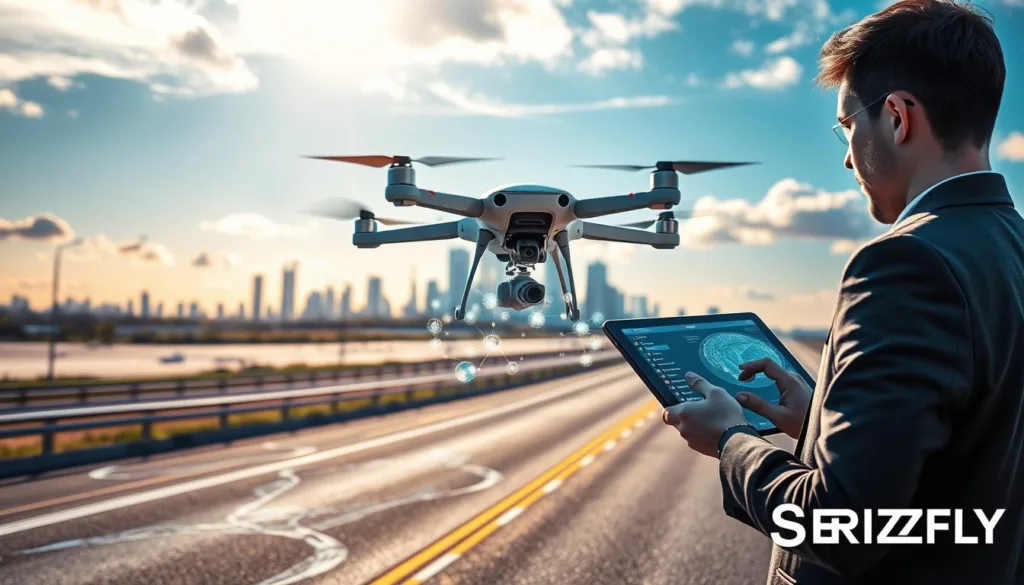
As technology advances, the need for effective maintenance strategies becomes more pressing. By integrating AI with aerial data, agencies can automate defect detection. This proactive approach helps address small issues before they escalate into significant failures.
Digital twins act as virtual models of physical structures. They allow engineers to simulate various conditions and evaluate repair strategies safely. The HERON project exemplifies this innovation, showcasing how AI systems analyze aerial imagery to classify pavement wear.
Through these advanced systems, agencies can predict when and where repairs are necessary. This not only optimizes resource use but also enhances the overall safety of infrastructure. The digital models provide a comprehensive view of road conditions, ensuring maintenance teams have accurate information at their fingertips.
Ultimately, proactive maintenance strategies supported by AI and digital twins are essential for extending the lifespan of critical transportation assets.
| Feature | Description | Benefits |
|---|---|---|
| Automated Detection | AI identifies pavement defects using drone data. | Reduces manual inspections and increases accuracy. |
| Digital Twins | Virtual models simulate various infrastructure conditions. | Helps test repair strategies safely and efficiently. |
| Predictive Analytics | AI predicts when repairs are needed. | Optimizes resource allocation and enhances safety. |
Drone road inspection simulation: Methods and Best Practices
Innovative approaches are reshaping how we monitor and maintain our transportation infrastructure. Effective inspections rely on advanced techniques and best practices that enhance data accuracy and operational efficiency.
Industry leaders emphasize that successful inspection processes require a combination of advanced mapping methods and rigorous best practices. Real-time monitoring tools allow operators to adjust flight paths dynamically, ensuring high-quality imagery and accurate data collection, even in variable weather conditions.
Best practices include:
- Standardizing the use of drone platforms and software for consistency across all construction and maintenance projects.
- Leveraging automation and AI-driven detection to increase the speed and accuracy of inspections.
- Integrating ground-based robotic systems with aerial platforms to provide a comprehensive view of road health.
- Ensuring that every inspection yields actionable insights for efficient maintenance.
By implementing these methods, agencies can maintain infrastructure with greater efficiency and lower overall costs.
Regulatory, Legal, and Safety Considerations
Navigating the complexities of regulations is vital for the safe use of aerial technology in infrastructure. Compliance with FAA guidelines, specifically Part 107, is mandatory for any commercial operation involving unmanned aerial vehicles in the United States.
Operators must prioritize safety by adhering to established flight regulations. This includes maintaining proper certification for all drone-related activities. Additionally, data security is a critical concern, especially with regulations like the General Data Protection Regulation (GDPR) in the EU, which sets stringent standards for protecting sensitive information.
Legal frameworks ensure that inspections are conducted ethically, respecting privacy while gathering necessary data. Regular training and adherence to regulatory updates help operators stay compliant, minimizing legal risks during their work.
By following these legal and safety protocols, organizations can build public trust and ensure the long-term viability of their drone programs.
Case Studies and Industry Applications
Technological advancements are revolutionizing how we approach infrastructure safety and maintenance. Real-world case studies highlight the effectiveness of aerial systems in monitoring and managing structures.
For instance, many construction projects have benefited from the use of these platforms, leading to significant efficiency gains. Improved safety for workers on the ground has also been a notable outcome.
Lessons learned from these scenarios emphasize the importance of selecting the right equipment and software. This ensures effective handling of complex inspection environments.
By analyzing imagery and mapping data, agencies have successfully identified structural issues before they required costly repairs. These applications show that drones are essential for proactive management, providing critical insights for road networks.
Successful implementation focuses on both the technical capabilities of the drone and the expertise needed to interpret the resulting data.
Emerging Trends and Future Directions
The future of infrastructure monitoring is set to be transformed by innovative technologies. As we look ahead, the integration of the Internet of Things (IoT) and robotics will create smarter systems for monitoring our infrastructure.
Next-generation sensors will enhance the quality of imagery, enabling the detection of microscopic issues in various structures. This advancement is crucial for maintaining safety and integrity.
Automation will also evolve, allowing drones to perform complex maintenance tasks with minimal human input. Emerging trends indicate that digital models will become dynamic, updating in real-time as data is collected during flights.
These advancements promise to reduce costs and improve efficiency in infrastructure management. Ultimately, the synergy between drones, software, and advanced imaging will redefine standards for maintenance and safety.
Practical Tips for Implementation and Maintenance Planning
To enhance the safety of our infrastructure, effective planning and implementation of technology are essential. Successful deployment of a drone program begins with selecting the right equipment. For instance, the ZenaDrone 1000 is an excellent choice for industrial inspections due to its autonomous flight capabilities and predictive maintenance features. Meanwhile, the Skydio X10 is ideal for close-range inspections in complex environments, thanks to its advanced obstacle avoidance technology.
Additionally, maintenance planning should integrate software that supports long-term asset management. This ensures that data is consistently stored and analyzed over time. Proper training for operators is also crucial. They must be equipped to handle the drone platform safely and effectively in various construction and road environments.
Here are some strategies for long-term asset management:
- Conduct regular equipment checks to ensure optimal performance.
- Implement software updates to maintain the accuracy and quality of inspection data.
- Focus on actionable insights to minimize operational risks.
- Prioritize effective planning to ensure drones are reliable tools for maintenance.
By following these practical tips, agencies can reduce the risk of operational issues and maximize their return on investment in drone technology. Effective planning ensures that drones remain a reliable part of the maintenance toolkit, supporting the safety and longevity of all infrastructure assets.
Conclusion
The way we maintain our transportation infrastructure is undergoing a significant transformation. This shift has brought forth a safer and more efficient alternative to traditional methods.
By leveraging advanced technology and AI-driven data analysis, agencies can swiftly identify and address issues with unprecedented accuracy. This integration ensures that public works departments can effectively manage critical infrastructure while minimizing risks to both workers and the public.
As we look to the future, the ongoing evolution of these technologies will play a vital role in proactive management. Investing in modern inspection methods is essential for organizations committed to long-term safety and operational excellence.
Ultimately, the combination of human expertise and advanced data creates a more resilient and reliable infrastructure for everyone.
FAQ
What is the purpose of using aerial data for inspections?
Aerial data enhances the accuracy and efficiency of inspections, allowing for detailed mapping and monitoring of infrastructure without extensive ground work.
How does automation improve inspection processes?
Automation streamlines data collection, reducing the time and costs associated with manual inspections. It also increases the quality of information gathered, leading to better insights.
What are the main benefits of using drones for infrastructure assessments?
Drones provide high-resolution imagery, improve safety by minimizing worker exposure to hazardous environments, and enable faster repairs and maintenance planning.
How do weather conditions affect aerial inspections?
Weather can impact the quality of data collected. Optimal conditions are crucial for accuracy and coverage, so planning around weather forecasts is essential.
What tools are necessary for effective data analysis post-inspection?
Effective analysis requires specialized software and systems for processing images and extracting relevant information, ensuring that all issues are identified and addressed.
Can aerial inspections help in risk management?
Yes, aerial inspections assist in identifying potential risks early, allowing for proactive maintenance and management of infrastructure to prevent costly failures.
What role does imagery play in inspections?
Imagery provides a visual representation of conditions, enabling operators to detect issues quickly and accurately, facilitating better planning and decision-making.
How do digital twins enhance maintenance strategies?
Digital twins allow for real-time monitoring and modeling of infrastructure, enabling more effective management and predictive maintenance based on actual conditions.
What are the challenges faced in implementing drone technology?
Challenges include navigating regulatory frameworks, ensuring data security, and addressing technical limitations of current equipment and software.
How can I choose the right equipment for aerial inspections?
Selecting the right equipment involves considering the specific needs of your inspections, such as the type of structures being assessed and the required sensors for data collection.