



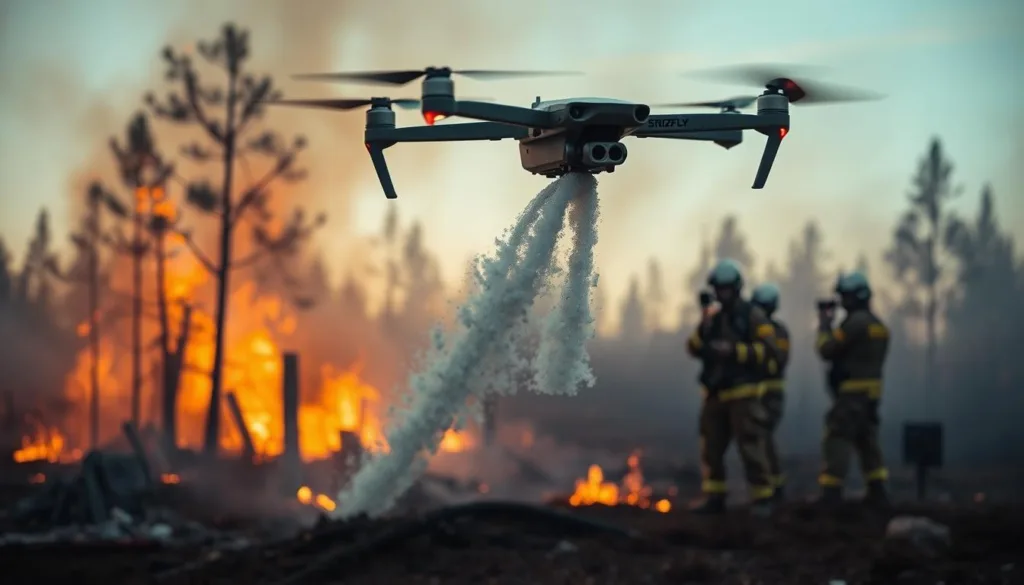
Welcome to the frontier of emergency response training. Modern tools are changing how we prepare for some of nature’s most powerful events.
First responders today face challenges that are more complex than ever. The traditional ways of preparing crews are no longer enough on their own.
Advanced technology now offers incredible new perspectives. It provides vital data and aerial views that were once out of reach. This allows for much safer and more effective preparation.
This guide will show you how these innovations are used in training scenarios. We will cover everything from the basic equipment to implementing advanced programs. The goal is to build skills that can truly save lives.
Whether you lead a department or want to learn more, you’ll find practical information here. We will explore how realistic scenarios can be created without real danger. This lets crews practice critical decisions in a controlled, authentic setting.
By the end, you will see why this type of preparation has become essential. It is shaping the future of how we respond to emergencies across the country.
Key Takeaways
- Modern training methods are crucial for tackling today’s complex emergency scenarios.
- New technology provides aerial data and perspectives that enhance safety and preparedness.
- Simulated environments allow for realistic practice without the risks of live exercises.
- This training approach helps crews improve critical decision-making skills effectively.
- Adopting these innovative programs is becoming a standard for forward-thinking departments.
- The guide covers implementation from basic concepts to advanced program setup.
- This methodology is vital for the future of emergency response nationwide.
Introduction to Drone Forest Fire Fighting Simulation
Modern emergency crews now have access to training methods that were once considered science fiction. These advanced systems blend virtual environments with real equipment operation.
What is Drone Forest Fire Fighting Simulation?
This specialized approach uses unmanned aerial vehicles to create realistic emergency scenarios. Crews can practice critical response skills in completely safe conditions. The technology replicates everything from small incidents to large-scale emergencies.
The Importance for Modern Firefighter Training
Over 500 fire departments across the United States now use these aerial tools in their operations. This makes proficiency with the technology essential for today’s responders. The training compresses months of field experience into focused sessions.
Firefighters develop decision-making skills needed when lives are on the line. They become more confident and capable from their very first day of service.
Understanding the Role of Drones in Firefighting
Advanced unmanned systems have become critical assets for modern emergency operations teams. These flying tools provide essential intelligence that was previously unavailable during crisis situations.
Technological Advances in Firefighting Drones
Today’s aerial platforms feature sophisticated sensor systems that detect heat signatures through smoke and darkness. This capability identifies hidden dangers that ground crews cannot see.
Modern equipment includes thermal imaging cameras that pinpoint hotspots within structures. These sensors reveal potential flare-ups before they spread, enhancing safety for response teams.
| Drone Model | Flight Time | Key Features | Primary Applications |
|---|---|---|---|
| DJI Matrice 350 RTK | 55 minutes | Multi-payload support | Large area monitoring |
| Skydio X10 | 45 minutes | Autonomous navigation | Challenging environments |
| Autel EVO Max 4T | 42 minutes | Thermal imaging | Structural assessment |
| Teledyne FLIR SIRAS | 40 minutes | Advanced sensors | Industrial response |
The information gathered by these systems extends beyond immediate crisis management. Recorded data supports training programs and post-incident analysis for continuous improvement.
Rugged construction allows operation in extreme conditions where human safety would be compromised. Multi-tool capability adapts each mission to specific emergency requirements.
How Drone Forest Fire Fighting Simulation Enhances Training Programs
Training programs for emergency responders have undergone a remarkable transformation with the integration of aerial technology. These innovative systems create dynamic scenarios that would be dangerous or impossible to replicate using traditional methods.
One of the greatest benefits is the ability to practice critical decision-making under pressure. Teams can rehearse resource deployment and evacuation protocols while using actual equipment they’ll operate in real emergencies. This builds confidence and competence from day one.
The safety advantages are significant. Personnel experience the complexity of major incidents without exposure to actual flames or structural risks. This approach eliminates the dangers associated with live exercises while maintaining realistic training intensity.
Programs can be repeated multiple times, allowing crews to master specific skills through repetition. A single day of aerial training exposes teams to dozens of different scenarios and conditions. This time efficiency compresses years of field experience into focused sessions.
For departments with limited budgets, these systems offer cost-effective readiness maintenance. The initial investment pays dividends through repeated use without the expenses of staging live exercises. This makes advanced preparation accessible to organizations of all sizes.
Developing Realistic Simulation Scenarios
Creating authentic training environments requires meticulous attention to environmental details and fire behavior patterns. The most effective programs mirror the unpredictable nature of actual emergency situations.
Simulating Wildfire Conditions Effectively
Advanced software now replicates how flames spread through different terrain types. Wind patterns and vegetation density influence fire intensity in these virtual environments.
Training programs can recreate specific geographical areas with accurate topography. This allows crews to practice in settings that match their actual service territories.
Integrating Real-Time Data and Sensors
Modern systems feed live information about virtual fire progression to trainees. This forces teams to adapt strategies as conditions change, just like during real incidents.
The use of actual sensor technology during training proves invaluable. Personnel practice interpreting thermal imagery to identify hotspots through smoke.
Multiple data sources combine to create comprehensive situational awareness. This approach teaches crews to synthesize information from various channels quickly.
Utilizing Advanced Sensor and Data Solutions
The true power of modern aerial response tools lies in their sophisticated sensor and data solutions. These technologies transform unmanned aircraft into intelligent platforms for emergency management.
Leveraging Thermal Imaging and Payloads
Thermal imaging is a game-changer for incident commanders. It reveals heat signatures invisible to the naked eye, spotting hidden hotspots through thick smoke.
Advanced payloads like the DJI Zenmuse H30T combine multiple capabilities. They offer thermal, zoom, and laser rangefinder functions in one unit. This provides comprehensive situational awareness from a single flight.
Illumination tools such as the CZI GL60 Plus extend operations into nighttime. They cut through darkness, supporting continuous monitoring when visibility is poor.
Data Collection for Informed Decision-Making
The information gathered by these sensors is crucial for making critical decisions. It provides objective data on fire intensity and structural integrity.
This replaces guesswork with concrete, life-saving intelligence. The data isn’t just for real-time use. It’s recorded for post-incident analysis and training improvement.
Proper training ensures personnel can correctly interpret this complex information. Understanding thermal signatures is as vital as operating the equipment itself.
Enhancing Safety Protocols and Response Strategies
Protecting personnel during emergency operations has reached new levels of effectiveness through advanced aerial surveillance capabilities. These technologies have transformed how teams approach dangerous situations.
Improving Risk Assessment with Aerial Views
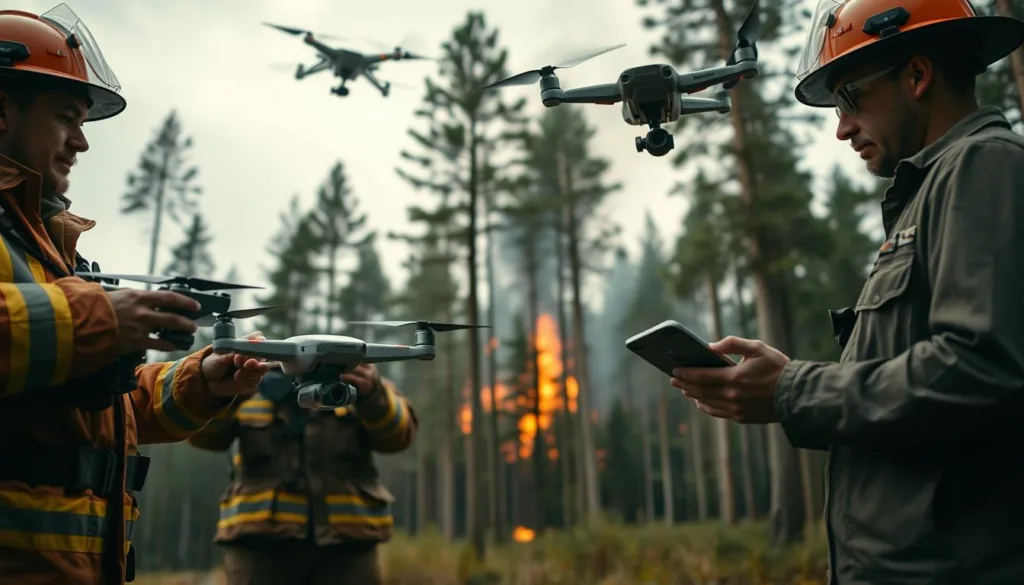
Aerial perspectives reveal hazards that ground teams cannot see. Unmanned aircraft identify unstable structures and dangerous materials from above. This critical information helps commanders make better decisions about crew deployment.
Thermal imaging detects heat concentrations that indicate potential flashover conditions. This gives advance warning to evacuate personnel from hazardous areas. The ability to monitor scenes in real-time maintains continuous safety assessment throughout operations.
Fewer responders need to enter dangerous environments for initial assessments. Unmanned systems provide comprehensive size-up information without risking human lives. This approach significantly reduces exposure to unnecessary risks.
Training simulations emphasize incorporating aerial intelligence into standard protocols. Crews develop automatic safety-first thinking patterns. This culture shift helps prevent injuries and protects firefighters during actual emergency response.
Integrating Drone Operations with Ground Crews
Effective emergency management requires perfect harmony between aerial and ground operations. When these two elements work together seamlessly, response effectiveness increases dramatically while keeping everyone safer.
Clear communication protocols form the foundation of successful integration. Pilots maintain constant contact with incident commanders, relaying critical information about changing conditions. This real-time data flow helps ground teams make better tactical decisions.
Coordinating Air and Ground Efforts Seamlessly
The groundbreaking Operation Fire Swarm 2 demonstration showcased advanced coordination systems. This event marked the first fully autonomous coordination of manned and unmanned aircraft using the BlueSkies Operational Air Mobility system.
Ground personnel benefit enormously from aerial intelligence. Thermal imagery and visual feeds help them understand situations beyond their immediate view. This information helps position equipment effectively and anticipate movement patterns.
| Coordination Method | Primary Function | Key Benefit | Implementation Level |
|---|---|---|---|
| Real-time Video Feed | Situational Awareness | Ground teams see beyond obstacles | Widely Adopted |
| Thermal Imaging | Hotspot Identification | Detects hidden dangers | Advanced Departments |
| Loudspeaker Systems | Emergency Communication | Broadcasts evacuation orders | Emerging Technology |
| Automatic Deconfliction | Airspace Management | Prevents aircraft collisions | Cutting-Edge Systems |
Modern equipment with loudspeakers adds another coordination dimension. Aerial teams can broadcast warnings or communicate with trapped civilians. This capability proves invaluable when radio systems fail.
The most effective departments treat aerial support as an integrated component rather than a separate function. This approach ensures both efforts complement each other to achieve common objectives more efficiently.
“When aerial and ground operations synchronize perfectly, we achieve response capabilities that neither could accomplish alone.”
Teams that train together develop essential communication rhythms. They learn to request specific reconnaissance and interpret aerial intelligence quickly. This mutual understanding becomes second nature during actual emergencies.
Case Studies: Success Stories and Lessons Learned
Across the nation, emergency response teams are documenting remarkable achievements with aerial technology. These real-world experiences provide valuable insights for departments considering similar programs.
Real-World Examples in Fire Departments
The Los Angeles Fire Department stands as a pioneering example. During the 2018 Woolsey incident, their unmanned aircraft tracked progression across vast terrain. This helped identify hotspots that ground crews couldn’t see.
New York City’s department demonstrated urban applications during a Brooklyn warehouse emergency. Aerial views informed critical decisions about resource deployment. They also helped establish safe evacuation routes.
The Menlo Park Fire Protection District shows versatile unmanned system use. They employed aircraft for hazardous material assessment during a chemical spill. Detailed imagery allowed planning without exposing personnel to danger.
Post-Incident Assessments and Feedback
After-action reviews using aerial footage prove invaluable for investigations. Departments document damage scenes for insurance purposes effectively. This process identifies what worked well and needs improvement.
Field experience from over 500 departments creates a wealth of knowledge. Newer programs can learn from established best practices and common pitfalls. This accelerates adoption curves significantly.
These examples consistently show that unmanned systems multiply effectiveness. They provide information that helps personnel work more safely. Whether conducting rescue operations or assessing damage, the technology proves essential.
Future Trends and Evolving Technologies in Drone Operations
The landscape of aerial emergency response is rapidly evolving with groundbreaking technological advancements. These innovations promise to make unmanned systems more autonomous and integrated into comprehensive emergency strategies.
Innovations in UAV and Simulation Technologies
One exciting development is the “second shift” concept for wildfire management. Unmanned aircraft operate during nighttime hours when conditions become too dangerous for manned aircraft. This provides continuous aerial support capabilities.
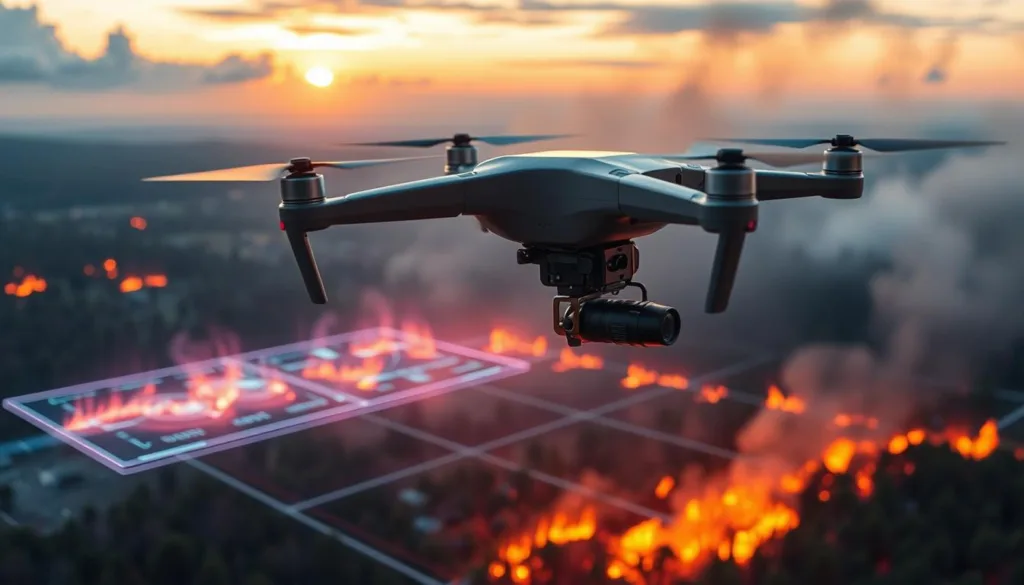
Systems like the DJI Dock 3 represent a significant leap forward. They enable remote launch and automated recharging without human intervention. Artificial intelligence powers fire detection algorithms that identify threats faster than human operators.
The Impact on Future Firefighting Strategies
Operation Fire Swarm 2 demonstrated coordinated multi-aircraft operations with sophisticated AI-driven systems. This approach allows multiple unmanned vehicles to work together as a coordinated team.
The impact on emergency strategies will be profound. Incident commanders gain access to real-time data from multiple autonomous platforms simultaneously. AI helps predict behavior and suggests optimal resource deployment for maximum effectiveness.
| Current Capability | Future Innovation | Strategic Impact |
|---|---|---|
| Manual flight operations | Fully autonomous missions | 24/7 response readiness |
| Single aircraft deployment | Coordinated swarm technology | Comprehensive area coverage |
| Limited payload options | Multi-functional delivery systems | Versatile emergency solutions |
| Visual line-of-sight operations | Satellite-integrated beyond-visual-range | Expanded operational reach |
Best Practices for Firefighting Training with Drones
Building effective training programs for aerial emergency response requires careful planning and proven methodologies. The right approach helps personnel develop skills systematically while avoiding information overload.
Successful programs follow a logical progression from basic operations to complex scenarios. This gives trainees time to master fundamentals before facing challenging situations.
Designing Effective Training Programs
Start with simple aircraft controls in safe environments. Gradually introduce realistic emergency scenarios as skills improve. This structured approach builds confidence and competence.
Organizations like DRONERESPONDERS provide valuable support for departments developing curriculum. They connect teams with resources and best practices from across the industry.
Continuous Simulation Improvements
Regular updates keep training content current with real-world lessons. Feedback from personnel helps identify which exercises provide the most value.
Performance tracking ensures programs achieve their objectives. Metrics like deployment speed and data interpretation accuracy measure effectiveness over time.
The best initiatives include ongoing refresher courses and advanced sessions. This continuous learning approach maintains peak readiness for all team members.
Overcoming Challenges in Simulation Training
While unmanned systems offer incredible capabilities, they also present unique operational challenges. Training programs must prepare personnel for these real-world limitations.
Addressing Technological and Operational Limitations
Weather represents a major constraint for aerial operations. High winds and extreme temperatures can ground equipment or reduce effectiveness. Training must include decision-making about safe deployment conditions.
Battery life continues to limit operational time. Modern systems like the DJI Matrice 4 feature hot-swappable batteries to extend missions. Proper training includes battery management strategies.
Regulatory restrictions complicate operations. FAA rules govern flight over crowds and coordination with manned aircraft. Pilots need thorough understanding of airspace regulations.
| Challenge | Impact | Training Solution |
|---|---|---|
| Weather Conditions | Limited deployment options | Decision-making simulations |
| Battery Limitations | Short operational windows | Mission planning exercises |
| Technical Malfunctions | Loss of control | Emergency procedure drills |
| Regulatory Restrictions | Operational constraints | Regulatory compliance training |
Technical failures are inevitable with complex systems. Training should simulate GPS failures and communication loss. This teaches pilots to maintain control in degraded situations.
Environmental factors like smoke density affect equipment performance. Simulating these challenging conditions prepares teams for real emergency situations. Addressing limitations creates realistic expectations and more adaptable operators.
Conclusion
As we conclude our exploration of modern emergency training, it’s clear that aerial technology has become indispensable for protecting communities. These advanced systems provide critical advantages that traditional methods cannot match.
Over 500 departments across the United States now rely on unmanned aircraft for safer, more effective operations. Platforms like the DJI Matrice series offer extended flight times and comprehensive sensor packages. This technology helps identify risks and support crucial decisions during emergencies.
The future promises even greater capabilities with autonomous systems and AI-powered detection. Training through realistic scenarios builds confidence without exposing personnel to unnecessary danger.
For any department considering these tools, the message is clear: mastering aerial technology is essential for modern emergency response. It represents a fundamental shift toward smarter, safer protection for both responders and the public they serve.
FAQ
What is a drone forest fire fighting simulation?
It’s a specialized training program that uses virtual environments to prepare firefighters and pilots for managing wildfires with unmanned aerial vehicles. This simulation replicates real-world conditions, allowing teams to practice without the risk of an actual blaze.
How do these training programs improve safety for ground crews?
By providing an aerial view of the scene, the technology helps identify hotspots and changing weather patterns. This information allows commanders to make smarter decisions, keeping rescue personnel out of high-risk areas and enhancing overall response safety.
What kind of data can firefighting drones collect during operations?
Equipped with advanced sensors like thermal imaging cameras, these UAVs gather critical data on fire spread, fuel loads, and structural damage. This real-time intelligence is vital for strategic planning and helps minimize the impact of wildfires.
Can drone systems like the DJI Matrice be integrated with existing fire department procedures?
Absolutely. Modern solutions are designed for seamless deployment alongside traditional firefighting methods. Proper training ensures that aerial support from platforms like the DJI Matrice works in harmony with ground crews for a coordinated effort.
How quickly can a drone be deployed to assist in a wildfire situation?
In many situations, a UAV can be in the air within minutes of arrival. This rapid response provides immediate situational awareness, which is crucial during the early stages of a fire for effective containment and rescue operations.
What is the future of this technology in emergency response?
The future looks promising, with continuous innovations in detection systems and autonomous performance. These evolving technologies will further enhance strategic decisions and improve outcomes for fire departments worldwide.