



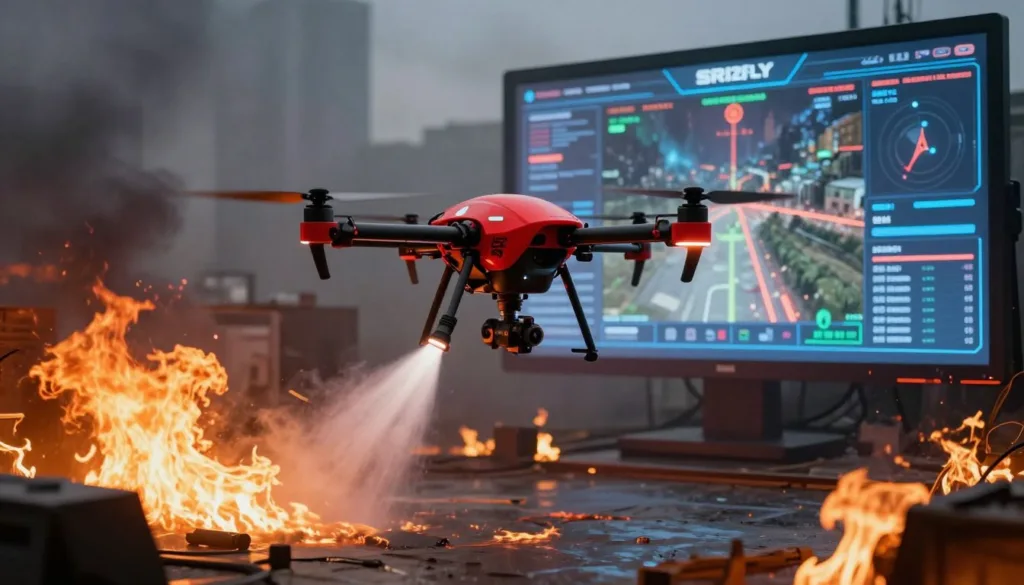
SRIZFLY delivers a modern training solution that helps fire departments modernize response and safety. Our platform blends realistic scenarios with clear instruction. We focus on practical skills: communication, rescue tactics, and equipment handling.
The NFPA reported that more than 60,000 first responders were injured in the line of duty in 2021. That fact drives our mission: lower risks and shorten response time. We design tools so teams train smarter and stay safer.
Our program offers video lessons, interactive exercises, and a predictable training path. This resource improves team coordination and boosts confidence during every incident. Departments gain a reliable service that fits real needs.
Key Takeaways
- SRIZFLY provides a focused training solution for modern fire response.
- Programs reduce risk and improve communication during emergencies.
- Video and interactive tools build rescue and safety skills.
- Adoption helps departments shorten response time and enhance protection.
- We offer a practical, data-driven resource to prepare teams for real incidents.
The Evolution of Firefighter Training
Today’s fire training blends hands-on practice with digital tracking to measure real performance. Modern tools let instructors record response times and skill accuracy. That data guides focused coaching and faster skill gains.
In Baton Rouge, a fire department trained over 200 people on extinguisher use in six weeks using modern props. This result shows how updated methods speed learning and improve safety. We see more departments adopt advanced approaches to prepare all firefighters for current hazards.
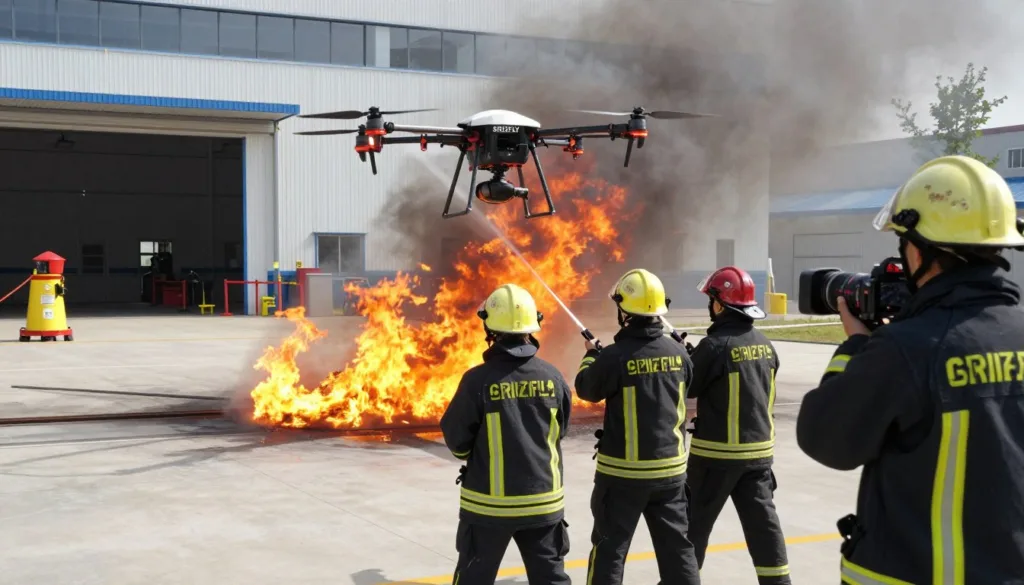
- From burn pans to metrics: training moved from basic live burns to systems that track performance.
- Better readiness: departments adopting modern tools report measurable gains in response and confidence.
- Scalable programs: digital methods make consistent fire training possible across shifts and locations.
We believe integrating digital tools creates a predictable, measurable program that raises safety and efficiency across the whole department.
Understanding Firefighter Drone Firefighting Simulation Software
Modern virtual trainers let crews rehearse high-risk incidents without exposing teams to real hazards. This section explains core functionality and the practical benefits for responders.
Core Functionality
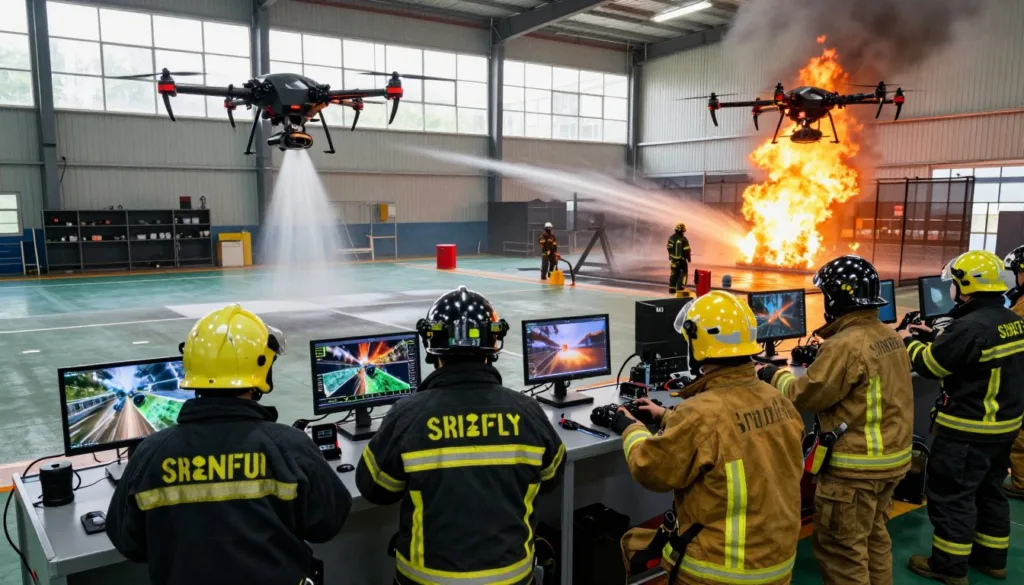
Libraries of incidents: Access virtual scenarios that cover smoke, fumes, and hazmat events from providers like Digital Combustion Fire Studio.
Interactive lessons: Video and information modules let teams replay complex scenes and review performance metrics.
Benefits for Responders
We help departments build skills faster and with lower risk. The system supports targeted training for rescue, containment, and safe response.
Support for departments: Resources like the Fire Hero Learning Network provide vetted modules to expand courses at no extra cost.
- Practice varied scenarios in a safe environment.
- Centralized video and data for consistent fire training.
- A complete program to raise safety and readiness across teams.
Enhancing Safety Through Virtual Reality
Immersive VR gear recreates gas tank and forest blazes so teams can rehearse tough rescues in a controlled space.
Firefighter VR, developed with the German Association of Fire Departments, uses goggles to train crews on gas tank fires and wildland incidents.
Virtual reality training lets firefighters face high-risk scenarios without actual flames. This reduces injury risk and speeds skill retention.
- Realistic simulator fidelity: complex environments mimic smoke, heat cues, and spread patterns.
- Focused rescue drills: repeatable tasks build decision-making under pressure.
- Accessible pricing: plans start at €199/month for volunteer brigades up to 25 responders.
| Feature | Benefit | Use Case |
|---|---|---|
| Goggle-based VR | Safe, immersive practice | Gas tank and forest blaze drills |
| Repeatable scenarios | Faster skill mastery | Rescue and command exercises |
| Affordability | Scales for volunteer units | Small departments onboarding |
We prioritize your team’s safety by delivering tools that sharpen tactics and readiness. Integrating VR into daily training ensures every member is prepared for the most challenging firefighting tasks.
Key Features to Look for in Simulation Tools
Choose tools that let trainers build courses fast and adapt drills to real risks in your district. A clear set of capabilities keeps your program practical and reliable.
Course Creation Tools
Custom course builders let managers assemble lesson plans, assign modules, and track completion. FireRescue1 Academy offers a custom course builder that schedules live drills and logs certifications.
Scenario Customization
Pick a system that supports tailored scenarios. You want scenarios that reflect local hazards and varied incident types. That focus trains crews for real events and builds key skills.
Mobile Accessibility
Mobile access saves time by letting firefighters review video and information on the go. SafetyCulture—rated 4.6/5 on Capterra—proves mobile tools help teams run checks and complete training from the field.
- Prioritize course builders and scenario editors.
- Require mobile playback of video modules and crew notes.
- Choose platforms that deliver measurable safety and training gains.
Reducing Operational Costs for Fire Departments
Operational savings start when teams shift from costly live exercises to efficient, in-house programs. One department cut over $1,000 a year by using LION systems for internal training.
We provide a ready-to-run case that includes all necessary equipment for a fast start. That lowers setup time and reduces reliance on outside contractors.
By keeping training internal, departments save time and protect core equipment for real incidents. This allows budgets to support upgrades and staff needs.
“Switching to internal exercises helped us reallocate funds to critical gear and community outreach.”
- Reduce the number of expensive live-fire drills.
- Run regular in-house training so your equipment stays ready.
- Reallocate funds to urgent needs within the department.
- Maintain top standards of safety for all firefighters.
- Streamline the training program to improve response readiness.
Our system and service help departments lower costs while keeping training effective and predictable.
Improving Decision Making in Complex Environments
Complex incidents demand split-second choices from crews working amid smoke and shifting hazards.
Handling Hazardous Materials
We train teams to recognize contamination, manage explosions, and act in smoke-filled zones. Digital Combustion Fire Studio supports realistic hazardous material scenarios used in our courses.
Quick decisions reduce harm. Our simulator gives first responders repeated exposure to risky situations. That builds muscle memory and clearer communication on scene.
- Train for hazardous material incidents and contamination control.
- Practice rescue and coordinated response under pressure.
- Test varied scenarios so departments face the most dangerous fires with confidence.
| Capability | Benefit | Use Case |
|---|---|---|
| Hazardous material runs | Faster, safer containment | Tank leaks and chemical spills |
| Explosive event drills | Improved triage decisions | Industrial blast response |
| Smoke and visibility training | Better navigation and rescue | Structure fire search and rescue |
We focus on tools that help your team make the right decisions. That protects the public and keeps your firefighters safer during every incident.
Integrating Digital Solutions into Daily Drills
Scheduling brief, tech-enabled drills each shift makes safety habits stick.
We work with tools that let captains assign drills and add sessions to the calendar. SafetyCulture-style scheduling reduces operational disruption and keeps the crew cohesive.
Regular integration ensures every person stays current with safety protocols. Short, repeatable drills make complex tasks familiar. That improves response in any emergency while keeping daily duties on track.
Our approach treats digital lessons as part of the routine. Leaders can track completion, log results, and spot gaps fast. This creates a reliable training rhythm and supports a consistent program across shifts.
- Integrating digital tools ensures firefighters practice key firefighting techniques.
- Schedule drills to fit your daily routine and minimize downtime.
- Track and document every emergency drill to raise readiness.
- We provide support to embed these methods into daily operations.
Managing Assets and Equipment Readiness
Knowing the status of each tool and piece of equipment prevents surprises during drills and real incidents.
We use inspection checklists and inventory tracking—like SafetyCulture features—to keep gear certified and on hand. This approach makes the next training session predictable and reliable.
Our system logs inspections, flags maintenance needs, and records replacements. That visibility cuts downtime and protects budgets.
- Track assets so crews have the right items for fire response and routine training.
- Schedule inspections to meet standards and reduce unexpected failures.
- Use clear records to speed repairs and keep inventory lean.
We help you manage resources efficiently so your team can focus on protecting the community. Reliable equipment and steady readiness improve response and build confidence across every shift.
Supporting First Responders with Advanced Analytics
Real-time metrics let managers spot gaps in readiness before an emergency occurs. We link drill results, skill checks, and course completion into one clear view.
SafetyCulture-style tracking allows leaders to rate program effectiveness and follow individual progress. That data shows where additional training will have the biggest impact.
Our analytics deliver features that evaluate core skills and log outcomes after each session. You get dashboards, trend reports, and exportable records to support accreditation and budgeting.
- Track trainee progress and identify weak points fast.
- Evaluate firefighters’ skills with objective, repeatable measures.
- Use data to make decisions that improve safety and rescue performance.
We provide ongoing support so your department uses analytics to sharpen readiness. This service turns raw data into a practical program that keeps first responders safer on every call.
Overcoming Challenges in Modern Firefighting
Departments face rising complexity: limited budgets, evolving hazards, and higher public expectations. These pressures make consistent fire training harder to sustain.
We provide a targeted program that addresses those gaps. Our service helps fire departments run realistic drills without costly live burns. That keeps crews safer and improves emergency response across shifts.
Free, vetted modules from the Fire Hero Learning Network reduce curriculum costs and expand course options. Combined with our tools, these resources give firefighters the skills to handle varied incidents and complex situations.
- Train smarter: focused exercises sharpen rescue and communication under pressure.
- Reduce cost: lower reliance on outside vendors and expensive props.
- Stay ready: repeated practice improves fire safety and response to real fires.
We stand with first responders by delivering practical solutions that strengthen fire protection and prepare teams for every emergency. Contact us to learn how this program fits your department’s needs.
Selecting the Right Software for Your Team
Start by mapping your department’s biggest training gaps to the system features that close them.
List core features: course creators, scenario simulators, mobile access, and clear video and information libraries. These are the building blocks of a reliable program.
Match features to daily needs. A small fire department may value mobile playback and quick course edits. Larger departments often need analytics and multi-shift scheduling.
Consider time and budget: the right solution saves time and reduces outside vendor costs over the number of training cycles you run each year.
- Evaluate how a tool supports routine drills and instructor control.
- Choose systems that deliver consistent video and information for every crew.
- Pick a solution that scales with your teams and long-term rescue goals.
We guide departments through decisions and offer a risk-free trial so your team can validate fit before committing. Your success drives our recommendations.
Conclusion
Smart investments in training tech turn rehearsals into repeatable, evidence-based improvements.
In conclusion, implementing advanced simulation software is essential for modern departments aiming to boost on-scene response. Prioritizing high-quality instruction reduces errors and strengthens fire protection across every shift.
By focusing on realistic drills and clear metrics, teams gain confidence and faster skill growth in real incidents. We encourage you to explore our solutions and test the tools risk-free with our 10-day trial.
Investing now will pay dividends in effectiveness and efficiency. Thank you for your commitment to excellence and for protecting your community every day.
FAQ
What is SRIZFLY’s system for firefighter drone firefighting simulation software?
SRIZFLY delivers a portable training platform that combines realistic virtual scenarios, mission planning, and analytics to help fire departments and first responders practice aerial support, incident assessment, and coordinated response safely and efficiently.
How does the platform improve training efficiency?
The simulator reduces real-world drill time by allowing repeated exercises in varied environments. Teams can run multiple scenarios back-to-back, measure performance with data dashboards, and focus on weak points—cutting overall training hours while improving readiness.
What core functionality should teams expect?
Expect scenario libraries, command-and-control interfaces, customizable mission parameters, multi-team collaboration, and post-exercise analytics. The system supports realistic sensor feeds and replicates common incident types encountered by urban and wildland teams.
How does the solution benefit first responders and fire departments?
It enhances situational awareness, decision-making, and coordination under stress. Departments gain consistent training standards, safer hands-on practice, and measurable outcomes that support continuous improvement and compliance requirements.
Can scenarios be customized for local risks and infrastructure?
Yes. The course creation tools let instructors model specific buildings, industrial sites, and terrain. You can adjust weather, visibility, fuel loads, and casualty placement to reflect local hazards and training objectives.
Is the platform usable on mobile devices during field exercises?
The system includes mobile access for on-site briefing, live telemetry viewing, and instant feedback. This keeps command teams connected and enables just-in-time coaching during drills without needing a full control room.
How does virtual reality enhance safety in training?
VR enables immersive, high-risk scenario practice without exposing crews to flames, toxic smoke, or structural collapse. Trainees experience realistic sensory cues while instructors retain control to pause or modify risk levels instantly.
Does the software support hazardous materials and rescue scenarios?
Yes. The platform includes specialized modules for handling hazardous materials, confined-space rescue, and technical search operations, allowing teams to practice containment, PPE protocols, and triage workflows virtually.
How does SRIZFLY help reduce operational costs?
By lowering the need for live burns, fuel, and wear on equipment, departments save on consumables and maintenance. Data-driven training also targets skill gaps, reducing overtime and repeat drills over time.
What analytics and reporting features are available?
Built-in dashboards track response times, task completion, communication logs, and equipment use. Instructors get exportable reports for accreditation, budget justification, and after-action reviews.
How does the platform support decision making in complex incidents?
It simulates multi-unit coordination, dynamic risk factors, and evolving incident timelines. Teams practice prioritization, resource allocation, and adaptive tactics—improving on-scene judgments during real emergencies.
Can the software integrate with existing department systems and equipment?
The solution offers APIs and standard data formats to connect with incident management systems, asset registers, and common telemetry feeds—enabling seamless integration into daily operations and training records.
What measures ensure equipment and asset readiness?
Asset management modules track gear status, maintenance schedules, and operational availability. Training scenarios can include equipment checks and deployment drills to reinforce inspection routines.
How does the platform support multi-agency exercises?
It enables cross-agency scenarios with role-based access, unified communication channels, and shared scenario files—facilitating coordinated drills with police, EMS, and public works for whole-of-community resilience.
What are common challenges when adopting this type of solution?
Typical hurdles include change management, aligning training curricula, and ensuring hardware compatibility. SRIZFLY provides onboarding, instructor workshops, and technical support to ease adoption and scale use.
How do we choose the right package for our team?
Assess your training objectives, incident types, fleet size, and budget. SRIZFLY offers modular licensing—pick modules for urban search, hazmat, or command training and scale as needs grow. Trial access helps validate fit before purchase.
Are there case studies or evidence of effectiveness?
Yes. Departments using SRIZFLY report measurable improvements in response times and coordination. We provide anonymized case studies showing gains in training efficiency, safety, and decision accuracy to support procurement decisions.
Is technical support and instructor training included?
SRIZFLY provides onboarding, instructor certification courses, and ongoing technical support. Customers receive documentation, scenario libraries, and optional on-site training to maximize program success.
What trial or demo options are available?
We offer a 10-day free trial so teams can evaluate the platform risk-free. The trial includes core modules, sample scenarios, and analytics access to demonstrate operational value.
How secure is data collected during exercises?
The platform follows industry-standard encryption and access controls. Data governance features let administrators manage permissions, retention policies, and secure exports for audits and reporting.
Who should I contact to learn more or request a demo?
Contact SRIZFLY’s sales or training team via the official website to schedule a live demo, request pricing, or arrange a pilot tailored to your department’s needs. We guide customers from evaluation to full deployment.