




In today’s fast-paced world, the role of drones has expanded significantly. They are no longer just tools for photography or delivery. Drones are now vital in various sectors, including public safety and emergency response. As the industry evolves, the demand for effective drone training has become essential.
Platforms like SIMNET are at the forefront, offering cloud-native solutions that enhance the capabilities of drone developers and educators. This technology allows teams to innovate rapidly and improve their operational efficiency. Moreover, it provides a safe environment for pilots to practice complex maneuvers without the risks associated with physical hardware.
As we explore this guide, we will uncover how advanced technology supports drone training. This will ensure that responders are well-prepared for high-stakes missions. By integrating these tools into their workflows, organizations can guarantee that their pilots are ready for unpredictable real-world scenarios.
Key Takeaways
- Modern drones play a crucial role in emergency response.
- Cloud-native platforms like SIMNET enhance innovation cycles.
- Safe virtual environments are vital for effective pilot training.
- High-fidelity simulation technology prepares teams for critical missions.
- Integrating professional tools ensures readiness for real-world challenges.
Introduction to UAV Emergency Rescue Training
The rise of drone technology is reshaping our approach to handling emergencies and disasters. As organizations increasingly rely on drones, the need for effective drone training becomes crucial. A notable example is the Trimodex 2 exercise in February 2016, where 316 participants from six countries tested the potential of drones in disaster scenarios.
Emergency response operations often require rapid deployment. This makes it essential for teams to master their equipment through rigorous and repetitive training. The use of drones in humanitarian efforts, like search and rescue, underscores the importance of standardized training.
Simulation provides a risk-free environment for operators to rehearse complex missions. These can include hurricane relief or flood damage assessment. By focusing on drone training, organizations can ensure their personnel are equipped to meet the technical demands of modern emergency operations.
- Trimodex 2 showcased drone capabilities in enhancing situational awareness.
- Rapid deployment is critical in emergency response.
- Standardized training is essential for effective humanitarian action.
- Simulation allows rehearsal of high-risk missions.
- Prepared personnel are key to successful emergency operations.
Simulation Software for UAV Emergency Rescue Training
Drones have become indispensable tools in modern emergency management. The advancement of simulation platforms like SIMNET and AirborneSIM has made it easier for teams to train effectively. These platforms combine design, flight simulation, and pilot training into a user-friendly web interface.
The SIMNET platform offers a comprehensive drone simulator. Users can experience realistic manual and autonomous flight across various global locations. Additionally, AirborneSIM allows operators to create an accurate digital twin of their aircraft. This replicates physics and sensors, providing a lifelike training experience.
This software supports realistic scenario-based learning. Pilots can practice in environments that mirror the complexities of real-world disasters. Here are some key benefits:
| Feature | Description |
|---|---|
| Realistic Flight Experience | Manual and autonomous flight simulations across diverse locations. |
| Digital Twin Creation | Accurate replication of aircraft physics and sensors. |
| Scenario-Based Learning | Practice in environments that reflect real-world challenges. |
| Ready-to-Use Courses | Access to a catalog tailored to specific UAV training needs. |
| Failsafe Testing | Evaluate procedures before actual field deployment. |
High-fidelity flight simulation ensures that the training environment remains consistent. This allows teams to develop critical skills in a safe space.
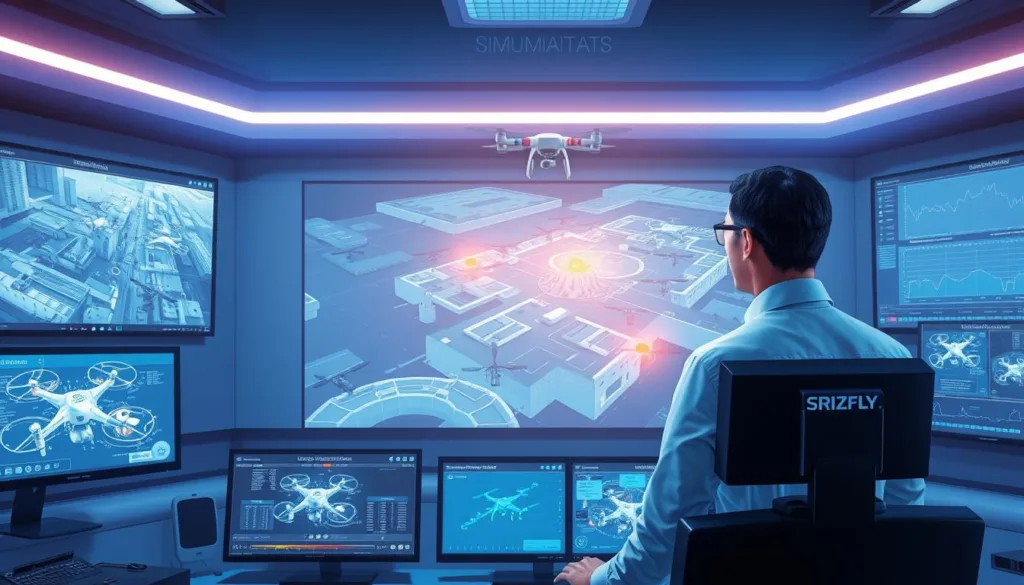
Key Features and Benefits of the Training Simulator
Drones are revolutionizing the way organizations approach critical missions. Utilizing a high-fidelity training simulator offers numerous advantages that enhance operational efficiency and safety.
First, these simulators significantly reduce the cost of complex missions. By avoiding the expenses linked to real-world flight testing, organizations can allocate resources more effectively. For instance, the setup of live video feeds during the Trimodex 2 exercise cost approximately 8,400 Euro, showcasing the financial benefits of simulation.
Moreover, virtual environments provide a safe space to practice emergency protocols. This not only enhances safety for drone pilots but also protects the public. Modern flight simulation tools enable the testing of flight control systems under various conditions, ensuring reliable drone performance during missions.
Integrating a professional drone simulator allows teams to maintain pilot proficiency through periodic retraining. These systems offer realistic feedback, helping operators refine their skills while minimizing the financial risks associated with hardware damage.

Designing Realistic Emergency Scenarios
The landscape of emergency response is evolving with the integration of drone technology. To maximize effectiveness, it is crucial to design realistic scenarios that challenge operators. This includes incorporating dynamics of weather and various terrains that could impact drone performance.
Over 3,000 students globally have used the SIMNET platform to design and test drones. This demonstrates the effectiveness of virtual environments in complex engineering learning. A professor at Embry-Riddle Aeronautical University utilizes these tools to teach students how to factor in risk factors into their drone design projects.
Incorporating Weather, Terrain, and Risk Factors
Creating authentic emergency scenarios involves integrating unpredictable weather conditions and challenging terrains. These elements test the limits of drone systems and prepare operators for real-world situations. By simulating various environments, teams can effectively prepare for the unpredictable nature of search and rescue missions.
Utilizing Digital Twins for Precise Mission Validation
Digital twins play a vital role in validating mission parameters. They ensure that the drone can handle specific risks before actual deployment. The use of a drone simulator in educational settings helps students manage the complexities of flight planning and mission execution.
Integrating Drone Technology with Advanced Simulation Tools
Innovative tools are reshaping the landscape of drone operations, making them more efficient. By integrating advanced technology, organizations can enhance their training processes and operational effectiveness. For instance, the HORYZN Team at the Technical University of Munich utilized SIMNET to visualize flight behavior and refine their drone design.
Similarly, the Flylanders Team at the New Jersey Institute of Technology relied on SIMNET to analyze flight performance and validate their aircraft design changes. These examples highlight the importance of bridging the gap between physical testing and virtual training.
Bridging the Gap Between Physical Testing and Virtual Training
Cloud-native platforms allow for seamless operations, enabling teams to access their simulation tools and performance data from anywhere in the world. This flexibility is essential for the rapid development of reliable drone systems for emergency use.
Leveraging Cloud-Native Platforms for Seamless Operations
Advanced data analysis tools provide detailed performance reporting. Organizations can track the progress of their drone missions and pilot training effectively. By leveraging these integrated systems, developers can ensure that their drone technology meets the rigorous demands of modern emergency response operations.
| Team | Use Case | Outcome |
|---|---|---|
| HORYZN Team | Visualizing flight behavior | Refined drone design |
| Flylanders Team | Analyzing flight performance | Validated design changes |
| General Use | Accessing tools remotely | Improved operational efficiency |
Case Studies: Simulation in Real-World Emergency Response
Understanding how drone technology is applied in real-life situations can greatly enhance pilot training. Case studies provide valuable insights into how simulation tools improve emergency response. For instance, Cale Griffith, Chief Pilot at AIRmarket Inc., emphasizes the importance of using SIMNET. He states that his drone pilots refine their skills in a virtual environment before operating real drones.
Another significant example is the Trimodex 2 exercise conducted in 2016. This event tested drone applications in search and rescue missions during a simulated hurricane scenario. Teams gained crucial insights into emergency response strategies, showcasing the effectiveness of these training tools.
Looking ahead, the XPONENTIAL Houston event in May 2025 will feature AirborneSIM. This will explore its impact on pilot training and BVLOS operations, highlighting the evolving landscape of drone usage. Learning from these case studies is essential for organizations aiming to enhance their training software.
Effective pilot training must include simulations that mimic real-world conditions, including wind and weather challenges. These insights underline the necessity of a professional training simulator in drone-based emergency response.
Conclusion
The adoption of advanced simulation tools is a transformative step for any organization looking to improve its drone training and emergency response capabilities. By utilizing a professional simulator, teams can ensure their pilots gain the necessary experience to handle high-stakes missions with confidence and precision.
We encourage you to schedule a free live demo of our platform to see how it can revolutionize your current training workflow today. Start your journey toward safer and more efficient drone operations by signing up for a free trial of our industry-leading software.
Contact our team to learn more about how our customized training solutions can be tailored to meet the specific needs of your response unit.
FAQ
What is the purpose of UAV emergency rescue training?
The purpose of UAV emergency rescue training is to prepare drone operators for real-world emergency situations, enhancing their skills in managing critical missions effectively and safely.
How does simulation software improve training for drone pilots?
Simulation software provides a realistic virtual environment where drone pilots can practice various scenarios, allowing them to develop their skills without the risks associated with real-life operations.
What are the key features of effective drone training simulators?
Effective drone training simulators offer high-fidelity flight simulations, realistic environments, scenario-based learning, and performance reporting tools that enhance the training experience.
Can weather conditions be simulated in training scenarios?
Yes, advanced simulation tools can incorporate various weather conditions, such as wind and rain, allowing operators to train under different environmental factors that may affect drone performance.
How does scenario-based learning benefit drone operators?
Scenario-based learning helps drone operators gain practical experience in handling emergencies, making decisions under pressure, and improving their overall operational readiness.
What is the role of digital twins in UAV training?
Digital twins provide a virtual representation of real-world systems, allowing for precise mission validation and testing in a controlled environment, which enhances the effectiveness of training.
How can organizations save costs through drone training simulations?
Organizations can save costs by using training simulations to reduce the need for physical resources, minimize the risk of equipment damage, and decrease the time spent on training new operators.
What insights can be gained from case studies in emergency response simulations?
Case studies offer valuable insights into best practices, operational challenges, and effective strategies for utilizing drones in emergency response, enhancing overall training and preparedness.