



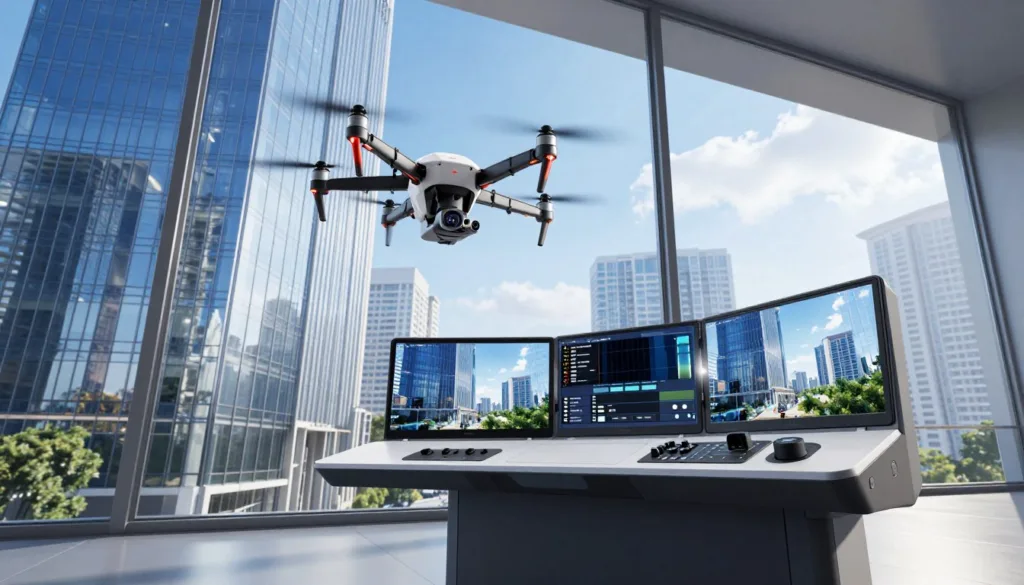
The innovative glass curtain wall cleaning drone simulator offers a controlled virtual space for modern technicians. This advanced system serves workers who need safe practice before operating live equipment near busy streets and pedestrians.
Mastering a high-rise window cleaning drone requires precision and focus. Through targeted drone operator training, users build essential skills to protect valuable glass surfaces from damage.
Key Takeaways
- Provides a safe virtual space for high-rise maintenance training.
- Protects costly building exteriors and fragile glass panels from pilot errors.
- Prepares operators for complex real-world weather and traffic conditions.
- Builds confidence before managing live equipment near busy streets.
- Enhances overall safety standards for modern commercial façade care.
Glass Curtain Wall Cleaning Drone Simulator for Safer, More Precise Training
Mastering a glass curtain wall cleaning drone requires a dedicated skills-building platform rather than immediate field deployment. Trainees must understand that simulation practice cannot replace official, supervised field qualification. Real-world operations demand certified competence and strict adherence to safety protocols.
The learning journey follows a gradual and structured path. Operators begin with basic flight controls to gain confidence. Next, they progress to stable hovering and controlled approach maneuvers.
Trainees then practice precise façade alignment. They master vertical and horizontal movement along smooth surfaces. Finally, they learn safe retreat, landing, and emergency recovery procedures.
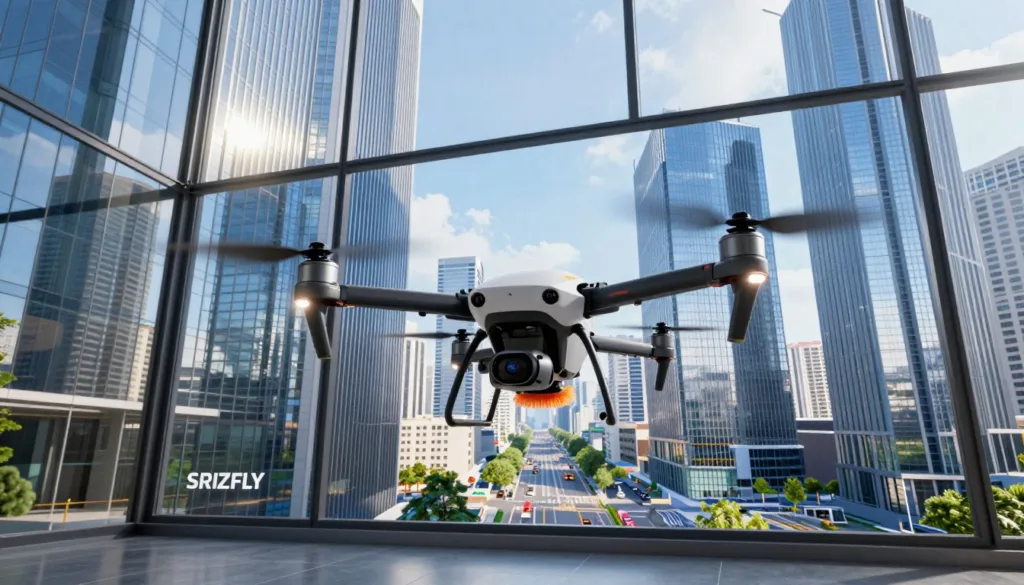
Cleaning high-rise glass exteriors exposes machines to severe environmental hazards. Strong winds can easily push a drone away from its intended path. Sudden gusts disrupt cleaning coverage and cause unstable contact or uneven spray placement.
Complex architectural features add another layer of difficulty. Corners and recessed areas alter the aircraft’s position relative to the glass surface. Mullions, ledges, signs, balconies, roof equipment, and nearby structures create serious collision risks.
Operator judgment is also tested by challenging visibility conditions. Harsh glare, deep shadows, rain, and cleaning spray obscure the view. Limited sightlines make it hard to judge distances accurately without proper training.
Realistic SRIZFLY Training Scenarios for Glass Cleaning Drone Operators
A useful SRIZFLY training program should include more than a flat glass wall. Real buildings have changing geometry. Operators may need to clean large uninterrupted panels, transition around corners, and work near mullions.
They must also learn to approach recessed sections. Maintaining control near ledges or rooftop equipment is equally critical. Every structure presents unique challenges that require adaptable piloting skills.
Operators must master decision-making skills when conditions change rapidly. A strong wind scenario tests whether the pilot can hold position. It also checks if they can reduce speed, move to a safer location, or pause the cleaning task.
A visibility scenario tests reliance on camera feeds and telemetry. It pushes the pilot to trust planned routes when visual cues fade. Meanwhile, a tight-space scenario requires slower movement. Greater awareness of nearby structures prevents costly accidents.
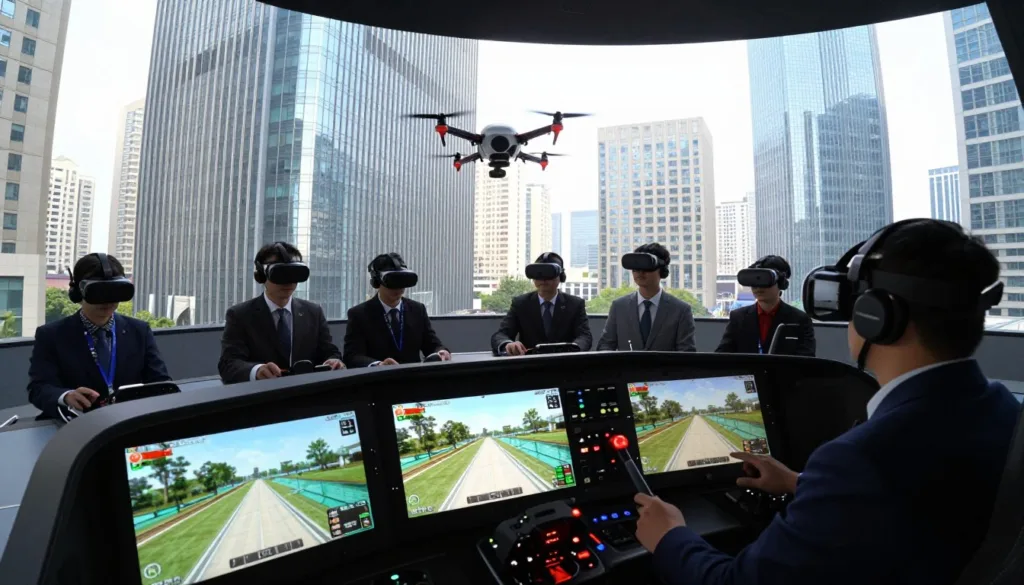
Organizations can incorporate the hardware into a complete operator-development program. The simulator supports daily onboarding and essential refresher training. Teams can use it for route rehearsal before touching real glass.
Equipment familiarization becomes safer and cheaper in a virtual space. Companies can also use targeted remediation after a performance review. This ensures that every worker meets the exact same internal standard.
Standardized testing helps reduce liability and equipment wear. When every operator trains under the same rigorous conditions, job sites remain secure. Investing in advanced simulation paves the way for flawless exterior maintenance.
Conclusion
Modern building maintenance requires advanced tools to protect workers and property. The SRIZFLY glass curtain wall cleaning drone simulator gives operators a controlled way to practice flight control, positioning, navigation, cleaning-system coordination, and emergency responses.
Realistic scenarios help teams prepare for tall façades, corners, ledges, recessed areas, wind, visibility changes, and unexpected obstacles. Crews build muscle memory without risking equipment damage or personal safety during high-rise operations.
Structured practice supports more consistent service delivery while reducing unnecessary exposure to live-work hazards during the learning process. Facility managers investing in SRIZFLY technology secure a smarter path toward efficient urban maintenance.