



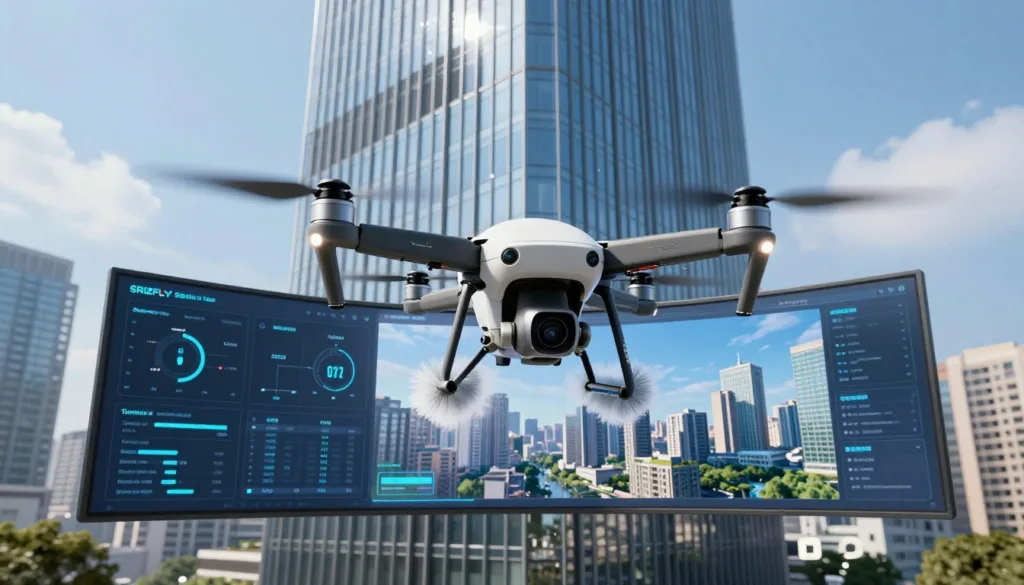
Glass curtain wall cleaning drones work close to people, traffic, and costly building exteriors. Before a live flight, technicians need a safe way to practice control, positioning, and route planning. Building glass curtain wall cleaning drone simulation software provides that controlled training space.
The SRIZFLY drone simulator helps operators prepare for glass facade cleaning in high-rise settings. They can practice holding a steady position, coordinating cleaning tools, and responding to sudden problems without risking equipment or property.
Effective high rise drone training also supports robotic facade maintenance teams. A virtual session can reveal weak points in flight plans and improve operator confidence before work begins on a real building.
Key Takeaways
- Simulation creates a safe space for drone operator practice.
- The SRIZFLY drone simulator supports flight and positioning skills.
- Operators can rehearse glass facade cleaning near complex surfaces.
- Virtual routes help teams plan high-rise maintenance work.
- Emergency drills prepare pilots for equipment and weather issues.
- Training can reduce risks to people, buildings, and cleaning drones.
Building glass curtain wall cleaning drone simulation software for safer operator training
Glass curtain wall cleaning demands steady control, clear judgment, and careful route planning. A live drone may work close to pedestrians, traffic, and costly glass panels. Simulation gives technicians a controlled space to build these skills before they enter an active work zone.
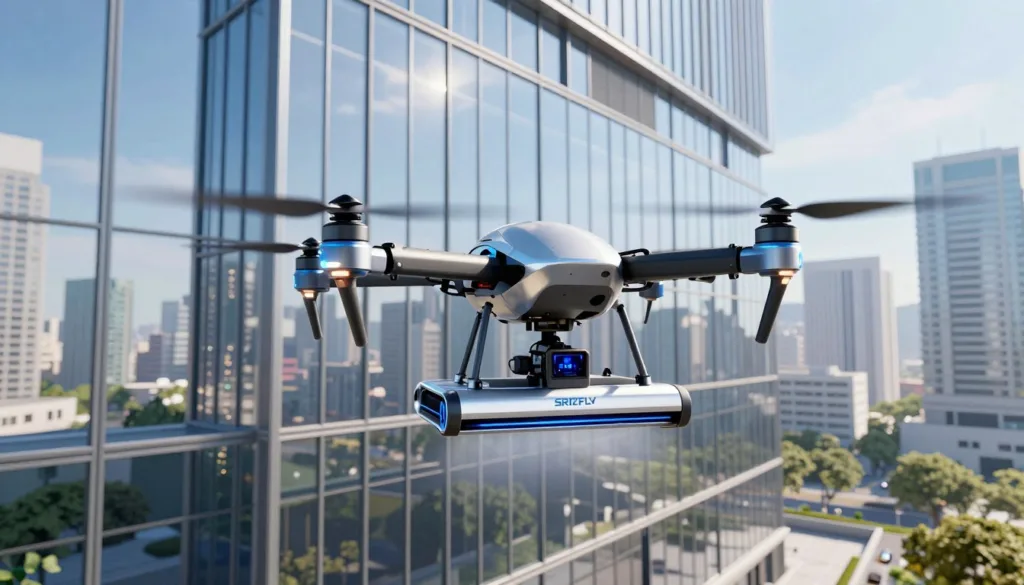
SRIZFLY simulation software can mirror key parts of a high-rise cleaning task. Trainees can set flight paths, manage speed, adjust camera views, and respond to changes near the facade. This approach makes drone operator training more practical and easier to repeat.
A curtain wall cleaning simulator lets a trainee practice the same route as many times as needed. Each session can focus on one skill, such as keeping a steady distance from the glass or aligning a cleaning tool with a marked panel. Mistakes can be reviewed without damage to the building or equipment.
Safe drone practice matters when a job site includes workers, residents, vehicles, and public walkways. Virtual exercises help operators learn how to pause, move away, and regain control when conditions change. These habits support better decisions during real cleaning work.
The training can cover more than washing glass. Operators may inspect seals, frames, anchors, and surface damage from several viewing angles. This creates a useful link between facade inspection training and drone cleaning skills.
Training managers can review flight paths, control inputs, route timing, and contact errors. These records help identify weak areas before a technician works on a live building. Teams can use the same practice data to set clear standards for commercial building maintenance.
By combining repeatable drills with realistic building layouts, simulation software supports a safer path from basic control to skilled operation. Technicians gain confidence through practice, while property teams reduce exposure to avoidable risks near valuable exteriors.
High-rise window cleaning drone simulation scenarios and realistic façade challenges
A strong high rise window cleaning drone simulation must reflect the changing shape of real buildings. A flat glass wall offers limited practice. Modern towers include sharp corners, deep recesses, ledges, balconies, and varied panel sizes. Each feature can change the drone’s path and cleaning pressure.
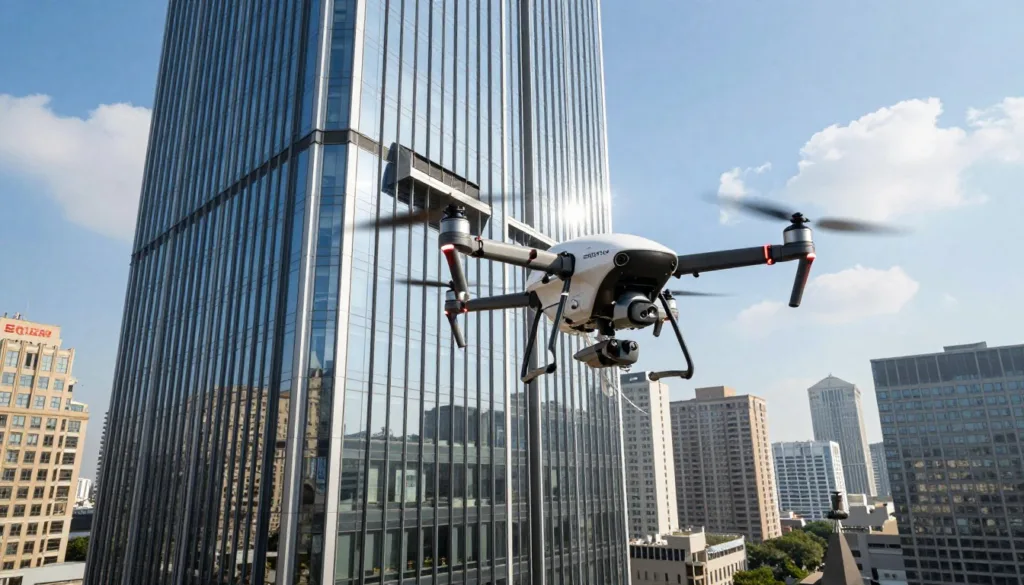
In one exercise, the drone follows a large, uninterrupted glass panel. The operator controls speed, distance, and cleaning coverage across a broad surface. The task builds steady flight habits and prepares crews for long passes on office towers, hotels, and residential buildings.
A second exercise introduces a building corner. The drone must turn without drifting into the façade or losing contact with the glass. These aerial cleaning scenarios test camera awareness, smooth control, and accurate positioning near changing angles.
Mullions create another challenge. Their raised frames can interrupt the cleaning path and affect the drone’s sensors. Operators must recognize each vertical and horizontal divider before moving across it. This practice supports safer glass facade drone cleaning on buildings with dense window grids.
Recessed sections require careful planning. A drone may need to move inward, reduce speed, and hold a stable position in a narrow space. The operator must watch for shadowed areas that can reduce camera detail. Good obstacle avoidance depends on early detection and calm control.
Wind can shift the drone when it moves past a corner or enters an open gap. Wind response training helps operators adjust position without sudden movements. Scenarios can include light gusts, crosswinds, and airflow that rebounds from nearby walls.
Realistic practice can combine several problems in one route. A mission may start on a wide panel, cross a mullion, turn around a corner, and enter a recessed bay. This format reflects the demands of glass facade drone cleaning and builds control under pressure.
SRIZFLY simulation software can repeat each route with measured changes in speed, wind, geometry, and visibility. Operators can review missed areas, unstable turns, and close approaches. This gives training teams a clear way to improve performance before live high-rise work.
How simulation software improves robotic performance, safety, and operational planning
Simulation software lets teams rehearse a full cleaning mission before equipment reaches the building. In a SRIZFLY simulator, operators can test vertical and horizontal movements across glass surfaces. This practice supports steady alignment and stronger robotic cleaning performance.
Route rehearsal gives crews a clear view of each work area. Facade route planning can reveal tight corners, recessed panels, ledges, rooftop units, and other obstacles. Operators can adjust speed, direction, and stopping points without risking damage to the drone or façade.
A realistic drone cleaning workflow links inspection, movement, rinsing, and return steps in one exercise. Operators learn how small changes in position affect coverage and water use. They can repeat difficult passes until each motion feels controlled and reliable.
Water control is part of the training process. Adjustable nozzle training helps operators set spray angles and flow rates for different glass surfaces. The right setting can improve cleaning quality while limiting runoff near entrances, vents, and sensitive rooftop equipment.
Safety drills give teams time to manage unexpected events. A simulation can recreate signal loss, wind shifts, blocked paths, or an emergency stop. These exercises build stronger habits and support safer aerial maintenance safety practices on active job sites.
Managers can review route times, missed areas, collision risks, and operator inputs after each session. These records help teams refine work plans and assign tasks with greater accuracy. Better preparation can reduce delays and create a more consistent cleaning operation.
Conclusion
Glass curtain wall maintenance demands careful planning, steady flight control, and strong emergency skills. Drone simulator software gives teams a safe space to practice these tasks before working near people, traffic, and costly glass surfaces.
The SRIZFLY drone simulator helps operators train for facade positioning, route planning, cleaning coordination, and sudden flight problems. These realistic exercises support safer high rise operations and help crews make better decisions under pressure.
As facade cleaning technology advances, virtual practice is becoming an important part of professional preparation. It can reduce training risks, improve equipment handling, and support consistent work across different building designs.
Used with field instruction and local regulations, simulation training can also support a certified drone operator qualification. By preparing before deployment, cleaning teams can protect workers, the public, and the building while delivering more reliable results.