



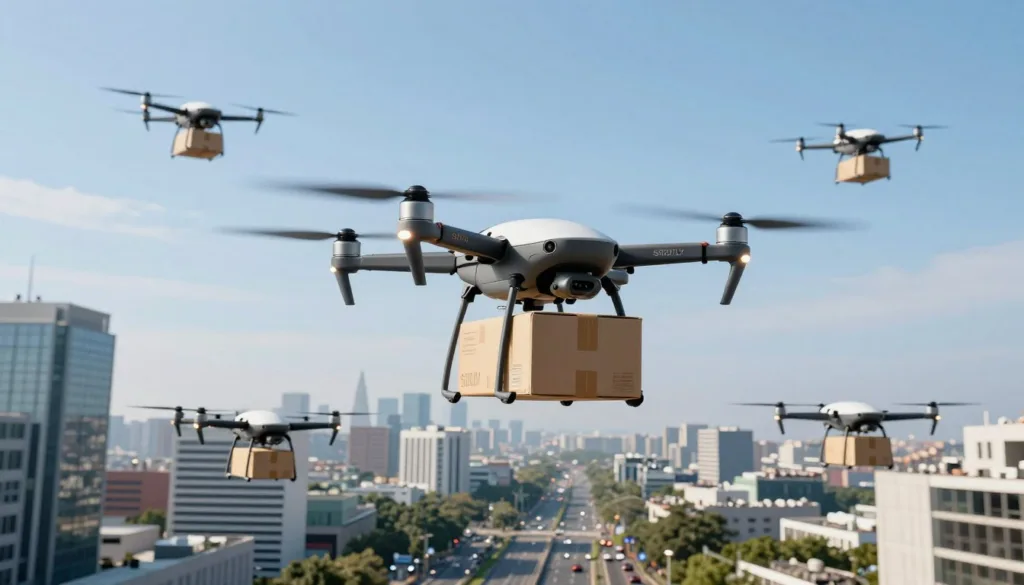
In today’s fast-paced world, the role of drones in logistics is becoming increasingly significant. These innovative machines offer a flexible and cost-effective solution for modern delivery systems, especially in smart cities. With the rise of e-commerce, businesses are seeking efficient ways to meet customer demands. This is where the integration of drone technology shines.
The SRIZFLY drone simulator provides valuable insights into how these systems can enhance logistics education. It connects theoretical learning with practical applications in the industry. Traditional teaching methods often struggle to demonstrate key aspects like path planning and scheduling effectively. However, this platform combines mathematical modeling and intelligent algorithms to create realistic delivery scenarios.
One compelling case study highlights the advantages of drone distribution in mountainous areas. Here, the efficiency of drone delivery surpassed that of conventional vehicles. This example sets the stage for understanding the broader implications of drone technology in logistics.
Key Takeaways
- Drone technology is revolutionizing delivery systems in urban environments.
- The SRIZFLY simulator bridges classroom learning with real-world industry needs.
- Traditional education often lacks practical demonstrations of drone logistics.
- Mathematical modeling and algorithms enhance logistics performance.
- Case studies show drones outperform traditional vehicles in specific scenarios.
Introduction to UAV Logistics Simulation
Drones are emerging as a vital component in the future of delivery services. This digital method allows for testing aircraft selection, delivery processes, route decisions, and scheduling before physical deployment.
Virtual environments play a crucial role in overcoming hardware expenses and space limitations. They create a realistic setting for students to engage with logistics concepts effectively.
The learning sequence is structured into five modules, guiding students from system cognition to scheme design. This includes debugging, verification, and comprehensive evaluation.
Instructors can leverage interactive scenarios to help students observe critical factors like route changes and resource utilization. This approach aligns with U.S. logistics management programs, which emphasize interdisciplinary skills in engineering and operations.
“The future of logistics education lies in integrating theory with practical application.”
The Evolution of Drone-Based Delivery Systems
As online shopping continues to flourish, the demand for faster delivery methods is reshaping the logistics industry. The shift from traditional, labor-intensive delivery systems to innovative drone solutions is evident. With the rise of e-commerce, consumers expect swift and reliable service.
Conventional vehicles often struggle in congested urban areas, where traffic delays can hinder timely deliveries. In contrast, drones can navigate aerial routes, significantly reducing delivery times. This capability is particularly valuable in emergencies, where rapid response is crucial.
Non-contact delivery methods have gained traction, especially during health crises, minimizing direct interactions between couriers and recipients. Drone delivery stations, capable of processing up to 18 deliveries per hour, exemplify the efficiency of this modern delivery system.
Current applications extend beyond commercial deliveries. Drones are being studied for transporting emergency medical supplies, enhancing search and rescue operations, and even monitoring agricultural practices.
“The integration of drones into delivery systems marks a significant advancement in logistics.”
Technology Behind Unmanned Aerial Vehicles in Logistics
The technology driving drone delivery systems is rapidly evolving, enhancing efficiency in logistics. Quadrotor designs are particularly suited for short-range delivery. Their ability to take off and land vertically allows access to confined spaces, making them ideal for urban environments.
With a thrust-to-weight ratio of about 2:1, quadrotors can hover and maneuver quickly. However, this does not eliminate the challenges posed by battery life and flight endurance. As one expert noted,
“The efficiency of quadrotors is impressive, but limitations in power still need addressing.”
Gyroscopes and accelerometers play a crucial role in maintaining stability. These devices continuously adjust the quadrotor’s attitude and position, ensuring smooth flight. The simulation architecture is built on three key foundations: trajectory generation, maneuvering control, and environmental dynamics.
Flight safety is influenced by various factors, including wind, weather conditions, and airspace restrictions. Understanding these elements is vital for practical delivery reliability.
Unmanned Aerial Vehicle (UAV) Logistics Application Simulation
The integration of drone technology is reshaping the landscape of delivery systems today. A mixed-integer programming model is essential for optimizing various factors, such as payload quantity, aircraft type, and terrain complexity. This model aims to minimize transportation costs and the number of required aerial vehicles.
In a typical case-study workflow, the process begins with assessing goods demand and selecting the appropriate aircraft. This is followed by generating three-dimensional waypoints and executing path smoothing. The final steps include delivery execution and performance evaluation.
The waypoint method utilizes three-dimensional coordinates to enhance accuracy. Techniques like duplicate-point removal and spline interpolation ensure smooth transitions during flight. With four interpolated points per meter, or one point every 0.25 meters, the path density improves for better curvature analysis.
To tackle complex routing and multi-aircraft scheduling problems, various optimization techniques are employed. These include genetic algorithms, simulated annealing, and the whale optimization algorithm. Yaw calculations based on adjacent waypoint coordinates help align the aircraft with its smoothed delivery trajectory.
Mathematical Modeling and Optimization Techniques
Mathematical models are transforming how we approach delivery challenges in today’s logistics landscape. The classical vehicle routing problem serves as a foundation for assigning customers, aircraft, launch points, and delivery sequences. By utilizing mixed-integer programming, we can convert various factors such as payload, terrain, and service requirements into measurable decision variables and constraints.
Several optimization techniques, including genetic algorithms, simulated annealing, and adaptive tabu search, are practical for addressing complex logistics decisions. These methods allow for effective planning in scenarios with multiple machines and delivery vehicles.
Truck-drone coordination is essential to minimize both driving costs and waiting-time costs. This multimachine cooperation enhances overall efficiency. Key outputs of these optimization models include route length, aircraft count, and completion time, all of which are crucial for adapting to changing demand scenarios.
Simulation Environment and System Architecture
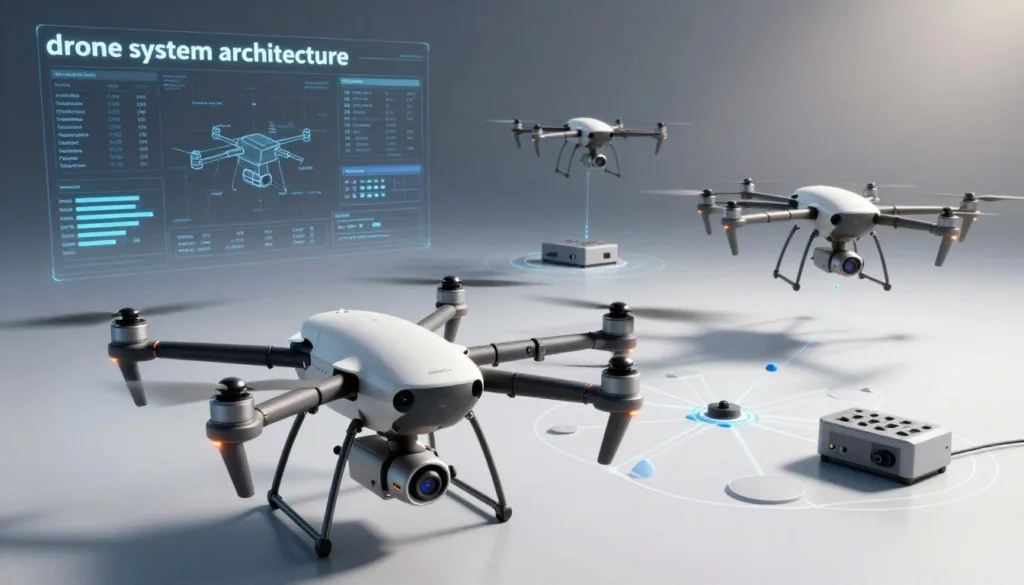
The architecture of drone systems is crucial for optimizing their performance in various delivery scenarios. This platform comprises five essential modules: system cognition, scheme design, simulation debugging, scheme verification, and comprehensive evaluation. Together, these components create a closed teaching loop that enhances learning.
Users can interactively adjust parameters such as payload, battery life, weather conditions, altitude, and fleet size during simulation runs. This flexibility allows for real-time analysis of how these factors impact delivery operations.
The system records key operational indicators, including task completion rates, transportation costs, aircraft utilization, and delivery times. This data-driven approach supports informed decision-making and improves overall efficiency.
Moreover, MOSIMTEC emphasizes the importance of modeling ground-station coverage and predictive maintenance. By analyzing these elements, users can better understand the dynamics of drone operations and their impact on delivery performance.
Visualizing and Analyzing Simulation Data
Visualizing data effectively is key to enhancing the performance of delivery systems. Dashboards can present route geometry, aircraft movement, and delivery completion in an easy-to-understand format. This accessibility helps users quickly grasp complex information.
Core comparison indicators such as task completion time, total cost, and UAV utilization rate are essential for evaluating different delivery schemes. These metrics allow for informed decisions when choosing the best operational strategies.
Cubic spline interpolation plays a significant role by creating denser trajectory points. This results in smoother visual playback and more precise flight analysis. It enhances the understanding of how different routes perform under various conditions.
Moreover, curvature analysis connects with required attitude adjustments. This helps identify sharp turns that may increase energy use or compromise safety. Side-by-side comparisons of traditional vehicles, single-aircraft plans, and cooperative fleets can reveal valuable insights.
Integration of Deep Reinforcement Learning in UAV Systems
Adaptive learning methods are crucial for enhancing decision-making in delivery systems. Deep reinforcement learning enables drones to make intelligent choices, especially when faced with unpredictable factors like demand fluctuations, wind changes, or battery status.
In this context, the agent represents the drone, while the state includes variables such as route selection, speed, altitude, and energy use. Actions are the decisions made based on these states, and rewards are given for successful deliveries.
To ensure smooth operations, actual-state feedback is continuously compared with desired-state information. This process allows for precise adjustments to motor-speed commands, ensuring the aircraft maintains stability during flight.
Unlike fixed optimization rules, learned decisions provide flexibility. This adaptability is vital when real-world conditions differ from initial training scenarios.
For optimal results, simulation-based training is recommended before deployment. This allows researchers to test various uncertain conditions without risking aircraft, cargo, or customer safety.
Impact on Modern Logistics Operations in the United States
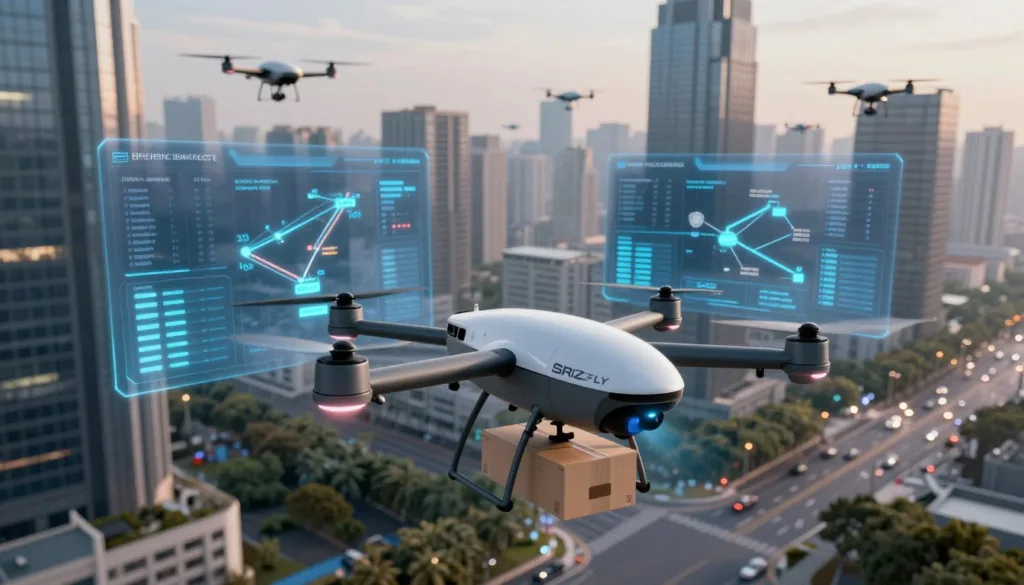
Across the U.S., businesses are discovering new efficiencies through the use of drone systems. Retailers and logistics providers can leverage these technologies for various purposes. This includes congested urban deliveries, rural access, and emergency supply transport.
Before expanding fleets, several factors must be assessed. Battery life, payload capacity, and flight time are crucial considerations. Additionally, maintenance, data handling, and disaster recovery strategies must be evaluated.
When comparing aerial delivery to electric ground transportation, it’s important to note that emissions reductions primarily stem from electrification. This highlights the need for a balanced approach to sustainability.
Simulation tools can help U.S. operators test demand and fleet capacity effectively. They also aid in determining ground-station placement and coverage. This is particularly relevant in mountainous areas, where traditional delivery methods may be less effective.
“The future of delivery lies in embracing innovative technologies.”
Conclusion
The evolving landscape of delivery services is increasingly being shaped by drone technology. The integration of these systems offers a bridge between theoretical concepts and practical execution.
This five-module platform supports a comprehensive learning journey, guiding users from understanding core principles to implementing effective delivery strategies. Techniques like spline-based trajectory generation enhance flight smoothness, while real-time sensor feedback ensures safer operations.
Moreover, mixed-integer programming and advanced algorithms provide measurable methods to reduce costs and improve efficiency. The addition of adaptive decision-making through reinforcement learning allows for flexibility in unpredictable environments.
Ultimately, the SRIZFLY drone simulator empowers users to evaluate logistics strategies effectively before making significant investments. It is a crucial step toward achieving safer and more efficient delivery systems.