



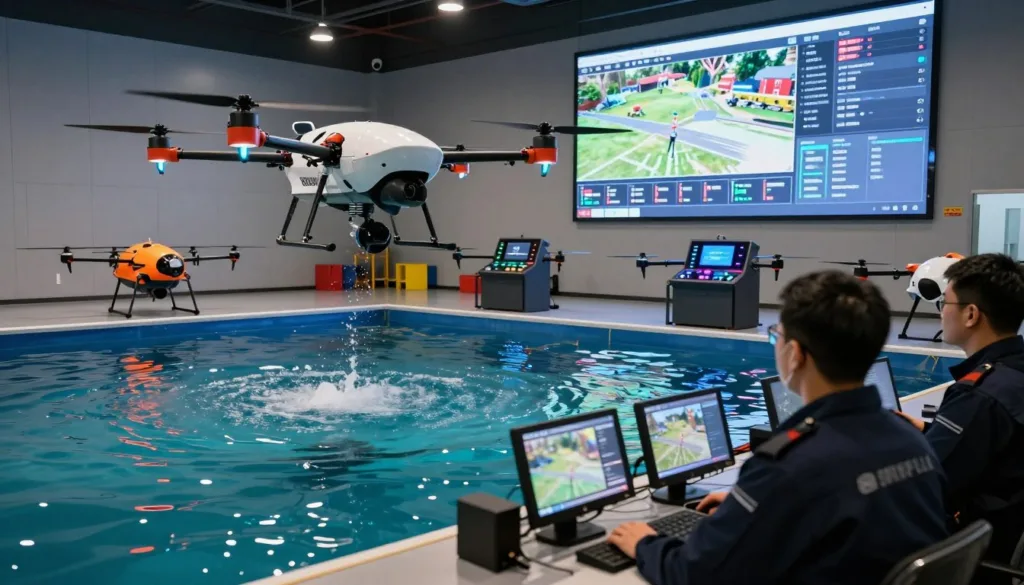
Reliable preparation is essential when emergency teams deploy aerial tech to save lives. SRIZFLY helps operators master vital skills before heading into the field.
Teams often search vast shorelines, deep lakes, rapid rivers, and coastal regions using advanced UAVs. Real-world practice brings heavy challenges like high winds, poor visibility, dynamic targets, and strict battery limits.
Mistakes during live missions can destroy expensive gear and risk human lives. Virtual practice prevents these costly errors by offering a safe environment.
Key Takeaways
- Master vital skills before operating in real emergency zones.
- Search shorelines, lakes, and rivers safely using virtual platforms.
- Overcome strong winds and low visibility without equipment risks.
- Protect expensive gear from crashes during high-stakes practice.
- Enhance team readiness using realistic mission scenarios.
Why Simulated Training for Water Rescue Drones Matters for Emergency Teams
When seconds count in a water rescue mission, pilots face immense operational pressure. Emergency teams need advanced tools that bridge the gap between classroom theory and chaotic real-world environments.
Water rescue missions are high-pressure operations that leave little room for hesitation. Every second saved can mean the difference between life and death.
Prepare Pilots for High-Pressure Water Rescue Scenarios
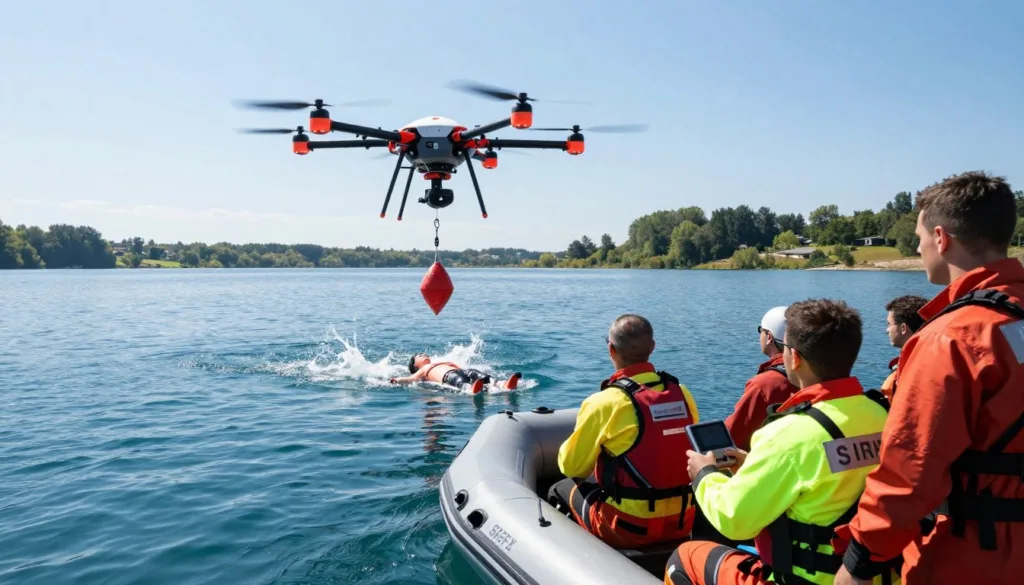
Pilots must locate a person quickly and follow instructions from an incident commander without delay. They also need to maintain a safe distance from other rescuers while keeping the aircraft stable over moving water.
The drone may operate while boats, helicopters, swimmers, or ground teams work nearby. Simulated training prepares pilots to handle these stressful multi-agency environments safely.
Reduce Training Risks, Equipment Damage, and Operational Costs
Traditional flight practice over turbulent water carries severe risks to expensive hardware. Crashing a real aircraft into a river wastes precious budget and halts team progress.
Using water rescue drones in a virtual environment removes physical danger. Teams can push aircraft to their limits without risking total loss or costly repairs.
Build Consistent Skills Across Public Safety and Rescue Teams
Different crew members often bring varying levels of experience to the field. Standardized virtual scenarios help emergency teams develop a unified playbook.
Regular virtual sessions ensure every operator reacts the same way during a crisis. This shared muscle memory improves coordination and overall mission success rates.
How SRIZFLY’s Drone Simulator Improves Water Rescue Readiness
Modern emergency response requires advanced preparation tools that replicate real-world danger without the physical hazard. The SRIZFLY drone simulator offers an immersive virtual environment designed to elevate water rescue readiness for public safety agencies across the United States. Teams can test their operational limits safely from a desktop station.
Getting started with this software is simple and straightforward for any agency. The free trial can be downloaded after completing the download form and does not require activation. When your team is ready to upgrade, the full version is purchased through the website and unlocked with an emailed activation code.
Practice Search Patterns, Remote Piloting, and Victim Location
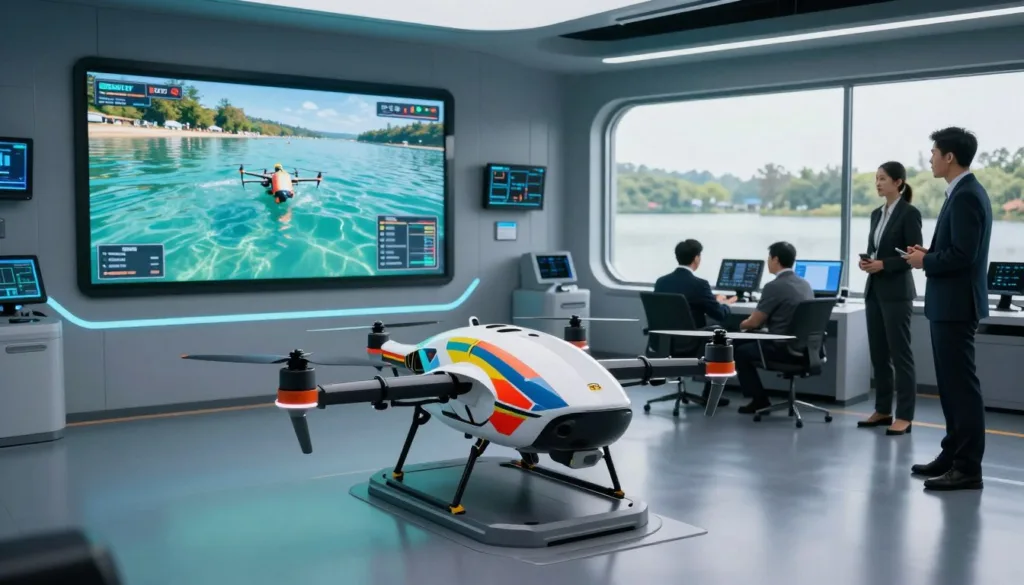
Executing a successful rescue starts with a systematic search. Pilots must master grid patterns, expanding square searches, and sector sweeps to locate missing swimmers quickly. The software allows operators to practice precision remote piloting over vast open water. Finding virtual victims in choppy waves builds the muscle memory needed for actual deployments.
Effective search routines save critical minutes during an emergency. Trainees learn how to adjust altitude and camera angles to scan surface areas efficiently. Repeated practice ensures that pilots react instinctively when lives hang in the balance.
Train for Weather, Visibility, Battery, and Communication Challenges
Real rescue operations rarely happen on calm, sunny days. Operators must learn to fly through sudden wind gusts, heavy rain, and dense fog. The platform simulates various visibility challenges, including night operations and blinding glare off the water surface. Pilots also experience unexpected battery drain and radio signal loss.
Overcoming these environmental hurdles requires strict focus and quick problem-solving. Teams practice maintaining visual line of sight and managing telemetry data under stress. This rigorous preparation prevents panic during unpredictable real-world missions.
Measure Pilot Performance and Refine Rescue Mission Planning
Data-driven debriefs help teams improve their overall efficiency. The software tracks flight paths, search coverage percentages, and response times for every session. Instructors can review these metrics to identify weak spots and correct bad habits.
- Review detailed flight logs after each virtual mission.
- Identify gaps in search grid execution and adjust flight paths.
- Refine future rescue strategies based on objective performance scores.
Using these insights allows departments to standardize their training protocols. Better mission planning ultimately leads to faster response times and safer outcomes on the water.
Conclusion
Water rescue missions demand rapid decisions and precise actions from emergency crews. Basic flight hours do not fully prepare pilots for unpredictable weather, weak batteries, or complex search patterns over open water. Rescue teams need repeatable practice to master victim location and rapid deployment.
The SRIZFLY drone simulator offers a secure virtual space for skill development. Pilots build vital competencies without risking expensive equipment or human safety during live operations. Emergency units gain reliable readiness through targeted scenario practice.
Public safety organizations ready to elevate water rescue capabilities can integrate advanced simulation technology today. Contact the team at SRIZFLY to schedule a demonstration and discover how virtual training transforms emergency response outcomes.
FAQ
What is the SRIZFLY drone simulator and how does it help water rescue operations?
The SRIZFLY drone simulator is advanced virtual training software designed to help emergency teams, public safety departments, and drone pilots practice shoreline searches, river rescues, and coastal surveillance safely. It replicates real-world physics, wind conditions, and water environments so pilots can build essential flight experience without risking expensive hardware or human safety.
How can I download and activate the SRIZFLY drone simulator free trial?
You can easily access the free trial by completing the download form on the SRIZFLY website. The trial version does not require activation, allowing you to test out the simulation features right away. Once you are ready to upgrade, the full version can be purchased directly through the website and is unlocked using an emailed activation code.
Why is simulated drone training important for aquatic search and rescue missions?
Water rescue operations are high-pressure environments involving moving targets, strong winds, low visibility, and complex coordination with boats or swimmers. Simulated training allows drone pilots to practice search patterns, battery management, and rapid decision-making in a risk-free environment where mistakes do not result in equipment damage or safety hazards.
Can public safety teams use the SRIZFLY simulator to practice complex weather and visibility challenges?
Yes, the simulator lets operators practice in various weather conditions, including heavy winds, fog, low light, and rain. This helps pilots prepare for unpredictable real-world emergencies where visibility is compromised and maintaining aircraft stability over open water is critical.
How does practicing with a drone simulator improve team communication and response times?
The SRIZFLY simulator helps pilots practice following instructions from incident commanders, maintaining safe distances from rescue personnel, and coordinating with ground or marine teams. Consistent practice builds muscle memory and tactical awareness, which directly translates to faster response times and better victim location rates during live emergencies.