



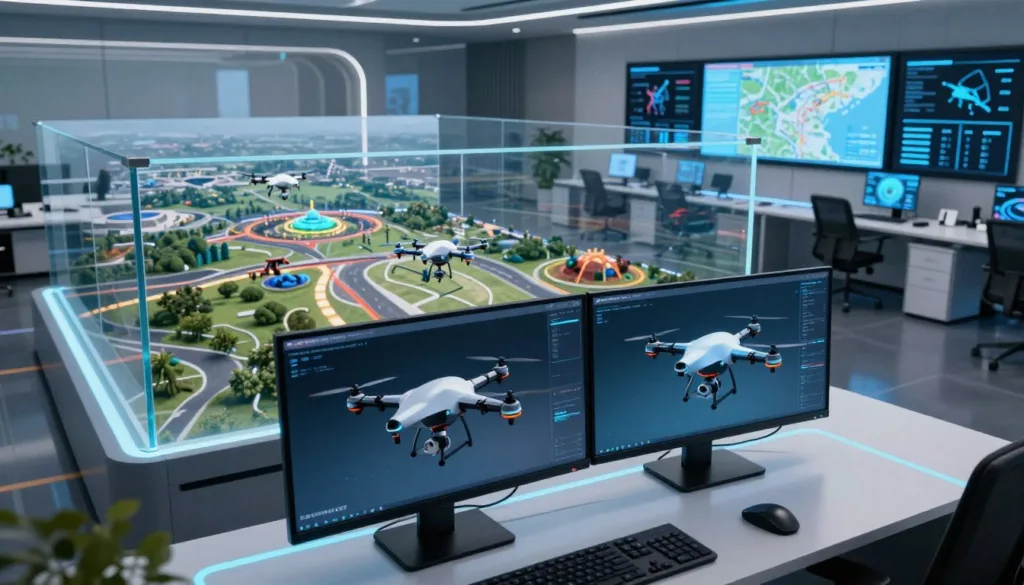
SRIZFLY simulator delivers AI drone simulation software built for advanced drone training, development, and mission rehearsal. The platform runs as a cloud-native drone simulation, so teams can access realistic flight scenarios from any browser without heavy local hardware.
Using SRIZFLY reduces risk and cost by moving many training hours into a safe, controlled virtual space. Operators gain skills faster, instructors get repeatable scenarios, and organizations save on fuel, maintenance, and airspace logistics. The environment also supports regulator-ready mission rehearsal for SORA and other compliance workflows.
Core users include drone developers, operators, training providers, educators, students, and public safety or defense organizations. Engineers use the simulator for design validation and CAD export, while pilots and crews use it for scenario practice with AI-driven feedback.
The primary value proposition is clear: enhance pilot proficiency with AI-driven simulation in a safe, controlled environment. SRIZFLY pairs realistic physics, sensor models, and AI coaching to accelerate learning and support end-to-end design-to-deployment workflows.
Key Takeaways
- SRIZFLY simulator is a cloud-native drone simulator for advanced drone training and development.
- Virtual training lowers costs and improves safety compared with repeated physical flights.
- AI-driven feedback speeds skill acquisition and supports personalized learning paths.
- Engineers and operators benefit from integrated design tools, CAD export, and realistic sensor models.
- Platforms like SRIZFLY enable regulator-ready mission rehearsal and operational preparedness.
- Schedule a demo or start a free trial to evaluate SRIZFLY for training, development, or education.
AI drone simulation software: What it is and why it matters for advanced training
AI drone simulation software brings flight physics, design, and training into a single, web-delivered platform. Platforms such as SRIZFLY and established suites like SIMNET show how a cloud-native simulation can support aircraft modeling, mission rehearsal, and scalable classroom use. A modern web-based drone simulator runs in browsers and on low-cost devices, so students and operators can train from anywhere.
Definition and core capabilities
The core of this technology is a cloud service that links parametric drone design libraries to live flight models and SITL frameworks like ArduPilot and PX4. Designers use drone design tools to export STEP or STL files for CAD and to feed virtual prototypes into the simulator. Real-time physics, sensor emulation, and worldwide 3D terrain let teams rehearse missions with realistic conditions.
Integration points matter for real workflows. Exportable flight logs and CSV outputs connect to analytics suites. Connections to ground control software such as QGroundControl and Mission Planner let pilots move seamlessly from simulator to hardware. Training catalogs tie into pilot training LMS integration so progress and course completion are recorded automatically.
Training outcomes and measurable benefits
Training in a virtual environment lowers risk and cost by letting trainees practice advanced maneuvers and failure modes with no chance of damaging hardware. Teams report fewer crashes, reduced repair spend, and faster readiness for field operations.
AI-driven feedback speeds skill acquisition. Auto-graded practical exercises and adaptive lesson plans use AI training analytics to highlight weaknesses and guide repeat practice. Objective metrics from automated flight logs provide clear evidence of proficiency for certification and audits.
Simulation outputs support regulatory work. Digital twins and recorded mission data can inform Specific Operational Risk Assessments for BVLOS operations and show regulators that operators meet safety standards. For design teams, rapid iteration in a web-based drone simulator shortens prototyping cycles and improves validation before physical tests.
Realistic environments and digital twins for mission rehearsal
Training for complex drone missions needs terrain and systems that feel real. Modern simulators combine global 3D terrain with precise physics so pilots rehearse in settings that match live operations. This reduces surprises during flights and improves decision-making in contested or remote areas.
High-fidelity mapping engines deliver a photorealistic terrain model at continental and local scales. Platforms such as Blackshark.ai and efforts like Mantle ETM provide whole-earth layers that scale from city streets to mountain ridges. These data sets let instructors pick exact launch zones, inspect sightlines, and test BVLOS routes before crews fly.
Sensor emulation brings virtual hardware to life. Physics-based models reproduce camera exposure, motion blur, long-range zoom optics, and LiDAR returns. Trainees experience the same artifacts and limits they would see on the real drone, which sharpens target recognition and ISR trade-offs.
Digital twin drone replicas mirror airframe dynamics, avionics, and payload behavior. Engineers can import customer 3D assets and tune component libraries to match multicopters, VTOLs, and fixed-wing platforms. Pilots practice recovery from failures, automation handoffs, and terrain-following profiles while the twin logs repeatable data for analysis.
Mission rehearsal benefits extend to planning and certification. Accurate sensor emulation plus global 3D terrain supports route deconfliction, threat assessment, and SORA evidence packages. Training teams run edge-case drills, such as dynamic weather or sensor degradation, without risk to people or equipment.
Operational units gain fidelity from whole-earth models and bespoke digital twins. When rehearsal environments match reality, rehearsals become experiments in tactics, not guesswork. This approach reduces training hours on live systems and shortens the path from simulator to operational readiness.
AI and automation features that accelerate pilot proficiency
SRIZFLY uses machine learning to speed skill acquisition for new and experienced pilots. The system tracks behavior in real time and applies targeted drills when patterns emerge. This approach reduces repetitive errors and shortens the path to mission-ready performance.
The platform delivers AI feedback drone training as part of an integrated curriculum. Trainees receive instant, specific comments on control inputs, altitude management, and mission planning choices. Trainers can review those findings and assign adaptive lesson plans that match each pilot’s gaps.
AI-driven feedback and personalized learning paths
AI models monitor flight telemetry to spot recurring mistakes. For example, repeated low-altitude passes during mapping missions trigger corrective simulations and stepwise remediation. This keeps learners focused on real weaknesses.
Adaptive lesson plans adjust difficulty and content based on analytics. SIMNET-style catalogs combine theory with simulation labs so pilots move from basic maneuvers to complex mission profiles at the right pace. Auto-graded exercises give immediate competency signals and free instructors for higher-value coaching.
Virtual assistants provide on-demand support around the clock. Trainees can ask tactical questions or request targeted drills and get responses tied to their recent performance. This reduces downtime and improves retention.
Automation for repeatable, objective assessment
Automated flight logs capture speed, altitude, battery use, control inputs, and GPS tracks for every sortie. Exportable CSV files let instructors and engineers analyze trends and build evidence-based reports. These automated flight logs form a clear audit trail for certification.
Objective scoring runs scenarios consistently so cohorts face the same test conditions. That repeatability removes bias and creates fair comparisons across pilots. Auto-graded exercises speed evaluation while preserving rigor.
LMS integration stores scores, logs, and evidence for certification, retraining, and regulator review. Centralized records make it simple to schedule periodic refreshers and demonstrate compliance during audits. Automation cuts instructor load and enables scalable remote training with self-guided labs.
Design, testing, and development benefits for drone engineers
Engineers working on SRIZFLY and similar platforms gain faster iteration and clearer validation when virtual tools are part of the workflow. A parametric component library lets teams assemble airframes, sensors, batteries, and motors inside the simulator. That setup speeds comparisons and supports quick trade studies without building a prototype.
Virtual design workflows and multidisciplinary analysis
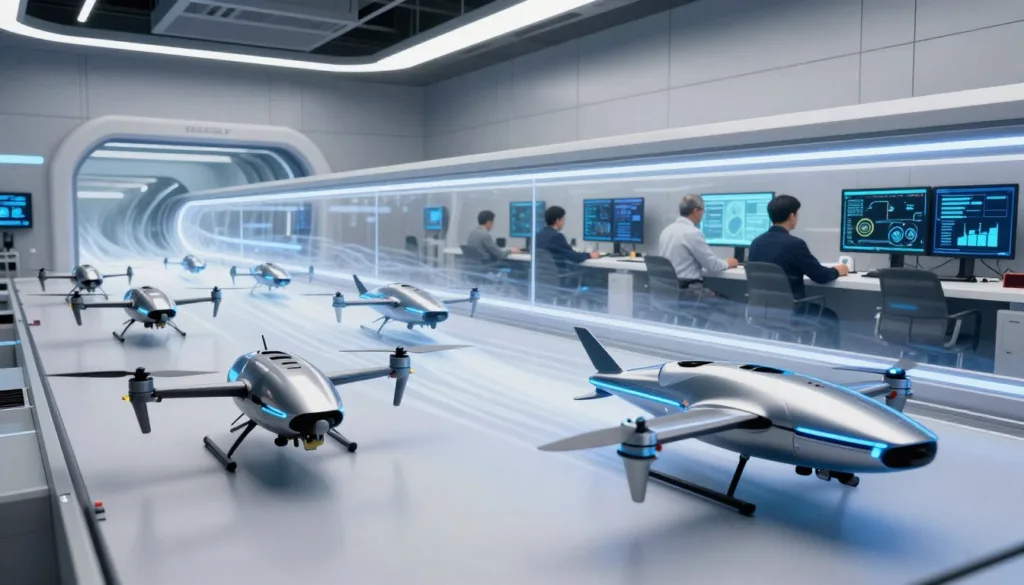
Designers drag and drop parts from the parametric component library to test configurations. Real-time performance prediction displays flight time, range, and payload effects while designers tweak mass and geometry.
Linking simulation outputs to CAD and flight-control tools keeps systems engineering intact. This integration reduces rework between mechanical, electrical, and software teams. It also makes it easier to run structured trade studies that target endurance, stability, and manufacturability.
Virtual wind tunnel, CFD, and CAD export
Built-in CFD visualization shows streamlines, pressure fields, and force vectors so engineers can tune wings and control surfaces. A virtual wind tunnel pane gives visual feedback on flow separation and drag during design sweeps.
Once a design is validated, export options like STEP STL export enable direct transfer to CAD and 3D printing workflows. Those exports shorten the path from simulation to physical prototyping and support rapid validation in a controlled test lab.
Operational training, safety, and regulatory readiness
Training platforms based on the SRIZFLY drone simulator close the gap between classroom theory and live operations. They let teams rehearse mission plans, tune procedures, and collect evidence that regulators accept for compliance reviews. Pilots gain confidence in complex profiles before a single real flight takes place.
Mission planning and rehearsal
Simulated environments support detailed mission planning for beyond-visual-line-of-sight routes and terrain-following tasks. Flight crews run BVLOS rehearsal in changing weather, test sensor failures, and validate communication handoffs. Integration with common ground control software uses the same flight parameters operators will see in service.
SORA support and regulatory evidence
Simulation outputs and digital twin mission logs help prepare Specific Operational Risk Assessment submissions. Operators can include recorded flight profiles and failure-case data to show mitigations. This SORA support shortens review cycles and clarifies operational limits for authorities.
Failsafe procedure training
Structured scenarios force pilots to practice emergency responses and recovery flows. Failsafe procedure training focuses on lost-link behavior, return-to-home tuning, and payload-safe descent methods. Repeating edge cases in the simulator reduces the chance of human error during live operations.
Maintaining ongoing proficiency
Platforms deliver scheduled modules, instructor-led sessions, and self-guided exercises to keep teams sharp. Periodic retraining ensures pilots retain skills for rare events and new mission types. Many operators report that routine simulator practice uncovers SOP gaps before they affect flights.
LMS recordkeeping and audits
Learning management system integration captures completion records, assessment scores, and detailed simulation logs. LMS recordkeeping creates a single source of truth for audits and certification bodies. This traceable evidence supports operator claims about training, currency, and competence.
Scaling training across teams
Self-paced web modules and scenario libraries let organizations scale retraining at low cost. Teams can run standardized BVLOS rehearsal or targeted failure drills across multiple bases. The result is consistent skill levels, documented readiness, and lower operational risk.
Applications across industries and advanced use cases
Real-world training needs vary by sector. Simulation platforms like SRIZFLY bridge the gap between lab work and field missions. They let teams practice sensor use, data workflows, and coordinated responses in safe, repeatable settings.
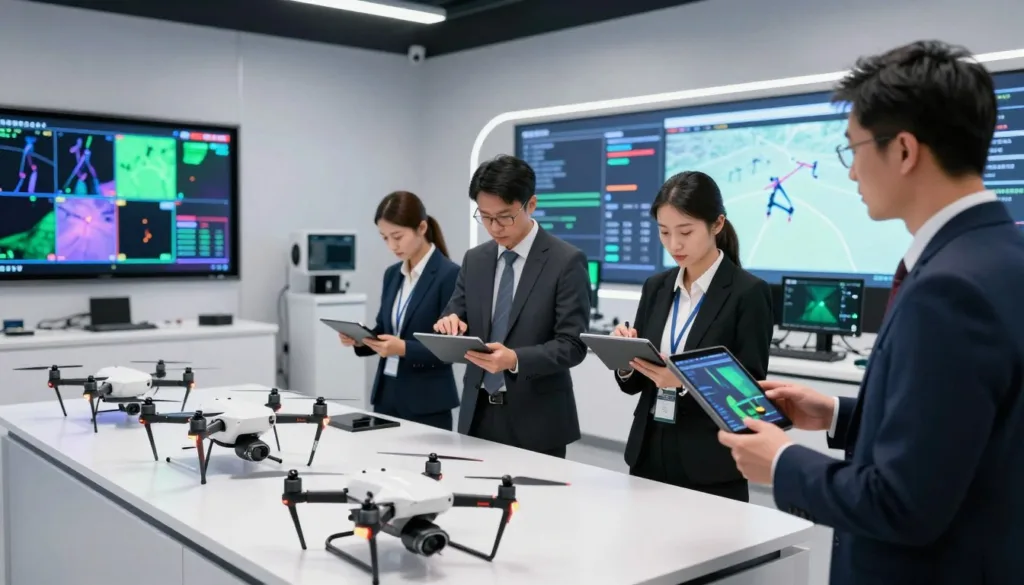
In agriculture, pilots learn multispectral imaging training to detect crop stress and optimize inputs. Courses cover sensor calibration, flight lines, and post-flight analysis. Learners follow automated mapping workflows to produce orthomosaics and 3D models used in agronomy reports.
Surveying teams rely on automated mapping workflows for topographic surveys and volume calculations. Simulated missions let operators test flight plans, geotagging, and point-cloud export. These exercises reduce re-flights and speed project delivery.
Disaster response benefits from realistic disaster simulation that scales from single-vehicle search to multi-drone coordination. Crews rehearse search-and-rescue patterns, structural damage assessment, and data handoff to incident command. Simulations protect responders while improving decision timelines.
Infrastructure inspection training teaches safe approaches to bridges, towers, and pipelines. Trainees practice close-proximity flight and sensor emulation to capture high-resolution imagery. That training reduces inspection time and improves defect detection rates.
Defense programs focus on tactical drone operations for mission planning and execution. Units explore offense and defense tactics, including anti-drone training to detect and mitigate hostile systems. Large-scale AI-vs-AI exercises let teams evaluate concepts without risking assets.
Public safety agencies run inter-agency drills for incident response and perimeter surveillance. Simulated scenarios build communication and command procedures. Shared cloud platforms let multiple departments access the same training content and metrics.
Mass training deployments scale classroom lessons into enterprise programs. Commercial providers, militaries, and universities use turnkey platforms such as SIMNET-style solutions to distribute curricula. These systems support user management, custom scenarios, and performance analytics.
Case studies from BISim’s VBS4 show how advanced simulation supports collective training across the U.S. Army, U.S. Marine Corps, Australian Defence Force, and the UK Ministry of Defence. Those programs emphasize mission rehearsal, scalability, and accurate environmental modeling.
| Use Case | Primary Training Focus | Typical Outcomes |
|---|---|---|
| Agriculture | Multispectral imaging training; sensor calibration | Improved crop monitoring; reduced input costs; reliable NDVI outputs |
| Surveying & Mapping | Automated mapping workflows; photogrammetry | Accurate topographic models; fewer re-flights; faster deliverables |
| Disaster Response | Disaster simulation; multi-vehicle coordination | Safer rehearsals; faster situational awareness; better resource allocation |
| Infrastructure Inspection | Close-proximity flights; sensor emulation | Higher defect detection; lower inspection time; improved reporting |
| Defense | Tactical drone operations; anti-drone training | Refined tactics; risk-free experimentation; scalable force rehearsal |
| Public Safety | Incident response drills; inter-agency coordination | Stronger SOPs; interoperable teams; validated response plans |
| Enterprise Training | Mass deployments; cloud-based content | Standardized skill sets; centralized analytics; curriculum customization |
Implementation, integration, and support considerations
Getting a simulator into daily training requires clear integration paths and reliable support. Start by mapping your flight stacks, ground control apps, and LMS so the simulator fits existing workflows without surprise gaps. Test connectors early and confirm export formats for audit-ready records.
Platform integration and compatibility
Confirm native support for common flight stacks before deployment. Native PX4 ArduPilot integration or SITL links cut development time and improve control fidelity. A working QGroundControl connector and Mission Planner interface let instructors replicate live operations.
APIs matter for training operations. A robust LMS API enables launching scenarios from a learning management system and returning scores, logs, and completion records. Offer CSV export for flight logs and design reports so analysts can run audits or custom post‑flight reviews.
Check hardware and VR compatibility. Support for USB transmitters, standard gamepads, and headsets such as Meta Quest expands training modes from procedural checks to immersive manual practice. Ensure the simulator accepts customer aircraft models and sensor definitions to match real missions.
Deployment models, licensing, and technical support
Decide whether cloud deployment or an on-site build meets your security and scale needs. A cloud-native vs on-premise simulator choice affects update cadence, accessibility, and data residency. Cloud deployments speed rollouts and scale to many trainees. On-premise installations keep sensitive data inside protected networks.
Review licensing and pricing carefully. Licensing for education often includes bulk institutional plans, discounted student seats, and per-seat commercial options. Compare total cost of ownership for training providers and universities, including seat counts, content packages, and renewal terms.
Ask vendors about ongoing responsibilities. Confirm who handles deployment, updates, content customization, and troubleshooting. Look for providers that offer demos, free trials, and managed support to lower the burden on internal IT teams. Evaluate service level agreements, update schedules, and the vendor content roadmap before signing.
| Consideration | What to verify | Why it matters |
|---|---|---|
| Flight stack support | PX4 ArduPilot integration, SITL compatibility, QGroundControl connector | Ensures realistic control behavior and smooth instructor workflows |
| LMS and reporting | LMS API access, CSV export, score and log synchronization | Keeps training records centralized and audit-ready |
| Deployment model | cloud-native vs on-premise simulator options, data residency | Impacts scale, update speed, and regulatory compliance |
| Licensing | licensing for education, institutional vs student vs commercial pricing | Determines affordability and long-term budget planning |
| Hardware and VR | USB transmitters, gamepad support, Meta Quest and peripherals | Extends training realism and pilot muscle memory |
| Vendor support | SLAs, update cadence, demos, free trials, custom import support | Reduces maintenance work and aligns simulator with mission needs |
Conclusion
AI-driven simulation has changed how teams prepare for complex drone operations. High-fidelity terrain, advanced AI behaviors, and accurate digital twins make mission rehearsal realistic and regulator-ready. That realism delivers safer, faster, and more measurable outcomes for pilots and engineers alike.
Integrated workflows bring clear cross-functional benefits. Virtual design, testing, and training reduce prototyping costs and shorten development cycles. These efficiencies improve operator readiness for BVLOS and other complex missions while helping institutions quantify drone training ROI.
Practical next steps are simple: schedule demo sessions of platforms such as SRIZFLY or SIMNET, evaluate integration needs like GCS connectors, LMS links, and CAD export, and review licensing that fits institutional budgets. Request custom digital twin creation and pilot a small training cohort to measure results before scaling.
Contact vendors to arrange a trial, request a tailored demo, and begin a focused pilot to validate performance and drone training ROI. A short, data-driven trial is the fastest way to prove value and make informed procurement decisions.
FAQ
What is AI drone simulation software and how does SRIZFLY fit this category?
AI drone simulation software is a cloud-native, web-based platform that unifies drone design, real-time flight physics, and pilot training. SRIZFLY exemplifies this model by offering parametric design libraries, SITL support for ArduPilot and PX4, worldwide 3D terrain, mission rehearsal, and an integrated catalog of training courses with LMS connectivity. It enables design-to-deployment workflows, virtual labs, and remote access on personal devices.
What are the primary benefits of using SRIZFLY for training and development?
SRIZFLY delivers safer training in zero-risk virtual environments, lowers costs compared with physical flight hours, accelerates skill acquisition with AI-driven feedback, and provides regulator-ready mission rehearsal outputs for SORA. It also shortens development cycles through integrated virtual testing, CAD export (STEP/STL), and direct connections to ground control software like QGroundControl and Mission Planner.
Who should consider using SRIZFLY or similar platforms?
Core user groups include drone developers and engineers, operators, flight training providers, educators and students, public safety teams, and defense organizations. Each benefits from safer practice, scalable remote training, digital-twin-based mission rehearsal, and objective evidence for certification and audits.
How does SRIZFLY support measurable training outcomes?
The platform captures automated flight logs (speed, altitude, battery, control inputs, GPS paths) and produces exportable CSVs for analysis. AI auto-grading, adaptive lesson plans, and LMS integration generate objective scores and recorded progress. These artifacts support certification, audits, and regulator submissions while enabling instructors to track proficiency trends.
Can SRIZFLY help with SORA and BVLOS regulatory readiness?
Yes. Simulation outputs, digital-twin mission records, and rehearsed BVLOS routes provide evidence for Specific Operational Risk Assessment (SORA). Realistic mission rehearsal under dynamic weather and failure conditions helps demonstrate operational readiness and supports regulator engagement for BVLOS approvals.
How realistic are the environments and sensors in SRIZFLY?
Modern platforms like SRIZFLY use worldwide high-fidelity terrain models and photorealistic rendering to recreate mission locations. Physics-based sensor emulation reproduces camera imagery, LiDAR returns, long-range zoom optics, and other sensor outputs for accurate planning and training. Advanced rendering techniques deliver photo-realistic sensor views suitable for reconnaissance and mapping rehearsal.
What are digital twins and how do they improve mission rehearsal?
Digital twins are custom virtual replicas of specific airframes, sensor suites, and operational areas. They mirror real hardware performance so pilots and engineers can rehearse BVLOS routes, terrain-following, failure modes, and edge cases. Digital twins also provide simulation evidence for SORA and reduce the need for costly physical prototypes.
How does AI-driven feedback work in SRIZFLY?
AI monitors trainee behavior in real time and issues targeted remediation. For example, if a trainee repeatedly flies too low during mapping, the system injects corrective drills and consequence simulations. Adaptive lesson plans adjust difficulty and content based on analytics, while virtual assistants provide on-demand guidance and answer trainee questions 24/7.
What automation features enable objective assessment?
Automation captures consistent flight data, produces repeatable scenarios, and computes objective scoring metrics. Instructors can export flight logs and reports, while LMS integration stores scores for certification and retraining. This reduces instructor load and enables scalable, self-guided remote training across cohorts.
How do SRIZFLY’s virtual design workflows benefit engineers?
Parametric component libraries let engineers assemble and iterate airframes, sensors, batteries, and propulsion systems rapidly. Real-time performance predictions estimate flight time, range, and speed for virtual trade studies. This accelerates design validation, lowers prototyping costs, and integrates with CAD and flight control tools for system-level validation.
Is there support for virtual wind tunnel and CFD-style analysis?
Yes. The platform provides virtual wind tunnel panes, force-vector visualizations, pressure-field displays, and CFD-like streamlines. These tools reveal aerodynamic impacts of design changes and help tune control surfaces. Validated designs can be exported as STEP or STL for CAD modeling and 3D printing.
How does SRIZFLY integrate with ground control and flight stacks?
SRIZFLY supports SITL integration and connectors for ArduPilot and PX4, and works with ground control stations like QGroundControl and Mission Planner. This enables realistic mission planning, failsafe tuning, and exportable flight logs that reflect real flight control parameters.
Can SRIZFLY export data for third-party analysis and audits?
Yes. Flight logs, telemetry, and design reports are exportable as CSV and other common formats. CAD exports (STEP, STL) and simulation artifacts can be used in third-party analysis, regulatory submissions, and audit-ready documentation.
What industry use cases are best suited to simulation training?
SRIZFLY supports agriculture (multispectral mapping), surveying and topographic modeling, infrastructure inspection (bridges, towers, pipelines), disaster response and search-and-rescue rehearsal, and coordinated multi-vehicle missions. Defense and public safety use cases include tactical operations, perimeter surveillance, incident response, and anti-drone scenario training.
Are there real-world examples of military or public safety adoption?
Large-scale digital twin and rehearsal tools such as BISim’s VBS4 and Mantle ETM have been adopted by the U.S. Army, U.S. Marine Corps, Australian Defence Force, and UK Ministry of Defence for collective training. Commercial platforms like SIMNET report decreased prototyping time and improved operator readiness among customers.
Does SRIZFLY support VR and specialized hardware?
Yes. The platform offers VR support for headsets like Meta Quest and is compatible with USB transmitters and gamepads for immersive manual piloting practice. These options enhance situational awareness and muscle-memory training for complex tasks.
What deployment and licensing models are available?
SRIZFLY and similar vendors typically offer cloud-native deployments for rapid updates and scale. On-premise options may be available for classified or sensitive operations. Licensing models include institutional bulk licenses, discounted student subscriptions, and per-seat commercial licenses. Evaluate SLAs, update cadence, and content roadmaps when choosing a plan.
How much technical support and customization can vendors provide?
Vendors often provide simulator deployment, updates, technical support, and content customization. Offerings range from self-service trials and demos to fully managed services that include custom digital-twin creation and scenario development. Review support tiers and response times before procurement.
How should organizations measure training ROI before a full rollout?
Start with a pilot cohort and track objective metrics: reduction in physical flight hours, lower crash/repair costs, speed of skill acquisition, and certification pass rates. Use exported flight logs, LMS scores, and design iteration time savings as quantitative measures to calculate ROI before wider deployment.
What integrations should I evaluate when selecting a simulation platform?
Key integrations include GCS connectors (QGroundControl, Mission Planner), flight stacks (ArduPilot, PX4), LMS compatibility, CAD export (STEP/STL), APIs for data exchange, and VR/hardware support. Also consider SORA-oriented reporting capabilities and the ability to import customer 3D assets for custom digital twins.
How quickly can teams get started with SRIZFLY?
Cloud-native platforms enable rapid onboarding with demos or free trials often available. Technical setup depends on integrations and customization needs; basic training modules and virtual labs can be accessed in hours to days, while custom digital-twin creation or enterprise integrations may take longer.
Are there privacy or security considerations for cloud-based simulation?
Yes. For sensitive operations, evaluate vendor compliance, data residency, role-based access controls, and on-premise deployment options. Vendors should provide clear SLAs, encryption, and support for secure import/export of classified assets when required.
How does simulation help with maintaining ongoing proficiency and compliance?
The platform provides periodic retraining programs, scenario libraries, and self-guided modules. LMS integration records completion and scores for audits and re-certification. Regular simulated edge-case practice reduces operational risk and ensures teams remain prepared for emergency responses and regulator reviews.
What are the recommended next steps for organizations interested in SRIZFLY?
Schedule a demo or start a free trial, request a custom digital twin for your airframe or operational area, pilot a small training cohort to collect ROI metrics, and evaluate integration needs (GCS, LMS, CAD export). Compare licensing and support options to match institutional budgets and procurement timelines.