



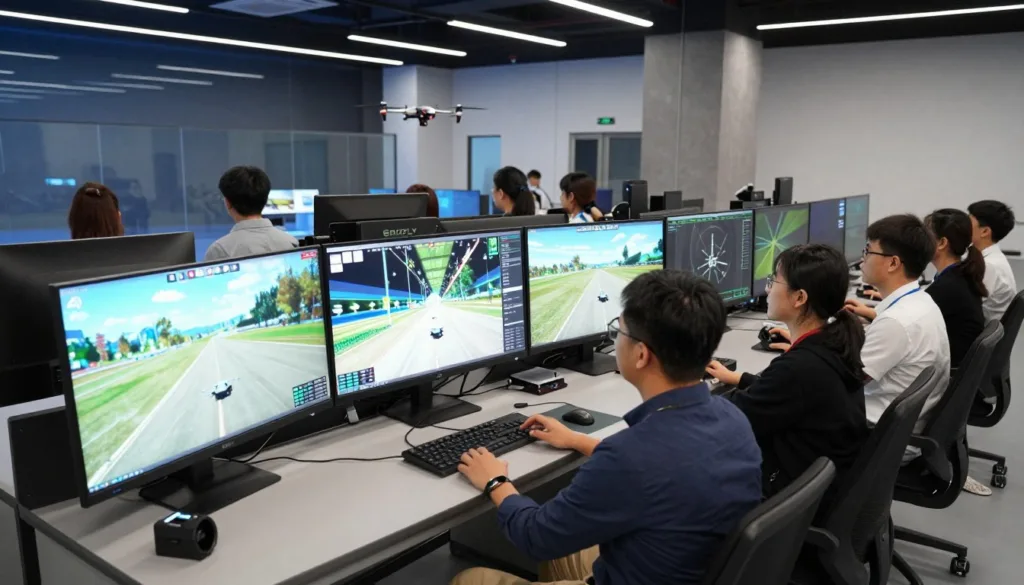
Learning to pilot advanced aircraft today doesn’t always require a physical cockpit. Modern drone training has shifted into high-tech virtual spaces where mistakes don’t lead to expensive crashes.
These digital worlds offer a safe way to master complex maneuvers before ever touching a real controller. It is truly an exciting time for aviation enthusiasts and engineers alike.
Companies like Microsoft are leading this change with Project AirSim. This tool helps developers build and test autonomous drones in environments that mimic the real world. By using such advanced technology, teams can gather data quickly without the risks of outdoor testing.
Safety remains the top priority as these systems evolve. Another great example is SIMNET, a cloud-native platform that offers deep analysis tools.
It provides a full suite of features for design and flight simulation. These innovations ensure that the next generation of aerial tech is both reliable and efficient. The bridge between the digital and physical worlds has never been stronger.
Key Takeaways
- Virtual training environments significantly lower hardware costs and financial risks.
- Safety is improved by allowing pilots to master maneuvers in a risk-free space.
- Microsoft Project AirSim provides high-fidelity models for testing autonomous flight.
- SIMNET offers cloud-based tools for advanced aerial design and deep analysis.
- Digital simulation allows for much faster data collection than physical field tests.
- Modern software accurately mimics real-world physics and complex weather patterns.
Why Choose an AI-Powered Drone Simulator for Your Training Needs
Stepping into the world of advanced flight requires more than just a controller; it requires a smart training partner. As the industry moves toward aerial autonomy, pilots must learn to work alongside intelligent systems. A high-quality UAV simulation provides the perfect bridge between basic hobby flying and professional mastery.
These digital tools offer more than just a video game experience. They create a space where you can understand how a drone reacts to complex commands. By using these platforms, you prepare yourself for the future of flight in a controlled setting.
Modern software helps you build muscle memory and mental Sharpness. You can practice difficult maneuvers until they become second nature. This preparation is essential for anyone looking to enter the commercial drone space.
Realistic Flight Physics and Environmental Conditions
One of the biggest benefits of a modern simulator is the level of detail it provides. Programs like Project AirSim allow you to experience lifelike scenarios. You can test how a drone handles during a search and rescue mission or a high-speed delivery.
The physics engines calculate wind resistance, gravity, and battery drain in real time. This means the drone in your virtual environment behaves exactly like the one in your backyard. You can even change the weather to see how rain or fog affects your sensors.
Practicing in these diverse conditions builds your confidence. You will know exactly what to do when the wind picks up during a real flight. This level of realism was impossible to achieve just a few years ago.
Risk-Free Learning Environment for All Skill Levels
Every pilot fears the “big crash” that ends with broken gear and expensive repair bills. A simulator removes that fear entirely. You can push your limits and try risky maneuvers without any financial consequences.
New pilots can learn the basics of hovering and landing without stress. Experienced operators can use the space to test new flight paths or software updates. It is a safe harbor for experimentation and growth.
“Simulation is not just about practicing what you know; it is about discovering what you don’t know in a safe space.”
Cost-Effective Alternative to Traditional Flight Training
Traditional flight schools can be very expensive and time-consuming. You often have to pay for fuel, travel, and instructor hours. A simulator allows you to train from the comfort of your own home at any time.
Platforms like SIMNET offer comprehensive tools for drone design and pilot certification. You can analyze your flight data to see where you are wasting energy or time. This efficiency helps you master drone operation much faster than field practice alone.
- No Repair Costs: Crashing in the sim costs zero dollars.
- Unlimited Flight Time: You are not limited by battery life or daylight.
- Varied Locations: Fly in urban centers or dense forests instantly.
AI-Driven Feedback and Performance Analytics
The “AI” in these simulators acts as a personal coach that never gets tired. It tracks every move you make and provides instant feedback on your performance. This data-driven approach is vital for mastering aerial autonomy.
You can review your flight paths to see if your turns were smooth or jerky. The software highlights areas where you can improve your drone operation for better efficiency. Instant analytics turn every practice session into a powerful lesson.
By looking at the data, you can set specific goals for your next session. This structured way of learning ensures that you are always moving forward. It takes the guesswork out of becoming a professional pilot.
Transforming Drone Operation Skills Through Advanced Simulation Technology
Advanced simulation technology is fundamentally changing how we approach drone pilot certification and skill building. These digital platforms allow you to practice complex maneuvers without any risk to physical hardware. By using a high-quality drone simulation, you can master the art of flight in a controlled setting.
Platforms like SIMNET provide a comprehensive suite of tools for drone design and analysis. These tools help pilots understand the mechanics of their aircraft while preparing for official certification. It is an immersive experience that builds confidence and sharpens your reactions in the field.
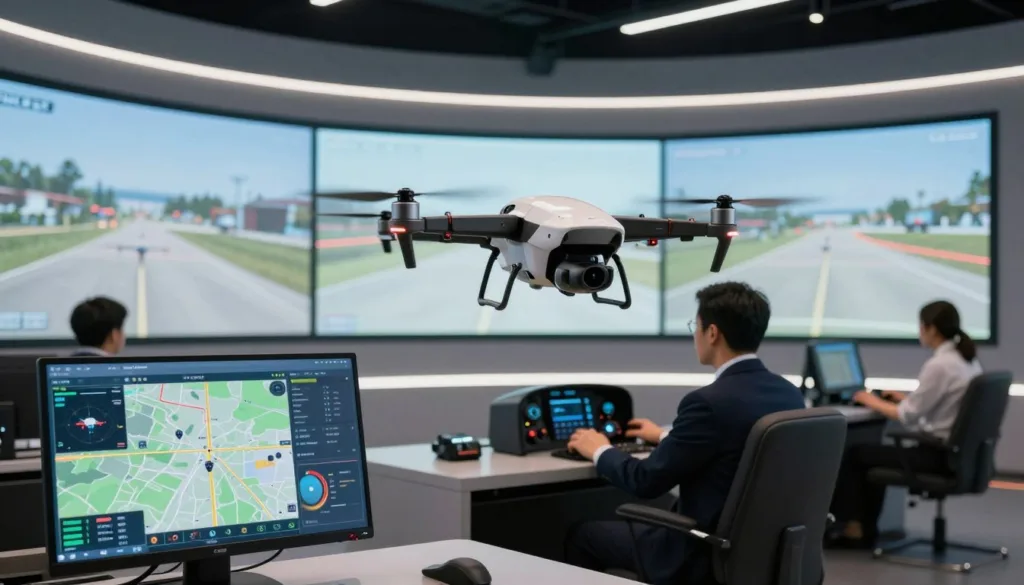
“Simulation is not just about practice; it is about the freedom to innovate without the fear of failure.”
The rise of autonomous systems is also reshaping the industry in exciting ways. Project AirSim allows developers to test and train drones in diverse, challenging scenarios. This includes everything from high-speed package delivery to critical search and rescue missions.
Practicing in these environments helps refine aerial autonomy for various commercial uses. You can simulate industrial inspections or navigate tight urban spaces with ease. This technology ensures that every flight is backed by hours of virtual experience.
Modern drone simulation software offers specific training for several industries:
- Delivery services: Testing routes and obstacle avoidance in busy neighborhoods.
- Search and rescue: Training for low-visibility and high-stress environments.
- Infrastructure inspections: Navigating close to structures safely to identify damage.
As autonomous systems become more common, the need for precise training grows. Pilots who embrace aerial autonomy tools will lead the way in the next era of aviation. You can stay ahead of the curve by perfecting your skills in a virtual world today.
Conclusion
AI technology is changing the way pilots learn. Microsoft Project AirSim shows how advanced tools help build better autonomous drones. These platforms offer a safe space to test new ideas. You can practice complex maneuvers without any risk to real hardware. Using flight simulation saves time and money for every pilot.
Modern flight simulation tools like SIMNET provide cloud-native solutions for everyone. This platform helps with drone design and deep analysis. It makes drone training accessible to teams across the globe. You get to see how your aircraft behaves in a virtual world before it hits the sky. Autonomous drones need this level of testing to stay safe.
The future of this industry looks bright. Industries like delivery and search and rescue will benefit from drone training. Better flight simulation leads to safer skies for everyone. Start your journey with these powerful digital tools today. High-quality drone training ensures you stay ahead in a fast-moving market.