Ever dreamed of soaring through the skies without leaving your home? Modern flight training software brings the thrill of aerial navigation right to your fingertips. These powerful programs create immersive environments where you can practice piloting skills in complete safety.
The beauty of this approach lies in its risk-free learning environment. Aspiring aviators can develop their abilities without worrying about damaging expensive equipment or dealing with unpredictable weather conditions. It’s the perfect way to build confidence before taking to the real skies.
Most flight training platforms work by connecting actual remote controllers to your device. This creates an authentic hands-on experience that translates directly to real-world operation. Whether you’re using a PC or Mac, the setup process is straightforward and accessible to beginners.
Today’s advanced programs offer incredible flexibility. You can customize various flying scenarios and adjust settings to match specific learning goals. This technology has become an essential tool for both recreational enthusiasts and professional operators seeking to refine their techniques.
Key Takeaways
- Flight simulators provide a safe, cost-effective way to learn aerial navigation skills
- These programs work with real controllers for authentic hands-on experience
- Perfect for beginners to build confidence before actual flight operations
- Compatible with both PC and Mac computer systems
- Customizable scenarios allow for targeted skill development
- Eliminates risks associated with weather and equipment damage
- Serves both recreational users and professional training purposes
Understanding Computer Drone Simulators
Virtual flight training platforms are revolutionizing how people learn aerial skills. These programs create immersive environments where you can practice without real-world risks.
Modern aerial training software offers incredible flexibility for all experience levels. Beginners and experts alike benefit from customizable scenarios that match specific learning goals.
Benefits for Beginner Pilots
New aerial enthusiasts gain tremendous advantages from virtual training. The financial risk of crashes disappears completely during the learning phase.
Mistakes become valuable lessons rather than costly accidents. This approach helps develop muscle memory and controller familiarity.
Confidence builds naturally before investing in expensive hardware. The transition to actual flight operations becomes much smoother.
Different Types of Simulators
Aerial training programs fall into three main categories. Each serves distinct purposes while offering some crossover benefits.
Game-focused options prioritize entertainment and casual enjoyment. Skill-building platforms provide structured training paths for professional development.
Specialized FPV systems target racing enthusiasts seeking competitive edges. Choosing the right type depends on your specific goals and interests.
| Simulator Type | Primary Focus | Best For | Example Platform |
|---|---|---|---|
| Game Simulators | Entertainment & Fun | Casual Users | Crazy Games Drone Simulator |
| Skill-Building Simulators | Professional Training | Commercial Pilots | Zephyr Simulator |
| FPV Simulators | Racing Performance | Competitive Flyers | DRL SIM |
All three categories help improve flying abilities to some degree. Dedicated training platforms typically offer more comprehensive learning structures.
The right choice depends on whether you seek professional preparation, racing competition, or simple aerial enjoyment. Many users find value in exploring multiple options.
How Drone Simulators Benefit Both Novice and Expert Pilots
From first-time flyers to seasoned professionals, simulation technology provides unique benefits that enhance real-world performance. These platforms serve as valuable training tools across all experience levels.
Newcomers gain fundamental skills without financial risk. They can practice basic maneuvers repeatedly until muscle memory develops. This builds confidence before handling expensive equipment.
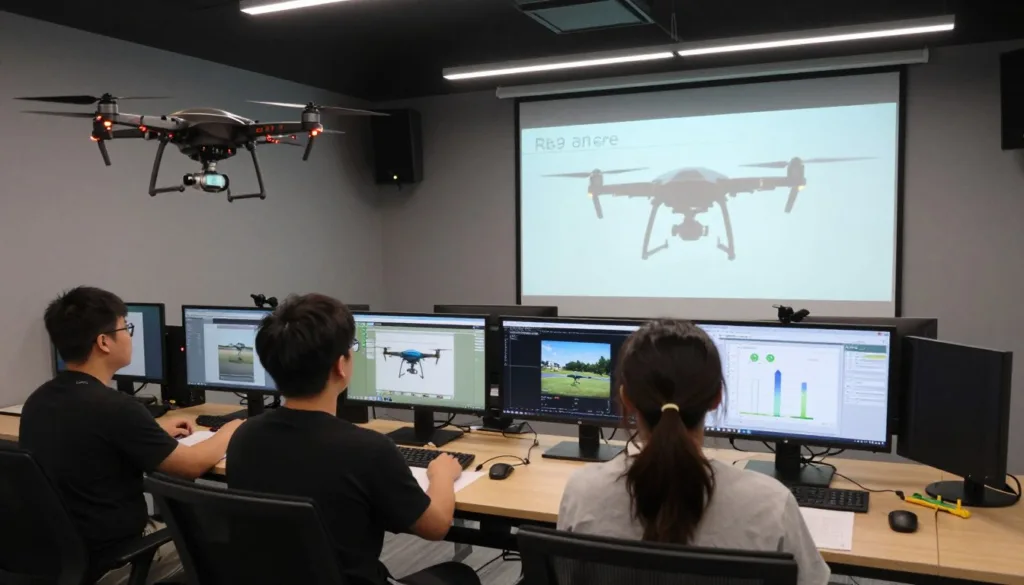
Experienced pilots use these programs to refine advanced techniques. They practice complex maneuvers in safe environments. This prepares them for specific missions or competitive events.
Improving Reaction Time and Confidence
Repeated simulation practice creates neural pathways that translate to faster responses. Pilots develop intuitive reactions to various flying scenarios. This mental training proves invaluable during actual operations.
These platforms allow users to attempt risky maneuvers safely. Pushing boundaries builds confidence without real-world consequences. Expanding capability envelopes becomes a risk-free process.
Consistent practice develops crucial situational awareness. Pilots learn to handle unexpected challenges effectively. This skill maintenance proves essential during off-seasons or equipment downtime.
“The ability to practice without limitations transforms how pilots approach skill development.”
Weather conditions and location access become irrelevant. Unlimited practice opportunities accelerate learning curves for all skill levels. This accessibility makes simulation an essential component of modern aerial training.
Key Features of Top Drone Simulators
Premium flight training platforms distinguish themselves through sophisticated systems that mirror real-world flying conditions. These advanced programs offer comprehensive features that accelerate skill development for all experience levels.
The most effective tools combine technical precision with flexible learning options. This creates an engaging experience that translates directly to real aerial operations.
Realistic Flight Physics
Exceptional programs invest heavily in accurate flight physics engines. They model complex aerodynamic forces like thrust, torque, and drag with remarkable precision.
This attention to technical physics ensures authentic flight characteristics. Skills developed in the virtual environment transfer effectively to actual flying scenarios.
The sophisticated physics simulation creates true-to-life responses. Pilots experience realistic wind effects, battery performance, and momentum changes.
Customizable Training Environments
Top-tier platforms offer diverse training environments that users can modify. You can practice in open fields, urban landscapes, or specialized obstacle courses.
This flexibility allows pilots to prepare for specific mission scenarios. The adjustable environment supports targeted skill development for various applications.
These customizable environments combined with accurate physics create comprehensive training tools. They address different user needs from basic learning to professional skill refinement.
Latest Developments in Drone Simulation for 2024
2024 marks a significant leap forward in virtual flight training capabilities and accessibility. The aerial simulation market has exploded with innovative features that make learning more effective than ever.
Artificial intelligence now powers adaptive training experiences. These systems analyze your flying patterns and adjust difficulty automatically. This personalized approach accelerates skill development for all levels.
Multiplayer capabilities have expanded dramatically. Pilots can now practice together in shared virtual spaces. Cloud-based progress tracking ensures seamless learning across devices.
| Feature | 2023 Standard | 2024 Advancement | Benefit |
|---|---|---|---|
| Physics Engine | Basic aerodynamics | Real-time wind modeling | More realistic responses |
| Graphics Quality | Standard definition | 4K VR-ready environments | Enhanced immersion |
| Training Modules | Fixed scenarios | AI-generated challenges | Adaptive difficulty |
| Regulatory Training | Basic rules | Full compliance scenarios | Legal preparedness |
Innovative Training Tools
New educational features include automated performance analytics. These tools provide instant feedback on your flying techniques. Structured curriculum paths guide both recreational and commercial pilots.
Regulatory compliance training has become a standard feature. Pilots can practice operating within legal boundaries before actual flights. This reduces legal risks and improves safety awareness.
Competition between developers has driven remarkable innovation. The result is more affordable, feature-rich options for everyone. 2024 truly represents the golden age of aerial simulation technology.
Comparing Leading Simulator Options
Two leading platforms demonstrate distinct approaches to virtual flight preparation. Understanding their different philosophies helps you select the right tool for your specific needs.
Each program targets different user groups with specialized features. The choice depends on whether you need institutional training or commercial scenario preparation.
Zephyr Drone Flight Simulator Insights
Zephyr focuses heavily on educational environments with its integrated Learning Management System. This makes it perfect for flight schools and universities tracking student progress.
The platform offers an impressive roster of customizable models including DJI Phantom 3 and Mavic Pro. Its accurate flight characteristics and FAA regulation integration prepare pilots for real-world compliance.
droneSimPro Simulator Overview
droneSimPro emphasizes commercial scenario preparation with its custom-built flight engine. It specializes in public safety, utilities, and cinematography applications.
While Zephyr carries a premium price point, droneSimPro offers more affordable access. Both support Windows and Mac systems with extensive controller customization.
Fortunately, both platforms provide free trial periods. This allows you to test their features before making any financial commitment.
Reviewing Best FPV Drone Simulators
For serious racing enthusiasts, mastering FPV flight requires tools that accurately replicate the intense physics of competitive events. These specialized platforms focus on high-speed maneuvering and first-person-view challenges.
The best options provide realistic racing experiences that translate directly to real-world competition. They help pilots develop the lightning-fast reflexes needed for success.
Drone Racing League’s SIM 3.0 Features
DRL’s latest platform stands out with extraordinary development rigor. The team conducted over 5,000 bench tests to create unparalleled accuracy.
This scientific approach generated 260,000 different configurations. Each combination delivers precise power curves and authentic flight characteristics.
Advanced features include unsteady drag modeling and propeller dynamics. The modular parts database allows incredible customization for competitive practice.
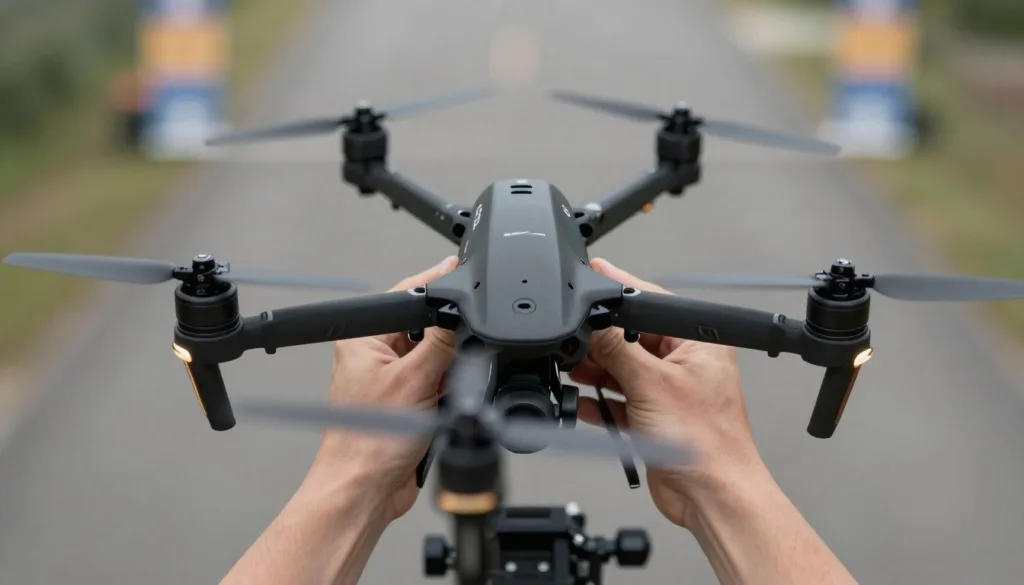
VelociDrone Simulator Breakdown
VelociDrone earns its reputation through exceptional physics modeling. It’s the official choice for MultiGP competitions worldwide.
The platform offers an impressive library with 40+ environments. Thousands of community-created tracks provide endless racing variety.
This community-driven approach ensures the platform evolves with racer preferences. It supports everything from micro to mega quad configurations.
Both platforms offer real-time multiplayer and advanced training modes. They represent the gold standard in FPV racing preparation.
Computer Drone Simulator: Essential for Realistic Flight Training
Quality simulation programs have become indispensable for developing genuine flying skills that transfer directly to outdoor operations. These tools provide the foundation for confident piloting without financial risks.
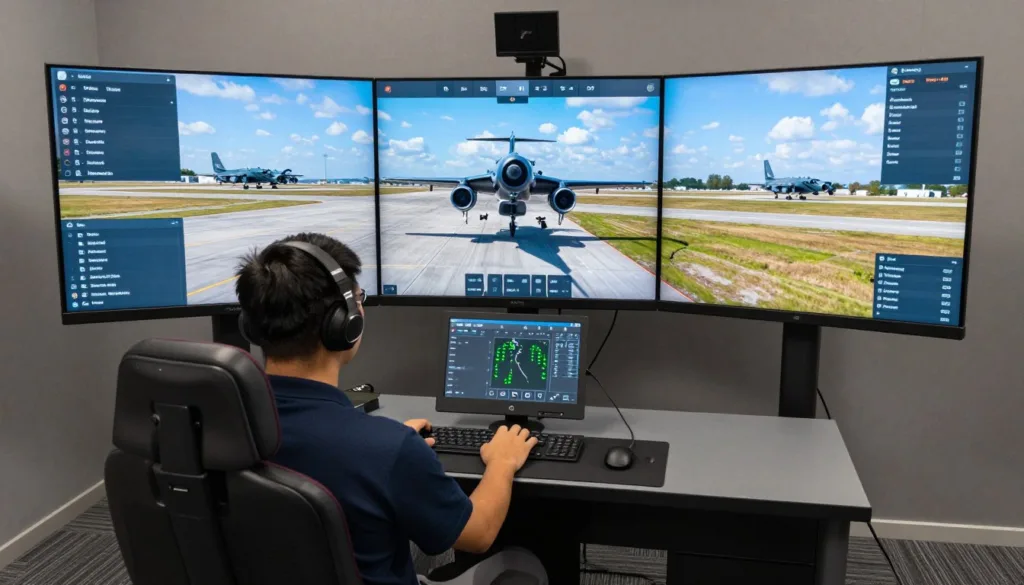
The best platforms achieve a critical balance between absolute realism and user accessibility. This makes them valuable for beginners starting their journey and professionals maintaining peak performance.
Standout Features and Flight Dynamics
Properly designed software creates experiences that feel nearly identical to operating real equipment. The gap between virtual practice and actual flying disappears completely.
Accurate flight characteristics create tremendous training value. Top developers invest in extensive real-world testing to ensure virtual models behave exactly like physical counterparts.
Advanced physics modeling creates authentic responses to environmental conditions. Realistic wind effects and mechanical failure simulations prepare pilots for any situation.
| Flight Characteristic | Basic Simulators | Advanced Platforms | Professional Grade |
|---|---|---|---|
| Physics Accuracy | Standard aerodynamics | Real-time force modeling | Scientific precision testing |
| Weather Effects | Basic wind simulation | Dynamic condition changes | Full meteorological integration |
| Controller Response | Generic input mapping | Device-specific calibration | Professional controller support |
| Emergency Training | Limited failure scenarios | Multiple malfunction types | Comprehensive procedure practice |
These programs serve multiple training purposes simultaneously. Users build basic skills, refine advanced techniques, and practice emergency procedures.
Investing time in quality simulation is one of the most cost-effective decisions a pilot can make. It prevents expensive crashes and accelerates development of confident, capable flying abilities.
Dive into Game-Like Experiences with Drone Simulators
Who says learning to fly can’t feel like playing your favorite video game? Many modern flight training platforms prioritize entertainment while still delivering legitimate skill development. These game-focused options remove the pressure of serious training.
The video game approach has made aerial navigation accessible to broader audiences. People who might feel intimidated by technical training programs find these engaging alternatives much more inviting. Creative scenarios and mission-based challenges keep users motivated.
Merging Fun with Training
The line between entertainment and education has beautifully blurred in today’s flight programs. What feels like playful exploration actually builds crucial flying fundamentals. Spatial awareness and controller familiarity develop naturally during enjoyable sessions.
When people have fun, they practice more frequently and for longer periods. This consistent engagement leads to faster skill development and better retention. The enjoyment factor shouldn’t be dismissed as frivolous—it’s a powerful learning tool.
Several platforms successfully balance entertainment value with genuine training benefits. They prove that learning to fly doesn’t have to be purely technical. Game-oriented simulators serve as excellent entry points, especially for younger users or those who learn best through exploration.
“The best learning happens when you’re having too much fun to notice you’re practicing.”
These engaging experiences demonstrate that skill-building and enjoyment can coexist perfectly. The right game-like simulator might be your ideal starting point for aerial adventures.
Free Drone Simulator Options Worth Trying
Exploring aerial navigation doesn’t require emptying your wallet thanks to remarkable free alternatives. These platforms have evolved to offer surprisingly robust features that challenge the assumption that quality training demands expensive software.
The business models behind free options vary widely. Some use freemium approaches with optional premium content. Others are completely free community-driven projects. Many provide excellent training value that transfers successfully to real-world flying.
ORQA FPV Skydive Simulator Overview
ORQA FPV Skydive stands out as a dynamic and versatile option available on Steam for Windows. This plug-and-play platform caters to beginners and experienced FPV pilots alike.
The simulator offers diverse environments including stadiums, racecourses, and construction sites. Its freemium model provides substantial content at no cost while offering additional scenarios for purchase. Regular updates keep the experience fresh for all users.
Tiny Whoop GO Simulator Insights
Tiny Whoop GO specializes in micro drone flight dynamics with an authentic beginner-friendly approach. This free option is perfect for enthusiasts of smaller aerial vehicles.
The platform’s unique track builder allows users to create and share custom courses. This fosters a creative community and provides endless variety without additional cost. It’s an excellent foundation for skill development at zero price point.
The Role of Drone Simulators in Professional Training
Industry-specific training scenarios have become essential for preparing pilots for real-world commercial applications. Flight schools and certification programs now rely heavily on these advanced tools to develop competent operators.
These platforms provide standardized instruction across entire training programs. They objectively track student progress and ensure consistent skill development before actual flight operations begin.
Commercial Training Applications
Professional platforms like droneSimPro offer specialized scenarios for various industries. Public safety training includes emergency response simulations for fires, accidents, and crowd control situations.
Utilities sector preparation covers power line inspections and tower assessments. Cinematography modules help pilots practice high-value scene filming and event planning techniques.
This targeted approach helps operators develop precise skills needed for specific commercial applications. The risk-free environment allows practice of complex maneuvers without equipment damage concerns.
Regulatory Compliance Learning
Advanced systems like Zephyr integrate FAA regulations directly into training exercises. Pilots receive immediate warnings for potential violations during practice sessions.
This real-time feedback helps internalize legal requirements before actual operations begin. The built-in Learning Management System makes these platforms ideal for educational institutions.
Educators can monitor performance data and identify areas needing improvement. This data-driven approach accelerates skill development while building compliance awareness from the start.
| Training Feature | droneSimPro | Zephyr | Primary Benefit |
|---|---|---|---|
| Industry Scenarios | Public safety, utilities, cinematography | General commercial operations | Targeted skill development |
| Regulatory Training | Basic compliance guidelines | FAA regulation integration | Legal preparedness |
| Educational Tools | Scenario-based learning | Full Learning Management System | Progress tracking |
| Risk Management | Equipment failure simulations | Weather and emergency training | Safety preparation |
Customizing Your Drone Flight Experience
What sets today’s flight training apart is the incredible flexibility to create experiences tailored exactly to your goals. Modern platforms offer extensive customization options that transform generic practice into targeted skill development.
This personalization approach ensures your training matches real-world scenarios perfectly. You can prepare for specific missions or simply optimize your comfort preferences.
Personalized Controller and Environment Options
The range of compatible controller options is impressive. Systems work with professional RC transmitters, gaming controllers like Xbox and PlayStation, and specialized FPV units.
You can configure button mappings and sensitivity curves to match your flying style. This level of control customization ensures seamless transition between virtual and actual flight operations.
Environment customization extends beyond basic scenery selection. Adjust weather conditions, time of day, and wind speeds to create realistic challenges. Practice in urban landscapes, open fields, or complex obstacle courses.
These options keep training engaging and relevant over time. You can continuously introduce new scenarios rather than repeating the same experiences.
Considerations on Price and Value in the Drone Simulator Market
The investment in aerial practice tools spans a wide spectrum, from completely free options to premium professional packages. Understanding this market helps you make smart financial decisions.
Higher price doesn’t always mean better value. The right choice depends on your goals and skill level.
Balancing Cost with Features
Evaluate features against your specific needs. Budget-friendly options like DRL SIM 3.0 and VelociDrone offer excellent training value.
Premium platforms like Zephyr justify their cost with advanced tools for professional training. Consider ongoing updates and community support when making your purchase.
| Price Tier | Example Platforms | Best For | Key Value Points |
|---|---|---|---|
| Free | ORQA FPV Skydive, Tiny Whoop GO | Beginners, Casual Users | Risk-free exploration, basic skill building |
| Budget ($) | DRL SIM 3.0, VelociDrone, droneSimPro | Enthusiasts, Hobbyists | Solid physics, good feature sets, community support |
| Premium ($$$) | Zephyr | Professionals, Institutions | Advanced tracking, regulatory training, LMS integration |
The variety of options ensures there’s something for every budget. Always try free trials before committing to a purchase.
Conclusion
The journey through aerial training tools reveals an impressive landscape of options for every aspiring pilot. From game-focused platforms to professional-grade programs, each type serves distinct purposes while building essential skills.
Pilots seeking the best training experience will find remarkable variety in today’s market. Free options provide accessible entry points, while premium platforms offer advanced features for serious development.
Key characteristics like realistic flight physics and extensive customization ensure genuine skill transfer. The right program eliminates financial risks while accelerating learning curves.
Virtual practice complements real-world flying, creating confident, capable operators. With options available for every budget and skill level, there’s never been a better time to begin your aerial journey.
FAQ
What are the main benefits of using a drone simulator?
These programs offer a safe and cost-effective way to build your skills. You can crash without breaking anything, practice in countless virtual environments, and significantly improve your reaction time and confidence before flying a real FPV quad.
Are there good free options available?
A> Absolutely! Programs like the ORQA FPV Skydive Simulator and Tiny Whoop GO provide excellent entry points. They allow you to get a genuine feel for the flight physics and controls without any initial purchase, making them perfect for beginners.
Can a simulator really help with professional training?
A> Yes, many advanced platforms are used for commercial applications. They help pilots master complex maneuvers, understand regulatory compliance scenarios, and train for specific tasks in a completely risk-free simulation environment.
What features should I look for in a top-tier simulator?
A> The best options focus on realism. Look for highly accurate flight physics, a wide variety of customizable training environments, and strong community support. Features like controller customization and video playback for analyzing flights are also incredibly valuable.
How do I choose the right simulator for my needs?
A> Consider your goals and budget. If you’re into racing, check out the Drone Racing League’s SIM 3.0 or VelociDrone. For general training, Zephyr Drone Flight Simulator and droneSimPro are great choices. Balancing the price with the specific features you need is key to finding the best value.