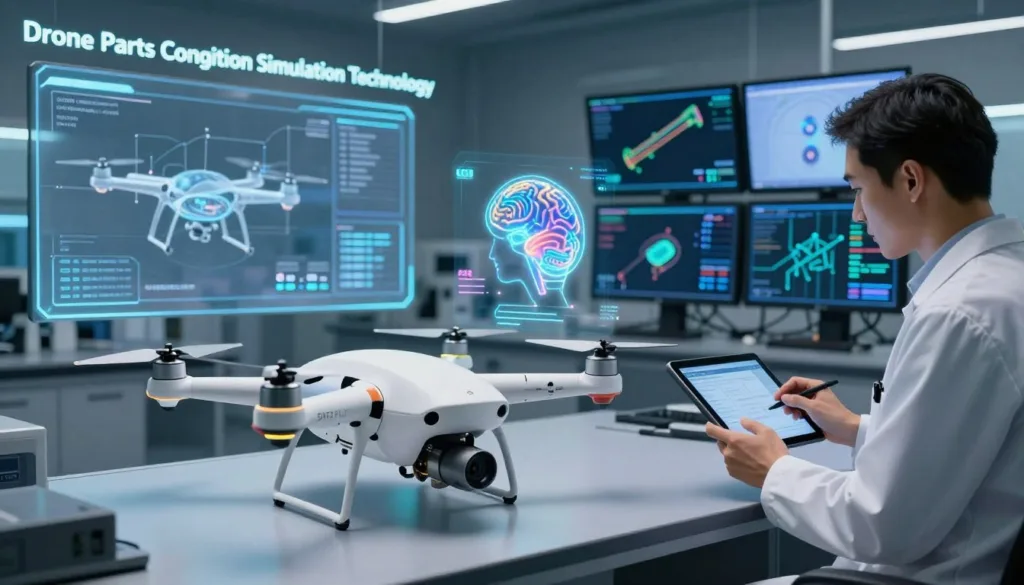
Welcome to a deep dive into a technology that’s changing the game for unmanned aerial vehicles. This innovation helps them understand their surroundings with remarkable speed and precision.
At its heart, this system blends smart algorithms with sophisticated sensors. It creates a powerful awareness tool for navigation. This tool works much like human thought processes do.
This advancement is a major step forward for aerial intelligence. It allows these machines to process complex environmental information in real-time. The result is safer and more efficient operations across many fields.
Whether you work in commercial applications, education, or research, grasping this concept is key. It opens up new possibilities for how we use these flying machines. This guide will break down the complex ideas into easy-to-understand parts.
We will show you how this technology enhances performance and safety. By the end, you’ll have a clear view of how it’s revolutionizing the industry.
Key Takeaways
- This technology significantly improves how unmanned aerial vehicles perceive their environment.
- It combines advanced algorithms with sensor data for real-time processing.
- The system creates a virtual practice space for safer flight operations.
- Understanding this innovation is valuable for commercial, educational, and research applications.
- It makes advanced autonomous flight more accessible and practical.
- The technology bridges the gap between theoretical capabilities and real-world use.
- This guide will simplify the core concepts for a comprehensive understanding.
Overview of Advanced Simulation Technology
Modern aerial systems are undergoing a remarkable transformation thanks to sophisticated simulation capabilities. This innovation processes environmental information in ways that traditional sensors alone cannot achieve.
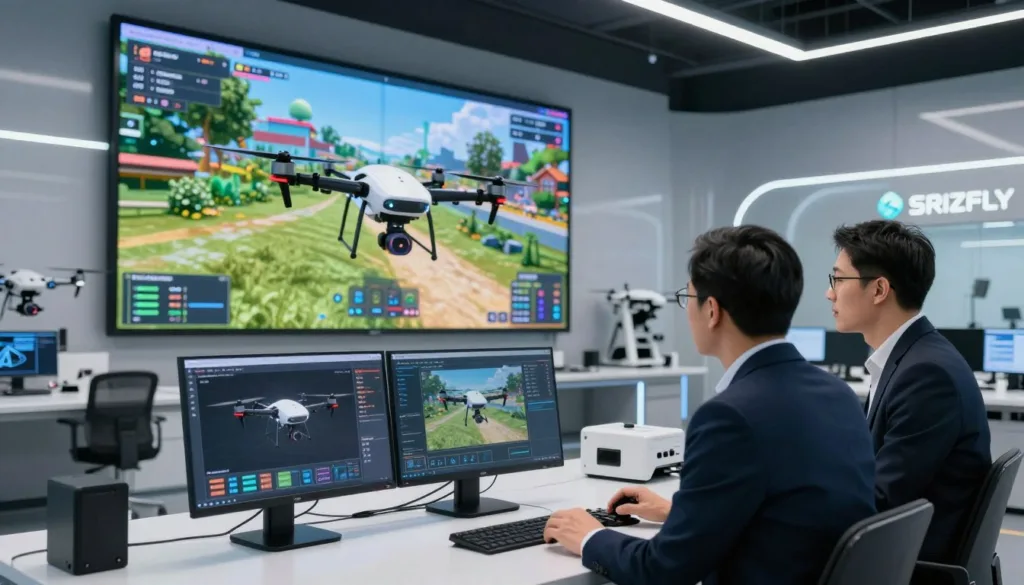
The system uses smart algorithms to identify both stationary and moving objects. It recognizes everything from buildings and trees to vehicles and birds. This creates comprehensive awareness across different landscapes.
Enhancing Performance with Real-Time Data
Real-time processing captures high-resolution information from multiple angles. The technology adapts to changing viewpoints as the aircraft moves. This precision makes operations significantly more reliable.
Customization allows tailoring for specific needs like delivery services or inspections. The system maintains consistent performance in urban, suburban, and rural settings.
Leveraging Simulation for Safer, Smarter Operations
Advanced modeling handles challenging weather conditions and lighting changes. It intelligently manages shadows, glare, and other optical complications. This ensures robust performance under real-world circumstances.
Virtual testing environments reduce operational risks before actual deployment. The approach shifts from reactive responses to proactive planning for navigational challenges.
Key Features of Drone Parts Cognition Simulation Module
What truly sets this innovative system apart are its powerful features that enable precise environmental understanding. These capabilities work together to create a comprehensive awareness tool for aerial vehicles.
Advanced Object Recognition and Environmental Awareness
The system uses smart algorithms to identify hundreds of different objects with remarkable accuracy. It can distinguish between buildings, vehicles, and natural elements in real-time.
Environmental awareness goes beyond simple detection. The technology understands relationships between objects, recognizing that a moving car requires different attention than a stationary tree.
This contextual understanding makes the system ideal for surveillance and monitoring tasks. It provides continuous tracking of specific targets across extended flight paths.
Dynamic Obstacle Detection and Collision Avoidance
Moving elements like pedestrians and other aircraft are detected instantly. The system adapts flight paths intelligently when unexpected changes occur.
Safety protocols evaluate potential conflicts milliseconds before they become dangerous. Automatic corrective maneuvers maintain safe distances from obstacles.
Multiple sensor inputs create a comprehensive 3D awareness map. This framework dramatically reduces accident risks in challenging environments.
Integrating Simulation with Drone Operations
Bringing simulation capabilities into actual aerial vehicle operations requires sophisticated integration approaches. This process bridges the gap between virtual testing environments and real-world flight controllers.
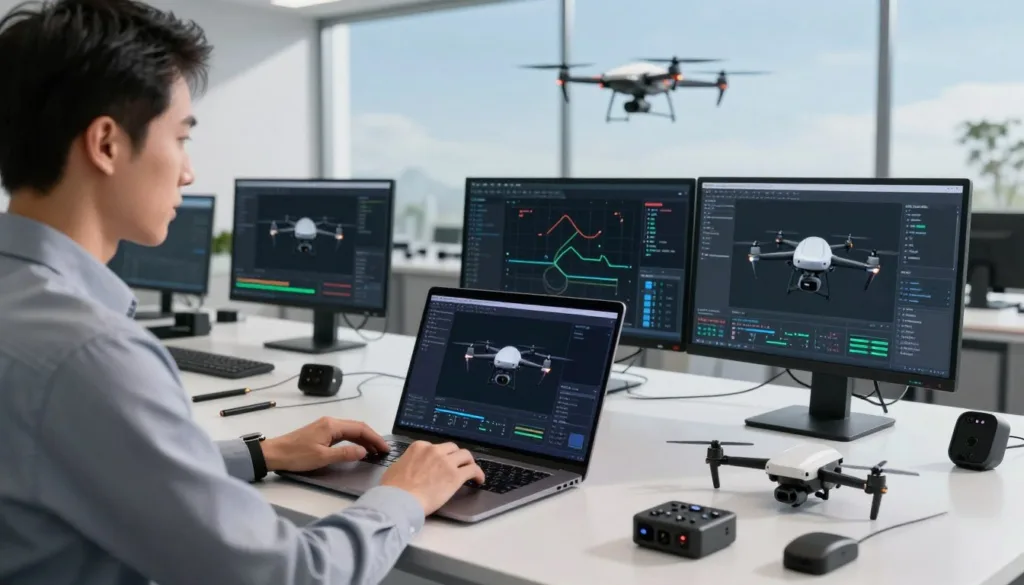
Seamless communication protocols ensure that insights from simulation translate directly into operational improvements. The integration creates a comprehensive ecosystem where virtual testing informs real-world performance.
Real-World Applications in Drones and Programming
Educational programs demonstrate how students learn STEM concepts through hands-on activities. They build unmanned aircraft, navigate obstacles, and collaborate on projects that develop technical skills.
Commercial applications show the practical value across diverse industries. Delivery services navigate complex urban environments while inspection operations require precise positioning near infrastructure.
Custom software development plays a crucial role in these implementations. Teams create web-based flight panels that display real-time information through user-friendly interfaces.
Adaptive Technology for Diverse Flight Conditions
The programming architecture allows for continuous improvement through machine learning. Each flight contributes data that refines the models for better accuracy.
Development teams often start with reduced-scale models to test control systems. This approach helps achieve excellent results in stabilization before scaling up to full-size operations.
Control software improvements focus on responsive self-correction mechanisms. Extensive testing optimizes parameters while carrying realistic payload weights for reliable performance.
Conclusion
As we wrap up our exploration, it’s clear that this advancement represents a significant leap forward in autonomous navigation. The technology we’ve discussed transforms how machines understand and interact with their surroundings.
Implementing these systems provides valuable experience that extends across entire operations. Each drone becomes smarter and more capable, building organizational knowledge that improves safety and efficiency.
Across industries, from delivery services to emergency response, drones equipped with these capabilities perform more reliably. They handle complex environments with greater confidence and precision.
This evolution marks an exciting time for aerial innovation. We encourage you to explore how these intelligent systems can enhance your specific applications and discover their potential for your unique needs.
FAQ
What exactly is a Drone Parts Cognition Simulation Module?
It’s a sophisticated technology that mimics real-world flight conditions. This programming allows a UAV to learn and react to its environment before ever taking off. It helps build smarter, safer flying machines.
How does this simulation technology improve a UAV’s performance?
By using real-time data, the system teaches the aircraft to make intelligent decisions. This leads to smoother flights, better battery management, and more precise control in various situations.
Can this system help prevent crashes?
Absolutely. A key feature is dynamic obstacle detection. The module trains the aircraft’s systems to identify and avoid potential hazards, significantly reducing the risk of collisions during autonomous or manual flights.
What are some real-world uses for this adaptive technology?
It’s incredibly versatile. Applications range from agricultural surveying with DJI drones to complex inspection tasks in construction. It equips flying robots to handle diverse conditions, from windy days to crowded spaces.
Do I need advanced programming skills to use this module?
A> Not necessarily. Many modern systems, like those from companies like Skydio, are designed with user-friendly interfaces. However, understanding the basics can help you unlock its full potential for custom projects.