Welcome to the world of advanced testing for unmanned aerial systems. This guide explores a powerful method for validating safety protocols before real-world use. We will show you how this technology helps organizations prepare for complex missions.
Using virtual environments, professionals can test their equipment without risk. This approach saves money and protects personnel. It accelerates development cycles and creates safer operational standards.
This friendly guide breaks down complex ideas into simple steps. You will learn about defensive and offensive testing methods. We cover major platforms, from military-grade software to accessible cloud tools.
Whether you are an engineer, researcher, or operator, this information is for you. Our goal is to provide actionable knowledge you can use immediately.
Key Takeaways
- Virtual testing allows for safe validation of unmanned aerial systems.
- This technology significantly reduces costs and protects equipment.
- Both defensive and offensive safety scenarios can be explored.
- A variety of platforms exist, catering to different expertise levels.
- Implementing these methods leads to safer real-world deployments.
- Complex concepts are simplified for immediate practical application.
Introduction: The Need for Drone Security Simulation
Teams working with aerial technology confront the reality that real-world testing carries substantial risks. Every mission into unknown airspace presents potential dangers to both equipment and personnel. Traditional testing methods often fall short of replicating the complex conditions these systems will face.
Understanding the Importance of Simulation in Drone Safety
Real-world testing of unmanned systems involves inherent dangers that can lead to equipment damage or safety hazards. Flight control engineers face immense pressure because missions cannot pause for debugging or updates. This makes pre-deployment validation essential for identifying potential failures.
Digital twin technology now creates accurate virtual environments that mimic real-world conditions. These systems reproduce sensor timing and aerodynamic effects with impressive precision. They provide a safe testing ground that evolves alongside changing threat landscapes.
Benefits of a Proactive Simulation Approach
A proactive approach shifts teams from reactive troubleshooting to predictive tuning. You can test guidance and control algorithms without live-fire consequences. This method allows for comprehensive coverage of edge cases and dangerous scenarios.
Organizations using these methods report fewer prototype crashes and faster development cycles. The ability to train personnel on complex operations in a controlled setting reduces insurance costs. Lab-driven insights arrive before procurement deadlines rather than after field failures.
Traditional test ranges cannot safely replicate contested radio spectrums or adversarial jamming. Simulation platforms provide intentionally vulnerable environments for security professionals to practice techniques legally. This comprehensive approach leads to safer real-world deployments.
Foundations of Drone Security Application Simulation
At the core of every effective virtual testing environment lies a carefully designed architecture of interconnected elements. These fundamental pieces work together to create realistic scenarios where you can safely validate your equipment’s performance.
Key Components and Hardware Essentials
The foundation rests on four main pieces that create authentic testing conditions. The flight controller acts as the brain, running firmware like ArduPilot. It processes virtual sensor data exactly like real equipment would.
Companion computers handle networking tasks and manage telemetry logs. They facilitate camera streaming for surveillance validation. Professional setups use processor-in-the-loop boards for precise timing.
Deterministic network interfaces maintain microsecond precision. This ensures physics engines and virtual sensors run smoothly together. Sufficient computing power handles multiple tasks simultaneously.
Essential Software and Control Systems
Software-in-the-loop workflows test mission programs entirely in virtual spaces. No physical equipment is needed. Hardware-in-the-loop setups connect real controllers to simulated sensors.
Ground control stations provide mission planning and flight mapping. They communicate using standard protocols like MAVLink. This gives operators the same interface they use in actual deployments.
Modern platforms integrate computational fluid dynamics with embedded controllers. They calculate blade load changes in real-time. Modular architecture allows different models to share data efficiently.
Setting Up Your Drone Simulation Environment
A successful testing setup begins with a clear assessment of your performance needs and available resources. This initial planning phase ensures you choose the right configuration for your specific goals, whether for basic validation or high-fidelity modeling.

Hardware and Software Prerequisites
Your system requirements depend heavily on the complexity you need. For basic testing and security validation, a Lite Mode configuration is often sufficient. This mode typically requires 4-8 GB of RAM, two processor cores, and no dedicated graphics card.
If you need high-fidelity 3D physics, a Full Mode environment is necessary. This demands more powerful hardware: 8-16 GB RAM, a dedicated GPU with at least 2 GB VRAM, and significantly more swap space.
The core software prerequisite is usually Docker. This containerization tool creates isolated, reproducible environments. It simplifies deployment across different machines, eliminating common setup conflicts.
Installation and Configuration of Simulation Tools
Installation for platforms like Damn Vulnerable Drone is streamlined through package managers. The process involves adding Docker repositories, importing security keys, and installing Docker alongside Docker Compose.
Once the core tools are installed, you clone the project repository. You then choose to either pull pre-built images or build them locally using provided configuration files. Management scripts help you start, stop, and check the status of your simulator.
Proper configuration also involves setting up virtual network interfaces. This ensures your ground control station software can communicate seamlessly with the virtual endpoints, creating a fully integrated testing system.
Understanding Communication Protocols and Sensor Integration
Network protocols serve as the invisible infrastructure that enables complex aerial missions. They ensure reliable data exchange between all system components. This foundation supports everything from basic telemetry to advanced swarm operations.
Simulated Network Communication Strategies
Modern testing platforms use sophisticated network strategies to validate communication reliability. They can inject interference patterns that mimic real-world jamming attempts. This helps engineers test fallback routes through satellite or line-of-sight links.
You can benchmark mesh-network formation during swarm launches. The system tracks how topology changes as vehicles maneuver. It monitors packet loss, latency spikes, and retry rates under various conditions.
Integrating Sensors with Flight Control Systems
Sensor integration testing connects virtual GPS, IMU, and camera components to your control system. This ensures the autopilot correctly fuses data from multiple sources. The platform generates realistic sensor outputs with programmable noise distributions.
Advanced testing validates how perception algorithms handle imperfect sensor data. You can configure communication protocols for different security levels. This helps balance encryption overhead with real-time control responsiveness.
Implementing Drone Security Application Simulation in Real-World Scenarios
Moving from theoretical concepts to practical implementation requires bridging the gap between virtual testing environments and actual field conditions. This transition involves configuring your simulation platform to reflect the specific challenges your equipment will face during real missions.
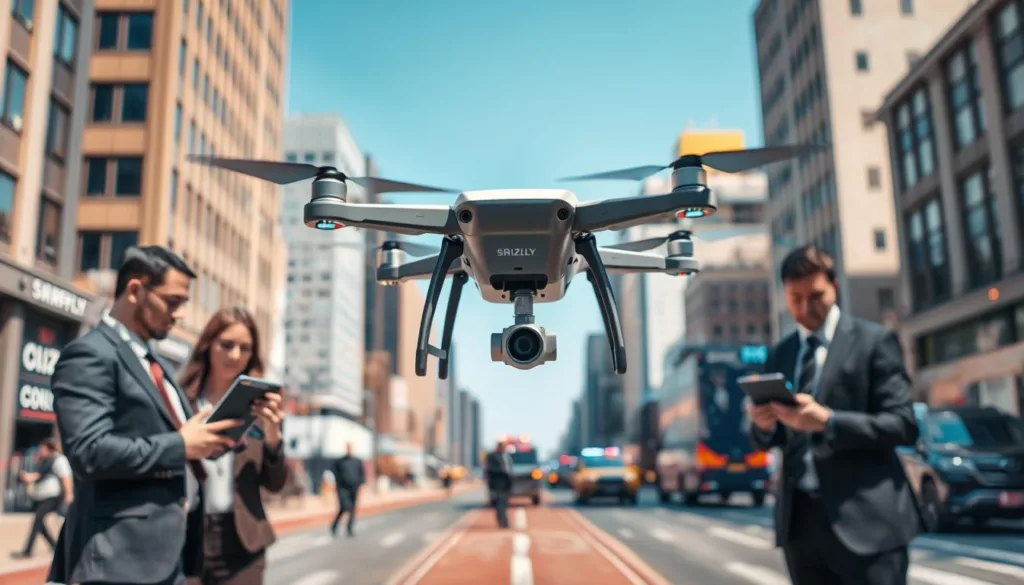
Modern platforms like Damn Vulnerable Drone provide comprehensive flight states that mirror actual operations. You can trigger sequences from initial boot through takeoff, autonomous navigation, and emergency protocols. Each state tests different aspects of system readiness and response.
Real-world scenario testing means simulating equipment failures mid-flight. This includes motor malfunctions, GPS signal loss, or communication dropouts. The goal is to verify proper failsafe procedures rather than uncontrolled behavior.
Security-focused exercises let you practice both defensive and offensive techniques. Platforms offer intentionally vulnerable systems for ethical hacking practice. These scenarios cover reconnaissance, exploitation, and various attack methods.
The most effective simulations recreate the exact geography and conditions of planned deployment locations.
Mission rehearsal capabilities reproduce contested radio spectrums and complex operational environments. You can practice beyond-visual-line-of-sight operations and coordination with other aircraft. This builds team confidence before actual field deployment.
Implementation success comes from creating digital twins of real locations. Use worldwide 3D terrain models to practice flying over exact geography and obstacles. This preparation ensures smoother transitions to live operations.
Step-by-Step Guide to Drone Simulation Testing
Effective virtual testing requires a systematic approach to scenario creation and data review. This process transforms theoretical planning into practical validation, ensuring your equipment performs as expected before real-world deployment.
Following a structured method helps identify potential issues early. It also provides clear documentation for regulatory compliance and team training purposes.
Configuring Test Scenarios and Mission Parameters
Begin by accessing your management web console to define mission parameters. Set waypoint coordinates, altitude limits, and speed restrictions that match your operational requirements. Establish failsafe triggers that activate during unexpected conditions.
Environmental conditions significantly impact vehicle performance. Configure wind patterns, temperature ranges, and lighting scenarios that reflect real deployment settings. Verify communication links between your ground control station and virtual components.
Load the specific model with firmware matching your production hardware. This ensures your tests accurately represent how your equipment will behave during actual missions.
Analyzing and Interpreting Simulation Data
During execution, monitor real-time telemetry through state displays. Watch for anomalies in position, velocity, and sensor readings that indicate potential problems. The system captures thousands of data points throughout each mission timeline.
Review frame-by-frame recordings to identify exactly when and why issues occurred. The replay capability lets you rerun identical missions with modified code. This scientific approach confirms whether fixes resolve problems without introducing new issues.
Export timestamped CSV files containing comprehensive performance metrics. Compare actual results against design specifications for hover efficiency, maximum speed, and endurance. Modern platforms automatically format logs to match regulatory templates, accelerating certification processes.
This methodical approach ensures your equipment meets performance requirements before building expensive prototypes. It provides confidence that your systems will operate safely in challenging environments.
Optimizing Flight Control and Autonomy via Simulation
Virtual testing platforms revolutionize how engineers refine stabilization and navigation algorithms. These tools let you push systems to their limits without physical risks. You can explore optimization spaces that would be impractical with real equipment.
Enhancing Flight Performance under Varying Conditions
Modern platforms inject realistic turbulence fields that challenge your equipment’s stability. Rotor dynamics models calculate blade load changes at microsecond intervals. This creates authentic aerodynamic forces for your controller to manage.
You can test against extreme conditions like high-altitude thin air or temperature variations. Performance profiling builds confidence that your system handles edge cases gracefully. The virtual environment safely replicates scenarios test ranges cannot.
Real-Time Monitoring and Adaptive Control
Real-time execution at hardware speeds ensures control loops behave identically in both virtual and physical testing. You gain visibility into closed-loop margins during environmental disturbances. This monitoring confirms stability reserves even near operational limits.
Adaptive features like gain scheduling adjust control sensitivity based on flight conditions. Replay functions verify these adjustments work correctly without amplifying sensor noise. Path-planning algorithms balance mission objectives against energy consumption.
Rapid iteration completes in minutes rather than requiring hours of field setup. This efficiency lets you explore comprehensive optimization spaces. The result is refined control systems ready for real-world deployment.
Integrating Simulation with Drone Training
The integration of digital training platforms is transforming how operators acquire and maintain their flight skills. These systems create safe spaces where learners can practice without risking expensive equipment.
Virtual environments let students experience emergencies and practice recovery procedures. They build confidence through repeated exposure to challenging scenarios.
Developing Effective Hands-On Training Modules
Modern training combines classroom learning with practical exercises. Students progress from basic hover control to complex mission planning. Web-based platforms make this accessible from any location.
SIMNET serves over 3,000 students worldwide with comprehensive courses. Their platform includes a Learning Management System to track progress. This helps instructors identify areas where students need extra help.
“Before any RPAS pilot touches a real drone at AIRmarket, they’ve refined their skills with SIMNET.”
Self-guided tools allow pilots to maintain proficiency between flights. They practice edge-case scenarios like engine failures and GPS loss. User-friendly interfaces with gamepad controls make learning engaging.
Performance scoring provides objective feedback on skill development. Training modules can replicate specific equipment models. This reduces transition time from virtual practice to real-world operations.
Enhancing Safety Protocols through Digital Twin Models
Digital twin technology offers unprecedented opportunities for validating safety measures before deployment. These virtual replicas recreate physical systems with remarkable precision, allowing engineers to test under extreme conditions without real-world risks. The accuracy of these models ensures that safety protocols developed in virtual environments translate effectively to actual operations.
Stress-Testing Safety Mechanisms Virtually
Virtual stress-testing lets you push equipment beyond normal limits safely. You can simulate motor failures, sensor errors, and structural issues that would be dangerous with real hardware. This approach helps identify weaknesses before they cause problems.
Fault-injection scenarios test how controllers handle unexpected situations. Engineers gather valuable data to establish evidence-based operational boundaries. The digital model provides insights into system behavior under stress.
Establishing Emergency and Return-to-Base Protocols
Emergency procedures require thorough validation before implementation. Virtual testing confirms that return-to-base protocols work correctly during various failure scenarios. This includes GPS denial, communication loss, and partial system failures.
Battery health models account for temperature effects on performance. They help establish safe energy reserves for different environmental conditions. This data supports regulatory assessments like SORA requirements.
Comprehensive testing builds confidence in safety systems. It ensures that unmanned aerial vehicles can handle emergencies autonomously. This approach creates robust safety protocols grounded in empirical evidence.
Leveraging Simulation for Research and Development
Virtual environments are revolutionizing how engineers approach vehicle design and testing. These powerful tools accelerate innovation by letting teams explore hundreds of design variations quickly. This approach transforms traditional development workflows.
Data-Driven Insights and Performance Metrics
Modern platforms provide instant predictions for critical metrics like flight time and range. Researchers gain valuable data to optimize systems holistically. This multidisciplinary analysis considers aerodynamics, propulsion, and structural integrity together.
Trade study features let you visualize how design changes affect overall performance. You can test different wing areas, motor powers, or battery capacities. These physics-based models support informed decision-making during development.
Virtual wind tunnels display airflow patterns and pressure fields in detail. Academic institutions particularly benefit from these accessible tools. Students learn complete design-build processes without physical laboratory costs.
CAD integration through STEP and STL exports bridges virtual validation to manufacturing. Optimized designs transition seamlessly to 3D-printable components. This comprehensive approach strengthens both research outcomes and practical development.
Key Considerations for Secure Drone Operations
Creating truly secure unmanned aerial missions requires careful planning and robust protective measures. This involves understanding potential threats and implementing layered defenses that protect your equipment throughout its entire mission lifecycle.
Risk Management and Compliance Strategies
GPS spoofing represents a serious threat to aerial operations. Attackers can transmit false signals that trick navigation systems. This could cause vehicles to drift far off course or land in unauthorized areas.
Virtual testing platforms help validate spoofing defenses effectively. They inject false data streams to check if receivers detect anomalies properly. Engineers evaluate alarm systems and response pathways to ensure quick, accurate protection.
Effective risk management uses multiple safety layers. If GPS fails, systems should switch to inertial navigation automatically. Communication encryption prevents command injection, while geofencing maintains operational boundaries.
Compliance strategies benefit greatly from documented testing evidence. Showing regulators how your systems detect and respond to threats builds confidence. This documentation demonstrates your commitment to safe operations.
Information protection extends beyond flight control to stored data. Mission planning details and flight logs need secure access controls. Testing environments validate these encryption measures thoroughly.
Ethical considerations remain paramount during all security testing. Educational platforms emphasize responsible use and legal compliance. Users must respect privacy laws and apply techniques only to authorized systems.
Overcoming Challenges in Drone Simulation Testing
Developing accurate virtual testing platforms presents unique obstacles that demand innovative solutions. As your testing library grows from dozens to thousands of configurations, managing complexity becomes essential. You need systematic approaches to organize scenarios, parameters, and results effectively.
Managing Complexity and Ensuring Model Fidelity
Model fidelity challenges often arise when using third-party components. These models may lack complete documentation, making verification difficult. You might wonder if aerodynamic coefficients or propulsion curves match real-world behavior.
Validation test suites provide standardized benchmarks to confirm parameter ranges. They check unit consistency before you invest time building scenarios. This approach helps ensure physical plausibility in your testing methods.
Classified data segregation presents additional hurdles for defense projects. Flight control code and mission algorithms must remain separated across security enclaves. These zones cannot share memory directly, creating integration challenges.
Optimizing Resource Allocation and System Scalability
Resource allocation becomes critical when scaling from single vehicles to swarms. Each unit requires physics modeling and sensor processing running in perfect synchronization. Real-time schedulers partition workloads across dedicated CPU cores.
These tools ensure physics engines and sensor pipelines never collide. They prevent thread contention that could introduce timing variations. The system maintains microsecond-level accuracy throughout testing.
User interface design must present thousands of telemetry fields understandably. Good testing platforms offer customizable dashboards and filtering capabilities. They highlight anomalies without overwhelming operators with too much information.
Code management benefits from version control integration and automated testing. Component modularity lets teams update subsystem models without breaking existing scenarios. Scalability planning should consider future expansion needs from the beginning.
Conclusion
Virtual testing environments have become essential for advancing aerial technology safely and efficiently. Throughout this guide, you’ve discovered how these platforms enable thorough validation of flight dynamics, sensor integration, and communication protocols without physical risks.
The technology now achieves remarkable accuracy in reproducing real-world behavior. This makes virtual testing results directly applicable to operational deployments across various missions.
You now understand the complete workflow from setup through sophisticated scenario execution. Integration capabilities mean testing connects seamlessly with your development process and training applications.
Whether you’re a researcher, developer, or operator, these tools accelerate timelines while improving outcomes. The range of available platforms ensures solutions exist for every requirement and budget.
As operations expand into complex environments, virtual validation becomes indispensable for risk management and compliance. The methods presented give you a solid foundation to implement testing within your organization.
Your next step is choosing the approach that fits your needs. Begin building the capability that will accelerate your program’s success in this rapidly evolving field.