
From surveying crops to inspecting construction sites, aerial technology is reshaping how many industries work. This shift creates a pressing need for high-quality training tools. Professionals must be prepared for complex, real-world scenarios.
Advanced training platforms have become essential. They provide a safe, controlled environment to master flight skills and operational procedures. This preparation is crucial for sectors like logistics, public safety, and energy.
Leading solutions, such as the ABJ Drone Simulator, offer enterprise-grade experiences. These platforms often include integrated learning management systems (LMS). They are built specifically for commercial operators.
Choosing the right training solution directly impacts safety, efficiency, and return on investment. Realistic simulation is no longer a luxury—it’s a core component of professional readiness. It builds confidence and competence for critical missions.
Key Takeaways
- The use of aerial technology is expanding rapidly across agriculture, construction, and public safety.
- Realistic, professional training is critical for safe and effective field operations.
- Advanced simulation platforms provide a risk-free environment to master complex skills.
- Enterprise-grade solutions often feature integrated learning management systems for structured training.
- Selecting the right training tool maximizes operational safety and return on investment.
- High-fidelity preparation builds pilot confidence for demanding real-world applications.
Introduction to Enterprise-level drone simulation software
Cutting-edge platforms transform how professionals prepare for complex aerial missions. These advanced tools create safe, virtual spaces to master critical skills. They are essential for modern training programs across various industries.
Understanding the Role of Simulation in Drone Training
High-fidelity systems replicate real-world flying conditions with precision. Pilots gain hands-on experience without any physical risk. This approach significantly reduces accidents during the learning phase.
Trainees practice basic maneuvers and complex procedures in controlled environments. It builds muscle memory and confidence before actual flight operations.
Key Benefits for Professional Drone Operations
These platforms offer far more than basic control. Features include autonomous mission planning and real-time data processing. AI integration helps with obstacle detection and regulatory compliance.
Professionals achieve faster skill development and better decision-making. Organizations see improved safety records and operational efficiency. Investing in quality training systems builds competent, ready teams for diverse applications.
Overview of Top Drone Simulation Solutions
Selecting the right platform for your team is a critical decision that impacts safety and skill development. A clear overview of the leading options helps organizations make an informed choice.
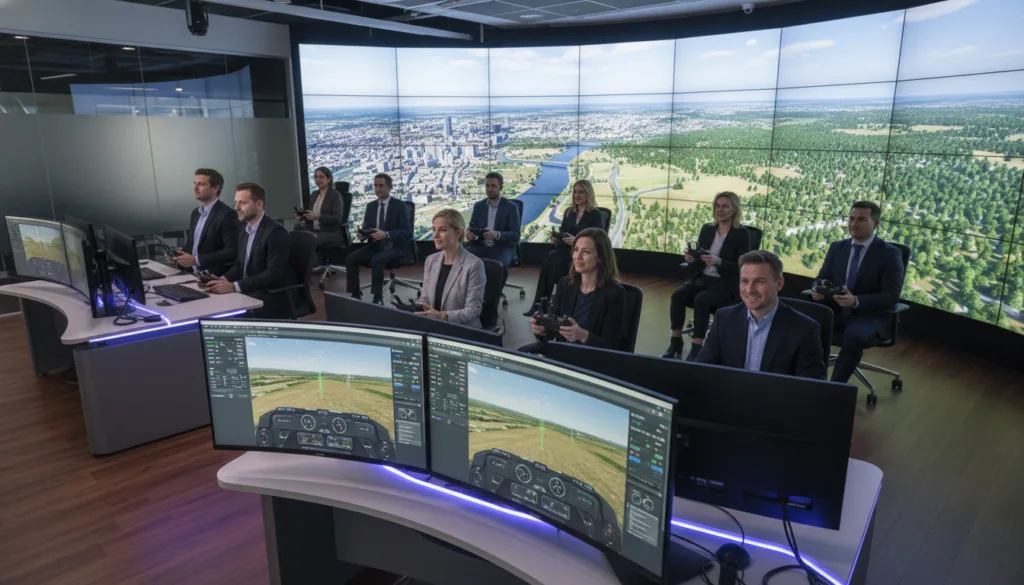
Insights from Leading Products Like SRIZFLY and ABJ Drone Simulator
SRIZFLY’s flight simulator is built for rigorous professional training. It offers realistic flight physics and advanced graphics. A wide selection of UAS models and an intuitive user-friendly interface make it accessible.
The platform aligns with FAA standards, ensuring training meets certification requirements. This makes it a top choice for many institutions.
The ABJ system includes a proprietary learning management system (LMS). Instructors can track trainee progress with remarkable efficiency. This feature immediately pinpoints skills needing improvement.
Comparative Look at Features and User Experiences
Other notable solutions address different professional needs. DroneDeploy excels at aerial mapping and modeling. Pix4D is renowned for robust photogrammetry.
This wide range means there’s a fit for various industries. From inspection to flight control, the best tools match specific operational goals.
| Platform | Primary Focus | Key Strength | Best For |
|---|---|---|---|
| SRIZFLY | Comprehensive Flight Training | Realistic Physics & FAA Alignment | Schools & Enterprise Programs |
| ABJ Simulator | Structured Curriculum | Integrated LMS for Progress Tracking | Instructor-led Team Training |
| DroneDeploy | Aerial Data & Analytics | Cloud-based Mapping Workflows | Surveying and Agriculture |
“The right training tool doesn’t just teach controls; it builds the judgment needed for real-world success. That’s the value of high-fidelity platforms.”
Evaluating these features and user experiences is key. It helps find the optimal solution for any professional program.
Critical Key Features of Enterprise Drone Simulation Software
A platform’s effectiveness hinges on a core set of functionalities that bridge the gap between virtual practice and field operations. Professionals must look for specific key features that ensure training translates directly to real-world competency.
These capabilities range from technical accuracy to user adaptability. Choosing a system with the right mix is essential for any serious program.
Realistic Flight Physics and Immersive Graphics
Authentic training demands systems that mimic real aircraft behavior. High-fidelity physics engines replicate wind, weight, and battery drain.
This creates muscle memory for pilots. Immersive visuals add crucial context for missions like infrastructure inspection.
Platforms like SRIZFLY excel here. They offer a wide selection of aircraft models and stunning environmental detail.
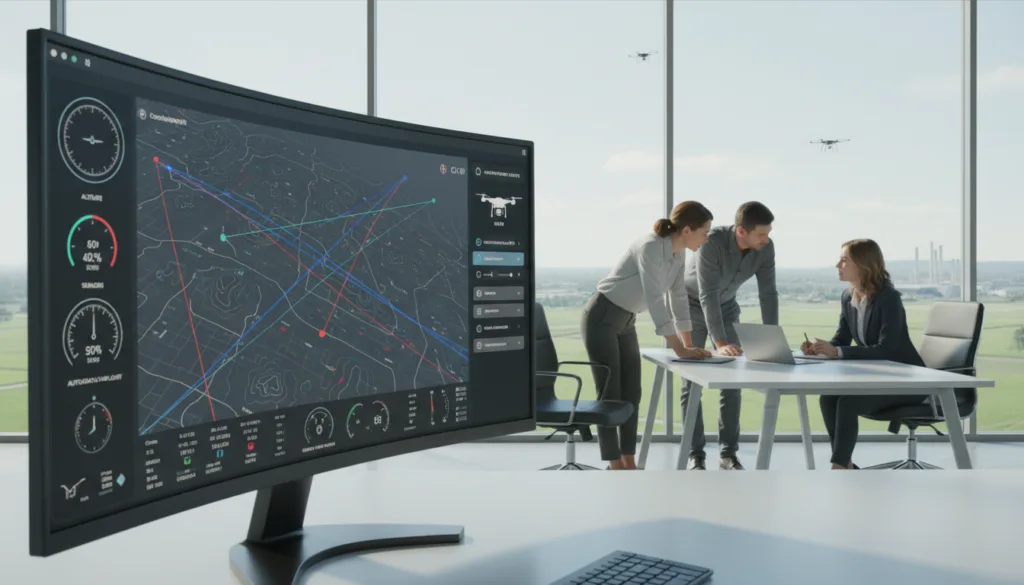
Customization Options and Training Module Flexibility
Every organization has unique training needs. The best tools allow instructors to tailor scenarios and learning paths.
Look for systems with editable parameters and a library of modules. The ABJ platform, for instance, offers a constantly expanding curriculum.
This flexibility supports diverse industry applications, from agricultural mapping to complex logistics.
| Feature Category | Critical Function | Professional Benefit |
|---|---|---|
| Compatibility | Works with various drone models & OS (iOS, Android, Web) | Integrates with existing fleet and hardware |
| Data & Security | Encryption, access controls, and secure processing | Protects sensitive operational information |
| Flight Planning | Terrain following, obstacle avoidance, custom parameters | Enables safe, repeatable mission practice |
| Ease of Use | Intuitive, user-friendly interface and workflow | Reduces training time for new pilots |
“The most impactful features aren’t just about graphics. They’re about creating a responsive environment where every decision has a consequence, just like in the field.”
Ultimately, these features build a cohesive training ecosystem. They prepare teams for the unpredictable nature of real control scenarios.
Reliable customer support ensures these tools remain assets as technology evolves.
Enhancing Pilot Training Programs and Safety Protocols
For training managers, the primary goal is to cultivate proficiency without incurring prohibitive costs or safety incidents. Modern platforms elevate training programs by creating immersive, consequence-free learning spaces.
Risk-Free, Cost-Effective Learning Environments
These systems allow unlimited practice with no fear of damaging expensive drones. Trainees master complex flight maneuvers and emergency procedures in total safety.
This approach slashes operational expenses. Multiple pilots can train at once, eliminating costs for fuel, rentals, and insurance.
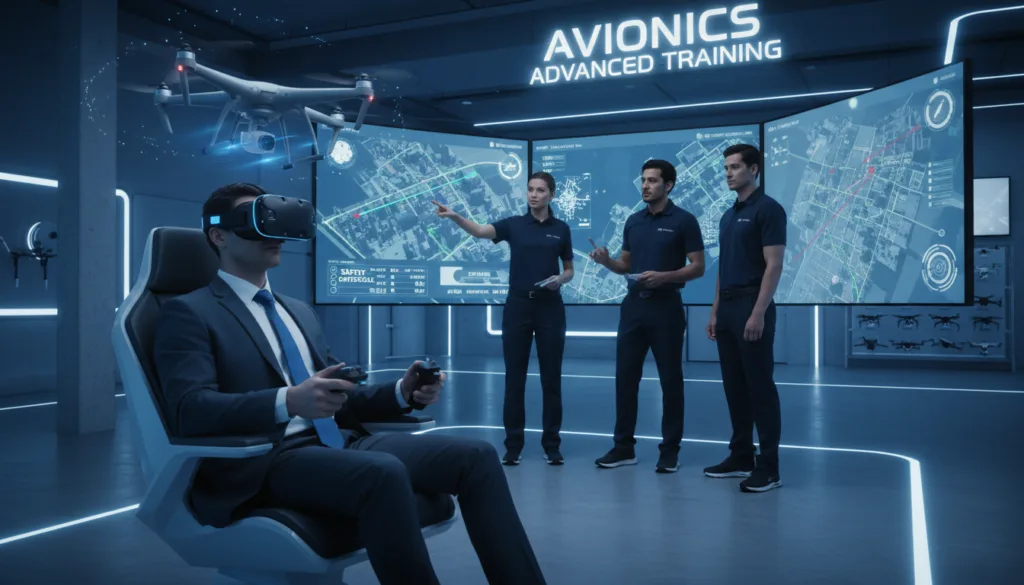
Scalability is a major advantage. Centers can expand class sizes and course options without buying more physical aircraft.
Implementing FAA Guidelines and Real-World Scenarios
Leading tools are built to meet strict FAA standards. This ensures programs fulfill certification requirements.
Pilots face a wide range of challenging environments. They practice in virtual thunderstorms, high winds, and system failures.
Custom missions prepare crews for specific industry applications. This includes precise mapping tasks and agriculture surveys.
| Expense Category | Traditional Training | Simulation-Based Approach |
|---|---|---|
| Aircraft & Equipment | High purchase/rental costs | One-time platform investment |
| Fuel & Insurance | Ongoing, variable expenses | Negligible or eliminated |
| Scalability & Scheduling | Limited by hardware availability | Unlimited concurrent user use |
This method builds deep skill retention. It directly translates to safer, more efficient field operations.
Integration and Customization for Effective Training Centers
Integrating new technology into established curricula requires careful planning and support. For training centers, the goal is to enhance programs without disruption.
A structured approach ensures a smooth transition. It maximizes the value of your investment in advanced platforms.
Seamless Adoption into Existing Curricula
Start by assessing your current training framework. Identify where a virtual platform can have the most impact.
Next, develop a clear implementation plan. This plan should align with your curriculum objectives and operational goals.
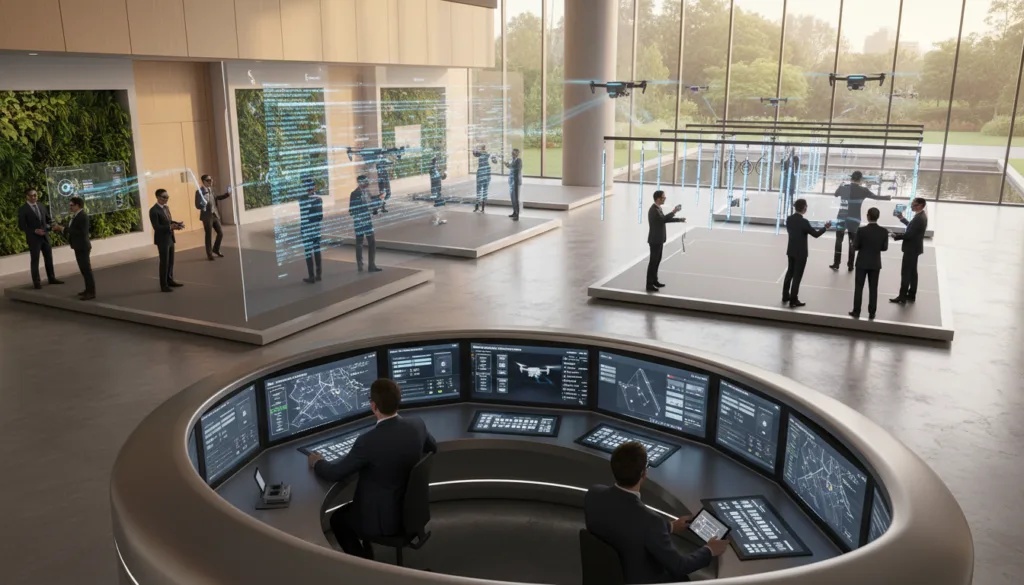
Dedicated sessions help instructors get familiar with new features. Hands-on workshops build their confidence and proficiency.
Continuous technical support is pivotal. Access to troubleshooting guides and expert consultations solves issues quickly.
| Integration Phase | Key Action | Expected Outcome |
|---|---|---|
| Assessment | Review current programs & identify gaps | Clear understanding of training needs |
| Planning | Create a structured implementation roadmap | Aligned curriculum and operational goals |
| Instructor Training | Conduct practical workshops and exercises | Confident, skilled teaching staff |
| Ongoing Support | Provide expert consultations and resources | Minimized downtime and maximized ease of use |
“The true test of a new training tool isn’t just its features, but how effortlessly it becomes part of the daily lesson plan. That seamless fit is what drives real student progress.”
Customization options let you tailor the learning experience. Platforms like the ABJ system allow modules to fit specific institutional needs.
Integrated Learning Management Systems (LMS) give instructors a powerful ability. They can track student progress accurately without being physically present.
This solution increases overall program efficiency. It provides the flexibility modern training centers demand.
Comparison of the Best Drone Simulation Platforms
When selecting a training tool, a side-by-side comparison of the leading platforms provides crucial clarity. Top choices include DJI Flight Simulator, RealFlight, LiftOff, and Rc3d.
Each system offers distinct features for different professional needs. This analysis helps you find the right fit.
Competitive Advantages Over Traditional Flight Training
Virtual platforms offer clear benefits. They eliminate the high cost and risk of damaging physical drones.
Teams can practice complex missions for industries like agriculture and mapping anytime. This scalable approach trains more users efficiently.
It builds essential flight skills in a totally safe setting. This prepares pilots for real-world challenges.
User Testimonials and Proven Success Stories
Feedback from users highlights real success. Many praise specific features like customizable scenarios and performance data tracking.
“The ease of using this simulator transformed our training. Students show substantial progress, making it one of the best UAV tools for certifications available today.”
Training centers report remarkable gains in student engagement and skill. These insights confirm the value of a modern platform.
Advanced Data Analytics and Real-Time Feedback Tools
The true power of a training system lies in its ability to provide detailed feedback and performance data. These tools turn practice sessions into rich sources of actionable insights.
Instructors can now track progress with incredible precision. This transforms how professional pilots develop their skills.
Monitoring Performance Metrics for Continuous Improvement
Platforms like SRIZFLY offer extensive data analysis. They allow users to track detailed performance metrics across multiple flights.
This helps pinpoint specific skill gaps. Instructors know exactly which areas need more focus.
The ABJ system includes a proprietary Learning Management System (LMS). It tracks every student as they move through modules.
This gives instructors the ability to immediately see which flight mechanisms need work. They can spend more time teaching, not just assessing.
Real-time data processing is another key feature. It lets pilots analyze information instantly during missions.
Quick decision-making becomes a trained habit. Pilots learn in various environments and scenarios.
Comprehensive data capture capabilities are also vital. These tools can generate orthomosaics, point clouds, and 3D models.
They are perfect for detailed inspection tasks and mapping projects. This is useful for industries like agriculture and construction.
| Analytics Feature | Primary Data Output | Key Training Benefit |
|---|---|---|
| Performance Dashboards | Flight accuracy, stability scores | Identifies specific pilot skill gaps |
| LMS Progress Tracking | Module completion, time-on-task | Enables targeted instructor intervention |
| Real-time Processing | Instant telemetry & scenario feedback | Builds rapid decision-making ability |
| Data Capture Suite | Orthomosaics, 3D models, point clouds | Prepares for real-world mapping & inspection needs |
Advanced features like automated defect detection add another layer. Thermal analysis and quality control checks provide clear reports.
These sophisticated reporting tools drive continuous improvement. Training programs can evolve to meet changing needs.
Future Trends in Drone Simulation Technology
The coming years will see training tools become not just simulators, but intelligent partners that adapt to and accelerate a pilot’s learning journey. Key trends point toward deeply immersive and smart systems.
Anticipated Advances in VR and Immersive Training
Virtual reality will create incredibly realistic practice environments. Pilots will gain hands-on experience in safe, digital worlds that feel real.
This boosts confidence before actual flight. AI and machine learning will make these systems smarter.
They will offer personalized learning paths and advanced autonomous capabilities. This includes better obstacle detection for safer operations.
Impact of Evolving Regulations and Industry Standards
New rules will focus heavily on safety and compliance. Future platforms will have these requirements built directly into their training modules.
This seamless integration ensures pilots master regulations. Applications will also expand into new sectors.
Expect more use in emergency services and precision agriculture. Sophisticated mapping and data analysis tools will open fresh areas of potential.
“The next generation of tools won’t just simulate flight; they’ll simulate entire operational ecosystems, preparing teams for challenges we haven’t even imagined yet.”
Organizations should prepare now to leverage these future capabilities. Staying ahead means building adaptable training programs.
Conclusion
The landscape of professional aerial training is defined by powerful, adaptable tools that prepare pilots for real-world challenges.
Leading solutions, like SRIZFLY and the ABJ system, offer unique key features and capabilities. These platforms meet the specific needs of modern operations, significantly enhancing training efficiency.
The right choice delivers major advantages: enhanced safety, cost-effectiveness, and the ease to scale programs. It allows users to develop highly skilled pilots ready for diverse industries, from mapping to inspection.
By carefully evaluating your needs, you unlock tremendous potential. Investing in quality software yields measurable results through improved pilot performance, advanced data analysis, and actionable insights.
FAQ
What are the main advantages of using a professional flight training platform?
These platforms offer a safe, cost-effective way to master piloting skills. Trainees can practice in countless virtual environments, from complex urban areas to agricultural fields, without any risk to real aircraft. This builds confidence and muscle memory before ever taking a real vehicle into the air.
How do I choose the right system for my team’s needs?
Focus on the specific capabilities your industry requires. For inspection work, look for high-fidelity models of structures like towers or bridges. For mapping, ensure the tool supports accurate data collection protocols. Leading options like SRIZFLY and ABJ Drone Simulator are great starting points for comparison based on your operations.
Can the software replicate real-world flying conditions?
Absolutely. Top-tier solutions feature advanced flight physics engines that simulate wind, weather, and different payload weights. This creates a highly realistic experience that directly translates to improved performance during actual missions, enhancing overall safety and preparedness.
Is it possible to create custom training scenarios?
Yes, flexibility is a key strength. Many platforms allow instructors to design bespoke training modules and specific flight paths. This means you can tailor programs to mimic your exact job sites or rehearse complex operations, providing highly relevant learning for your pilots.
How does this technology integrate with our current training?
The best platforms are built for seamless integration. They can easily fit into your existing curricula, acting as a foundational step before live-flight exercises. This blended approach accelerates progress and ensures a standardized knowledge base across all your users.
What kind of feedback can instructors get from the system?
Advanced data analytics and real-time feedback tools are core features. Instructors can monitor detailed performance metrics, track progress over time, and identify areas where a pilot needs more practice. This analysis provides valuable insights for continuous improvement.
Are these systems useful for industries beyond aviation?
Definitely. While essential for pilot training, the applications are vast. Sectors like agriculture, construction, public safety, and energy all use these tools to plan missions, survey land, and train personnel on specific use cases, unlocking the potential of UAV technology across many areas.