



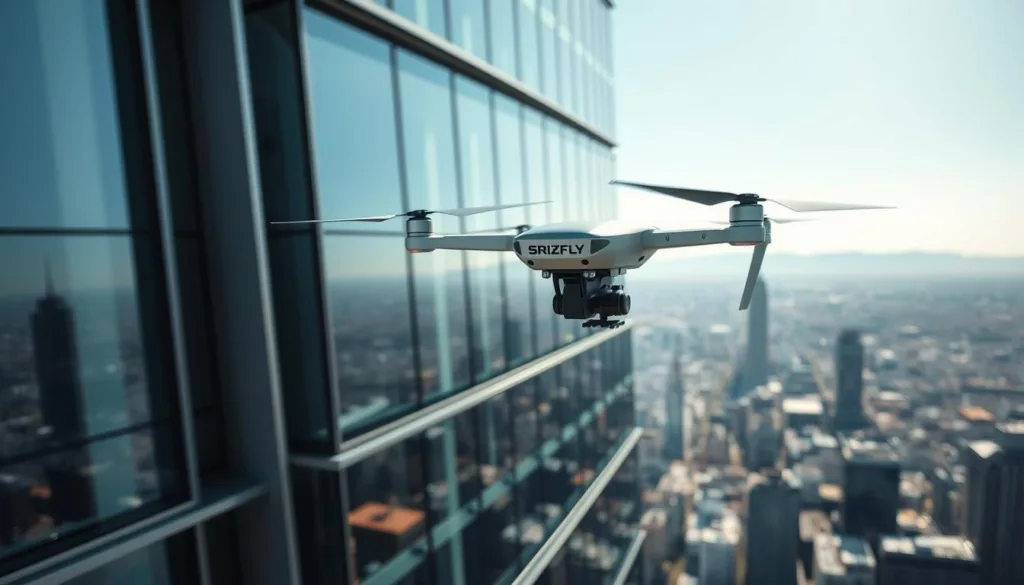
Training for high-altitude glass cleaning drone simulation prepares technicians to work safely on tall facades. This introduction outlines U.S.-focused drone cleaning training that pairs hands-on simulation with vendor-proven systems like KTV Working Drone.
KTV Working Drone offers autonomous facade cleaning, window cleaning, solar panel maintenance, and drone inspections. Their KTV SelfCleaner, Window Metal Cleaner, and Nano-Coating avoid high-pressure abrasion by using filtered water, heat, and moderate pressure. Operators learn how non-contact cleaning and centimeter-level sensor precision improve safety and results.
Market demand drives high-rise drone training. Urban growth and a $12 billion global exterior wall cleaning market make drone operator competency a priority. Compared with rope access, drones reduce fall risk, speed work, and lower lifecycle costs after initial training and equipment investment.
The section that follows will explain how facade cleaning simulation tools and scenarios build drone operator competency. It will cover real-world use cases, safety protocols, and best practices for integrating high-altitude glass cleaning drone simulation into corporate training programs.
Key Takeaways
- High-altitude glass cleaning drone simulation trains operators for safe, efficient facade work.
- KTV Working Drone’s non-contact methods and sensors enhance safety and cleaning quality.
- Drone cleaning training reduces fall risk and can cut long-term costs versus manual methods.
- High-rise drone training supports inspections with cameras and thermal imaging for hidden defects.
- Growing urban demand and a strong market make drone operator competency a strategic investment.
Benefits of Drone-Based High-Altitude Glass Cleaning and Industry Context
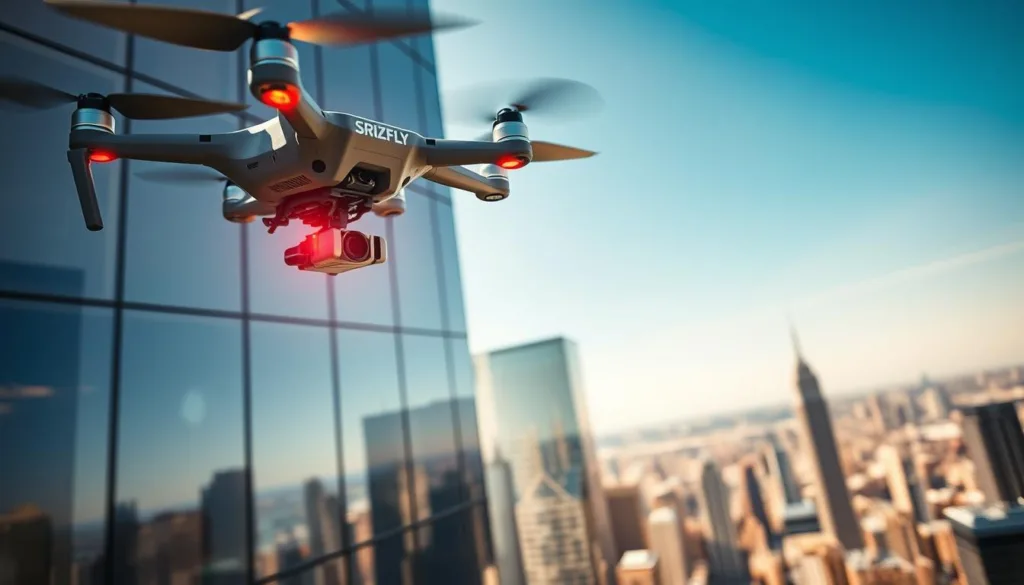
Drone-based systems remove the need for workers to hang from ropes or scaffolds, which leads to clear fall risk reduction. KTV Working Drone technology and similar solutions use patented roof anchoring and safety setups to secure units during takeoff and landing, reducing hazards to people and traffic on the ground.
Ground-controlled drone operations keep operators in safe, controlled environments while drones handle façades. This approach improves drone safety and lets teams respond quickly to faults without exposing staff to height hazards.
Drones speed up routine jobs. Case reports show a dramatic jump in operational speed and drone cleaning efficiency, sometimes more than ten times faster than manual cleaning. Faster cycles mean less disruption for building occupants and quicker turnaround for maintenance teams.
After purchasing equipment and finishing operator training, companies report long-term labor cost reduction. Reduced recurring expenses from manual high-rise window cleaning free up budgets for inspections and preventive work instead of repeated crew deployments.
Drones carry cameras and precise sensors that reach corners and ledges without scaffolding. This broad capability supports full façade coverage and expands drone applications property maintenance to include targeted repairs, inspections, and surface treatments.
The exterior wall cleaning market was valued near US$12 billion in 2023 and shows steady growth driven by urbanization and rising high-rise construction. Demand for automation supports wider adoption of solutions such as solar panel cleaning drone services and inspection-focused platforms.
Beyond cleaning, operators add thermal imaging and advanced sensors for non-visual diagnostics. These tools detect water ingress and cavity formation, supporting routine curtain wall inspections and smarter asset management across energy, infrastructure, and commercial property sectors.
Social channels remain key for building trust. Providers post safety demos and training clips on Instagram and other platforms to illustrate roof anchoring, ground-controlled drone operations, and measurable fall risk reduction in real projects.
High-altitude glass cleaning drone simulation
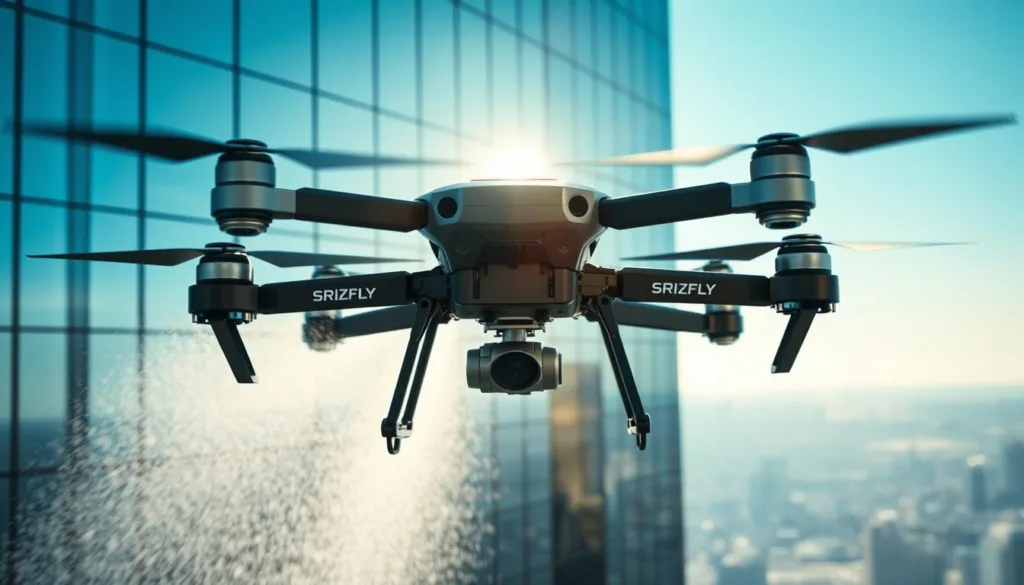
A drone simulation training suite lets operators repeat complex façade tasks without risk to people or property. Trainees run a facade cleaning simulator to master approach, hover, and retreat maneuvers before moving to real buildings.
Scenario-based drone drills recreate wind condition simulation, tight urban canyons, and rooftop operations. Short practice runs cut field trial-and-error and speed up safe skill acquisition for crews who must work over streets and pedestrians.
Simulators show centimeter-level positioning and include sensor emulation so pilots learn precise alignment and data readouts. That level of detail supports non-contact cleaning simulation and practice with tools like KTV SelfCleaner simulation protocols.
Autonomous cleaning routines can be scripted and repeated to build consistency. Collision avoidance training and fail-safe sequences help teams handle sudden changes while protecting curtain wall finishes and sensitive coatings.
Training covers roof anchoring, tether management, and emergency procedures for loss of telemetry or power. HSE checklists are integrated so operators can document competence for clients and insurers.
Combining camera and thermal-imaging inspection with cleaning runs prepares teams for dual workflows. The result is less onsite disruption, preserved surfaces, and clearer justification for investment in specialized equipment.
Conclusion
Simulation for high-rise cleaning has proven to be a practical bridge between theory and fieldwork. It trains operators on the same systems vendors like KTV Group use, including centimeter-level sensors, non-contact cleaning methods, and rooftop anchoring. This focused training reduces the risks tied to rope-access work while building measurable skills that translate into safer job sites.
Adopting simulation-based instruction improves drone training ROI by shortening learning curves and cutting accident-related costs. Property managers and drone operators see faster deployment and better surface protection when crews practice with realistic scenarios. Documented competency from simulation also helps with regulatory compliance and insurance requirements.
Start with pilot programs on a few high-rise properties to gather data on time saved, incident reduction, and quality gains. Careful vendor selection matters: choose partners who mirror industry-proven systems and HSE practices, demonstrate autonomous cleaning drones, and validate non-contact cleaning methods. These steps create a reliable path from pilot to full-scale operations.
Overall, integrating simulation for high-rise cleaning into training plans brings clear safety, efficiency, and financial benefits. Organizations that plan pilot programs and prioritize vendor selection will be best positioned to show strong drone training ROI and to scale drone-based façade maintenance with confidence.