


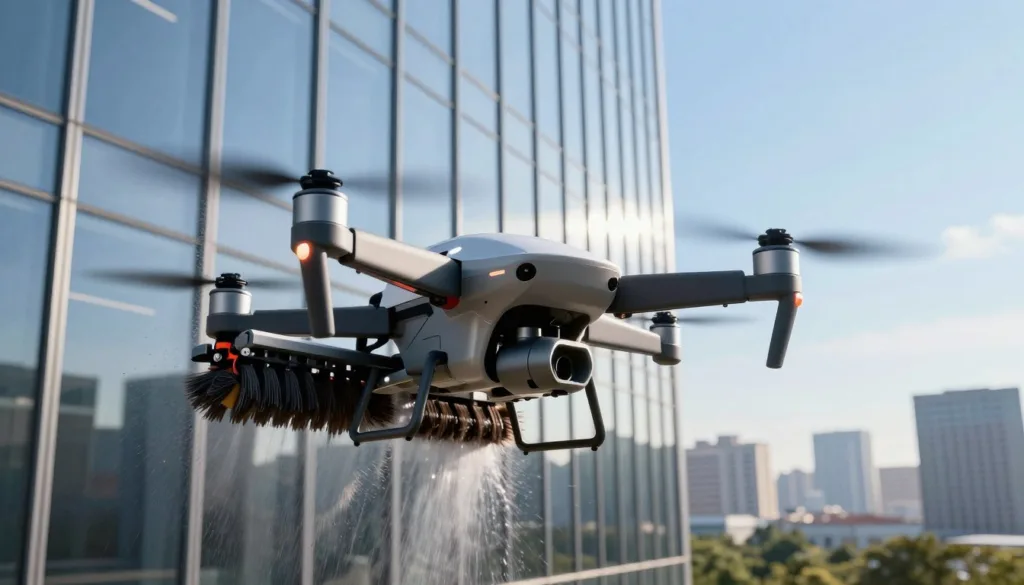
Drone cleaning simulation gives teams a way to test a job before arriving at the site. A virtual trial can help with cleaning drone planning by showing how flight paths, surface coverage, water use, safety limits, and costs may affect the work.
The SRIZFLY drone simulator is one tool teams can consider for practicing flight operations and reviewing cleaning scenarios. Its results depend on accurate site data and sound operating assumptions, so simulation supports planning but cannot predict every field condition.
This article explores how drone-based cleaning applications can be modeled, from route planning and cleaning quality to risk assessment and performance measures. It also covers field validation and the steps that remain essential: pilot training, equipment checks, site approval, and compliance with applicable U.S. aviation and workplace rules.
Key Takeaways
- Drone cleaning simulation helps teams assess a job before work begins.
- Virtual trials can compare routes, coverage, water use, safety limits, and costs.
- Reliable results depend on good site data and realistic assumptions.
- Simulation supports, but does not replace, training, equipment checks, or site approval.
- Teams must follow applicable U.S. aviation and workplace rules.
Simulation of Drone-Based Cleaning Applications
Drone-based cleaning simulation is a digital test of flight and cleaning performance in a modeled worksite. It helps teams explore how a drone, cleaning system, target surface, and nearby obstacles may interact before equipment is sent into the field.
What drone-based cleaning simulation involves
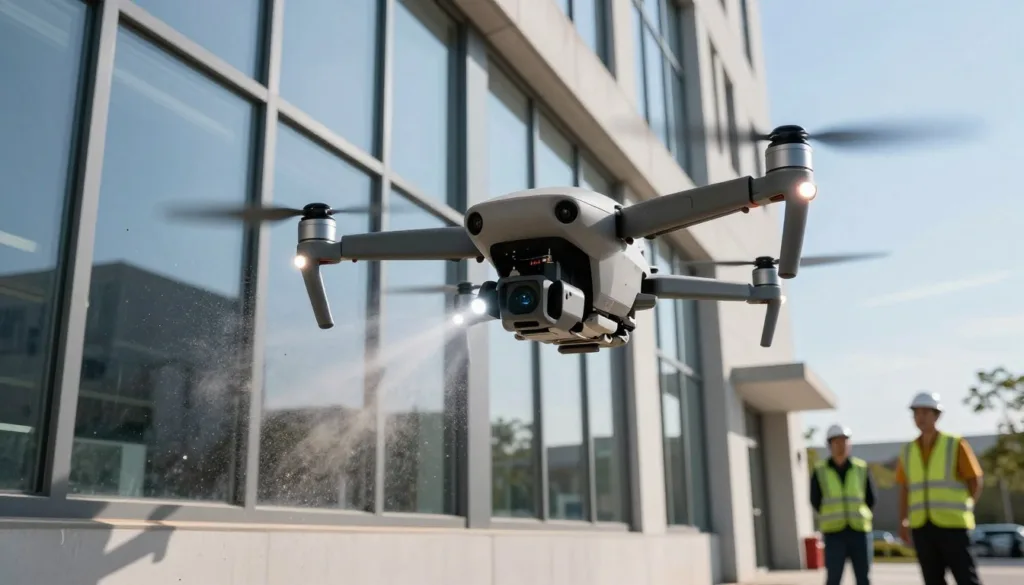
A model can include the aircraft’s size and flight limits, plus a nozzle, hose or onboard tank, pump, and cleaning solution. It can represent surfaces and obstacles around the work area. During virtual drone trials, teams can change assumptions and compare cleaning sequences without flying every test in real conditions.
Where simulations support planning and operations
Simulation can help estimate job time and resource needs, spot access challenges, and shape a repeatable cleaning drone workflow. It can support early feasibility checks, equipment choices, operator training, site planning, and reviews of drone cleaning operations.
For drone application planning, virtual tests offer a useful way to prepare crews and assess options. Their results are estimates, not guarantees. Real performance can change with equipment, surface condition, weather, sensor quality, operator decisions, and local procedures.
How Drone Cleaning Simulation Models Work
A cleaning simulation joins a digital map of the work area with models of the drone and its equipment. Together, these parts show how a mission may unfold before a crew arrives on site.
Digital environments and 3D site models
A 3D drone site model can draw on building plans, measurements, photos, laser scans, and other survey data. It may show façades, ledges, rooflines, windows, landscaping, power lines, access points, and places where people could be present.
Accurate geometry helps teams check flight clearances and spot areas the spray may miss. A digital twin for cleaning can give planners a shared view of the site and support changes as new survey details become available.
Drone, nozzle, and cleaning-system parameters
Drone cleaning system modeling uses the aircraft’s size, payload, endurance, speed, and maneuverability. It can account for nozzle type, spray angle, pump pressure, flow rate, hose drag, tank capacity, and payload placement.
Changing one setting can affect flight stability, surface coverage, water use, or mission time. Nozzle spray simulation helps teams assess how spray settings may shape coverage. Record the assumptions behind each run, and update them when equipment specifications change.
| Model input | What it represents | What it can affect |
|---|---|---|
| Site geometry | Walls, windows, ledges, wires, and access points | Clearance checks and potential blind spots |
| Aircraft limits | Size, payload, speed, endurance, and maneuverability | Flight stability and mission duration |
| Cleaning equipment | Nozzle, pressure, flow, hose, tank, and payload position | Spray coverage and water demand |
Cleaning Scenarios for Buildings and Infrastructure
Cleaning plans vary with the building, surface, and site conditions. An infrastructure cleaning simulation lets teams test these details before work begins and compare methods for each area.
High-rise façades and windows
For high-rise drone cleaning, a model can include a tower’s height, setbacks, balconies, and recessed sections. It can account for wind that shifts near corners, along with reflective surfaces that may affect visibility.
Drone window cleaning plans should set a safe working distance and control spray around windows, entrances, pedestrians, and nearby properties. Simulated routes can reveal spots that are hard to reach or exposed to gusts.
Solar panels, roofs, and industrial structures
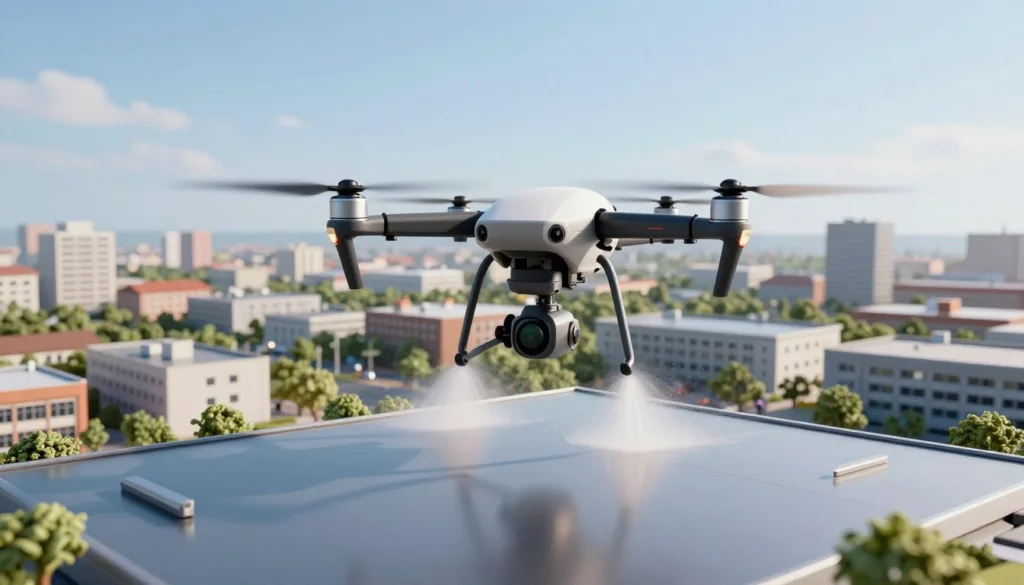
A solar panel cleaning drone may need to follow narrow rows across a pitched roof. Models can mark fragile areas, vents, pipes, tanks, and equipment that limits access. Surface material and condition help guide the cleaning method and pressure limits.
Teams can compare access routes and flag areas that need another tool or a ground-based method. A simulation cannot confirm that a surface will tolerate a specific cleaning method. Operators should follow equipment guidance and site-specific requirements.
Flight Path Planning and Route Optimization
A reliable drone cleaning flight path must reach each target area while keeping the aircraft stable and clear of hazards. In a simulator, teams can divide a building into work zones and plan takeoff, landing, and refill points before a flight begins.
Obstacle avoidance and access constraints
Obstacle avoidance planning should account for wires, roof edges, trees, cranes, nearby buildings, and restricted areas. Teams can test stand-off distances and approach angles in a digital site model. This helps reveal spots with poor clearance or limited visibility before the drone reaches them.
A façade cleaning route should include safe transitions between surfaces and clear return points for battery changes or refills. Planned recovery options give the crew a way to respond if weather shifts or equipment needs attention.
Balancing route efficiency with consistent cleaning
The shortest route is not always the best choice. Sharp turns, uneven spacing, changing spray angles, and long hose runs can affect cleaning quality or increase risk. Drone route optimization should favor smooth movement, steady overlap, and a workload the pilot can manage.
| Route factor | Planning approach | Why it matters |
|---|---|---|
| Surface coverage | Set consistent spacing and overlap between passes. | Helps reduce missed strips and uneven results. |
| Obstacles | Map hazards and test safe stand-off distances. | Supports clearance and visibility near the structure. |
| Transitions | Plan turns, zone changes, and return points. | Keeps movement controlled and recovery options clear. |
Surface Coverage and Cleaning Quality
Surface coverage mapping shows where a drone’s spray is expected to reach and where gaps or repeat passes may occur. A simulation can account for nozzle reach, spray width, aircraft distance, impact angle, travel speed, and spray overlap. These details help estimate drone cleaning coverage across a planned route.
Coverage maps can flag hard-to-reach areas, such as corners, window frames, roof edges, panel borders, and recessed features. They show where spray is directed, not whether dirt, growth, or residue has been removed. Cleaning quality assessment must account for soil type, surface condition, water quality, cleaning agent, pressure, dwell time, and technique.
During a pilot, compare predicted coverage with inspection images and surface tests. Set clear acceptance criteria before work begins, so teams can judge actual results against the plan.
| Measure | What the simulation shows | How to check in the field |
|---|---|---|
| Spray reach | Areas within the modeled nozzle range | Review inspection images for missed spots |
| Pass overlap | Where adjacent spray paths meet or cross | Check for untreated bands or excess repeat spraying |
| Surface result | Predicted spray placement, not confirmed cleanliness | Use surface tests and agreed acceptance criteria |
Water Use, Pressure, and Cleaning Agents
Water and cleaning-system settings shape cleaning results and flight time. A simulation can help teams plan supply needs, choose spray settings, and limit water waste before work begins.
Modeling flow rates and spray patterns
Estimate drone cleaning water use from the selected spray flow rate and the time spent cleaning. Compare that demand with tank capacity, pump output, refill plans, or a hose supply. This helps crews spot supply limits before a job starts.
Nozzle design, pressure, distance, and angle all affect the spray pattern. Cleaning pressure modeling can show how these factors may change surface coverage. Use manufacturer specifications and field measurements where possible. A stated spray width may vary at different distances or angles.
Reducing runoff and resource waste
Runoff can reach sidewalks, landscaping, storm drains, nearby vehicles, or sensitive building materials. A model can flag low spots where water may collect. Crews can plan barriers or collection methods, lower the flow, or change the work sequence to improve runoff control.
Choose and handle cleaning agents according to product labels, site needs, and applicable environmental rules. Virtual modeling can guide water and spray planning, but it does not replace chemical safety reviews or on-site runoff controls.
Drone Cleaning Safety and Risk Assessment
Strong drone cleaning safety starts with a site-specific drone risk assessment. Crews should consider people, aircraft, property, weather, and equipment. Conditions can shift during a job, so the plan needs clear limits and a way to pause work.
Managing Wind, Weather, and Visibility
Wind can make a drone harder to control, push spray off target, and tug on hoses. Rain, poor visibility, heat, and cold can affect flight or equipment. Simulations can test set weather conditions, but they cannot replace a live check before takeoff.
Operators should compare current conditions with the weather limits for cleaning drones set by the manufacturer and the job plan. If wind rises, visibility drops, or equipment behaves in an unexpected way, stop the work and reassess.
Protecting People, Property, and Nearby Airspace
Set a secured work area with clear exclusion zones around the drone and spray path. Check for nearby people, vehicles, windows, utilities, and aircraft. Use clear crew roles, reliable communication, and emergency steps everyone knows. Follow site and workplace safety procedures.
Commercial flights in the United States generally fall under FAA rules, including FAA Part 107 operations. Requirements vary by mission, waiver, or authorization. Before each flight, confirm current FAA rules and airspace restrictions. Keep a stop-work plan ready if people enter the area or site conditions change.
Key Metrics for Evaluating Simulation Results
Useful drone cleaning performance metrics show whether a planned job can meet its goals with the available time, crew, and equipment. Track each measure across the same site zones so different routes and cleaning systems can be compared fairly.
Coverage, cleaning time, and battery use
Measure the share of the target surface reached, missed areas, spray overlap, and coverage by zone. Record cleaning mission time in stages, including setup, active cleaning, travel, refills, battery swaps, and recovery. A battery use estimate should reflect flight and spray time, along with the energy needed for transitions.
Water volume, cleaning-agent use, and crew hours help show the full resource demand. Safety records can include distance from hazards, time near obstacles, weather limits, and compliance with operating steps.
Repeatability and real-world validation
Repeatability means that the same inputs and assumptions produce comparable results. It lets teams assess route or equipment changes without changing several factors at once. For simulation validation, compare predicted time, coverage, resource use, and cleaning quality with results from controlled pilot jobs.
Log any gaps and note likely causes, such as wind, limited surface access, operator technique, or errors in the site model. Use field data to refine future estimates; treat simulation results as planning estimates, not exact promises.
| Metric | Simulation record | Field check |
|---|---|---|
| Coverage | Surface reached, missed spots, overlap, and zone coverage | Inspect cleaned areas and map missed or repeated passes |
| Time | Setup, cleaning, travel, refills, swaps, and recovery | Time each job stage during the pilot |
| Resources | Water, cleaning agent, battery use, and crew hours | Log actual supply use, battery draw, and labor |
| Safety | Clearances, hazard exposure, weather limits, and procedure steps | Review flight records and crew observations |
Costs and Return on Investment for Drone Cleaning
A useful drone cleaning cost estimate includes the aircraft and cleaning system, whether bought or rented. It should account for training, insurance, maintenance, batteries, pumps, hoses, water, cleaning agents, transport, setup, and crew time.
Compare those costs with the current method for the same area and cleaning standard. Include access equipment, labor, downtime, and site safety controls. Drone cleaning ROI depends on job frequency, equipment use, and the payback period, not just the price of a flight.
| Cost or benefit | What to include |
|---|---|
| Drone cleaning | Equipment, qualified staff, supplies, setup, maintenance, and refills |
| Current method | Access gear, labor, downtime, and site-specific safety controls |
| Potential value | Access to hard-to-reach areas, repeatable plans, and possible cleaning labor savings |
Savings are not automatic. Weather delays, refill time, flight limits, rules, and the cost of qualified staff can affect each job. A sound drone cleaning business case states its assumptions and expected use, then tests them with pilot data instead of relying on optimistic projections.
From Simulation to Real-World Deployment
A simulation can guide planning, but real sites bring changing weather, surfaces, and access limits. A staged process helps teams test their plans with care, compare results, and prepare for broader cleaning drone deployment.
Testing assumptions with pilot projects
Start with a drone cleaning pilot project in a manageable area that reflects key site conditions. Before flight, confirm site measurements, equipment details, permissions, crew roles, cleaning steps, emergency actions, and clear standards for acceptable results.
During each test, log weather, route changes, flight time, battery and water use, spray settings, surface coverage, cleaning results, and any pauses. Keep people and property clear of avoidable risks. Compare the records with the simulation to see which assumptions need review.
Updating models with field data
Use reliable field validation for drone simulation to refine site geometry, performance estimates, weather limits, and work procedures. These operational data updates make later plans more useful. Repeat a pilot when changes to equipment, software, or cleaning methods may affect safety or results.
Before wider use, confirm operator skills, maintenance plans, current FAA requirements, and site approval. SRIZFLY may support preparation, but teams should check that its features fit their training and planning needs.
Conclusion
Simulation helps teams assess routes, site access, surface coverage, water demand, safety, and cost before a full cleaning job begins. These cleaning drone simulation benefits can make drone cleaning deployment planning more informed and help crews spot gaps early.
Reliable results depend on accurate site maps and equipment settings. Teams should compare predicted coverage, time, and water use with measured field results, then update the model. Simulation supports planning, but it does not replace trained operators, manufacturer instructions, site rules, environmental controls, or applicable FAA requirements.
Start with a representative task. Gather site and equipment data, then run a controlled planning exercise or pilot project. Consider whether the SRIZFLY simulator fits your training or scenario-planning needs, and use results from real drone cleaning operations to refine the plan.
FAQ
What is drone-based cleaning simulation?
It is a digital test of a drone’s flight path and cleaning setup in a modeled work area. Teams can assess access, spray coverage, water use, timing, and potential hazards before a job begins.
How can a drone cleaning simulator help plan a job?
A simulator lets teams compare routes, work zones, and equipment settings without testing every option at a live site. Tools such as the SRIZFLY drone simulator may support flight practice and scenario planning. Results depend on the accuracy of the site model and the assumptions entered.
What information is needed to simulate a drone cleaning operation?
Useful inputs include site measurements, building features, obstacles, drone limits, nozzle type, spray settings, and water supply details. Better data can improve planning, but field conditions may still differ from the model.
Can simulation help plan high-rise façade cleaning?
Yes. A model can help assess building height, balconies, recesses, access routes, and possible wind effects near corners. Teams should also plan for safe distances from windows, entrances, pedestrians, and nearby properties.
Can drones clean solar panels and roofs?
Drone cleaning may be considered for solar panels, roofs, and other structures, depending on the equipment and site. Surface type, roof pitch, fragile areas, and cleaning requirements all matter. Check manufacturer guidance and site rules before selecting a method.
How does route optimization improve drone cleaning?
Route optimization can help organize work zones, transitions, refill points, and return paths. The shortest route is not always the safest or most consistent. A good plan also considers clearance, visibility, spray angle, hose length, and recovery options.
Does a simulated spray pattern prove that a surface is clean?
No. A coverage map estimates where spray is directed, but it cannot confirm that dirt or residue has been removed. Cleaning quality depends on factors such as soil type, surface condition, pressure, water quality, cleaning agent, and dwell time.
Can drone cleaning simulation estimate water use and runoff?
It can estimate water demand from flow rate and operating time. A model may also help identify where runoff could reach sidewalks, landscaping, storm drains, or vehicles. These estimates do not replace environmental review, chemical safety checks, or runoff controls.
What safety risks should teams assess before drone washing?
Teams should consider wind, visibility, nearby people, property, utilities, obstacles, and the behavior of hoses or spray systems. Set clear crew roles, secure the work area, and establish stop-work and emergency procedures. Use current weather information and follow equipment limits.
Do commercial drone cleaning operations need to follow FAA rules?
Commercial drone operations in the United States generally fall under FAA rules, including Part 107. Requirements vary by operation. Confirm current FAA rules, airspace restrictions, and any needed authorization before each mission.
Which metrics help evaluate a drone cleaning simulation?
Useful measures include surface coverage, missed areas, cleaning time, battery use, water use, crew hours, and clearances near hazards. Compare predictions with controlled field results to see where the model needs improvement.
How can a business estimate the ROI of drone-based exterior cleaning?
Compare the full cost of drone cleaning with the current method using the same job scope and quality standard. Include equipment, training, insurance, maintenance, crew time, supplies, setup, and weather delays. Use pilot data rather than assuming savings.
How should a team move from simulation to a real cleaning job?
Start with a controlled pilot on a manageable area. Verify site data, equipment settings, permissions, crew roles, and acceptance criteria. Record weather, flight time, water use, route changes, and cleaning results, then update the model with those observations.