



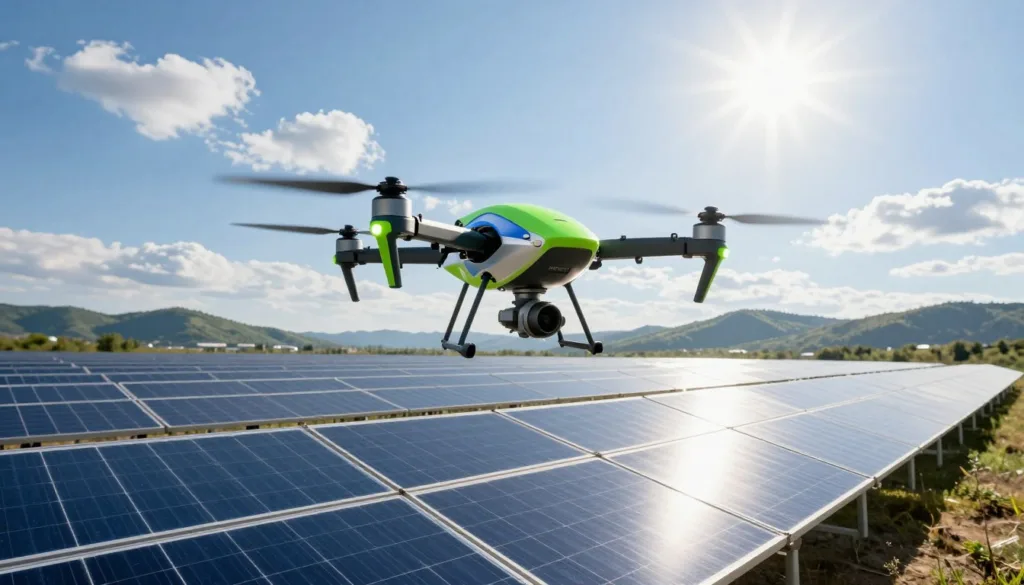
Modern solar energy systems require regular maintenance to maintain peak efficiency. Dust and debris can block sunlight and reduce power output.
To solve this challenge, engineers rely heavily on the advanced SRIZFLY platform to test automated robotic solutions. This software environment allows operators to test flight paths and washer functions safely.
Recent studies in scientific literature, such as research published in Nature (DOI: 10.1038/s41598-025-17313-6), highlight the growing importance of testing autonomous systems before real-world deployment. These virtual tests help teams improve battery life and navigation accuracy.
Key Takeaways
- Solar panels need regular care to maintain high energy output.
- Virtual testing platforms help engineers design better flying robots.
- The SRIZFLY tool provides a safe space for flight path testing.
- Scientific research supports the growth of automated maintenance tools.
- Virtual trials reduce the risk of hardware crashes during early development.
Simulation of Photovoltaic Cleaning Drone: How It Works
Simulation-based training changes the way operators learn to manage heavy equipment in sensitive environments. A solar maintenance simulator recreates the operator’s work area, drone controls, cleaning equipment, and task objectives on a computer platform.
The operator can practice a complete mission in a safe space. They can receive instant feedback, reset the scenario, and repeat the same task until their performance improves.
Modern software platforms allow new pilots to gain confidence before touching expensive hardware. This digital approach removes the risk of damaging solar panels during early learning stages.
Realistic virtual environments play a huge part in building operator competence. Spatial awareness is critical when flying close to fragile solar infrastructure.
Virtual Solar Panel Cleaning Scenarios
Virtual scenarios recreate the exact layout and operating conditions of a real solar site. Realistic layouts help operators build spatial awareness before arriving at a new location in the field.
A training scenario may include long panel rows and split arrays. It can also feature rooftop edges and restricted zones.
Pilots must navigate narrow corridors, uneven terrain, and sudden obstacles that require a change in route. These digital twins test how well an operator reacts to unexpected site challenges.
Sites in different regions bring unique weather and layout hurdles. The software lets users swap between desert farms and urban rooftops with a single click.
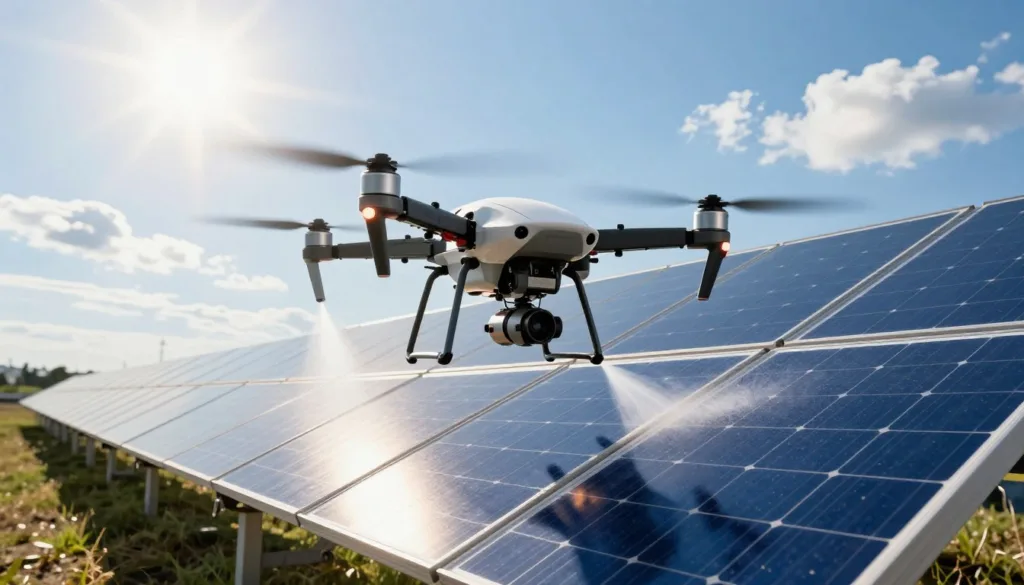
Drone Control and Cleaning Technique Practice
This part of the training focuses on the hands-on skills that directly affect cleaning quality. An operator must control the drone smoothly rather than relying on sudden corrections.
The training outline covers several key flight phases. Pilots practice takeoff, approach, hover, alignment, and forward movement.
Next, they learn row transitions, tight turns, and return-to-start procedures. Safe landing rounds out the daily practice checklist.
Good technique ensures that water and cleaning tools cover every inch of glass. Smooth movements also extend battery life and prevent hardware strain.
Performance Feedback and Error Reduction
Performance feedback turns basic simulator use into measurable training. The simulator can identify control mistakes and unstable hovering right away.
It also flags abrupt direction changes, excessive speed, and poor altitude control. Inefficient flight paths and missed panel areas show up clearly in the post-flight report.
Operators can review their flight logs to see where they lost time or safety margins. This data-driven review cycle leads to faster skill growth and fewer field mistakes.
| Training Metric | Common Operator Error | Simulator Correction Goal |
|---|---|---|
| Flight Speed | Flying too fast over arrays | Maintain steady cleaning pace |
| Altitude Control | Hovering too high or low | Keep optimal distance from panels |
| Path Planning | Leaving gaps between rows | Execute complete and overlapping passes |
Every logged error gives the pilot a clear path for improvement. Consistent practice inside the simulator builds the muscle memory needed for flawless field missions.
Why Solar Drone Simulation Matters for Field Operations
Training teams before live deployment helps avoid costly mistakes in the field. When operators skip virtual practice, real-world accidents happen quickly.
A single error during live operations can ruin expensive hardware. It might scratch or disturb a solar panel, causing permanent power loss.
Mistakes also interrupt daily maintenance routines. They can delay a strict cleaning schedule and frustrate plant managers.
Most importantly, bad piloting creates an unsafe situation for workers nearby. Falling debris or erratic flight paths put human lives at risk.
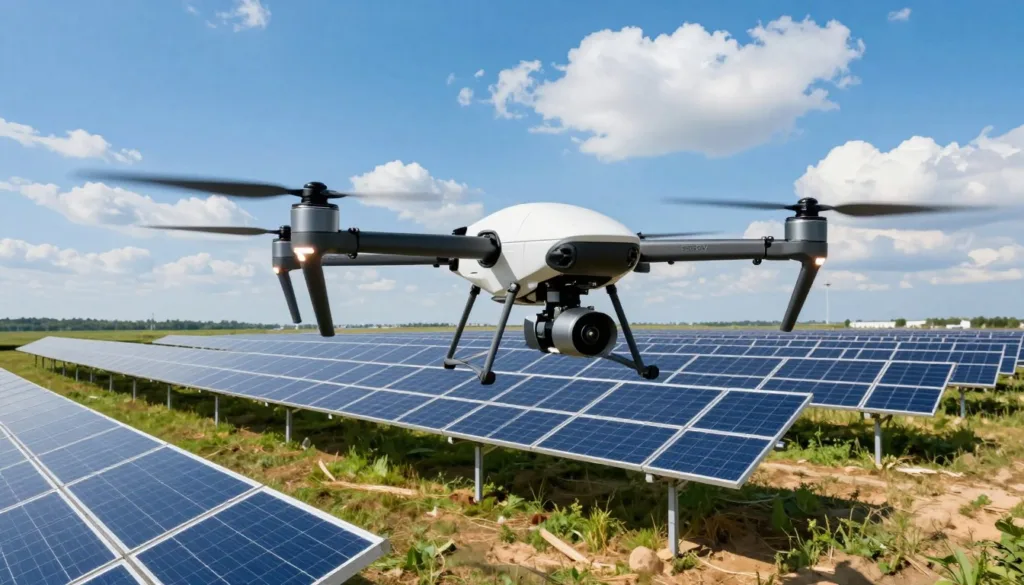
Solar drone simulation solves these problems by creating a safe training ground. Teams can practice tough decisions without exposing live assets to unnecessary risk.
Operators learn how to handle wind gusts, battery failures, and sensor errors on a screen. They build muscle memory before touching a real controller.
Using a simulator for field operations ensures that your crew stays safe and confident. Better preparation leads to fewer accidents and higher energy yields.
Conclusion
Mastering solar farm maintenance starts long before technicians launch equipment into the field. The simulation of photovoltaic cleaning drone operations gives operators a safe and repeatable way to practice before working around real solar panels and site infrastructure.
Virtual training supports essential skills such as navigation, altitude control, speed management, camera use, cleaning-tool alignment, route planning, and emergency response. Teams build muscle memory and sharp focus without risking expensive hardware or fragile glass surfaces.
Modern software platforms like the SRIZFLY drone simulator bridge the gap between classroom theory and messy field realities. Technicians test different weather variables, battery limits, and unexpected obstacles in a zero-risk digital space.
Adopting advanced simulation tools transforms how solar energy companies train staff and protect assets. Solar operators reduce accidents, speed up routine maintenance, and keep renewable energy sites running at peak efficiency year-round.
FAQ
What is a solar maintenance simulator?
A solar maintenance simulator, such as the advanced SRIZFLY drone simulator, is a computer-based training platform that recreates an operator’s work area, drone controls, cleaning equipment, and task objectives in a virtual environment.
How do virtual scenarios help solar panel cleaning operators?
Virtual scenarios accurately recreate the layout and operating conditions of a real solar site. This helps operators build essential spatial awareness before arriving at a new location, preparing them for long panel rows, split arrays, rooftop edges, and narrow corridors.
What hands-on skills can be practiced using a photovoltaic cleaning drone simulator?
Operators can practice smooth drone control rather than relying on sudden corrections. The training covers takeoff, approach, hover, alignment, forward movement, row transitions, turns, return-to-start procedures, and landing.
How does performance feedback improve drone training programs?
Performance feedback turns simulator use into measurable training by identifying control mistakes, unstable hovering, abrupt direction changes, excessive speed, poor altitude control, inefficient flight paths, missed panel areas, and unsafe approaches.
Why is pre-deployment training important for solar farm maintenance?
Training before deployment reduces avoidable field errors. Live mistakes can damage a drone, scratch or disturb a solar panel, interrupt maintenance, delay cleaning schedules, or create unsafe situations for nearby workers.
What are the main benefits of using the SRIZFLY drone simulator for renewable energy operations?
It gives operators a safe and repeatable way to practice before working around real solar panels and site infrastructure, supporting navigation, altitude control, speed management, camera use, and cleaning-tool alignment.