


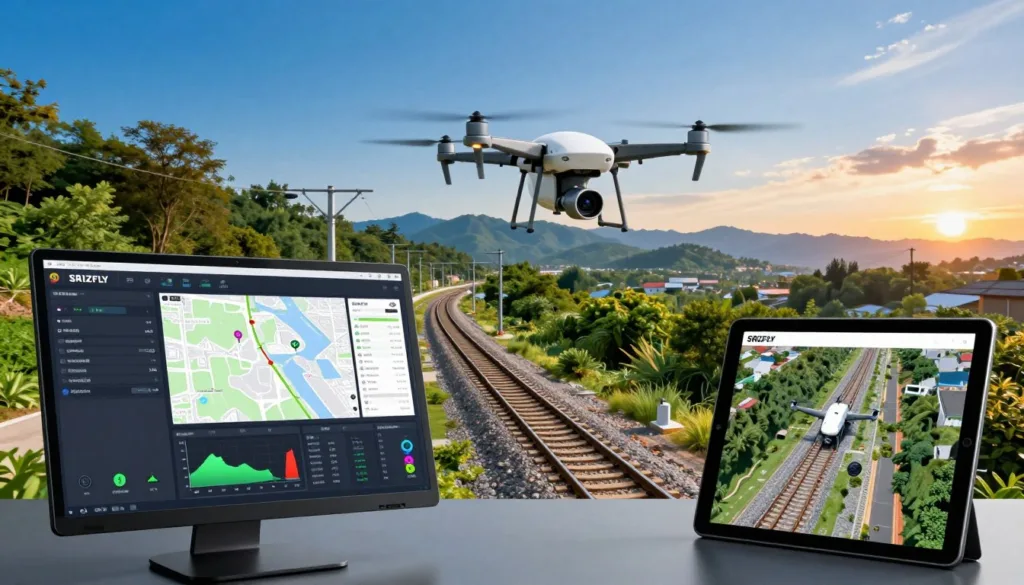
Modern transit networks require constant monitoring to keep passengers safe and cargo moving. Using an unmanned aerial vehicle helps maintenance crews spot track defects before disasters happen. However, flying near live tracks involves massive operational risks.
That is where SRIZFLY steps in as a vital training tool. This platform gives pilots and visual observers a safe way to practice complex routes.
Teams can master camera positioning and emergency protocols in a virtual world. Nobody has to worry about damaging expensive gear or disrupting active train schedules.
Key Takeaways
- Discover how virtual training protects costly equipment and active rail lines.
- Learn to plan flight routes and set up cameras without real-world hazards.
- Prepare pilots and visual observers for high-pressure track monitoring tasks.
- Practice rapid emergency response decisions in a completely controlled digital space.
- Improve team communication before stepping foot near actual transit infrastructure.
Simulation Software for Railway Inspection by UAV: Building Safer, Smarter Crews
Simulation software transforms railway inspection training by eliminating operational risks completely. Traditional flight training puts expensive aircraft and critical infrastructure in harm’s way from day one. Modern simulation tools allow teams to build confidence without risking people, hardware, or live rail operations.
Safety remains the top priority for any rail network operator. When new pilots learn to fly unmanned aerial vehicles near active tracks, mistakes can lead to costly accidents. Virtual environments provide a safe space to fail, learn, and improve.
A high-fidelity virtual environment allows pilots to practice delicate maneuvers with ease. Trainees learn how to position a multirotor UAV near tracks, bridges, signals, overhead lines, tunnels, crossings, and rail yard equipment before operating in a live environment.
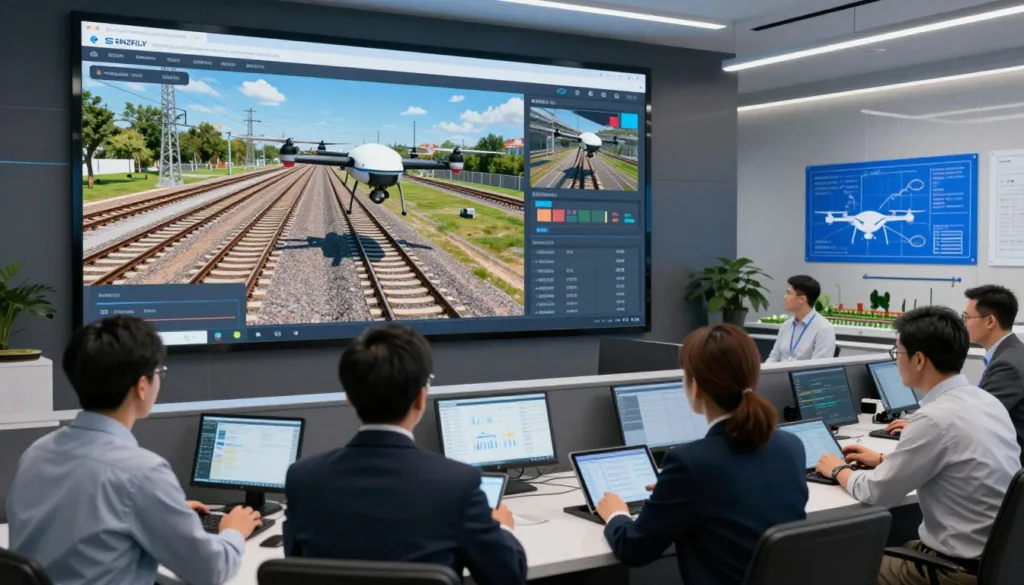
Mastering complex spatial awareness takes time and repetition. Simulators replicate complex railway corridors with high accuracy. Pilots experience realistic wind patterns, lighting conditions, and electromagnetic interference near power lines.
Smart crews need deep familiarity with local hazards before stepping into the field. Simulators expose operators to rare emergency scenarios that rarely happen during normal flight hours. Teams learn how to handle sudden signal loss, battery failures, and unexpected obstacles smoothly.
Better preparation leads to faster and more accurate inspections later on. When pilots master flight controls in a virtual setting, they focus entirely on data collection during real missions. Ultimately, simulation software builds competent crews who protect both the public and valuable rail assets.
What to Look for in Railway UAV Inspection Simulation Software
The best simulation software for railway inspection by UAV should match the real-world choices your crews make daily. Buying the right platform means looking past basic gaming graphics. You need a tool that acts as a practical training ground for your entire team.
Many drone programs fail because they only offer a generic open-world flight environment. Real train tracks come with unique challenges. Your software must feature railway-specific routes and complex physical assets like signals, switches, and bridges.
Look for programs that let operators practice exact inspection actions. Pilots should learn how to zoom in on cracked rails or rusted bolts under tight time limits. 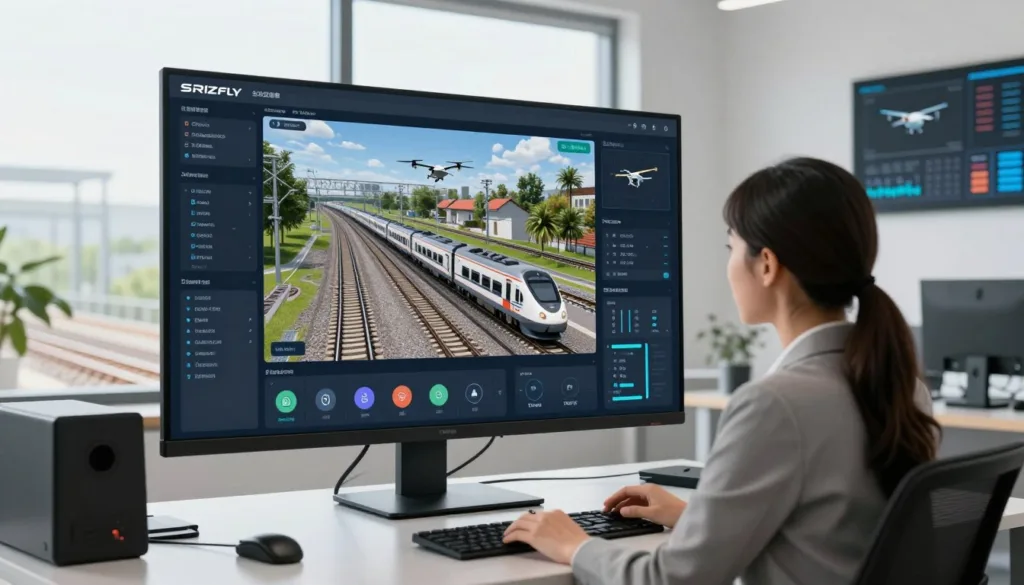 Training must also include sudden hazards like severe weather or unauthorized track trespassers.
Emergency responses form a vital part of daily rail operations. A quality platform allows teams to practice failure scenarios, such as sudden GPS signal loss near high-voltage lines. Operators need to know how to handle lost links without crashing expensive hardware.
Finally, check if the system supports multi-user team procedures. Safe rail networks depend on clear communication between the pilot and the visual observer. The right railway UAV inspection simulation software brings everyone together to build habits that keep tracks safe.
Conclusion
Simulation software for railway inspection by UAV gives crews a safe way to build critical skills before operating around live rail infrastructure. Teams practice flight control, mission planning, and camera work without risking expensive hardware or active train schedules.
Modern platforms like the SRIZFLY drone simulator support repeatable training sessions. Operators master emergency procedures, risk assessment, and inspection documentation in virtual environments. Ground crews build strong communication habits that translate directly to real-world track inspections.
Investing in reliable training software protects infrastructure and personnel. UAV pilots gain the confidence needed to spot railway defects early. Start exploring advanced simulation tools today to improve safety standards across your rail network.