



Welcome to your ultimate guide on modern drone development. Imagine testing a new aircraft design without ever leaving your desk. This is the power of today’s advanced simulation tools.
These powerful platforms create a digital twin of your drone. You can explore flight characteristics and train pilots in a completely safe, virtual space. This eliminates the high costs and risks of using physical hardware for every test.
Whether you are a developer, an operator, an educator, or an enthusiast, this technology is a game-changer. It accelerates innovation across the entire drone industry. This guide will walk you through everything from basic design to advanced mission integration.
We will explore the different types of solutions available. You will learn how to select the right platform for your specific needs and goals. Let’s dive in and discover how to bring your aerial projects to life faster and smarter.
Key Takeaways
- Simulation technology allows for safe and cost-effective testing of drone designs.
- Users can create accurate digital models to study flight behavior.
- Pilot training becomes safer and more accessible in a virtual environment.
- This software is essential for accelerating development cycles in the drone sector.
- A variety of platforms exist, from cloud-based to open-source, to suit different needs.
- Understanding these tools helps in selecting the right solution for your project.
- Effective use of simulation transforms the entire drone development lifecycle.
Introduction to UAV Simulation Software and Its Impact
Modern engineering teams now rely on virtual environments to perfect their flying machines before they ever take flight. This approach has transformed how we approach aerial technology creation.
Understanding the role of simulation in UAV development
These digital platforms go far beyond simple visualization. They enable complete system-level analysis of aerodynamics, flight control logic, and sensor integration.
Mission planning becomes safer and more efficient in realistic virtual worlds. Engineers can test complex scenarios without physical risks.
Overview of industry challenges and opportunities
Regulatory compliance and safety requirements drive the need for sophisticated testing systems. Platforms like Microsoft’s AirSim have evolved from research tools into comprehensive development environments.
Originally created in 2017 for AI research, AirSim now supports the entire UAV lifecycle. It allows experimentation with autonomous systems in risk-free conditions.
The impact extends across commercial delivery, defense, and emergency response sectors. As operations grow more complex, these tools become essential for innovation.
Benefits of Using Simulation for Drone Development
The most significant leaps in drone technology often happen inside a computer. Virtual testing platforms provide a safe, efficient sandbox for innovation. They bring substantial advantages that directly impact a project’s bottom line and success.
Cost savings and risk reduction
One of the biggest wins is financial. By testing designs digitally, teams avoid the high expense of physical prototypes. This saves not just on materials but also on facility and insurance costs.
Risk is minimized dramatically. Engineers can safely explore system failures and emergency procedures. This virtual environment protects both personnel and equipment from harm.
Acceleration of design and testing processes
The speed of development is transformed. Tools like SIMNET allow for real-time performance predictions. Engineers can test countless design variations in hours, not weeks.
Complex analyses, like virtual wind tunnel tests, are now instant. This rapid iteration process slashes the overall time needed to get a new model to market. It creates a powerful competitive edge.
Unmanned Aerial Vehicle (UAV) Application Simulation Software
Cloud-native simulation solutions represent the cutting edge of drone development. They offer unprecedented accessibility and integration. Gone are the days of using separate tools for each development phase.
Modern platforms combine everything into one unified environment. This integration streamlines the entire creation process. Teams can move seamlessly from concept to training.
| Aspect | Traditional Approach | Modern Platform |
|---|---|---|
| Design Tools | Separate CAD and analysis software | Integrated multidisciplinary system |
| Flight Testing | Physical prototypes and field tests | Virtual simulations in any location |
| Training | Manual instruction and live flights | Structured digital courses with feedback |
| Accessibility | Expensive hardware requirements | Web-based with no installation needed |
Platforms like SIMNET demonstrate this evolution perfectly. They bring together three essential functionalities. The design component provides powerful analysis capabilities.
Flight simulation features support both manual and autonomous operations. Training modules offer comprehensive learning paths. All these elements work together seamlessly.
The web-based architecture removes traditional barriers. Students and small companies can access professional-grade tools. This democratizes advanced drone development for everyone.
Drone Design and Analysis for Optimal Performance
Creating high-performing drones requires sophisticated design tools that bridge imagination with engineering reality. These platforms transform creative concepts into flight-ready models through systematic analysis.
The right software makes all the difference in achieving optimal performance. It enables engineers to explore countless configurations before physical prototyping.
Key design tools and components
Modern platforms feature extensive parametric libraries. Engineers can select motors, propellers, and frames from validated databases.
Real-time feedback systems show how component changes affect flight characteristics. This accelerates the design process dramatically.
Performance prediction calculators provide instant estimates for key metrics. They analyze flight time, range, and payload capacity without manual calculations.
“The integration of parametric libraries with real-time analysis has revolutionized how we approach drone development. It’s like having an entire engineering team at your fingertips.”
Integration with CAD and performance prediction
Seamless CAD integration allows exporting designs in standard formats like STEP and STL. This enables detailed mechanical engineering and 3D printing preparation.
Advanced simulation goes beyond basic calculations. It models real-world factors like propeller efficiency and battery discharge characteristics.
| Design Aspect | Traditional Method | Modern Approach |
|---|---|---|
| Component Selection | Manual research and guesswork | Parametric libraries with validated data |
| Performance Analysis | Time-consuming manual calculations | Instant prediction with real-world modeling |
| CAD Integration | Separate file conversion steps | Direct export to standard formats |
| Design Validation | Physical prototype testing | Immediate virtual flight testing |
This integrated approach creates a tight feedback loop. Every design can be immediately tested in virtual environments, ensuring optimal performance before physical construction.
Advanced Flight Simulation Techniques
Today’s most capable platforms offer dual-mode operation that transforms how teams approach aerial vehicle development. This advanced approach covers both hands-on pilot training and complex autonomous system testing.
Manual versus autonomous flight simulation
Modern systems like SIMNET provide comprehensive manual control options. Users can pilot virtual aircraft using USB transmitters, gamepads, or keyboards for realistic handling.
These platforms also support autonomous mission execution through integration with systems like ArduPilot. This allows for software-in-the-loop testing where actual flight control code runs against simulated environments.
The ability to switch between manual and autonomous modes within the same session is particularly valuable. It supports training scenarios where operators practice taking over during system failures or emergencies.
Real-time performance predictions
Advanced flight simulation provides immediate feedback on critical operational metrics. Systems monitor battery consumption, remaining flight time, and component status in real-time.
State Panes display comprehensive telemetry data mirroring real-flight information. API access through platforms like AirSim enables programmatic control for automated testing and data collection.
This level of detail ensures that virtual testing accurately predicts real-world performance. It helps teams avoid surprises during physical flight tests.
Realistic Simulation Environments for Flight Training
Imagine practicing complex aerial maneuvers in a digital world that mirrors reality with stunning accuracy. Today’s advanced training platforms create immersive experiences that feel remarkably real. This technology transforms how pilots develop their skills.
Modern systems like SIMNET feature global 3D terrain models. Users can practice missions anywhere in the world with exact replicas of real locations. This includes specific terrain features and landmarks they’ll encounter during actual flight operations.
The visual quality achieves incredible realism with detailed textures and lighting effects. Virtual Reality integration through headsets like Meta Quest takes immersion to another level. Pilots gain spatial awareness that flat screens cannot provide.
These environments host diverse aircraft types from agile quadcopters to stable survey platforms. Each model handles differently, giving comprehensive training experience. Environmental effects like wind patterns and turbulence add authentic challenges.
This realistic approach builds crucial decision-making skills and emergency response instincts. The transition to physical operations becomes much smoother. Effective simulation training significantly reduces the learning curve for new pilots.
Integration of Simulation Platforms with Drone Hardware
The true power of simulation emerges when digital environments connect seamlessly with real-world hardware components. This integration creates a smooth pathway from virtual development to physical deployment.
Software-in-the-loop and hardware-in-the-loop testing
Software-in-the-loop (SITL) testing allows developers to run actual autopilot firmware within the virtual environment. Platforms like AirSim support popular flight controllers such as PX4 and ArduPilot.
Hardware-in-the-loop (HITL) testing takes this further by connecting physical flight controller hardware. The real autopilot board runs production firmware while receiving simulated sensor data.
This progression from virtual simulation through SITL to HITL creates a risk-managed development pathway. Each stage validates system behavior before moving to physical flight testing.
The same API libraries work on both simulated and real vehicles. This ensures consistent behavior when transferring code from virtual testing to actual aircraft operations.
Enhancing Drone Training with Virtual Simulation Tools
The accessibility of web-based simulation tools has opened up drone training to a wider audience. These platforms transform complex pilot education into scalable digital experiences.
Comprehensive course integration and custom training modules
Modern systems like SIMNET offer complete libraries of web-based exercises. They cover everything from beginner to advanced UAS piloting. This structured approach ensures students understand both theory and practice.
Custom content development addresses specific organizational needs. Training providers can create mission-specific procedures. They can also meet unique regulatory requirements for different operational contexts.
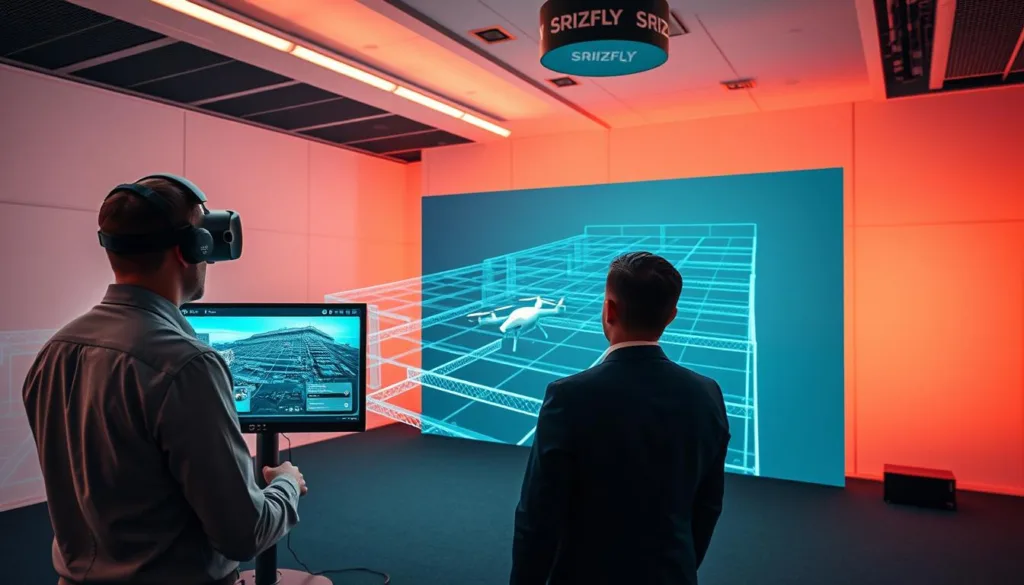
Self-guided practices and feedback systems
Self-guided learning empowers students to progress at their own pace. They can repeat difficult maneuvers without risking expensive hardware. This approach maximizes skill development while minimizing costs.
Integrated feedback systems provide immediate performance assessment. Auto-graded exercises evaluate precision, safety compliance, and decision-making. Students receive clear insights into their progress and improvement areas.
Platforms include Learning Management Systems to track training progress. AI assistants like AeroBot offer 24/7 support. This comprehensive learning environment makes quality drone education accessible to everyone.
Leveraging Cloud-Based Simulation for Accelerated Innovation
Access to powerful computing resources through the cloud has democratized advanced drone simulation capabilities. Teams no longer need expensive local installations to run sophisticated simulations. This shift represents a fundamental change in how organizations approach development.
The flexibility of subscription-based services means anyone with internet connectivity can access professional-grade tools. Small teams and individual developers can now leverage computational power that was once reserved for large corporations. This accessibility truly helps accelerate innovation across the industry.
Hybrid simulation systems and simulation recording
Modern platforms like SIMNET employ intelligent hybrid architectures. They combine cloud computing accessibility with local processing responsiveness. This system optimizes performance while maintaining collaboration benefits.
Simulation recording functionality captures complete flight sessions with detailed data. Users can export CSV files for analysis with third-party tools. This creates valuable datasets for debugging and machine learning applications.
Microsoft’s Project AirSim exemplifies this evolution, providing end-to-end capabilities for safe autonomy testing. The cloud-native approach facilitates seamless team collaboration across different locations. Together, these features create an environment that continuously drives progress forward.
Utilizing Data Analytics and Reporting in Simulation
The true value of virtual testing emerges when teams transform raw flight data into actionable intelligence. Modern platforms turn every simulation session into a rich source of design insights.
Engineers can view real-time performance metrics during testing. This immediate feedback shows exactly how design changes affect flight characteristics. Trade study tools create visual comparisons that make optimization transparent.
| Data Feature | Traditional Analysis | Modern Platform |
|---|---|---|
| Real-time Metrics | Post-session manual review | Live dashboard with instant updates |
| Performance Reports | Basic summary documents | Interactive web-based reports |
| Data Export | Limited format options | CSV, PDF, and API access |
| Third-party Integration | Manual data transfer | Seamless tool connectivity |
Downloadable reports serve multiple purposes across organizations. Teams use them for regulatory submissions and stakeholder presentations. Each page contains comprehensive performance summaries that facilitate informed decision-making.
Custom data logging captures precisely the information needed for specific applications. This systematic collection builds organizational knowledge repositories over time. Teams can view patterns and optimization opportunities across multiple projects.
Customization and Scalability in Simulation Software Platforms
Flexibility in licensing and integration options makes advanced drone development accessible to users at every level. Modern platforms adapt to organizational workflows rather than forcing rigid constraints.
Flexible licensing and integration with LMS
SIMNET offers adaptable licensing models that serve diverse needs. Individual students can access low-cost licenses for personal devices. Institutions benefit from bulk licensing for multiple computers.
The platform integrates seamlessly with existing Learning Management Systems. This preserves investments in established training infrastructure. Performance scoring flows back into the LMS for comprehensive tracking.
Users can choose SIMNET’s integrated learning management solution. This provides a complete educational ecosystem. The approach supports both structured courses and self-guided practice.
| License Type | Best For | Key Features |
|---|---|---|
| Individual Student | Personal learning and practice | Low cost, personal device access |
| Institutional Bulk | Schools and training centers | Multiple users, centralized management |
| Enterprise Agreement | Large organizations | Scalable, custom integration options |
“The ability to customize simulation platforms to match specific operational requirements transforms how organizations approach drone development and training.”
An extensive parametric components library provides building blocks for customization. Users access motors, batteries, and airframes from validated databases. This variety enables modeling specific aircraft configurations.
The software supports custom content development for specialized needs. Organizations work with providers to create tailored training exercises. This combination of ready-made and custom tools ensures relevance across different applications.
Case Studies and Success Stories from the Industry
Seeing real results from actual users provides the strongest proof of a technology’s value. Professionals across the field are achieving remarkable outcomes by integrating advanced virtual platforms into their daily work.
Their experiences highlight the practical benefits in a powerful way.
Real-world applications in drone development and testing
A professional drone developer confirms this shift. “Design testing in a virtual environment gives us insights we simply couldn’t get from static tools,” they stated. This approach is essential for visualizing flight dynamics in real time.
Commercial operators also rely heavily on these tools. A Chief Pilot from AIRmarket Inc. explained their everyday use. “We test failsafe parameters and new procedures virtually before any pilot touches a real aircraft,” they noted. This ensures safety and efficiency.
“SIMNET was a huge help in designing and testing my plane. It gave me a solid idea of how the size and shape would affect flight, and the simulator predictions were surprisingly accurate.”
Academic teams report similar success. The HORYZN Team from Technical University of Munich called the platform a “game-changer.” It helped them refine their vehicle design thoroughly before building physical hardware.
These stories show a clear pattern. Virtual testing accelerates the development cycle. It leads to better-performing final products and significantly reduces risk. This is the modern way to innovate.
Tips for Selecting the Right Simulation Platform
Your selection process should begin by identifying your specific goals and requirements. Different teams need different tools for development, training, or operational planning.
Look for a drone simulator that supports the aircraft types you work with. This includes multicopters, fixed-wing models, and hybrid designs. The right platform should match your actual equipment.
Consider how you’ll use the software. Cloud-based options offer accessibility, while local installations provide offline capability. Check integration with your existing CAD tools and flight controllers.
The learning curve matters, especially for students or mixed-skill teams. A good simulator balances ease of use with advanced features. Support resources like tutorials and community forums are essential.
Finally, compare licensing models and review case studies from similar organizations. Real-world success stories reveal which features deliver the most value for your specific needs.
The Role of Weather and Environmental Factors in Simulation
The accuracy of any training platform depends heavily on how well it recreates nature’s unpredictable elements. Realistic weather conditions transform virtual testing into authentic preparation for real-world challenges.
Modern systems capture atmospheric dynamics with remarkable precision. This creates training experiences that feel remarkably close to actual operations.
Modeling real-world conditions for accurate simulations
Advanced platforms like SIMNET include comprehensive weather effects accessible through simple interfaces or APIs. Users can control wind patterns, precipitation, and visibility conditions with precision.
These systems model complex interactions between air currents and terrain. The way wind flows around slopes and obstacles creates realistic turbulence patterns.
| Weather Aspect | Traditional Approach | Modern Simulation |
|---|---|---|
| Wind Modeling | Basic directional winds | Complex terrain-influenced flows |
| Precipitation Effects | Visual only | Impact on sensors and flight dynamics |
| Temperature Variations | Static conditions | Dynamic atmospheric changes |
| Visibility Conditions | Fixed settings | Gradual fog and cloud transitions |
Ground effect, the aerodynamic phenomenon near the surface, is accurately represented. This helps pilots master takeoffs and landings close to the ground.
High-fidelity 3D terrain models enable realistic mission planning anywhere in the world. Platforms support terrain-following flight operations with authentic environmental challenges.
Dynamic scenarios that change during flight train pilots to adapt to evolving conditions. This systematic approach builds judgment that transfers directly to real operations.
Future Trends in UAV Simulation and Design
As we look ahead, the convergence of artificial intelligence and cloud computing is creating unprecedented opportunities for aerial system development. These technologies will fundamentally transform how teams approach innovation.
Emerging technologies and cloud-native platforms
Machine learning algorithms are evolving from testing tools to active participants in the optimization process. They can generate and evaluate thousands of design variations automatically.
Cloud-native architectures represent the future standard. Microsoft’s Project AirSim exemplifies this shift toward enterprise-grade platforms with professional support and reliability.
| Current Capability | Future Trend | Impact |
|---|---|---|
| Basic AI Testing | AI-driven Design Optimization | Faster innovation cycles |
| Local Simulation | Cloud-native Platforms | Global team collaboration |
| Static Digital Models | Live Digital Twins | Real-time fleet management |
“The transition from research tools to commercial platforms marks a significant maturation of our industry, enabling safer and more efficient development workflows.”
Predicted impact on aerospace and beyond
The influence will extend far beyond traditional applications. Urban air mobility and autonomous passenger aircraft represent exciting new frontiers.
Regulatory frameworks are evolving to accept simulation-based validation. This will accelerate certification processes across the entire aerospace sector.
These advancements will compress development timeframes dramatically. Teams can bring sophisticated vehicles to market faster than ever before.
Conclusion
The evidence is clear: virtual platforms now form the backbone of successful drone projects. From initial design to advanced pilot training, these tools deliver measurable benefits.
They accelerate development cycles while reducing costs and risks. Students and professionals alike gain valuable skills in safe digital environments.
The future promises even more capable systems with deeper AI integration. As the industry grows, these platforms will become increasingly essential.
We encourage you to explore different solutions that match your specific needs. Visit provider websites to view demonstrations and trial versions.
Investing time in learning these tools pays long-term dividends. They build capabilities that remain valuable throughout your career in this exciting field.
FAQ
What is drone simulation software used for?
This software creates a virtual environment to test and train with drones. It helps engineers improve designs and allows pilots to practice flying safely. This saves time and money by reducing risks before using real hardware.
How can simulation tools help reduce development costs?
By using a virtual platform, you can test countless designs and flight scenarios without building physical prototypes. This cuts down on material costs and accelerates the entire design process, leading to faster innovation.
Can I use this software for pilot training?
Absolutely! These platforms offer realistic flight training with various weather and ground surface conditions. It’s a great way for students and professionals to build skills in a safe, controlled setting.
Does the software integrate with actual drone systems?
Yes, many advanced platforms support integration through methods like hardware-in-the-loop testing. This allows you to connect and test real components within the simulation for accurate performance data.
What kind of performance data can I get from a simulation?
You can get real-time data on flight dynamics, battery life, and how the vehicle handles different environmental factors. This information is crucial for optimizing your drone’s performance and reliability.
Are there options for cloud-based simulation?
Definitely. Cloud-native platforms offer flexible access and powerful tools for teams. They support hybrid systems and simulation recording, making collaboration and iterative testing much easier.