



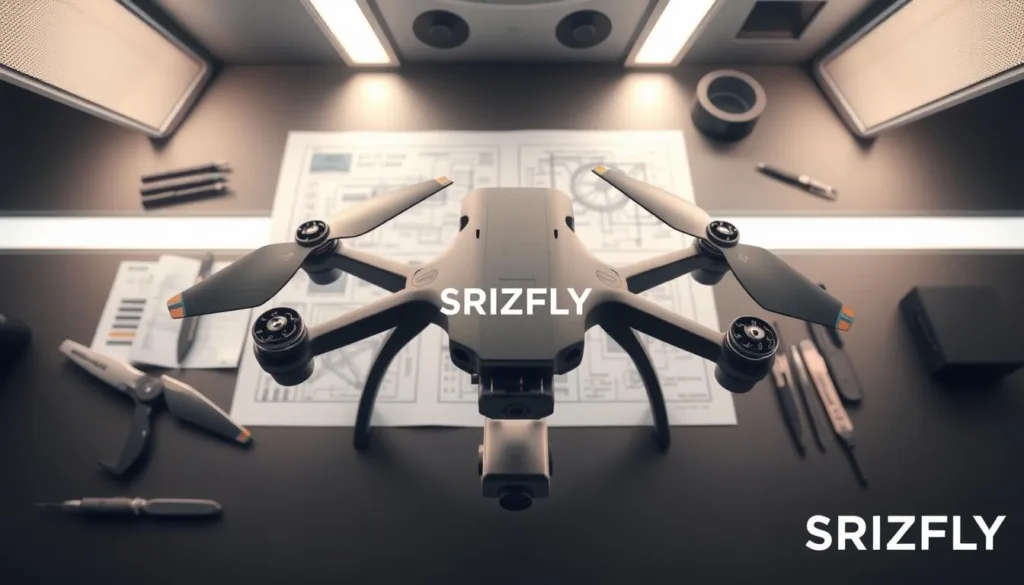
Unmanned aerial vehicles have come a long way. They started as research projects and are now vital tools in many fields. Modern platforms use smart, modular designs. This helps them handle tricky flight patterns and process lots of sensor data.
This guide is about taking these machines apart digitally. We look at a virtual teardown process. It’s a safe way to learn how complex mechanical systems work inside. You get to see every part without touching a screwdriver.
Using special software, you can explore each component in detail. There’s no risk of breaking anything. This method is perfect for students and working engineers. It builds a deep understanding of how everything fits and functions together.
The goal is to master the internal structure of these flying machines. You’ll learn how electronic and mechanical parts team up for stable movement. This knowledge is key for real-world operations and future design projects.
Key Takeaways
- Virtual teardowns offer a safe, detailed look inside complex aerial platforms.
- Simulation software lets you analyze every component without physical risk.
- Modern drone systems combine electronics and mechanics for stable flight.
- Digital modeling is a powerful tool for students and professionals to learn.
- Documenting each part in a virtual model ensures accuracy for future work.
- This approach is a cost-effective way to study performance in different settings.
- Systematic analysis reveals the smart engineering choices that make drones work so well.
Introduction and Overview of the Simulation Guide
This guide opens the door to exploring aerial platforms from the inside out. We focus on a virtual method that lets you inspect every part safely. You won’t need any screwdrivers or wrenches.
The process combines hands-on exploration with powerful digital tools. Platforms like SIEMENS NX create accurate 3D models. This approach builds a deep understanding of how each component functions.
You will learn to analyze a complex mechanical system step-by-step. The goal is to create a precise digital twin. This model serves as a perfect reference for any project.
Our methodology is designed for all skill levels. Beginners get a clear starting point. Professionals can refine their techniques for better flight analysis.
| Aspect | Traditional Physical Teardown | Virtual Simulation Teardown |
|---|---|---|
| Tools Required | Physical screwdrivers, pliers | Computer and modeling software |
| Risk of Damage | High – parts can be broken | None – completely safe |
| Learning Depth | Limited by physical access | Unlimited – view any angle |
| Documentation Ease | Manual notes and photos | Automatic digital records |
| Overall Cost | High for replacement parts | Low – one-time software |
Proper documentation is a key part of this guide. Your digital notes ensure accuracy for future work. This makes the process valuable for teams and solo learners.
By the end, you’ll confidently navigate the internal structure of modern drones. This knowledge directly improves how you plan real-world flight system checks and repairs.
SRIZFLY SESP-U1 System: Key Features and Benefits
This innovative software solution provides unmatched insight into six major DJI product lines. The platform is built for detailed educational exploration. You can inspect every component from every angle.
The system supports a wide array of popular aerial vehicles. It includes the iconic Phantom 4 and the powerful M600. You also get the high-performance M300 and the agricultural T30.
Furthermore, the compact Mavic 3 and the versatile M30T are covered. This range lets you compare different mechanical elements. You see how each model is built for its specific job.
Learning happens in a completely safe, digital space. There is no risk of damaging expensive hardware. This method is perfect for schools and professional training programs.
| Supported Model | Primary Use Case | Notable Characteristic |
|---|---|---|
| Phantom 4 | Aerial Photography | Iconic, stable platform |
| M600 | Heavy-Lift Operations | Powerful hexacopter design |
| M300 | Industrial Inspection | High-performance, rugged |
| T30 | Agricultural Spraying | Specialized for crop care |
| Mavic 3 | Portable Filmmaking | Compact, foldable design |
| M30T | Public Safety & Mapping | Widely utilized, thermal camera |
By using this platform, you gain a deeper understanding of construction. You learn how internal parts work together for stable flight. This knowledge is key for planning real-world system checks.
The simulation offers a cost-effective way to master procedures. It prepares you for handling actual drones with confidence. This tool turns complex learning into an engaging, visual process.
Drone Assembly and Disassembly Simulation
A virtual exploration method transforms how we learn about the inner workings of modern flying systems. This digital technique lets you inspect every component safely. You can see how parts connect without any physical tools.
Understanding the Simulation Process
The process is a step-by-step digital examination. You start by loading a 3D model of the aerial platform. Then, you virtually take apart each section.
This reveals how motors, frames, and electronics interact. The goal is to build an accurate digital twin. This model acts as a perfect reference for analysis.
You gain a clear understanding of the entire system. This knowledge is crucial for predicting how changes affect flight behavior.
Why This Approach Benefits DJI Drone Users
This method offers a safe space to learn complex mechanical sequences. There is no risk of damaging expensive hardware. It’s ideal for both new pilots and seasoned technicians.
Users get deep insights into their machine’s construction. You can test different scenarios digitally. This helps plan real-world maintenance with confidence.
The simulation bridges theory and hands-on practice. It prepares you for efficient system checks and upgrades. This leads to better performance and longer flight times.
Exploring DJI Drone Models and Their Unique Characteristics
From photography to agriculture, DJI’s lineup features specialized machines with unique builds. Each model is engineered with distinct characteristics for its primary task. This makes virtual analysis both fascinating and essential.
Insights on the Phantom 4 and M600 Models
The Phantom 4 is built for stable aerial photography. Its frame and gimbal are optimized for smooth motion. The heavy-lift M600 uses a robust hexacopter system for carrying payloads.
Researchers at MIT CSAIL, like Tao Du, show why these designs matter. They created irregular models, like a five-rotor pentacopter.
Such custom shapes require extremely complex control parameters for stable flight.
Standard DJIdronesavoid this by using proven, symmetrical layouts.
Disassembly Tips for the M300, T30, Mavic 3, and M30T
For the M300 and agricultural T30, focus on sensor attachment points. Their high-performance and spraying systems are mounted securely. A virtual teardown helps identify these fasteners.
The compact Mavic 3 and M30T need careful attention. Their folded designs pack many parts into a small space. During a digital disassembly, document every connection method.
This simulation approach ensures you understand each drone‘s architecture. You can then optimize it for its specific job.
Step-by-Step Simulation Process for Assembly
To replicate a machine’s physical structure in software, you must follow a logical sequence. A methodical workspace setup is essential for precision during the technical examination.
Begin by preparing a clean, well-lit digital environment. Focus on external components like propeller guards first. This reveals the basic attachment techniques used in the system.
Document every step with high-resolution captures. Record the orientation of each individual part. Use precise digital calipers to measure components as you work.
| Critical Step | Key Tools & Outcomes |
|---|---|
| Workspace Preparation | Organized digital environment; clear component visibility. |
| External Component Analysis | Reveals mounting techniques and primary system interfaces. |
| Dimensional Documentation | Digital calipers; accurate data for the 3D model. |
| Functional Subsystem Division | Makes the virtual build process manageable and logical. |
| Component Organization | Labeled virtual containers; ensures easy reference for reassembly. |
Divide the examination into functional subsystems, like propulsion or landing. This makes the virtual build more manageable. Place removed parts in labeled digital containers.
This organized process is key for creating an accurate digital twin. It ensures every detail supports stable flight analysis in the final model.
Best Practices for Virtual Drone Teardowns
The foundation of any accurate digital model lies in meticulous recording of every physical detail. This disciplined approach turns a complex examination into a reliable reference for future work.
Documenting Measurements and Component Details
Our analysis of a standard platform revealed the task’s scale. We found 82 individual parts, with 36 unique elements requiring specific notes.
Capturing exact dimensions is crucial. Use digital calipers for precision. Create a consistent naming convention, like ‘motor_mount_front_left’.
This organized process builds a comprehensive parts catalog. Include names, functions, and material specs. Photograph each item against a neutral background with a scale.
| Documentation Method | Primary Tool | Key Outcome |
|---|---|---|
| Dimensional Capture | Digital Calipers | Exact data for the 3D model |
| Visual Reference | Scale Photography | Clear component identification |
| Data Organization | Structured Naming Convention | Intuitive digital assembly workflow |
| Functional Cataloging | Parts List Spreadsheet | Complete system understanding |
Thorough documentation pays off later. It eliminates guesswork during the 3D modeling phase. Your team saves time and ensures the virtual twin matches the real system.
This accuracy is vital for predicting flight behavior. A well-documented model becomes a powerful tool for testing and optimization.
Leveraging Digital Tools and 3D Modeling Software
Parametric design software has revolutionized how we create and test mechanical components. These platforms allow for precise virtual modeling of complex parts. This digital approach is essential for modern engineering workflows.
Utilizing Advanced Techniques in SIEMENS NX and Other Platforms
SIEMENS NX is a powerful platform for parametric design and assembly modeling of complex aerial vehicle components. It handles intricate shapes with commands like extrusion and sweep. These techniques are vital for creating robust frames and structural mounts.
Cloud-native options like SIMNET combine design capabilities with flight simulator functionality. This enables performance prediction for your virtual models. You can use surface modeling commands to generate complex aerodynamic curves for propellers and fairings.
Integrating these digital tools into your workflow ensures your aerial vehicle system remains accurate. It streamlines the entire simulation process from model creation to testing.
| Software Platform | Primary Strength | Ideal Application |
|---|---|---|
| SIEMENS NX | Parametric design & assembly modeling | Complex geometry creation for components |
| SIMNET | Cloud-native design & flight simulation | Performance prediction for virtual models |
| General CAD Software | Surface modeling commands | Generating aerodynamic curves |
This comparison helps you select the right tool. Each platform offers unique advantages for different stages of the design process.
Essential Techniques for Virtual Disassembly and Reassembly
The art of building a precise digital twin relies on specialized computer-aided design methods. You must master a core set of software commands to bring complex shapes to life.
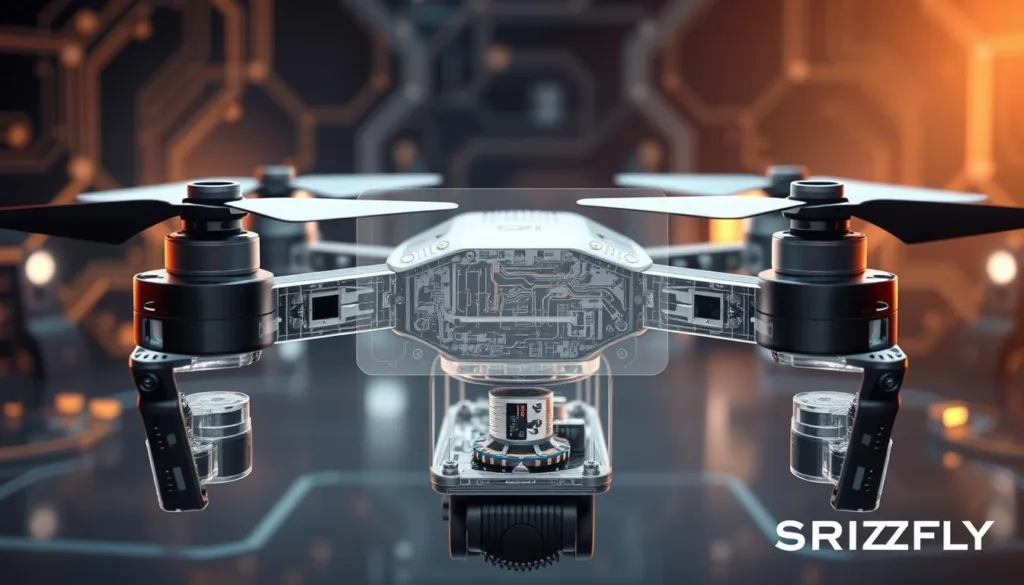
Start with solid modeling techniques like chamfer and delete body. These tools refine the geometry of individual parts. Your work in virtual reassembly then requires careful attention to spatial relationships.
Every connection must mirror the original platform. This ensures the complete system functions as intended in the model.
For organic components, use combined curve projection. This command creates accurate 3D splines from 2D sketches. It is critical for modeling complex aerodynamic parts.
Applying these methods lets you create a faithful digital replica. This model becomes a powerful reference for analyzing the entire aerial vehicle. You can study how each part influences overall flight performance.
A well-built digital twin reveals the inner logic of modern drones. It shows how the mechanical and electronic systems work together. This knowledge is key for predicting stable flight under different conditions.
Overcoming Common Challenges in Simulation and Assembly
Even experienced engineers encounter obstacles when translating physical systems into digital models. These hurdles can slow progress and reduce confidence in your final virtual build.
A methodical approach is your best defense against common technical problems. By anticipating issues early, you save significant time and resources later.
Identifying and Avoiding Common Pitfalls
One frequent issue involves moving parts that interfere with each other inside the machine. Your team must work together to spot these spatial conflicts during the modeling phase.
Another pitfall is ignoring realistic communication delays between components. Sensor noise should also be factored into your virtual tests for accurate results.
Regular regression testing helps you avoid new bugs after software updates. This validation step ensures your model matches the real device’s flight behavior.
| Challenge Type | Common Pitfall | Recommended Solution |
|---|---|---|
| Spatial Interference | Parts collide in the virtual space | Perform interference checks during assembly |
| Communication Lag | Ignoring signal delay between modules | Add realistic latency to your simulation |
| Software Updates | New bugs introduced after changes | Implement automated regression testing |
| Data Loss | Critical component info not documented | Maintain a detailed digital log for each step |
Document every connection and part orientation meticulously. This prevents information loss and supports your entire team. Addressing these challenges early creates a robust digital system.
Proper validation gives you confidence that the virtual platform performs like the real one. This systematic approach turns potential problems into learning opportunities for future projects.
Integrating Artificial Intelligence into Drone Simulation
The next frontier in virtual modeling involves smart algorithms that can perceive and react. These tools bring a new level of autonomy to your digital tests. They allow machines to interpret their surroundings in real-time.
Advanced perception modules use artificial intelligence to spot landing markers and navigate complex spaces. This means your unmanned vehicle can make decisions during tricky flight operations without a pilot. It’s like giving the machine a pair of smart eyes.
Researchers at Macquarie University are pushing this further. They explore neurosymbolic AI and large language models to boost reliability. Their work helps these systems reason better about dynamic environments.
You can use AI to simulate how a platform sees the world. This is vital for testing obstacle avoidance and planning safe paths. It creates a realistic digital playground for your autonomy projects.
Future software versions will likely offer proactive design tips. An AI could analyze your payload and battery needs to suggest optimizations. This integration makes the entire system smarter and safer from the start.
Optimizing Assembly Techniques for Enhanced Performance
Fine-tuning your aerial vehicle’s build can unlock significant gains in its operational capabilities. This process goes beyond simple construction. It’s about strategic refinement for better results.
Ensure all structural elements are correctly aligned. This maintains perfect balance during high-speed flight. A well-balanced machine handles more predictably and safely.
Use performance prediction tools in your software. Visualize how design tweaks affect your drone‘s range and battery life. This digital testing saves time and materials.
Proper surface finishing and tight tolerance management are critical. Parts must fit together seamlessly for optimal aerodynamic performance. Even small gaps can create drag and waste power.
The optimization process should focus on smart weight reduction. Keep the main frame strong while removing unnecessary material. A lighter system can fly longer and carry more.
Analyze the dynamics of all rotating components. Improving the efficiency of the propulsion system boosts overall power. This leads to more responsive and agile flight characteristics.
Continuous refinement of your assembly methods leads to more reliable machines. These efficient drones can then execute complex missions with greater precision and confidence.
Control Systems and Flight Simulation Considerations
The bridge between a planned path and actual movement is built by intelligent guidance protocols. This control system is the core of any autonomous machine. It translates navigation data into precise motor commands.
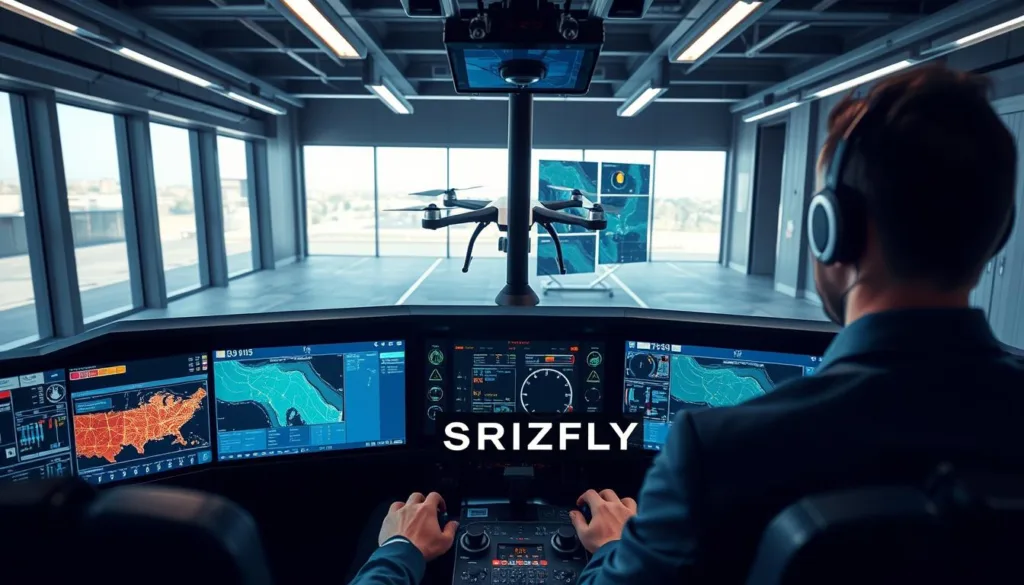
You must consider how the flight controller talks to mechanical parts. Electronic signals need to create accurate physical responses. This interaction is vital for stable and predictable movement.
Popular rule-based libraries like PX4 and ArduPilot are key tools. They handle mission-critical tasks for many aerial platforms. Integrating them into your digital tests adds a layer of real-world logic.
Motion analysis of the user’s remote is also essential. It shows how pilot input changes the machine’s behavior. Your simulation should include realistic actuator dynamics and signal delays.
A robust system ensures stable flight in tough weather. It helps the drone adapt to unexpected situations. This reliability is what separates good drones from great ones.
Practical Tips for Efficient System Validation
The Harbin Institute of Technology’s indoor testbed showcases the power of motion capture for system verification. Their 7m x 7m x 4m space uses sixteen cameras. This creates a fully observable environment for testing.
Your validation team should use similar controlled spaces. Motion capture tracks every movement of the aerial vehicle. This verifies the flight dynamics predicted by your models.
Hardware-in-the-loop testing is a critical next stage. It validates the interfaces between the flight controller and onboard computing hardware. This bridges the gap between virtual models and physical operations.
For real-world tests, implement safety measures. Nets from companies like Gorilla Netting can mitigate the risk of unintended flyaways. This protects both your equipment and the surrounding area.
| Validation Stage | Primary Tool | Key Outcome |
|---|---|---|
| Software-in-the-Loop | Virtual Simulation Environment | Verifies control logic and system behavior in code. |
| Hardware-in-the-Loop | Physical Controller with Simulated I/O | Tests real electronic interfaces and timing. |
| Controlled Flight Test | Indoor/Outdoor Testbed with Safety Nets | Confirms full integrated performance in a safe space. |
Efficient validation requires this staged approach. Document results at each phase. This helps the team identify and resolve design flaws early.
Proper documentation before mission-critical deployments saves time and resources. It builds confidence that your entire platform will perform reliably.
Future Trends in Drone Technology and Simulation
The horizon of aerial technology is rapidly evolving with groundbreaking digital advancements. Emerging digital twin platforms are set to redefine how we design and test flying machines. These virtual replicas allow for deep analysis before any physical prototype is built.
Innovations in Digital Twin Technologies
High-fidelity digital twins create exact copies of physical systems. Engineers can perform structural analysis and aerodynamic testing in a safe, virtual space. This reduces costs and speeds up development cycles.
Cloud-based tools enable global teams to collaborate in real-time. Complex simulation projects become more manageable with shared digital workspaces. This fosters innovation and faster problem-solving.
Advanced simulation environments can replay sensor data from actual flights. This allows for rigorous regression testing and validation. Variable lighting and extreme weather conditions are added for realism.
These advancements improve the safety and efficiency of autonomous operations. Commercial industries benefit from more reliable and capable machines. The future looks bright for smarter, safer aerial systems.
Industry Insights: Real-World Applications and Benefits
The practical impact of smart flying machines is now visible in fields from logistics to public safety. These autonomous platforms are reshaping everyday operations with remarkable efficiency.
They excel at aerial delivery for last-mile logistics. Infrastructure inspection is another major use. Bridges and power lines can be checked without risky climbs.
Precision agriculture leverages artificial intelligence for crop monitoring. This allows for safer and more targeted field management. Search and rescue missions benefit greatly.
These drones access dangerous terrain without risking human lives. The film industry relies on them for unique aerial shots. This provides perspectives once impossible to capture.
| Industry Sector | Primary Application | Key Benefit |
|---|---|---|
| Logistics & Delivery | Aerial Package Transport | Reduces delivery times and costs |
| Infrastructure | Structural Inspection & Monitoring | Enhances worker safety and data accuracy |
| Agriculture | Crop Health Analysis | Optimizes resource use and increases yield |
| Public Safety | Disaster Response & Search | Enables rapid access to hazardous zones |
As these tools become mission-critical, robust testing is essential. Virtual simulation helps optimize each drone system before deployment. This process cuts costs and improves overall flight performance for entire fleets.
Conclusion
This journey through virtual teardown methods equips you with a powerful skillset for modern aerial robotics. Mastering these digital techniques is essential for excellence in unmanned aerial vehicles.
By following the systematic pipeline outlined here, you ensure safety and reliability in your system designs. The integration of artificial intelligence and digital twins will drive innovation for years.
Apply these best practices to your own projects. Improve the performance and efficiency of your flight operations. Stay informed about future trends to remain competitive in this exciting field.
Thank you for exploring this comprehensive guide. We hope it empowers your work with DJI platforms.
FAQ
What is the main goal of a virtual assembly and disassembly process for unmanned aerial vehicles?
The primary goal is to provide a risk-free, cost-effective training environment. This approach allows pilots and technicians to master maintenance procedures, understand the internal structure of platforms like the DJI Phantom 4, and optimize their workflow before ever touching physical hardware.
How does the SRIZFLY SESP-U1 system enhance this training?
The SRIZFLY system offers a realistic digital twin experience. It uses detailed 3D models and accurate physics to simulate every step. This gives users deep insight into component relationships, system validation, and proper handling techniques, boosting both confidence and skill.
Can these simulations help with specific DJI models like the Matrice 300 or Agras T30?
Absolutely. High-fidelity simulations are tailored to the unique characteristics of each platform. For example, you can practice accessing the core systems of an M300 or safely removing the spray system on a T30. This model-specific focus is key for professional operations.
What role does artificial intelligence play in these virtual environments?
AI introduces smart assistance and adaptive learning. It can guide users through complex steps, predict potential errors during a virtual teardown, and personalize the training pace. This integration makes the learning process more efficient and effective.
Why is documenting measurements and parameters during the simulation important?
Meticulous documentation builds a valuable knowledge base. Recording torque specs, cable routing, and battery compartment details during the virtual process ensures consistency and precision later in real-world assembly, enhancing overall performance and safety.
What software tools are commonly used for creating these simulations?
Professional-grade software like SIEMENS NX is often utilized for its powerful 3D modeling and simulation capabilities. These platforms allow developers to create interactive, accurate models that users can manipulate in real-time, exploring every element of the UAV’s design.
How do these simulations prepare users for real-world flight control and perception systems?
By virtually interacting with the flight controller, camera gimbals, and sensor arrays, users gain a practical understanding of how these systems integrate. This hands-on knowledge is crucial for troubleshooting and optimizing the aircraft’s perception and planning capabilities in the field.
What is a digital twin, and how is it relevant to future trends in this field?
A digital twin is a live, virtual replica of a physical asset. In future trends, these twins will be central, allowing for continuous system optimization, predictive maintenance, and advanced testing of new flight parameters or payloads without any risk to the actual vehicle.