



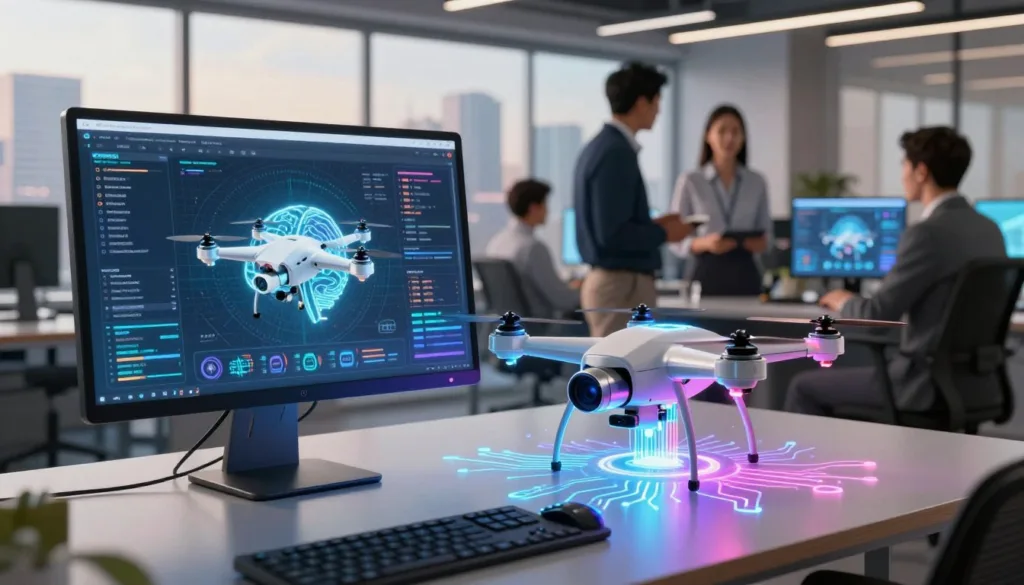
Drone Parts Cognitive Simulation Software is changing how teams design, test, and train with unmanned aircraft in the United States. By combining drone simulation with sensor-driven data and human-systems engineering, this software speeds prototyping, reduces risk, and helps operators achieve safer flights. It gives engineers and trainers a virtual workspace to explore failures, refine parts, and rehearse missions without grounding real hardware.
The SRIZFLY SESP-U1 system is a standout example. Its assembly and disassembly function supports common DJI platforms, including Phantom 4, Matrice 600 (M600), Matrice 300 (M300), T30 agricultural sprayers, Mavic 3, and M30T. Learners can practice unit-level assembly and maintenance inside the SRIZFLY SESP-U1 environment, gaining hands-on familiarity before touching a physical drone.
At its core, drone parts cognition blends advanced algorithms, real-time sensor fusion, and cognitive models to mirror human-like situational understanding. This lets researchers, educators, commercial operators, and product teams close the gap between virtual testing and live performance using UAV simulation tools tailored for drone development U.S. stakeholders.
Key Takeaways
- Drone Parts Cognitive Simulation Software accelerates safe prototyping and testing.
- SRIZFLY SESP-U1 supports assembly training for key DJI models like Phantom 4 and M300.
- Combines algorithms and sensor fusion to create realistic drone parts cognition.
- Useful for commercial operators, educators, researchers, and product developers.
- UAV simulation tools reduce risk and improve operational readiness in drone development U.S.
What is Drone Parts Cognitive Simulation Software and Why It Matters
Drone parts cognitive simulation models how components sense, reason, and act inside a digital twin. The software blends perception models, decision logic, and simulated actuators to mirror real-world behavior for parts and subsystems.
Defining cognitive simulation for drone parts and systems
The drone parts simulation definition centers on virtual models that mimic human-like reasoning. These models combine sensor emulation with algorithms to spot buildings, trees, vehicles, birds, and other hazards. They map relationships between parts, show how connectors and mechanical interfaces respond, and trace fault propagation through assemblies.
Key benefits for innovation and operational efficiency
Benefits drone simulation deliver include safer designs through dynamic obstacle detection and virtual collision-avoidance testing. Teams shorten development cycles with virtual prototyping and reduce risk by rehearsing missions before real flights. Real-time processing uses high-resolution, multi-angle data to test performance under varied lighting and weather, so designers get immediate feedback.
Operational efficiency drones gain when every simulated flight feeds data back to refine autonomy models. That continuous improvement boosts reliability and lowers maintenance time. Training UAV assembly becomes more efficient with part-level practice, letting technicians gain hands-on skills in software before touching hardware.
How this bridges research, education, and industry
Drone education simulation offers safe, repeatable labs for STEM students and technicians. Learners can practice assembly and disassembly of representative commercial models such as DJI Phantom 4, Mavic 3, and Matrice platforms inside a virtual environment. Research-industry bridge drones occurs when labs and companies share reproducible test scenarios for algorithm tuning and human-automation studies.
Innovation UAV testing benefits industrial adopters like delivery, inspection, and agriculture firms. Simulation lets operators tailor scenarios to specific tasks and environments. Platforms such as SRIZFLY SESP-U1 support workforce upskilling by providing realistic training UAV assembly workflows for commonly used models, speeding onboarding and improving field readiness.
Core Technologies Behind Advanced Drone Parts Cognition
The software stack that powers modern drone part cognition mixes statistical learning, real-time sensing, and formal verification. Designers blend supervised networks with reinforcement policies so models learn to spot parts, predict motion, and choose safe actions during flight. This mix lets teams refine autonomy machine learning models from lab benches to live flights.
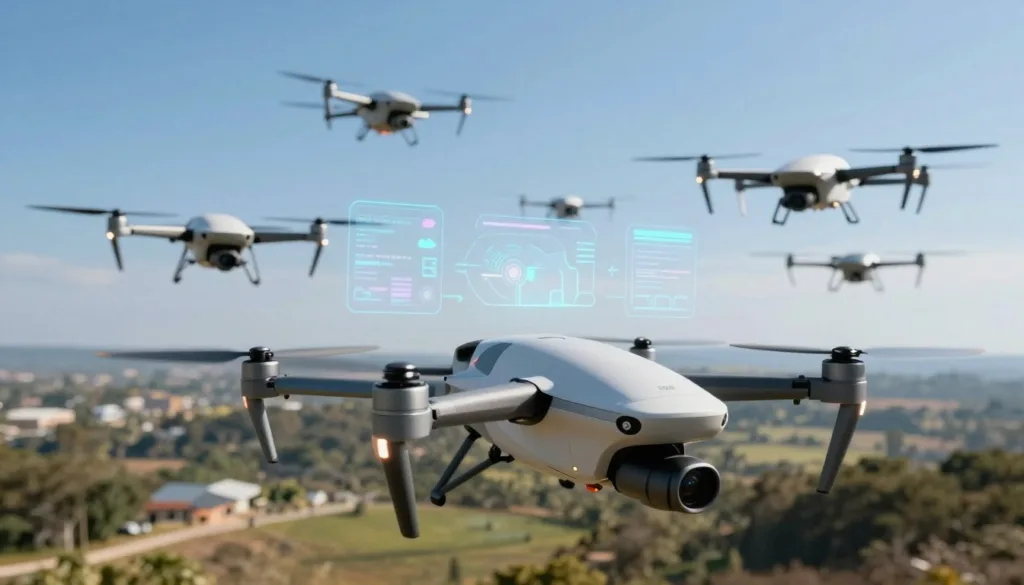
Algorithms and machine learning models drive the core perception and control loops. Object recognition UAV models are trained on hundreds of classes to tell moving items from fixed fixtures. Low-latency inference pipelines evaluate threats in milliseconds and trigger corrective maneuvers. Iterative training uses both simulated missions and logged flight telemetry to tune battery management, stabilization, and payload effects.
Sensor fusion is vital for 3D awareness. LIDAR camera IMU fusion produces a stable world view by combining range returns, visual frames, inertial rates, and GPS fixes. That combined feed reduces single-sensor failure risk and yields higher fidelity maps used by collision-avoidance modules. High-resolution, multi-angle captures recreate shadows, glare, and weather so simulated testing matches field conditions.
Real-time UAV data flows into decision layers that must act under tight deadlines. Streamed telemetry, compressed vision frames, and fused point clouds feed autonomy machine learning controllers that plan and replan as situations change. Those controllers power mission-level tools that produce situational maps for part-level validation and safe route selection in dense urban or rural airspace.
Formal reasoning strengthens safety and certification readiness. Formal methods drone safety techniques let engineers prove properties such as bounded response times and non-deterministic recovery behaviors. Tools inspired by ADEPT FlightDeckZ bring mathematical checks into design cycles so software meets strict aerospace criteria. NASA ACE Lab practices, like part-task simulations and FlightDeckZ-style environments, guide specification and verification workflows.
Human-systems engineering shapes interfaces and operator expectations. Cognitive engineering methods define tasks, metrics, and likely failure modes when pilots or ground crews interact with automated systems. That human-centered view reduces surprises from automation handoffs and supports realistic training scenarios that improve trust and performance.
Practical Applications: From Drone Assembly to Mission-Ready Testing
This section shows how cognitive simulation moves teams from bench work to safe, mission-ready flights. The platform blends hands-on practice with advanced test routines so technicians, engineers, and operators can train, validate, and rehearse complex tasks before touching hardware.
Virtual assembly and disassembly training
The SRIZFLY SESP-U1 assembly training workflow recreates step-by-step procedures for common DJI platforms. Trainees practice with models such as Phantom 4, Matrice 600 (M600), Matrice 300 (M300), T30, Mavic 3, and M30T. Each session teaches connector seating, sensor mounts, payload interfaces, and routine maintenance without risk to hardware.
Repeatable virtual drone assembly scenarios accelerate onboarding for field technicians. Performance metrics record time, errors, and tool usage so instructors can give targeted feedback.
Part-level validation and collision-avoidance testing
Part-level validation drones simulations model mechanical and electrical interactions at component granularity. The system exposes failure modes like connector misalignment, motor mount stress, and sensor occlusion. Teams catch issues before building costly prototypes.
Collision avoidance simulation uses multi-sensor 3D mapping to test dynamic obstacle detection. The environment includes pedestrians, other aircraft, and moving ground objects. Safety protocols run corrective maneuvers based on milliseconds-early conflict evaluation to support UAV safety testing.
Operational scenario rehearsal and mission planning
Mission rehearsal drones let operators run full sequences in a controlled environment. Waypoint navigation, payload operations, and contingency steps play out with realistic sensor feeds so crews validate procedures and timing.
UAV mission planning benefits when simulated sensor and environment outputs feed flight control logic. Planners optimize routes, energy budgets, and emergency responses before live deployment.
- Agricultural workflows for the T30 compare spray patterns and coverage in diverse conditions.
- Infrastructure inspection scenarios replicate complex angles and payload operations for Matrice-series craft.
- Urban delivery route tests and multi-vehicle rehearsals explore traffic, landing zones, and AAM coordination.
Bringing together SRIZFLY SESP-U1 assembly training, DJI assembly simulation, part-level validation drones, collision avoidance simulation, UAV safety testing, mission rehearsal drones, UAV mission planning, and scenario simulation creates a practical pipeline. Teams reduce crash risk, compress learning curves, and launch more reliable missions.
Integrating Cognitive Simulation into Your Drone Development Workflow
Start by planning how to integrate drone simulation into your existing stack so outputs feed controllers and mission planners. Choose environments that export logs compatible with CI pipelines and support high-fidelity sensor models for realistic testing.
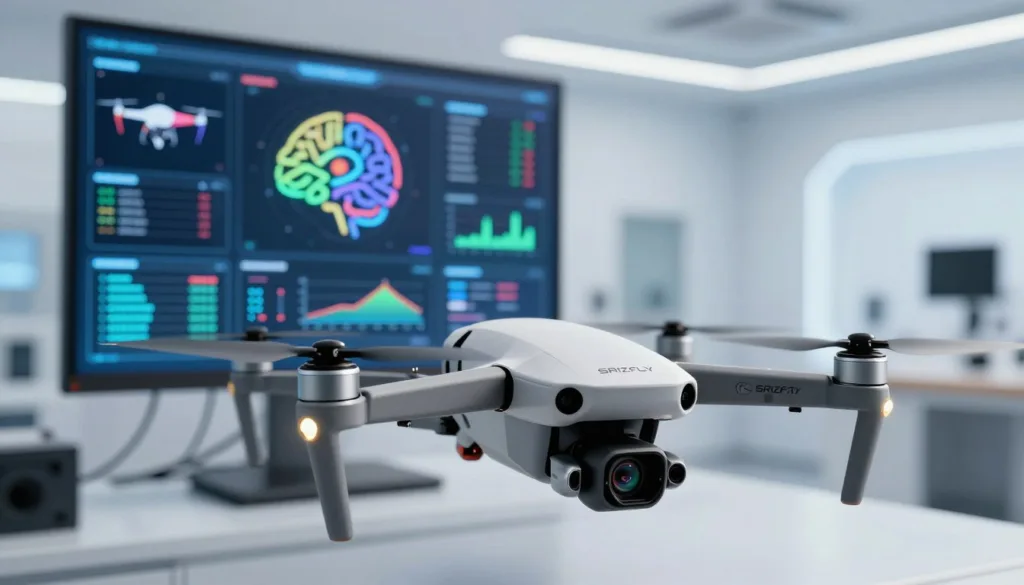
- Connect cognitive modules to autopilots like PX4 or ArduCopter using standardized protocols so simulated behavior informs live controllers.
- Adopt a simulation toolchain UAV approach that supports hardware-in-the-loop and can replay sensor logs for regression testing.
- Plan SRIZFLY integration for assembly training, tying SESP-U1 outputs to control stacks before HITL validation.
Data collection, model refinement, and continuous improvement:
- Build a data pipeline for simulation data collection that mirrors real flight telemetry, sensor logs, and event annotations.
- Use iterative cycles where simulation-generated edge cases augment field data to drive model refinement UAV and robustness.
- Maintain versioned datasets and models, run automated validation suites, and include human-in-the-loop reviews to catch interaction issues.
Team roles, skills, and hiring guidance:
- Hire personnel with hands-on experience in software and hardware integration; look for backgrounds with PX4, ArduCopter, or Betaflight.
- Prioritize autonomy engineers skilled in machine learning and control theory to support continuous learning drones and model refinement UAV.
- Include a cognitive systems engineer and human-systems engineers versed in formal methods to assess usability and safety.
- Bring on simulation specialists who can create high-fidelity sensor models and manage simulation toolchain UAV tasks.
- For drone simulation hiring, favor candidates who combine soldering and frame work with strong programming and communication skills, and who are authorized to work in the United States when hiring locally.
Practical steps to start:
- Map interfaces between simulators and autopilots, prioritizing real-time telemetry export for training pipelines.
- Design a shared repository for simulation data collection and label standards to speed supervised learning.
- Schedule regular model refinement UAV cycles with formal verification checkpoints before deployment.
Conclusion
Drone parts cognitive simulation brings together advanced algorithms, sensor fusion, and human-systems engineering to boost safety, speed up training, and cut development costs. The approach makes virtual testing and verification practical for engineering teams, helping them find design faults early and reduce hardware risk during hands-on work.
The SRIZFLY SESP-U1 summary highlights tangible value for technicians and integrators. Its virtual assembly and disassembly workflows support at least six DJI models—Phantom 4, Matrice 600, Matrice 300, T30, Mavic 3, and M30T—shortening onboarding and lowering the chance of costly mistakes on real units. That mix of realistic practice and part-level validation improves readiness for repair and mission prep.
Looking ahead, the future of drone cognition depends on tighter toolchain integration, the use of formal methods for verification, and multidisciplinary teams that combine software, controls, and human factors expertise. Organizations across the United States that adopt these practices will be better positioned to scale operations, meet compliance demands, and drive continued innovation in autonomous systems.
This drone simulation conclusion underscores a pragmatic path: deploy cognitive models, validate them with rigorous methods, and invest in people and processes to turn simulation gains into operational advantage.
FAQ
What is Drone Parts Cognitive Simulation Software?
Drone Parts Cognitive Simulation Software models how a drone’s components and subsystems perceive, interpret, and react to environmental information. It combines perception, decision logic, and simulated actuator responses to create human-like situational understanding at part and system levels. The software uses algorithms, sensor models, and human-systems engineering principles to mirror how components behave in assemblies, how connectors respond during assembly/disassembly, and how faults propagate through the system.
Why does cognitive simulation matter for drone development and operations?
Cognitive simulation accelerates innovation and improves operational efficiency by enabling virtual testing of safety, performance, and maintenance workflows. Teams can run collision-avoidance tests, validate part interactions, rehearse missions, and prototype designs without risking hardware. The result is safer flights, faster prototyping, improved assembly training, and reduced operational risk when transitioning to real-world flights.
Which DJI models does SRIZFLY SESP-U1 support for assembly and disassembly training?
SRIZFLY SESP-U1 supports assembly/disassembly workflows for at least six DJI models, including the Phantom 4, Matrice 600 (M600), Matrice 300 (M300), T30 (agricultural plant protection), Mavic 3 (compact/portable), and M30T. Users can practice connectors, sensor mounts, payload installations, and routine maintenance procedures within the virtual environment.
How does the software improve safety through virtual testing?
The software enables dynamic obstacle detection and virtual collision-avoidance testing by identifying stationary and moving objects—buildings, trees, vehicles, pedestrians, and birds—and modeling their relationships to parts and systems. Low-latency inference pipelines evaluate threats milliseconds before conflicts and trigger corrective maneuvers. Multi-sensor 3D mapping and weather/lighting simulation create realistic conditions to reduce crash risk before live flights.
What core technologies power Drone Parts Cognitive Simulation Software?
Core technologies include object recognition models trained on hundreds of object classes, supervised and reinforcement learning approaches, sensor fusion of cameras, IMUs, GPS, and LIDAR/range sensors, and real-time decision logic for low-latency control. The stack also applies formal methods and human-systems engineering concepts to verify safety constraints and predict human–automation interactions.
How does sensor fusion improve simulation fidelity?
Sensor fusion combines multiple inputs—high-resolution multi-angle cameras, inertial measurement units, GPS, and range sensors—to create robust 3D situational awareness. This reduces single-sensor failure risk, accurately models viewpoints, shadows, glare, and weather effects, and supports realistic virtual testing of perception and control algorithms.
Can simulated flights improve machine learning models?
Yes. Each simulated flight yields labeled telemetry and sensor data that refine supervised and reinforcement learning models. Simulation produces edge-case scenarios that augment real-world datasets, enabling iterative training cycles that improve autonomy, battery management, stabilization under payloads, and overall performance before deployment.
How does SRIZFLY SESP-U1 help training and education?
SRIZFLY SESP-U1 offers part-task assembly and disassembly practice without risk to hardware, shortening onboarding for technicians and students. It provides repeatable, measurable sessions with performance metrics for assessment. This supports hands-on STEM learning, part-level maintenance training, and prepares learners to handle real drones safely.
What research applications does cognitive simulation support?
Researchers can rapidly iterate autonomy algorithms, run reproducible experiments under repeatable conditions, and study human-automation interaction. The environment supports vehicle-level and part-level experiments, enabling controlled testing of control policies, sensor models, and interaction effects informed by practices like NASA ACE Lab part-task simulations and FlightDeckZ concepts.
How does part-level validation work in the software?
Part-level validation simulates mechanical and electrical interactions of individual components to expose failure modes before physical prototyping. Examples include connector misalignment, motor mount stress, sensor occlusion, and fault propagation through assemblies. These simulations help designers catch issues early and reduce hardware iteration cycles.
Can I rehearse full mission profiles in the simulator?
Yes. The software supports mission rehearsal including waypoint navigation, payload operations, contingency procedures, and multi-vehicle coordination. Simulated missions feed realistic sensor and environment outputs into flight control logic so operators can optimize routes, energy budgets, and emergency responses prior to live deployment.
How does the software integrate with autopilot platforms and CI pipelines?
Recommended integration patterns connect cognitive simulation modules to autopilots like PX4 and ArduCopter and to mission planners via standardized communication protocols. Simulators should export logs and support high-fidelity sensor models, enabling integration with continuous integration pipelines for automated regression and hardware-in-the-loop validation.
What data pipeline and model refinement practices are recommended?
Best practices include collecting standardized telemetry, sensor logs, and event annotations from simulation and real flights; curating datasets for supervised learning; maintaining versioned datasets and models; and running automated validation suites. Human-in-the-loop reviews and formal verification tools should validate model updates before deployment.
Which team roles and skills are needed to adopt cognitive simulation?
Key roles include software and drone developers with hardware integration experience, autonomy engineers skilled in machine learning and control theory, human-systems engineers familiar with formal methods and cognitive engineering, and simulation specialists for high-fidelity sensor modeling. Desirable skills include experience with PX4, ArduCopter, Betaflight, sensor integration (GPS, IMU, cameras, LIDAR), and both hardware assembly and software development.
How does formal methods and human-systems engineering influence design and verification?
Formal methods enable mathematical analysis and verification of properties like safety constraints, non-determinism handling, and completeness. Human-systems engineering applies cognitive principles to define tasks, performance metrics, and predict human–automation interaction performance. Combined, they improve reliability, certification readiness, and reduce unexpected failures caused by complex interactions.
Which industries and use cases benefit most from cognitive simulation?
Commercial operations such as delivery, infrastructure inspection, agriculture (e.g., T30 plant protection workflows), and Advanced Air Mobility concepts benefit greatly. The software helps tailor simulations to specific tasks, environments, and multi-vehicle coordination, enabling safer, more efficient operations across urban, suburban, and rural settings.
What immediate practical outcomes can organizations expect after adopting cognitive simulation?
Organizations typically see safer flights through improved collision avoidance, faster time-to-market from virtual prototyping, reduced operational risk from mission rehearsals, and enhanced maintenance and training via part-level assembly practice. Technicians gain repeatable training, and autonomy teams get richer datasets for model refinement.
How should organizations start integrating cognitive simulation into their toolchain?
Start by selecting simulation environments with high-fidelity sensor models and log export capabilities. Connect simulations to autopilot stacks (PX4, ArduCopter) and mission planners, and include simulation outputs in CI pipelines. Use SRIZFLY SESP-U1 for assembly training while exporting logs to refine control stacks before hardware-in-the-loop testing.
Are there measurable training benefits from virtual assembly practice?
Yes. Virtual assembly reduces risk to hardware, shortens onboarding, and provides measurable practice sessions. Performance metrics collected during virtual tasks help assess skill acquisition, reduce field errors, and accelerate technician readiness for common DJI platforms such as Phantom 4, M600, M300, T30, Mavic 3, and M30T.
What are common integration challenges and how can teams overcome them?
Common challenges include matching sensor fidelity to real-world counterparts, ensuring low-latency inference for decision logic, and aligning simulated logs with production telemetry formats. Overcome these by choosing simulators that export standardized logs, incorporating hardware-in-the-loop stages, and maintaining iterative validation cycles that combine simulation and flight data.
How does mission-level 3D awareness improve collision-avoidance and planning?
Sensor-driven 3D awareness maps provide dense spatial context that feeds collision-avoidance systems and part-level validation modules. They enable planners to evaluate obstacles, terrain, and dynamic actors in urban, suburban, and agricultural environments, leading to optimized routes, energy budgets, and safer contingency responses.
How does the software support continuous improvement of autonomy systems?
The software enables iterative model lifecycles where simulation-generated edge cases augment real-world data for training. Teams maintain versioned datasets and models, run automated validation, and use human-in-the-loop reviews and formal verification to validate updates. This cycle improves robustness, reduces regression risk, and supports certification-readiness.
What practical advice exists for hiring teams to build cognitive simulation capability?
Prioritize candidates with combined hardware and software skills: soldering and frame assembly experience plus object-oriented programming. Look for autonomy engineers experienced with ML and control, human-systems engineers versed in formal methods, and simulation specialists. Ensure candidates are authorized to work in the U.S. when hiring locally. IHMC-style guidance recommends strong communication, independent problem solving, and collaborative mindset.
How does SRIZFLY SESP-U1 tie into certification and verification workflows?
SRIZFLY SESP-U1’s part-level simulations and mission rehearsals provide repeatable conditions and detailed logs for verification and validation. When combined with formal methods and human-systems engineering practices, these tools produce artifacts and datasets that support specification, verification, and training—helpful for certification-readiness and regulatory interactions.