



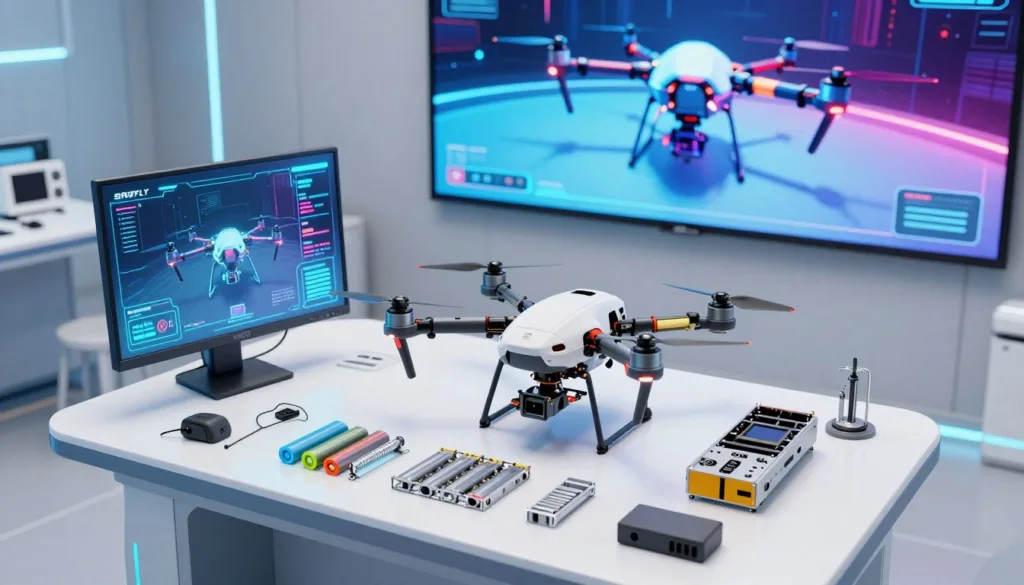
Learning new skills often feels hard for beginners. SRIZFLY provides a safe *environment* to grow these vital talents. This virtual repair practice lets you study complex gear without breaking pricey parts.
Users build skill by finishing realistic tasks. Data shows that SRIZFLY improves training while keeping people safe. It lowers costs by removing the need for physical tools.
Mastering drone disassembly becomes easy with this modern software. A digital assembly simulation ensures that users perform every step correctly. You can practice *freely* while gaining great direct experience in a digital space.
Many workers find this modern way very helpful. It removes the *fear* of making costly errors. Your total proficiency will increase fast through regular use.
SRIZFLY offers a unique way to move ahead. It bridges the gap between books plus actual work.
Begin your path toward being an expert today. This platform changes how we learn.
Key Takeaways
- Practice in a risk-free virtual environment.
- Lower training costs by cutting out physical tools.
- Improve technical skills with realistic practice.
- Enhance safety by avoiding real hardware accidents.
- Gain confidence through repeated direct practice.
- Boost total training speed and efficiency.
Understanding Drone Disassembly and Assembly Simulation
Mastering the intricate parts of a drone starts with a comprehensive virtual teardown. This process allows users to explore every component without touching a physical device. By using a high-quality drone simulation, engineers can see how parts fit together in a digital space.
Technicians often face high costs when they make mistakes on real hardware. Virtual teardowns solve this problem by providing a risk-free environment for practice. You can take apart motors, sensors, and frames with a simple click on your screen.
A key part of this technology is cognitive simulation. This advanced tool mimics how a person thinks and acts during a repair task. It makes the drone simulation feel incredibly lifelike by following real-world logic and physics.
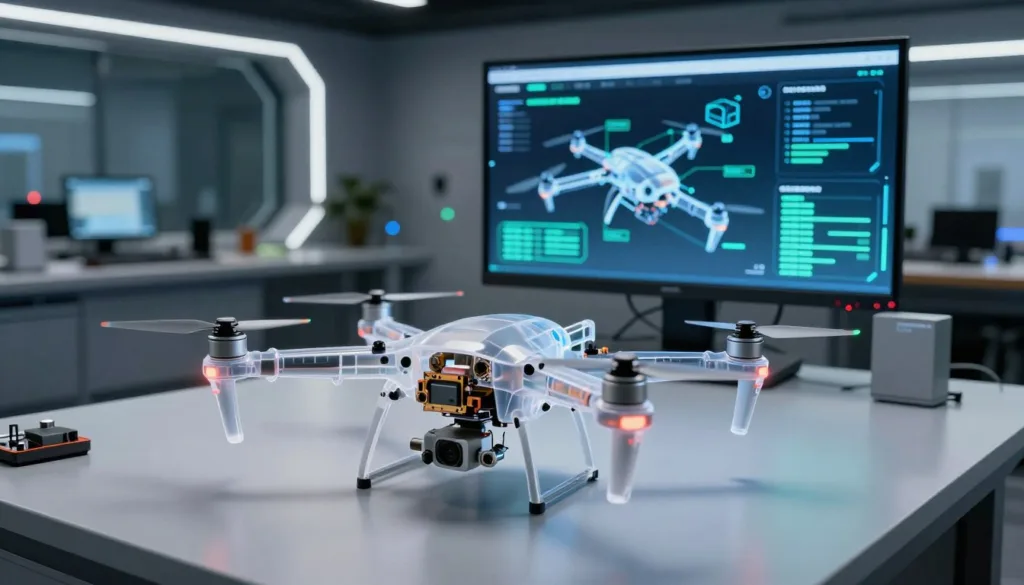
Developers use cognitive simulation to create scenarios that challenge the user’s memory and focus. These virtual teardowns guide you through the correct order of assembly. This helps build “muscle memory” in the brain before you ever pick up a screwdriver.
“Virtual environments provide the perfect sandbox for technical mastery without the fear of costly errors.”
Efficiency is another major benefit of using a drone simulation for training. You can reset a complex assembly in seconds rather than spending hours rebuilding it manually. This speed allows for more repetitions, which leads to faster skill growth for new technicians.
| Feature | Virtual Method | Physical Method |
|---|---|---|
| Risk of Damage | None | High |
| Setup Time | Instant | Hours |
| Cost per Session | Zero | Variable |
| Learning Speed | Fast | Moderate |
The role of cognitive simulation extends into the design phase of new drones as well. Engineers test how easy a drone is to fix before they even build a prototype. This ensures that future drones are more user-friendly and durable for everyone.
Using a drone simulation bridges the gap between reading a manual and doing the work. It builds confidence by letting you fail and learn in a safe way. This digital approach is changing the way we think about modern technical education.
SRIZFLY’s Approach to Interactive Drone Training
SRIZFLY transforms how technicians learn by merging high-fidelity graphics with technical precision. This platform provides a space where users can experiment without the fear of breaking expensive equipment. It focuses on the tiny details that matter in real-world drone maintenance.
The interactive drone training modules allow for a deep dive into the internal components of various models. Users can virtually touch and move parts to understand their specific functions. This hands-on feeling builds muscle memory and confidence before anyone touches a real aircraft.
“Simulators serve as the essential bridge between theory and mastery, ensuring every technician is ready for the field.”
Several simulator features stand out in the SRIZFLY software to help students succeed. These include high-resolution 3D models and step-by-step guidance for complex repairs. The system tracks individual progress and highlights areas where the user needs more practice.
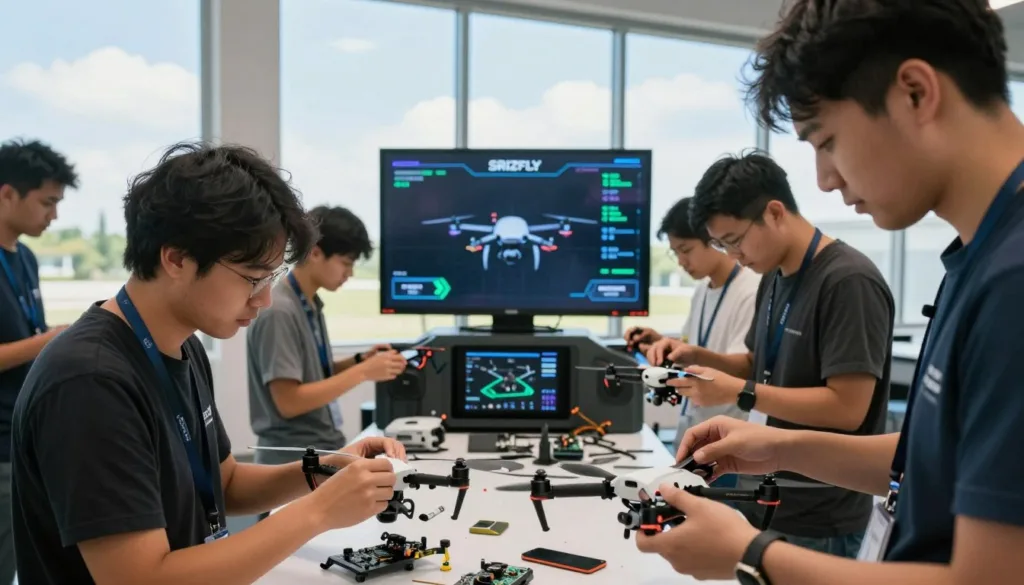
According to industry data, SRIZFLY simulators can improve training outcomes and reduce the risk of accidents. By practicing in a safe virtual space, pilots and technicians avoid making costly mistakes. This leads to a significant reduction in repair costs and operational downtime.
Efficiency is another key benefit of this modern approach to learning. Users can repeat difficult tasks as many times as they need to feel comfortable. This repetition ensures that they master the assembly process quickly and effectively.
| Simulator Features | Training Benefit | Long-Term Outcome |
|---|---|---|
| 3D Interaction | Hands-on experience | Higher skill retention |
| Virtual Disassembly | Zero hardware risk | Reduced repair costs |
| Guided Tutorials | Structured learning | Increased efficiency |
The realistic environment mimics the challenges found in a physical workshop. Technicians learn to identify parts and use tools in a controlled setting. This preparation is vital for maintaining safety standards in the drone industry today.
Benefits of Virtual Drone Repair Practice
The shift toward digital simulations provides a safe and cost-effective method for training drone repair teams. Using virtual drone repair tools allows users to experiment without the fear of damaging expensive hardware. This approach builds confidence before a technician ever touches a real-life aircraft.
One of the most significant advantages of this technology is improved safety. Traditional repair training involves sharp tools, high-voltage batteries, and delicate components that can cause physical injury. In a simulated environment, these risks are completely removed, creating a stress-free learning space for everyone.
Furthermore, organizations see reduced costs when they move their training programs online. There is no need to purchase “disposable” drones for practice or pay for replacement parts when a student makes a mistake. This leads to a much higher return on investment for technical schools and drone companies.
| Feature | Virtual Practice | Physical Practice |
|---|---|---|
| Risk Management | Improved safety for users | Potential for injury or fire |
| Budget Impact | Reduced costs on parts | High expense for replacements |
| Learning Speed | Instant resets and repeats | Slow manual rebuilds |
| Accessibility | Available anywhere, anytime | Requires a dedicated workshop |
Efficiency also sees a massive boost through interactive simulations. Technicians can reset a virtual drone repair session instantly rather than waiting for a physical rebuild. This rapid feedback loop accelerates the learning curve for complex drone systems and internal wiring.
“Simulation is the bridge between theory and mastery, allowing for endless mistakes without real-world consequences.”
Engineers can practice specific, rare failure scenarios that would be too difficult or expensive to recreate in person. This deep level of preparation ensures they are ready for any challenge in the field. Mastering these skills virtually saves time and prevents costly downtime during actual operations.
Ultimately, SRIZFLY makes this transition seamless and effective for all users. By focusing on realistic physics and detailed components, the simulator prepares technicians for the high stakes of the aerospace industry. It is the smartest way to build a highly skilled workforce for the future of flight.
Conclusion
Using digital tools changes how pilots learn to fix their gear. This summary shows that virtual practice makes a big difference. SRIZFLY provides a safe space to learn complex repairs. You can take apart a DJI Mavic or a custom FPV drone without breaking real parts. This summary highlights the power of modern tech.
Data proves that SRIZFLY simulators improve training outcomes. Users learn faster and remember more. These tools reduce the risk of accidents during real-world flights. Pilots who practice virtually show much higher efficiency in the field. They know every screw and wire before they touch a screwdriver. This conclusion proves the value of the software.
This conclusion highlights the shift toward smart training. Safety and skill go hand in hand. Every pilot needs a solid foundation in hardware. SRIZFLY makes this possible through realistic 3D environments. It is the best way to gain confidence without high costs.
Your next step is a clear call to action. Visit the SRIZFLY website to see these simulators in motion. Follow this call to action to boost your skills. Start your journey toward expert drone maintenance today. Better skills lead to safer skies for everyone.