



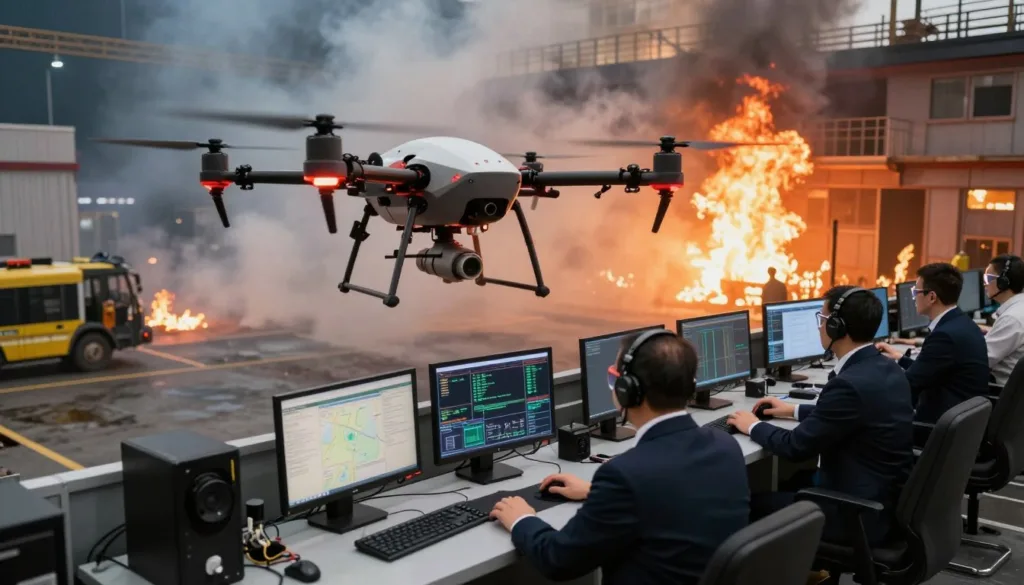
Emergency response professionals face unprecedented challenges in today’s world. Wildfires are growing larger and more frequent. Structural fires demand split-second decisions. Traditional training methods put firefighters at serious risk.
The SRIZFLY drone simulator changes everything. This cutting-edge platform brings firefighting drone simulation into the training room. Crews practice dangerous scenarios without stepping into actual danger. They build critical skills in a controlled environment.
Real fire emergencies require quick thinking and teamwork. Firefighters need to understand how drones move through smoke and flames. They must learn to read thermal data and coordinate complex operations. Drone simulator training gives them these abilities before they face real emergencies.
Climate change is making fire seasons longer and more intense. Fire departments across the United States need better preparation strategies. The SRIZFLY drone simulator addresses this need directly. Agencies can train unlimited teams on unlimited scenarios without expensive equipment or dangerous conditions.
Modern firefighting drone simulation combines three powerful elements. First, advanced sensors capture real-world fire behavior. Second, digital technology recreates these scenarios perfectly. Third, firefighters practice responses in immersive virtual environments. This combination creates training that actually works.
The benefits are clear and measurable. Trainees face zero physical risk during drone simulator training. They can repeat scenarios as many times as needed. Rare or extremely dangerous situations become safe practice opportunities. The cost stays much lower than traditional methods while the training quality improves dramatically.
Fire departments in major cities are already adopting this technology. Training programs integrate firefighting drone simulation into their curriculum. Emergency management agencies rely on drone simulator training to prepare their personnel. The shift toward simulation-based learning is reshaping how first responders prepare for crisis situations.
Key Takeaways
- The SRIZFLY drone simulator delivers realistic firefighting training without physical danger to participants
- Firefighting drone simulation allows teams to practice unlimited scenarios at a fraction of traditional training costs
- Drone simulator training prepares crews for rare and extremely dangerous situations safely
- Advanced sensors and digital technology create accurate recreations of real fire emergencies
- Fire departments across the United States are adopting drone simulator training to meet growing demand
- Climate change is driving the need for better-prepared firefighting teams and advanced training solutions
- Immersive simulation environments improve decision-making skills and team coordination during actual emergencies
The Evolution of Emergency Response Through Advanced Simulation Technology
Fire departments across the United States face unprecedented challenges in preparing their teams for modern emergencies. Traditional training methods have become insufficient for addressing the complexity of today’s fire scenarios. The introduction of advanced simulation technology, including emergency response drones and virtual firefighting training systems, marks a significant shift in how firefighters prepare for dangerous situations. This evolution reflects both the changing nature of fire behavior and the need for more effective training solutions.
Simulation-based learning allows agencies to create realistic environments without exposing trainees to unnecessary risk. Modern virtual firefighting training platforms provide opportunities to practice decision-making, test strategies, and develop coordination skills before facing actual emergencies. The integration of drone technology with simulation systems creates immersive learning experiences that were impossible just a decade ago.
Understanding the Growing Need for Realistic Firefighting Training
Fire behavior has changed dramatically over recent decades. Modern fires burn hotter, spread faster, and behave in ways that are increasingly unpredictable. Traditional training methods struggle to replicate these conditions effectively.
Current challenges in firefighter preparation include:
- Limited ability to practice in realistic smoke and heat conditions
- Difficulty simulating rapidly changing wind patterns and terrain obstacles
- Inability to safely train for extreme fire behavior scenarios
- Challenges coordinating multi-agency responses in controlled settings
- Gaps in preparing for unprecedented fire intensities
Virtual firefighting training addresses these limitations by allowing teams to experience complex scenarios repeatedly. Trainees can practice responding to fires that spread faster than they can escape, make critical decisions under extreme pressure, and work through multi-agency coordination challenges. These realistic simulations prepare responders for situations their predecessors never encountered.
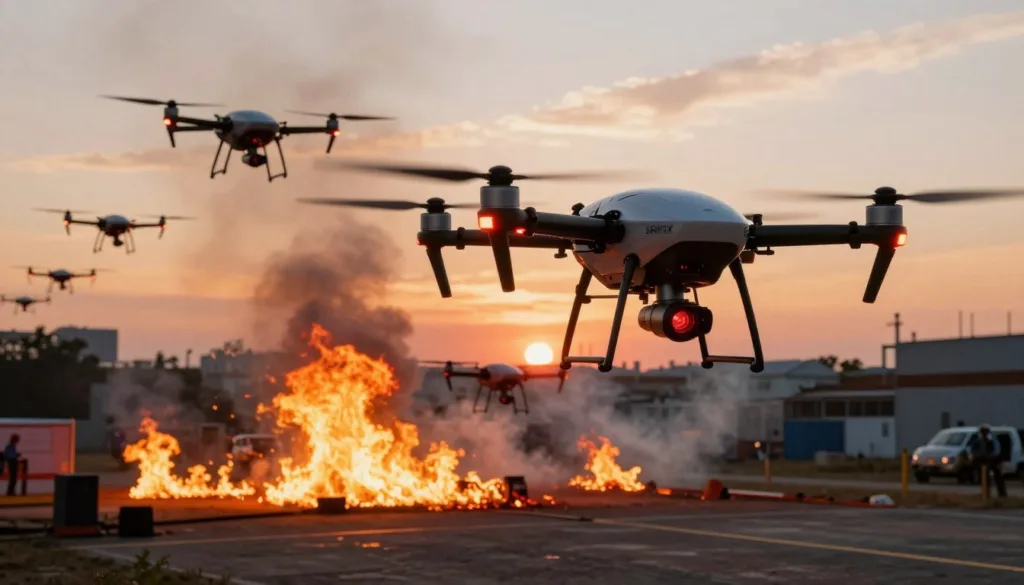
How Climate Change is Driving Innovation in Fire Response Preparation
Climate change has transformed the fire landscape across America. According to the World Resources Institute, 119 million hectares of forest were destroyed between 2001 and 2021. This alarming trend continues to accelerate.
Key climate-related changes affecting fire response:
| Climate Factor | Impact on Firefighting | Training Response |
|---|---|---|
| Extended Fire Seasons | Longer periods of fire danger throughout the year | Year-round training scenarios and readiness protocols |
| Extreme Weather Events | Unpredictable winds and rapid temperature changes | Variable scenario training with dynamic conditions |
| Unprecedented Fire Behavior | Fires burning in patterns not documented historically | Simulation of worst-case scenarios and novel situations |
| Expanded Drought Conditions | Increased fuel availability and rapid spread rates | Intensive wildfire response training with acceleration focus |
| Urban-Wildland Interface Growth | Fires threatening populated areas with complex logistics | Multi-jurisdictional coordination training using drones |
Emergency response drones play a critical role in this evolution. These systems help agencies prepare for scenarios that would be too dangerous or expensive to replicate in live training exercises. Wildfire response training now incorporates drone-based simulations that allow teams to practice coordinating aerial reconnaissance, ground operations, and resource deployment simultaneously.
Simulation technology enables agencies to prepare for worst-case scenarios that may never have occurred before. Firefighters can train for fire behavior patterns influenced by climate factors without waiting for actual emergencies. This proactive approach saves lives and increases community safety.
The shift toward simulation-based learning represents essential progress in emergency preparedness. As climate patterns continue changing and fire behavior becomes less predictable, investment in virtual firefighting training and emergency response drone systems becomes not optional but necessary for adequate response capability.
Core Features of Modern Firefighting Drone Systems
Modern firefighting drones represent a leap forward in emergency response technology. These systems pack advanced sensors and capabilities that allow firefighters to assess dangerous situations from safe distances. Understanding these features helps explain why drone training scenarios and fire simulation software have become essential tools for preparing emergency response teams.
The heart of any effective firefighting drone lies in its sensor package. Thermal imaging drones can see through dense smoke and darkness to detect heat signatures with remarkable accuracy. This ability saves lives by helping teams locate fire hotspots and identify people in danger before ground crews arrive.
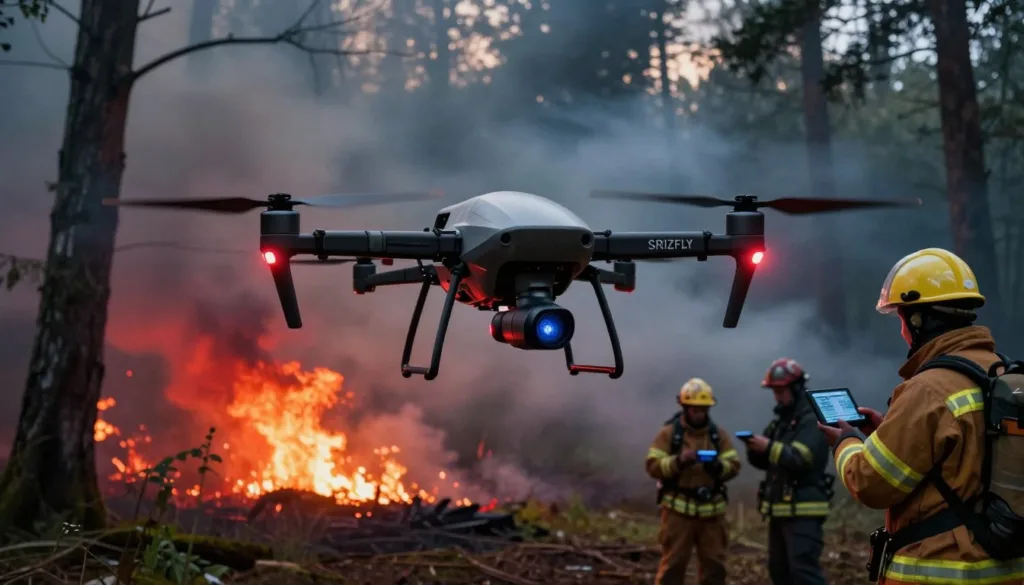
- Thermal cameras like Teledyne FLIR Boson+ that identify temperature patterns and hotspots with precision
- LiDAR sensors that create detailed 3D maps of terrain and structures even in low-visibility conditions
- High-resolution cameras with 64MP narrow and 48MP telephoto lenses for clear imagery and documentation
- Multispectral sensors that capture data across different light wavelengths for comprehensive analysis
Beyond observation, many firefighting drones carry active response equipment. Payload options include foam dispensers, water cannons, and dry powder systems for direct fire suppression. Communication speakers allow operators to coordinate with ground teams and warn people in danger.
This comprehensive capability set is exactly what makes fire simulation software so valuable. Realistic training requires drones that accurately replicate these sensor functions and payload options. When firefighters practice with drone training scenarios that mirror real equipment, they develop skills that transfer directly to actual emergencies.
| Assessment Method | Response Time | Data Quality | Operator Safety | Decision Speed |
|---|---|---|---|---|
| Ground-only assessment | 15-30 minutes | Limited visibility | High risk | Slow |
| Thermal imaging drones | 2-5 minutes | Clear heat mapping | Safe distance | Fast |
| Multi-sensor drone systems | 1-3 minutes | Comprehensive data | Remote operation | Very fast |
The technology continues to improve. Modern drones now integrate with digital platforms that process sensor data in real time. This integration means that fire simulation software can provide increasingly realistic training scenarios based on actual drone performance data.
Effective emergency response depends on teams that understand their equipment thoroughly. When firefighters train with drone training scenarios that accurately represent these systems, they build confidence and competence. This practical knowledge translates into faster decisions and better outcomes when responding to real fire emergencies.
Fire simulation software platforms like SRIZFLY continue to advance these capabilities. They allow teams to practice with thermal imaging and sensor combinations without expensive real-world operations. This approach makes training more accessible while keeping emergency responders sharp and ready for actual deployment.
Firefighting Drone Simulation: Creating Immersive Training Environments
Modern firefighting drone simulation platforms build realistic training experiences through advanced sensor technology and sophisticated virtual environments. The SRIZFLY drone simulator represents a breakthrough in how emergency responders prepare for real-world fire incidents. These systems combine cutting-edge hardware simulation with digital twin technology to create scenarios that challenge trainees with authentic decision-making situations. Firefighters and incident commanders using aerial firefighting simulation tools develop critical skills in interpreting complex data streams and coordinating response strategies under pressure.
The foundation of effective training lies in replicating how actual drones collect and process information during emergencies. Real-time fire monitoring capabilities depend on multiple sensor types working together to paint a complete picture of fire conditions.
Multispectral Sensors and Real-Time Data Collection Capabilities
Advanced firefighting drone systems use several sensor types simultaneously to gather comprehensive fire scene data. These sensors work together to give responders complete awareness of dangerous conditions.
- Thermal sensors detect temperature variations across the fire scene, revealing the hottest zones and predicting fire spread direction
- Infrared cameras identify heat patterns invisible to human eyes, helping locate trapped individuals and assess structural safety
- Visual spectrum cameras provide detailed imagery that gives context to thermal data and documents overall scene conditions
- Gas and smoke sensors analyze chemical composition to identify hazardous materials and assess air quality for responder safety
Training simulations must accurately model how these sensors perform under real conditions. Smoke density, weather patterns, time of day, and visibility all affect sensor performance. When trainees practice with aerial firefighting simulation systems, they learn to synthesize multiple data types into actionable intelligence—not just viewing raw sensor feeds but developing tactical judgment.
Integration with Digital Twin Technology for Dynamic Scenario Modeling
Digital twin technology creates virtual replicas of real environments that behave like their physical counterparts. For firefighting training, these digital twins incorporate actual terrain data, vegetation maps, building layouts, and infrastructure details specific to each jurisdiction.
The power of digital twin technology in training comes from its ability to evolve during simulations. As trainees pilot drones and collect sensor data, the virtual environment updates in real-time. Fire behavior changes based on fuel types, weather patterns, and topography. This dynamic modeling teaches responders how to adapt strategies when conditions shift—the exact skill needed during actual emergencies.
| Digital Twin Component | Training Benefit | Real-World Application |
|---|---|---|
| Terrain and Topography Data | Trainees practice in realistic landscape conditions | Better navigation and positioning decisions during actual wildfires |
| Building and Infrastructure Models | Urban firefighting scenarios match actual jurisdictions | Improved structural assessment and evacuation planning |
| Vegetation Mapping | Fire spread prediction matches local fuel conditions | Accurate tactical planning for wildland operations |
| Real-Time Weather Integration | Scenarios adapt to changing environmental conditions | Dynamic decision-making under pressure |
Location-specific training scenarios give teams the advantage of practicing responses in their actual operational areas. A fire department in Colorado can train on mountain terrain with specific forest composition. An urban fire service can prepare for high-rise incidents using their city’s actual building configurations. Real-time fire monitoring through digital twin simulation transforms preparation from generic exercises into jurisdiction-specific skill development.
The integration of real-time fire monitoring data with digital twin environments creates feedback loops that improve training effectiveness. Trainees see immediate consequences of their tactical decisions. A choice to focus aerial resources on one fire zone plays out with scientifically accurate fire behavior predictions, teaching proper decision-making without real-world risk.
AI-Powered Autonomous Coordination and Agent-to-Agent Communication
Modern firefighting demands more than skilled pilots operating autonomous firefighting drones in isolation. Real emergency response involves coordinated teams across multiple agencies, ground units, command centers, and aerial assets working in unison. The SRIZFLY drone simulator recognizes this reality by incorporating AI-powered fire response systems that teach trainees to work within complex coordination frameworks. These intelligent systems handle routine data processing and analysis while responders focus on critical strategic decisions.
The foundation of autonomous firefighting drones lies in multi-agent frameworks where specialized AI agents communicate seamlessly with each other. Think of this like a team where each member has specific expertise:
- Simulation Drone Agent manages aircraft operations and collects sensor data in real-time
- Weather Agent continuously updates environmental conditions and predicts fire behavior changes
- Risk Analysis Agent evaluates threats to structures, evacuation routes, and responder safety
- Response Planning Agent suggests optimal resource deployment and tactical strategies
These agents communicate constantly, creating a self-learning ecosystem. Each training session adds valuable data that improves future performance. The system analyzes which strategies worked, what decisions led to better outcomes, and what patterns predict successful containment. Drone pilot training programs using this technology prepare responders to interpret AI recommendations while maintaining human oversight and final decision-making authority.
The comparison below shows how AI-enhanced systems outperform traditional methods across critical firefighting operations:
| Performance Metric | Traditional Methods | AI-Powered Systems |
|---|---|---|
| Decision Speed | 15-25 minutes | 2-4 minutes |
| Resource Coordination | Manual coordination between units | Automated optimization with recommendations |
| Scenario Adaptation | Static training exercises | Dynamic adaptation based on changing conditions |
| Learning Improvement | Gradual improvement over months | Rapid improvement per training session |
Agent-to-agent communication in autonomous firefighting drones enables advanced perception capabilities. The system independently assesses blaze characteristics, spread patterns, and environmental threats without constant human direction. This doesn’t replace human expertise—it augments it by handling complex data analysis instantly. Incident commanders receive AI recommendations backed by real-time analysis, allowing them to make faster, more informed decisions during critical moments.
Drone pilot training incorporating these AI systems prepares responders for the technology-assisted future of emergency response. Trainees learn to trust AI recommendations while maintaining healthy skepticism and human judgment. They understand how these intelligent systems improve coordination among teams, reduce response times, and ultimately save lives while protecting communities from expanding wildfires.
Real-World Applications: Wildfire Containment and Mountain Region Operations
Wildfire response training demands practical experience that traditional methods cannot fully deliver. Mountain terrain presents unique challenges for firefighters. Steep slopes, shifting wind patterns, and dense vegetation complicate response efforts. Firefighting simulation technology offers trainees a safe space to practice these demanding scenarios. The SRIZFLY drone simulator brings wildfire response training into the present, allowing teams to rehearse complex mountain operations before facing real fires.
When a wildfire ignition alert arrives, every second counts. Advanced firefighting simulation technology compresses the learning curve, preparing teams to act with precision under pressure. Drones deploy within moments to map terrain and identify multiple ignition points. Real-time data streams to command centers, where digital replicas update continuously. Teams practice making rapid decisions about containment placement, evacuation priorities, and resource deployment while the simulated fire evolves unpredictably.
Simulation Execution and Real-Time Strategic Adjustments
A successful wildfire response requires instant adaptation to changing conditions. In simulation-based training, weather forecasts trigger multiple fire propagation scenarios. Wind direction shifts force commanders to reposition resources and adjust containment tactics in real time. This mirrors actual mountain wildfire operations where conditions change rapidly.
Trainees learn to interpret streaming data from aerial units and adjust strategy accordingly. The simulation presents realistic dilemmas that demand quick thinking:
- Deciding where to place containment lines on steep terrain
- Prioritizing evacuation routes in multiple zones
- Allocating water and personnel to maximum effect
- Monitoring fire behavior as wind patterns shift
- Managing multiple ignition points simultaneously
Mountain regions present extreme complexity. Narrow valleys funnel wind unpredictably. Dense forests spread flames rapidly. Isolated communities require precise timing for evacuation. The SRIZFLY simulator recreates these challenges with stunning accuracy, preparing teams to handle real-world emergencies with confidence and competence.
| Response Element | Traditional Training Approach | Drone-Enhanced Simulation |
|---|---|---|
| Initial terrain mapping | Manual assessment, limited aerial view | Drone reconnaissance within seconds, complete thermal overview |
| Fire spread prediction | Weather estimation with weather service data | AI-powered modeling running multiple scenarios simultaneously |
| Containment line placement | Ground-based assessment only | Aerial perspective combined with heat signature analysis |
| Resource deployment decisions | Static pre-planning with limited adjustment | Dynamic reallocation based on real-time fire behavior |
| Personnel safety assessment | Visual observation and experience | Thermal data revealing hidden fire risks |
Thermal Imaging and Smoke Penetration Technologies
Thick smoke obscures visual cameras completely. Thermal imaging drones see straight through smoke by detecting heat energy that human eyes cannot perceive. This fundamental difference transforms firefighting operations and makes thermal imaging drones essential tools in modern wildfire response training.
Thermal cameras detect infrared radiation, allowing operators to identify active fire, locate trapped people, and spot reignition dangers invisible to standard cameras.
Wildfire response training teaches personnel to interpret thermal imagery with precision. Different heat signatures tell specific stories about fire behavior:
- Bright white areas indicate active burning zones requiring immediate attention
- Cooling patterns show where suppression efforts succeeded
- Heat shadows beneath structures reveal structural weaknesses
- Cold spots in previously burned areas signal reignition risks
- Human heat signatures stand out distinctly, enabling rescue operations
Firefighting simulation technology teaches teams to make critical decisions based on thermal data. Where should ground crews enter structures safely? Which areas need continued water application? Are suppression efforts succeeding? Thermal imaging provides answers that visual assessment alone cannot deliver. The SRIZFLY simulator trains personnel to trust and properly use this life-saving technology before they face actual fires in dangerous mountain terrain.
“Thermal imaging capability separates modern firefighting operations from outdated approaches, enabling faster decision-making and more effective resource allocation in conditions where visibility is severely compromised.”
Mountain wildfires demand excellence. Thermal imaging drones and firefighting simulation technology work together to prepare teams for success. Trainees develop muscle memory through repeated scenarios. They learn to coordinate drone operations with ground teams. They practice reading thermal data under stress. When real emergencies arrive, these trained teams respond with precision that saves lives and protects communities.
Safety Protocols, Regulatory Compliance, and Resource Optimization
Fire safety simulation training represents a fundamental shift in how emergency response drones prepare personnel for real-world operations. Any effective training system must meet three core requirements: protect trainee safety, comply with federal and state regulations, and maximize limited resources. Modern platforms achieve all three by bringing dangerous scenarios into controlled virtual environments.
Virtual training eliminates physical risk while maintaining psychological realism. Trainees can practice extreme situations—structural collapses, flashover conditions, hazmat incidents, and severe weather operations—without any possibility of injury or equipment damage. This safety-first approach allows drone pilot training to focus entirely on skill development rather than accident prevention.
Safety-by-design principles protect both trainees and operational data. Fail-safe systems prevent simulation errors from creating dangerous training situations. Secure data handling protects sensitive information about emergency response strategies and facility layouts. Realistic stress exposure prepares responders psychologically for actual field conditions without causing trauma.
Building Real-World Skills Through Authentic Components
Advanced simulators like the Entrol Fire Boss system use genuine aircraft components to create muscle-memory training that transfers directly to real operations. The system includes authentic Garmin G600 TXi glass cockpit displays, actual pilot seats, and genuine flight controls. Specialized vibration systems replicate the physical sensations of water scooping and payload drops, providing realistic training feedback in a completely safe environment.
Meeting Regulatory Standards and Compliance Requirements
Fire safety simulation platforms align with critical regulatory frameworks that govern emergency response operations:
- FAA regulations for drone operations and flight safety
- OSHA requirements for firefighter training and certification
- State and local emergency response standards
- National Incident Management System (NIMS) compliance requirements
Virtual training fulfills many certification requirements while reducing environmental impact and public safety concerns associated with live training exercises.
Resource Optimization and Cost Effectiveness
Emergency response drones require significant investment. Fire safety simulation maximizes training value from limited budgets through several mechanisms:
| Training Approach | Personnel Exposure Risk | Scenario Realism | Annual Operating Cost | Regulatory Compliance |
|---|---|---|---|---|
| Traditional Live Training | High Risk | Moderate | $50,000-$150,000 | Limited Coverage |
| Drone Pilot Training Simulation | Zero Risk | High | $8,000-$25,000 | Full Compliance |
Virtual scenarios allow unlimited practice repetitions without fuel costs, aircraft wear, or consumable expenses. Multiple trainees can use the same simulator, increasing training throughput significantly. Agencies can practice rare scenarios—large-scale disasters, unusual weather patterns, specific building types—that would be impossible or prohibitively expensive to recreate physically.
Simulation data provides objective performance metrics that identify skill gaps and track improvement over time. This data-driven approach ensures training investments produce measurable results in personnel competency and emergency response readiness.
For fire departments and emergency agencies of all sizes, drone pilot training through simulation offers a sustainable, economically viable path to operational excellence. Safety, compliance, and resource efficiency work together seamlessly within modern training platforms.
Conclusion
Firefighting drone simulation has moved beyond being a new training tool. It is now a critical part of how fire departments prepare for real emergencies. Throughout this article, we explored how virtual firefighting training creates safe spaces to practice dangerous scenarios. Trainees learn to read sensor data, make quick decisions, and work with advanced technology without risking their lives. The realistic environments teach skills that directly transfer to the field.
The technology keeps getting better. Next-generation platforms will blend aerial drones with ground-based robot systems for complete emergency response training. Advanced AI Decision Agents will manage complex operations across multiple units with less human input needed. Edge computing will bring high-quality drone simulator training to remote regions where internet speeds are slow. Fire departments across the country will share what they learn, building prediction models that work in different climates and conditions. These improvements are not just ideas for the future. Teams are building and testing them right now.
Agencies of all sizes can access this technology. Large fire departments can install systems on-site to keep their data secure. Regional training centers in remote areas can use edge deployments that work without constant internet connection. Smaller departments can pick cloud-based options that fit their budgets. SRIZFLY drone simulator and similar platforms make advanced firefighting drone simulation available to everyone. The barrier to entry keeps dropping. Cost is no longer an excuse to skip this type of training.
Climate change is making fire seasons worse and more unpredictable. Communities need firefighters who are ready for complex, dangerous scenarios. The departments that invest in virtual firefighting training today will be best prepared to protect their neighborhoods tomorrow. Take action now. Schedule a demonstration with a simulation provider. Request information about adding drone simulator training to your current programs. Download resources about implementation options. Whether you lead a large city department or a small rural station, the time to upgrade your training is now. Contact a provider today and discover how firefighting drone simulation can transform your team’s readiness.
FAQ
What is firefighting drone simulation training and how does it differ from traditional live training methods?
Firefighting drone simulation training uses advanced virtual reality technology to create immersive, realistic emergency response scenarios without physical risk to trainees. Unlike traditional live burns and field exercises that are limited in scope and dangerous, drone simulation allows firefighters, incident commanders, and pilots to practice unlimited scenarios—from wildfires in mountain terrain to structural fires and hazardous material incidents—in a controlled digital environment. The SRIZFLY drone simulator and similar platforms replicate authentic sensor capabilities, weather conditions, and fire behavior patterns, enabling responders to develop critical decision-making skills while maintaining complete safety. Traditional methods cannot adequately prepare teams for the complexity of modern fires, which burn hotter, spread faster, and behave more unpredictably due to climate factors and environmental changes.
How does the SRIZFLY drone simulator create realistic training environments?
The SRIZFLY drone simulator creates immersive training through several integrated technologies. First, it replicates advanced sensor packages found on actual firefighting drones, including thermal imaging cameras (like the Teledyne FLIR Boson+ thermal camera), high-resolution visual cameras (64MP narrow and 48MP telephoto), and LiDAR systems that create detailed 3D terrain maps. Second, it incorporates digital twin technology—virtual replicas of physical environments that use actual terrain data, vegetation maps, building layouts, and infrastructure details. These digital twins dynamically evolve as trainees gather simulated sensor data during exercises, creating real-time scenario adaptation that mimics actual emergency conditions. Third, the platform models scientifically accurate fire behavior based on fuel types, weather patterns, and topography, ensuring that trainees learn realistic spread predictions and proper tactical decision-making.
What are digital twins and why are they important for firefighting drone simulation?
Digital twins are virtual replicas of physical environments that behave like their real-world counterparts. In firefighting drone simulation, digital twins incorporate actual terrain data, vegetation maps, building layouts, and infrastructure details to create location-specific, highly realistic training scenarios. These environments continuously update as new sensor data arrives during simulation exercises, creating evolving scenarios that challenge trainees to adapt strategies in real-time—exactly as they would during actual emergencies. This technology enables fire departments to practice responding to fires in their actual jurisdiction with realistic terrain, structures, and environmental conditions, making training far more relevant and effective than generic scenarios. Digital twins model fire behavior based on specific fuel types, weather patterns, and topography, providing scientifically accurate spread predictions that teach proper tactical decision-making and strategic planning.
How does artificial intelligence enhance firefighting drone simulation training?
Modern firefighting drone simulation platforms integrate AI-powered autonomous coordination systems that work alongside human operators to enhance decision-making and operational capability. The system uses multiple specialized AI agents working together: the Simulation Drone Agent manages aircraft operations and sensor data collection; the Weather Agent continuously updates environmental conditions and predicts how changing wind, humidity, and temperature will affect fire behavior; the Risk Analysis Agent evaluates threats to structures, evacuation routes, and responder safety; and the Response Planning Agent suggests optimal resource deployment and tactical approaches. These agents communicate with each other and with human incident commanders, creating a collaborative intelligence network that doesn’t replace human judgment but augments it by handling routine tasks and data processing. This allows commanders to focus on strategic decisions while benefiting from enhanced situational awareness. The system also features adaptive learning capability—continuously improving with each training session by analyzing what strategies worked and what patterns predict successful fire containment.
What sensor capabilities do modern firefighting drones have that simulation must replicate?
Modern firefighting drones carry advanced sensor packages including thermal imaging cameras that see through dense smoke to detect heat signatures and locate people in danger; LiDAR systems that create detailed 3D maps of terrain, vegetation density, and structural features even in low-visibility conditions; high-resolution visual cameras for detailed assessment and documentation; and specialized systems like gas and smoke sensors that analyze chemical composition to identify hazardous materials. Beyond sensors, many drones carry payload systems including foam dispensers, water cannons, dry powder systems for direct fire suppression, and speaker systems for communicating with people in danger or coordinating ground teams. Realistic simulation platforms must accurately replicate all these capabilities and their performance under different conditions—varying smoke density, weather patterns, and times of day—to provide authentic training that transfers directly to real-world operations.
How does thermal imaging technology help firefighters during actual emergency response operations?
Thermal imaging cameras detect infrared radiation (heat) that passes through smoke, allowing operators to “see” fire conditions when visual cameras show only thick smoke. During actual operations, thermal imaging helps firefighters identify the hottest areas indicating active fire spread, detect heat signatures of people trapped in structures or wildland areas, recognize cooling patterns that suggest successful suppression, and spot reignition risks in areas that appear visually extinguished but still retain dangerous heat. This technology changes tactical decisions by locating safe entry points for ground crews, identifying structural weaknesses before collapse, finding the most effective positions for suppression efforts, and confirming complete extinguishment before declaring an area safe. Simulation training teaches pilots and analysts to interpret thermal imagery effectively, developing the critical skills needed to leverage this technology during actual emergencies when decisions must be made quickly and accurately.
What are the safety advantages of using drone simulation for firefighter training?
Drone simulation training eliminates physical risk to trainees by allowing them to practice extremely dangerous scenarios in a virtual environment. Firefighters can practice entering unstable structures, operating in flashover conditions, responding to hazardous material incidents, and flying in extreme weather without any possibility of injury or equipment damage. Modern simulation platforms incorporate safety-by-design principles including fail-safe systems that prevent simulation errors from creating dangerous situations, secure data handling that protects sensitive operational information, and realistic stress exposure that prepares responders psychologically without traumatizing them. Platforms like the entrol Fire Boss system use authentic components (real Garmin G600 TXi cockpit, actual pilot seats, genuine flight controls) and specialized vibration systems that replicate physical sensations, providing realistic muscle-memory training that transfers directly to real aircraft operations while maintaining complete training safety.
How does firefighting drone simulation help with regulatory compliance and certification requirements?
Firefighting drone simulation platforms align with FAA regulations for drone operations, OSHA requirements for firefighter training, and state/local standards for emergency response certification. Simulation training can fulfill many certification requirements while reducing the environmental impact and public safety concerns of live training exercises. By providing objective performance metrics through simulation data, agencies can demonstrate competency achievement, track improvement over time, and maintain consistent training standards across all personnel. This approach satisfies regulatory bodies that training is comprehensive and effective while avoiding the complications and risks associated with traditional live training methods.
What makes firefighting drone simulation more cost-effective than traditional training methods?
Simulation training maximizes training value from limited budgets through multiple mechanisms. Virtual scenarios allow unlimited practice repetitions without fuel costs, equipment wear, or consumable expenses associated with actual flight. Multiple trainees can use the same simulator platform, significantly increasing training throughput compared to traditional methods. Agencies can practice rare or impossible scenarios—such as large-scale disasters, unusual weather conditions, or specific building types—that would be prohibitively expensive or dangerous to recreate physically. Additionally, simulation reduces personnel exposure to hazardous conditions, minimizes environmental impact, and provides objective performance data that identifies skill gaps and tracks improvement over time. For agencies of all sizes, these cost efficiencies make comprehensive firefighting training accessible and sustainable.
How can fire departments integrate drone simulation into existing training programs?
Modern simulation platforms offer flexible deployment options for agencies of all sizes and budgets. Large fire departments can implement on-premises installations that maintain data sovereignty and integrate seamlessly with existing infrastructure. Regional training centers in remote areas can use edge deployments that provide high-fidelity simulation even with limited connectivity. Smaller agencies or those seeking cost-effective access can adopt cloud-based solutions that scale with their needs. Integration typically begins with consultation with simulation providers to assess current training capabilities and identify specific operational scenarios most relevant to local conditions. Departments can schedule demonstrations to evaluate how platforms like the SRIZFLY drone simulator align with their training objectives, request information about implementation timelines, and explore how simulation can complement or replace specific traditional training activities.
What types of scenarios can be practiced using firefighting drone simulation?
Firefighting drone simulation platforms support an extraordinarily wide range of scenarios. These include wildfire containment in mountain regions with steep terrain and unpredictable wind patterns; structural fires in urban environments with multi-story buildings and hazardous interior conditions; hazardous material incidents requiring careful drone positioning and sensor data interpretation; large-scale disaster response requiring coordination among multiple aircraft and ground units; scenario-specific challenges like rapid fire spread due to climate change, extreme weather conditions, and complex terrain features. Each scenario can be customized with location-specific details using digital twin technology, allowing departments to practice responding to fires in their actual jurisdiction. Scenarios can be modified in real-time to create adaptive challenges that force trainees to adjust strategies as conditions change, precisely replicating the dynamic nature of actual emergency operations.
How does real-time data collection during simulation training improve incident command decisions?
Simulation training teaches incident commanders to synthesize multiple data streams simultaneously from multispectral sensors—thermal sensors detecting temperature variations across a fire scene, infrared cameras identifying heat patterns invisible to the naked eye, and visual spectrum cameras providing contextual imagery. By practicing with these integrated data sources repeatedly during simulation exercises, commanders develop pattern recognition skills that enable faster, more accurate decision-making during actual emergencies. They learn to identify hottest areas of fires, predict spread direction, locate trapped individuals, assess structural integrity, and coordinate resource deployment—all while managing evolving conditions and adapting strategies in real-time. This realistic training accelerates decision speed and improves strategic choices compared to traditional methods where commanders have less opportunity to practice interpreting complex multi-sensor datasets.
Why is wildfire simulation training increasingly important in the context of climate change?
Climate change has intensified fire seasons and created increasingly complex emergency scenarios that emergency responders’ predecessors never encountered. Between 2001 and 2021, 119 million hectares of forest were destroyed, demonstrating the escalating wildfire crisis. Longer fire seasons, more extreme weather events, and unprecedented fire behavior patterns require responders to train for scenarios beyond their predecessors’ experience. Simulation technology allows agencies to prepare for worst-case scenarios, practice decision-making under extreme conditions, and develop strategies for new fire behavior patterns that traditional training methods cannot adequately address. By training extensively on climate-change-intensified wildfire scenarios through simulation, fire departments become better prepared to protect their communities as environmental conditions continue to evolve.
What is the role of the Weather Agent in firefighting drone simulation systems?
The Weather Agent is a specialized AI component within firefighting drone simulation platforms that continuously updates environmental conditions and predicts how changing wind, humidity, temperature, and other meteorological factors will affect fire behavior during training scenarios. Rather than using static weather conditions, the Weather Agent creates dynamic, realistic environmental challenges that force trainees to adapt their strategies as conditions change—exactly as they must do during actual emergencies. By experiencing how wind shifts change fire spread direction, how humidity affects smoke behavior, and how temperature impacts drone operations, trainees develop critical skills for tactical decision-making under real-world conditions. This dynamic weather modeling ensures that simulation training accurately prepares responders for the environmental complexities they’ll face in actual firefighting operations.
How do multispectral sensors in simulation training teach data interpretation skills?
Multispectral sensor simulation replicates how actual firefighting drones collect data across multiple spectra—thermal, infrared, and visual spectrum—simultaneously. Through repeated simulation exercises, trainees learn to interpret each sensor type independently and synthesize the information into actionable intelligence. Thermal data shows temperature distribution across fire scenes; infrared imagery reveals heat patterns invisible to human eyes; visual cameras provide contextual geographic and structural information. By practicing regularly with these integrated data types, pilots and analysts develop the cognitive skills to quickly recognize critical information—identifying the hottest areas of a fire, predicting where flames will spread next, locating people in danger—without being overwhelmed by the data complexity. This practice-based learning creates muscle memory for data interpretation that transfers directly to actual emergency operations where rapid, accurate data analysis determines outcomes.
What emerging technologies will enhance firefighting drone simulation in the future?
Next-generation developments include seamless integration of aerial drones with ground-based robotic systems for comprehensive emergency response simulation that teaches coordinated operations across multiple platforms; advanced AI Decision Agents that can orchestrate complex multi-unit operations with minimal human input while maintaining appropriate human oversight; edge computing technology that enables high-fidelity simulation even in remote locations with limited connectivity, improving training accessibility; and collaborative learning systems that share insights across agencies and regions to build increasingly accurate predictive models based on collective operational experience. These developments are actively being deployed rather than remaining distant possibilities, making advanced capabilities available to forward-thinking agencies implementing simulation training today.
How does the entrol Fire Boss system enhance simulation training with authentic equipment?
The entrol Fire Boss system uses genuine aircraft components to create authentic training experiences that transfer directly to real operations. The simulator includes a real Garmin G600 TXi cockpit—the actual avionics system used in real firefighting aircraft—ensuring that trainees develop genuine familiarity with controls and displays they’ll use operationally. Authentic pilot seats and genuine flight controls provide tactile feedback that supports muscle-memory development. Specialized vibration systems replicate the physical sensations of water scooping and payload drops, providing realistic training feedback without the risks of actual flight. This combination of authentic components and realistic sensory feedback creates high-fidelity training that maximizes skill transfer from simulation to real-world operations, making training time more effective and reducing the additional practice required when transitioning to actual aircraft.
How can simulation platforms accommodate agencies of different sizes and budgets?
Modern firefighting drone simulation platforms offer three primary deployment models to ensure accessibility across agencies of all sizes. Large fire departments can implement on-premises installations that maintain complete data sovereignty, integrate seamlessly with existing infrastructure, and support high training volumes. Regional training centers serving multiple agencies can use edge deployments that provide high-fidelity simulation even in remote locations with limited internet connectivity. Smaller departments or agencies with budget constraints can adopt cloud-based solutions that scale flexibly with training needs, eliminating large capital investments while providing access to comprehensive simulation capabilities. Pricing models typically correlate with deployment choice and usage levels, ensuring that all agencies—regardless of size or budget—can implement advanced simulation training appropriate to their circumstances.
How do AI-powered agent systems improve multi-unit coordination training in simulation?
AI-powered agent systems within simulation platforms coordinate multiple specialized functions that work together to support incident commander decision-making. The Simulation Drone Agent manages aircraft operations, the Weather Agent models environmental changes, the Risk Analysis Agent assesses threats to structures and personnel, and the Response Planning Agent suggests optimal resource deployment. These agents communicate with each other and with human operators, creating a collaborative intelligence network that demonstrates how technology-assisted emergency response operates in real situations. Trainees experience realistic multi-agent coordination, learning to interpret AI recommendations, validate automated assessments, and make final decisions with enhanced situational awareness. This training prepares responders for technology-assisted operations that characterize modern emergency response, ensuring teams can leverage automated systems effectively while maintaining appropriate human judgment and control.
What performance metrics does simulation training data provide to track trainee improvement?
Simulation platforms capture detailed performance data throughout training exercises, providing objective metrics that identify skill gaps and track improvement over time. Data includes decision speed—how quickly incident commanders identify critical information and make tactical choices; resource coordination effectiveness—how well teams deploy assets in response to evolving scenarios; scenario adaptation speed—how rapidly trainees adjust strategies when conditions change; and strategic outcome quality—whether decisions lead to successful fire containment with minimal resource waste. This data enables training coordinators to assess individual and team competency, identify specific skill areas requiring additional practice, benchmark performance against established standards, and demonstrate training effectiveness to regulatory bodies and agency leadership. The objective nature of simulation-generated data ensures that training evaluation is impartial and evidence-based rather than relying on subjective assessments.
How do mountain terrain scenarios in simulation training differ from structural fire scenarios?
Mountain terrain scenarios present unique challenges that require distinctly different tactical approaches than structural fires. Mountain scenarios involve steep, heavily vegetated terrain, unpredictable wind patterns that shift rapidly with topography, limited access for ground resources, extensive containment line placement challenges, and complex evacuation considerations across difficult terrain. Simulation training for mountain scenarios teaches strategic fire spread prediction based on slope aspect, vegetation type, and wind channeling; resource positioning in areas with limited equipment access; evacuation route planning when traditional roads may be compromised; and coordination among dispersed ground and aerial units operating across vast areas. Structural fire scenarios involve different challenges—building layout complexity, interior hazards, limited drone navigation space, occupant location and rescue considerations, and water supply management. By practicing both scenario types extensively through simulation, departments develop versatile emergency response capabilities applicable to their specific regional fire risks.
How does simulation training prepare responders for increasingly rare but dangerous scenarios?
A