



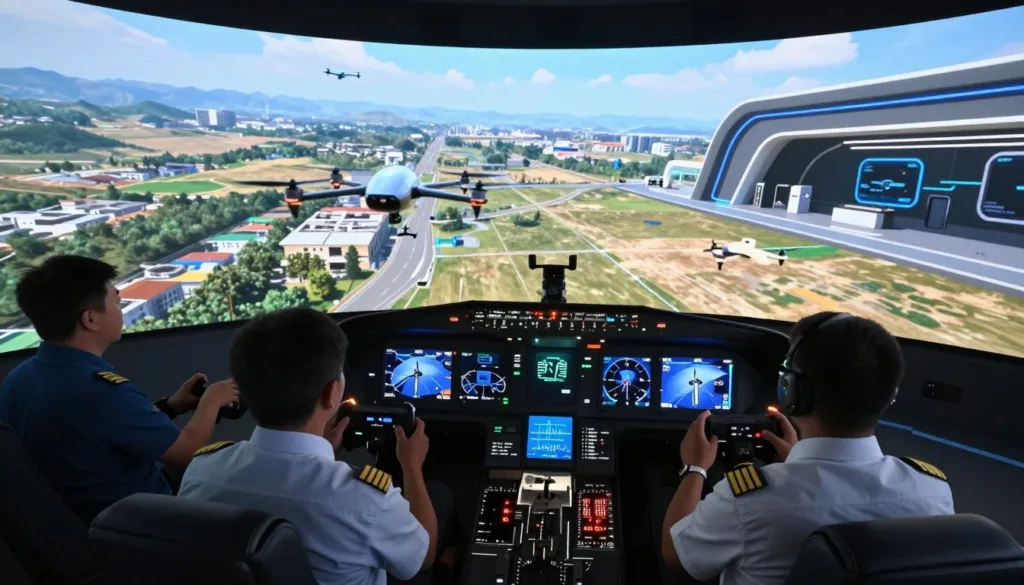
Mastering low-altitude flight simulation software is essential for modern operators. Operating unmanned aerial vehicles near buildings, utility lines, and trees requires extreme precision. Real-world practice can bring high costs, gear damage, and weather delays.
The SRIZFLY drone simulator offers a practical fix for these risks. This advanced UAV flight simulator lets pilots build crucial skills in a safe digital space. Trainees can test manual controls and autonomous missions without risking expensive physical hardware.
Using drone pilot training software helps teams prepare for complex environments worldwide. Virtual reality tools improve situational awareness and response times. Proper low-altitude drone training ensures safe missions before crews step into the field.
Key Takeaways
- Real-world drone training often involves high costs, equipment risks, and weather limits.
- The SRIZFLY drone simulator provides a risk-free environment to build vital pilot skills.
- Advanced UAV flight simulator tech supports both manual and autonomous mission practice.
- Virtual reality tools improve spatial awareness near obstacles like trees and power lines.
- Effective low-altitude drone training prepares operators for complex real-world challenges.
- Quality drone pilot training software reduces gear damage during the learning phase.
How Low-Altitude Flight Simulation Software Builds Safer, More Skilled Drone Pilots
Mastering complex low-level maneuvers to meet the rigorous demands of commercial drone pilot training requires more than just basic open-air flight practice. Trainees must learn how to manage multiple critical factors at the exact same time. These factors include altitude, speed, heading, braking distance, camera view, obstacle clearance, and shifting wind conditions.
When learners use a specialized flight skills simulator, they gain the unique opportunity to repeat challenging tasks safely. This repeated practice helps them make their control inputs much more accurate and consistent.
Practice Low-Altitude Flight Skills in a Controlled Environment
Low-altitude operations present some of the toughest challenges for any new operator. A modern flight skills simulator allows pilots to practice these dangerous maneuvers without any real-world consequences.
According to industry research, virtual reality and mixed reality tools help improve overall pilot performance and boost confidence. Trainees can safely explore environmental modeling and realistic flight physics while building essential muscle memory.
Reduce Training Costs, Equipment Wear, and Operational Risk
Traditional flight practice often leads to costly hardware crashes and excessive battery and motor wear. Implementing proper drone training risk reduction strategies helps companies save money while protecting expensive aircraft.
Simulation technology drastically reduces the reliance on fuel-burning flight hours. It also supports continuous education when bad weather or strict airspace access limits outdoor flying.
Prepare Pilots for U.S. Commercial Drone Operations
Federal regulations in the United States require high standards of competency for professional operators. Comprehensive safe drone training ensures that new pilots understand how to react swiftly during unexpected emergencies.
By engaging in regular low-level flight practice through advanced software platforms, crews build the deep situational awareness needed for successful commercial missions.
Core Capabilities to Look for in Drone Flight Simulation Software
Choosing the right training software requires a close look at core technical capabilities. Not all drone simulators offer the same training value for commercial teams. A game-style flight experience may help with basic stick familiarization. However, professional teams need accurate controls, measurable outcomes, and mission-specific exercises.
Modern platforms must replicate real-world challenges to prepare operators for complex tasks. Industry studies on extended reality and virtual training highlight several central features for high fidelity. Evaluating these systems helps flight departments invest in tools that truly build operator competence.
Realistic flight dynamics form the foundation of any professional training tool. Simulators must account for inertia, thrust, torque, and sensor behavior. When a platform features realistic drone flight physics, pilots learn how aircraft respond to sudden weight shifts and motor stress.
Environmental factors are just as important as machine mechanics. Operators face unpredictable skies on every job site. Advanced systems incorporate drone weather simulation to test how crosswinds, gusts, and rain affect craft stability. These tools force pilots to make critical decisions under pressure.
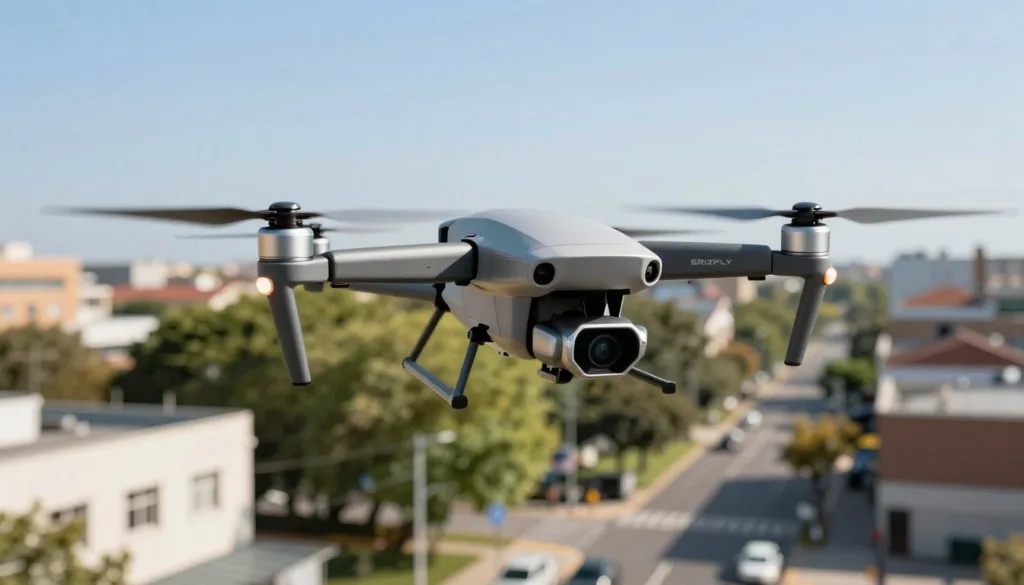
Operating in the field also requires detailed spatial awareness and geography. A reliable 3D terrain drone simulator provides global virtual locations and digital twins of real environments. This capability allows teams to practice complex navigation around skyscrapers, power lines, and rugged mountains.
“High-fidelity simulation bridges the gap between classroom theory and dangerous field operations by creating safe, repeatable environments for skill mastery.”
Commercial operations demand structured practice routines rather than casual free flight. Effective software relies on scenario-based drone training to simulate real job site tasks. Pilots can practice emergency battery failures, lost link protocols, and automated mapping grids.
To measure success, training managers need robust data collection tools. Modern software includes pilot performance tracking with features like flight recording, CSV export, and LMS progress monitoring. These metrics help instructors identify weak spots and certify pilots with confidence.
Below is a quick comparison of essential features to guide your software selection process:
| Feature Category | Basic Game Simulators | Professional Drone Simulators |
|---|---|---|
| Physics Engine | Arcade-style movement | High-fidelity inertia and torque |
| Environment | Static, generic maps | Global 3D terrain and weather |
| Training Focus | Recreation and gaming | Structured mission readiness |
| Analytics | None or basic scores | Detailed CSV logs and LMS tracking |
Investing in the right platform transforms how flight teams prepare for missions. By focusing on core technical capabilities, organizations ensure their pilots are ready for any challenge in the field.
Using SRIZFLY Simulation to Build Real-World Mission Readiness
Transforming raw piloting skills into mission-ready expertise demands advanced simulation tools like SRIZFLY. Moving beyond basic stick time allows commercial flight teams to practice complete operational workflows in a safe environment. This software acts as a vital bridge between learning simple controls and executing complex field duties.
Global 3D terrain and digital twins of actual drone platforms create hyper-realistic environments for your crew. You can test dynamic weather conditions and unexpected failure scenarios before sending expensive hardware into the sky. Every session helps pilots build the exact muscle memory required for successful field deployment.
Train for Inspection, Mapping, Surveying, and Emergency Response
Different commercial applications require specialized flight techniques and strict adherence to protocol. High-fidelity virtual environments allow teams to conduct targeted inspection drone training without risking physical infrastructure. Pilots learn to navigate tight industrial spaces and identify structural flaws with pinpoint accuracy.
When it comes to geographical data capture, mapping and surveying drone training ensures teams master grid patterns and overlap rates. Furthermore, emergency response drone training prepares operators for high-stress situations like search and rescue or disaster assessment. Utilizing a reliable drone mission simulation lets crews practice critical response protocols repeatedly until actions become second nature.
Measure Pilot Performance and Identify Skill Gaps
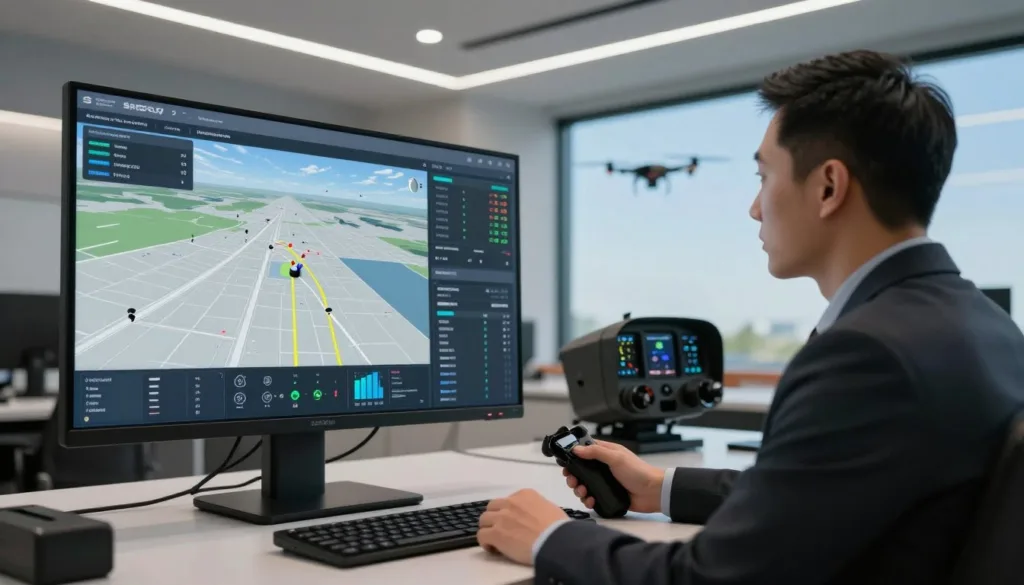
Tracking progress is essential for maintaining high safety standards across your flight operations. The platform features auto-graded exercises and detailed state monitoring to evaluate every maneuver. Instructors can review simulation recordings and export CSV data to spot operational errors instantly.
Targeted feedback helps eliminate bad habits before they cause costly accidents in the field. Detailed analytics give managers clear insight into individual learning curves and overall team readiness.
Scale Training Across Teams and Locations
Expanding your commercial drone program requires a consistent and repeatable educational framework. Built-in LMS progress monitoring makes scalable drone training simple across multiple departments and remote offices. SORA support and structured training modules keep your entire organization aligned with modern regulatory standards.
Virtual reality support immerses multiple trainees in shared scenarios to improve crew resource management. Ready to elevate your operational safety and team efficiency? Contact our sales team today to schedule a personalized SRIZFLY software demonstration and start building true mission readiness.
Conclusion
Low-altitude flight operations require sharp focus and fast decision-making from every pilot. Basic stick control is never enough when managing unexpected wind gusts or sudden obstacles near buildings and trees. Pilots need deep situational awareness to handle high-risk moments safely.
Immersive digital tools transform how teams build this critical expertise. Studies show that a advanced drone training simulator improves safety margins, operational confidence, and training efficiency across every flight hour. Digital twins and virtual terrain replicate real conditions without risking costly hardware.
Mastering complex environments demands professional flight training software capable of tracking performance metrics and repeating difficult mission scenarios. Teams achieve faster skill mastery while preparing directly for FAA Part 107 training standards and commercial requirements.
Start upgrading your flight program today. Integrate SRIZFLY simulation tools to accelerate real-world mission readiness and protect your valuable fleet.
FAQ
What is the primary benefit of using the SRIZFLY drone simulator for low-altitude flight training?
The SRIZFLY drone simulator allows pilots to build precise control, strong situational awareness, and reliable responses in high-risk environments before operating expensive physical equipment in the field.
Why is low-altitude drone training different from open-air flight practice?
Low-altitude operations require pilots to manage altitude, speed, heading, braking distance, camera view, obstacle clearance, and changing wind conditions simultaneously near structures, trees, utility lines, and people.
How does low-altitude flight simulation software reduce operational risks and costs?
By practicing in a risk-free virtual environment, commercial operators and public safety teams can significantly minimize equipment wear, eliminate crash repair costs, and prevent property damage during the learning process.
What features should I look for in professional drone flight simulation software?
Look for accurate flight physics, realistic environmental behaviors, measurable performance outcomes, and mission-specific exercises rather than simple game-style flight mechanics.
Can the SRIZFLY simulator help prepare pilots for FAA-compliant commercial drone operations?
Yes, the software helps pilots master standard operating procedures, emergency readiness, and complex spatial awareness required for safe commercial drone flights and Part 107 missions.
What types of real-world missions can be practiced using simulation tools?
Trainees can practice specialized procedures for aerial inspection, infrastructure mapping, land surveying, and search-and-rescue emergency response operations.
How can organizations use simulation software to measure pilot performance?
Advanced simulators track user inputs, flight paths, and reaction times, allowing trainers to generate objective pilot performance metrics and easily identify specific skill gaps.
Is it possible to scale drone training across multiple teams and locations?
Yes, software-based training platforms allow organizations to deploy standardized flight exercises across multiple remote stations, ensuring consistent pilot proficiency fleet-wide.