



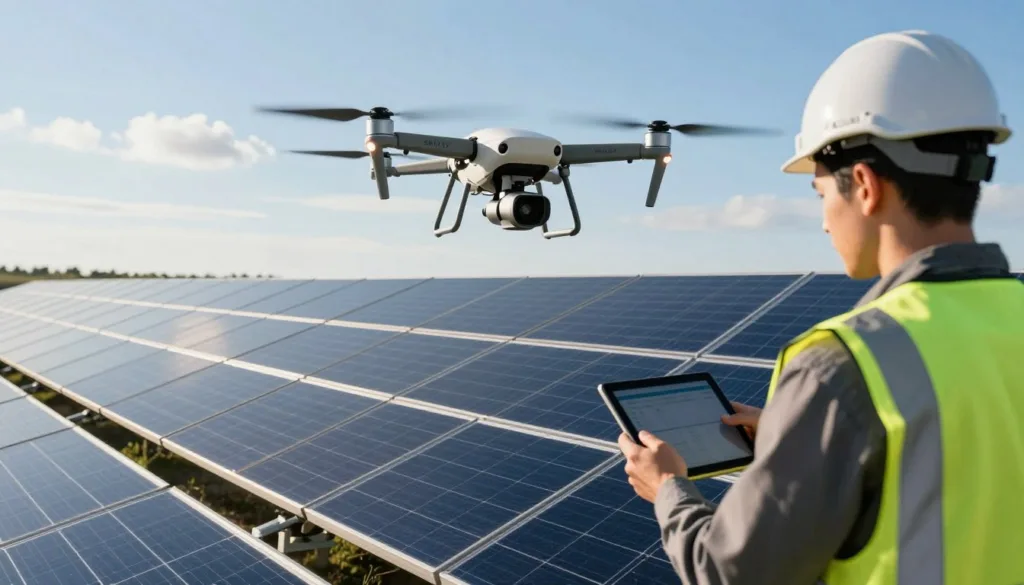
Solar energy usage is growing rapidly across the United States. Maintaining these massive power systems requires high precision and specialized skill sets. Using a drone training simulation helps experts master their craft safely.
Thermal imaging is now a vital part of every photovoltaic inspection. It helps technicians find hidden faults in solar cells quickly and accurately. Professional training is essential for mastering these complex imaging techniques.
Mastering these advanced techniques takes time and hands-on practice. The SRIZFLY simulator offers a realistic environment for professional solar panel inspections. It allows pilots to gain confidence before heading into the field.
This cutting-edge tool allows pilots to practice complex maneuvers in a virtual space. It ensures that every real-world check is both safe and highly efficient. Professionals can now refine their skills without risking expensive hardware.
Key Takeaways
- Drone thermography is a vital tool for modern solar farm maintenance.
- Virtual practice reduces the risk of damaging expensive field equipment.
- The SRIZFLY simulator provides a realistic environment for skill building.
- Professional training significantly improves the accuracy of thermal imaging.
- Mastering virtual flights leads to better performance during real-world checks.
- Simulation-based learning makes solar panel assessments faster and safer.
Why Solar Energy Professionals Need Advanced Drone Training
As renewable energy infrastructure expands, the demand for high-precision solar panel inspections has reached an all-time high. Traditional methods of checking panels are often slow and carry significant physical risks for workers. Modern solar energy professionals must now adapt to faster, digital workflows to keep up with industry growth.
Simply owning a drone is not enough to provide high-quality data to clients. You must understand how to capture and analyze complex information to provide real value. This is why advanced drone training has become a vital requirement for anyone looking to excel in the field.
Specialized training focuses heavily on the use of thermal cameras to detect hidden faults. These sensors allow pilots to see heat signatures that indicate failing cells or “hot spots” invisible to the naked eye. Mastering these techniques ensures that solar panel inspections are both accurate and reliable.
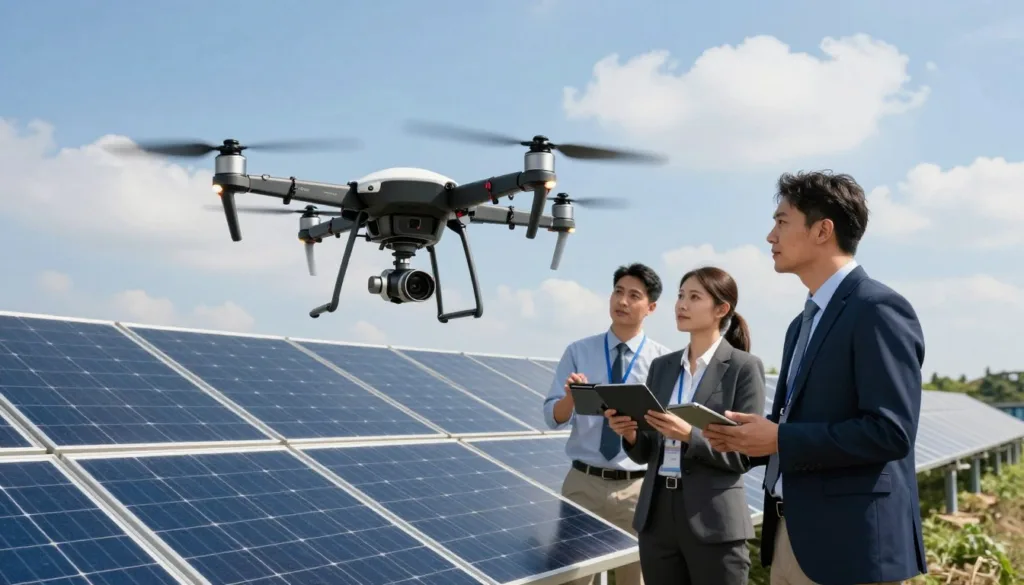
Safety remains a top priority for utility companies and residential installers alike. By using drones, technicians stay safely on the ground while the aircraft handles the high-altitude work. Proper advanced drone training teaches pilots how to navigate these complex environments without risking expensive equipment.
Simulators like SRIZFLY offer a perfect way to build these technical skills. You can practice identifying thermal anomalies in a virtual space before ever stepping into the field. This preparation helps solar energy professionals build the confidence needed for high-stakes commercial jobs.
Investing in your education sets you apart in a highly competitive job market. Companies now look for certified experts who can deliver detailed reports rather than just raw footage. High-quality solar panel inspections save time and money, making you an indispensable asset to any green energy team.
| Inspection Factor | Manual Inspection | Advanced Drone Inspection |
|---|---|---|
| Data Accuracy | Visual observation only | Thermal and high-resolution imaging |
| Worker Safety | High risk (climbing ladders) | Low risk (ground-based operation) |
| Time Efficiency | Several days for large farms | A few hours for large farms |
| Cost Savings | High labor and insurance costs | Reduced manpower and faster results |
Key Benefits of Simulation-Based Training for Solar Panel Inspections
Adopting simulation-based training transforms how professionals approach solar panel inspections. It provides a bridge between basic flight skills and specialized industrial tasks. Using tools like the SRIZFLY drone simulator allows pilots to master their craft before ever stepping onto a job site.
This approach ensures that every pilot enters the field with confidence and technical precision. Modern simulators recreate the exact physics of drone flight. This realism helps trainees understand how environmental factors affect their equipment.
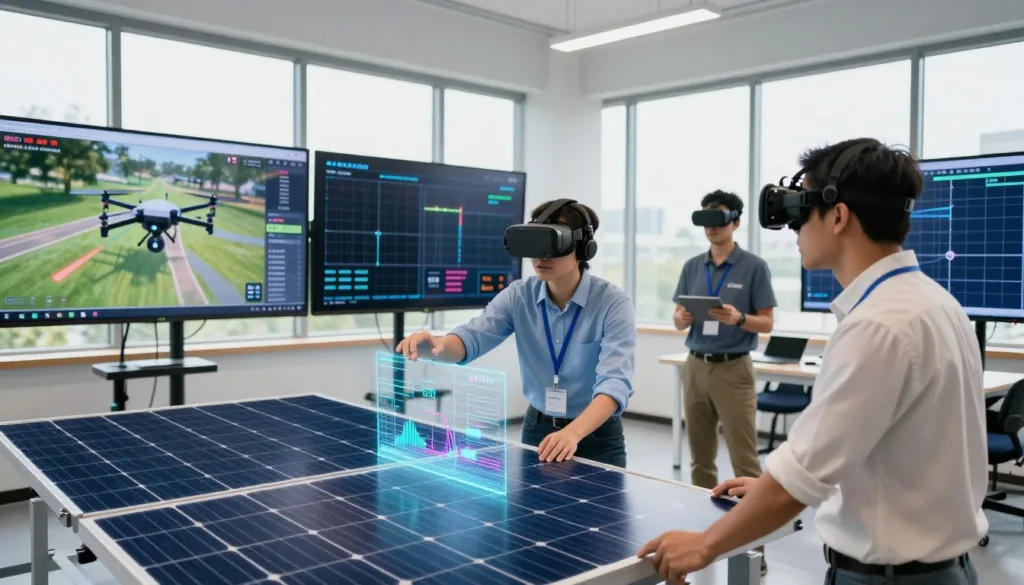
The following table highlights the differences between virtual and field-based learning methods:
| Feature | Simulation Training | Traditional Field Training |
|---|---|---|
| Safety Risk | Zero risk of equipment damage | High risk of crashes and injury |
| Weather Conditions | Customizable and repeatable | Dependent on local weather |
| Training Cost | Low overhead and no fuel costs | High travel and maintenance costs |
Risk-Free Learning Environment for Complex Inspection Scenarios
A risk-free learning environment is the biggest advantage of virtual tools. Trainees can practice flying near expensive solar arrays without any fear of collisions. They can test their limits in high winds or low-light conditions safely.
If a mistake happens, the pilot simply hits the reset button. This freedom allows for deeper exploration of complex flight maneuvers. It removes the anxiety that often slows down the learning process for beginners.
Experienced pilots also benefit from this safety. They can simulate rare emergency scenarios, such as battery failures or signal loss. Mastering these moments in a virtual space saves lives and hardware in the real world.
“Precision in the virtual world leads to perfection in the physical world.”
Cost Savings Compared to Traditional Field Training
Traditional training involves high costs for travel and equipment maintenance. Companies often spend thousands on fuel and on-site logistics. Simulation-based training eliminates these recurring expenses entirely.
Using a simulator reduces the wear and tear on actual drone fleets. Motors, batteries, and sensors stay fresh for real billable work. This extends the lifespan of expensive hardware significantly.
Businesses can train multiple pilots simultaneously in a digital lab. This scalability makes it easier to grow a team without a massive budget. Efficiency in training directly leads to higher profit margins.
Accelerated Skill Development and Certification Readiness
Pilots build muscle memory much faster in a simulator. They can repeat a specific flight path dozens of times in a single hour. This density of practice is impossible to achieve during field sessions.
Simulation prepares candidates for professional certifications more effectively. They can focus on the specific standards required by industry regulators. This targeted practice increases the chances of passing flight exams on the first try.
- Instant feedback on flight accuracy.
- Ability to pause and analyze mistakes.
- Access to various PV system layouts.
Repeatable Practice for Mastering Thermal Imaging Techniques
Mastering thermal sensors is critical for identifying faulty solar cells. Simulators allow pilots to practice interpreting heat signatures in various weather patterns. They learn to distinguish between actual defects and simple reflections.
Consistent repetition ensures that no defect goes unnoticed during real solar panel inspections. Pilots can adjust sensor settings in the software to see how data changes. This technical knowledge is vital for producing high-quality inspection reports.
Thermal imaging requires a steady hand and a specific flight altitude. Simulators provide the perfect arena to lock in these flight parameters. Expertise in data collection starts with virtual repetition.
Understanding Photovoltaic Inspection Drone Training Simulation Technology
The technology behind a photovoltaic inspection drone training simulation creates a bridge between digital practice and real-world success. Modern pilots no longer rely on basic flight games to hone their skills. Instead, they use specialized software like the SRIZFLY simulator to master the nuances of solar energy maintenance.
These platforms combine high-fidelity graphics with complex physics engines. This ensures that every flight feels authentic and every inspection task mirrors a live mission. By using these tools, professionals can perfect their techniques before they ever step onto a job site.
Realistic Virtual Environments Mirroring Real Solar Installations
The core of a high-quality simulator lies in its realistic virtual environments. These digital landscapes are not just visual backgrounds; they are data-driven recreations of actual solar farms. They include accurate terrain, varying elevations, and precise solar panel layouts.
Visual fidelity is crucial for identifying defects. Trainees can observe how sunlight interacts with panels at different times of the day. This teaches them to manage glare and shadows that could otherwise hide critical thermal anomalies during a real inspection.
Advanced simulations also include dynamic weather systems. Pilots must learn to stabilize their craft in shifting winds or adjust their camera settings under overcast skies. These realistic virtual environments prepare them for the unpredictable nature of outdoor work.
Interactive Flight Controls and Inspection Tool Integration
Authentic hardware interaction is a vital part of the training process. High-end systems offer interactive flight controls that sync directly with professional drone remotes. This allows students to build muscle memory using the exact sticks and buttons they will use in the field.
Beyond simple flight, the software integrates specialized inspection tools. Pilots can toggle between standard RGB cameras and thermal imaging sensors with a single click. This dual-view capability is essential for spotting “hot spots” on solar cells that indicate damage or failure.
Using interactive flight controls, trainees practice maintaining a steady gimbal angle while orbiting a panel. This precision ensures they capture clear, usable data for later analysis.
| Technology Feature | Function | Professional Benefit |
|---|---|---|
| Physics Engine | Simulates wind and gravity | Realistic drone handling |
| Sensor Emulation | Thermal and zoom views | Accurate defect detection |
| Hardware Syncing | Remote controller support | Builds muscle memory |
Performance Metrics and Assessment Tracking
One of the greatest advantages of digital training is the ability to measure progress. Simulators track every movement the pilot makes during a session. This includes flight path efficiency, battery management, and the quality of the images captured.
Instructors use these metrics to provide objective feedback. If a pilot consistently flies too close to the panels, the system flags the safety risk. This data-driven approach ensures that only competent pilots move forward to live operations.
Scenario-Based Training Modules for Various PV System Types
A comprehensive photovoltaic inspection drone training simulation offers diverse scenarios. Not every solar project looks the same. Trainees can switch between residential rooftop inspections and massive utility-scale solar arrays.
“Simulation technology allows us to fail safely in a digital world so we can succeed flawlessly in the real one.”
Each module presents unique challenges, such as navigating around power lines or managing signal interference. By practicing these specific scenarios, pilots expand their expertise across the entire solar industry.
Essential Features That Make Professional Drone Simulation Effective
Choosing the right software requires an understanding of the essential features that make professional drone simulation effective for solar panel analysis. These tools go beyond simple gaming graphics to provide a true-to-life experience for technicians. A high-quality platform ensures that every minute spent in the virtual world translates to real-world proficiency.
High-fidelity virtual landscapes are crucial for success in the renewable energy sector. These environments must replicate real solar farms with accurate lighting and varied weather conditions. This helps pilots learn how glare affects thermal sensors during a live inspection.
Interactive flight controls are another pillar of effective training. The simulator should respond exactly like a physical drone would when facing high winds or battery drain. This consistency builds the muscle memory needed for precise maneuvering around expensive photovoltaic equipment.
Performance metrics allow users and managers to track progress over time. These systems log every mistake, such as getting too close to a panel or missing a hot spot. Detailed data ensures that every session contributes to a higher standard of safety and efficiency.
Effective training also requires a wide variety of scenarios. A professional drone simulation should include different types of PV systems, from residential rooftops to utility-scale farms. Practicing on diverse layouts prepares pilots for the unique challenges each site presents.
Top-tier simulators like SRIZFLY focus on these technical details to bridge the gap between theory and practice. By using realistic physics, pilots can test the limits of their aircraft without any financial risk. This approach creates a more confident workforce ready for complex field assignments.
“Simulation is not just about flying; it is about mastering the data capture process in a controlled environment.”
| Essential Feature | Technical Description | Training Impact |
|---|---|---|
| Realistic Physics | Mimics wind, gravity, and inertia | Improves manual flight precision |
| Thermal Imaging | Simulates heat signatures and defects | Enhances fault detection accuracy |
| Performance Metrics | Logs flight paths and error data | Provides measurable skill growth |
| Scenario Variety | Multiple PV layouts and weather | Prepares pilots for diverse sites |
Career Advancement and Industry Applications
Mastering drone simulations opens new doors for professionals looking to elevate their standing in the renewable energy sector. These virtual tools provide the foundation for long-term success by mimicking high-pressure field conditions. Pilots who use the SRIZFLY simulator often find that their technical proficiency translates directly into faster career advancement.
The transition from a basic pilot to a solar specialist requires more than just flight hours. It demands a deep understanding of how different industry applications affect data quality. By training in a virtual space, you can explore various scenarios that would be too risky or expensive to attempt in the real world.
This specialized knowledge makes you a more attractive candidate for top-tier energy firms. Companies actively seek out operators who can demonstrate a high level of precision and safety. Simulation training ensures you are ready to meet these demands from day one.
Meeting Commercial Solar Inspection Standards
Large-scale projects require strict adherence to commercial solar inspection standards to ensure data reliability. Clients expect detailed reports that follow specific protocols for thermal imaging and RGB sensor height. Practicing these standards in a simulator allows you to perfect your workflow without risking expensive hardware.
The SRIZFLY platform includes modules specifically designed to teach these rigorous requirements. You will learn how to maintain the correct gimbal angles and flight speeds necessary for high-quality data. This attention to detail ensures that your final reports meet the expectations of engineers and stakeholders.
Consistent practice helps you internalize these complex rules. When you eventually step onto a live site, following the commercial solar inspection standards becomes second nature. This consistency builds trust with your clients and leads to repeat business opportunities.
Building Expertise in Utility-Scale PV Facilities
Utility-scale facilities present unique challenges due to their massive size and repetitive layouts. Navigating thousands of panels requires a strategic approach to battery management and flight path planning. Simulation allows you to practice covering these vast areas efficiently and safely.
You can test different flight patterns to see which one yields the best results for large arrays. This expertise makes you a valuable asset to large energy firms that manage gigawatt-scale assets. Your ability to handle these industry applications effectively will set you apart from the competition.
“The ability to simulate utility-scale environments has transformed how we prepare our pilots for the field.”
Expanding Service Offerings for Inspection Businesses
Business owners can use simulation to train their entire team quickly and safely. Offering specialized PV inspections allows a company to stand out in a crowded drone service market. With the right training, a small business can take on larger and more profitable contracts.
Expanding your services leads to significant career advancement for your staff and higher revenue for the company. You can move beyond simple photography into advanced thermal analysis and site mapping. This diversification is key to surviving and thriving in the modern drone industry.
| Professional Role | Primary Focus | Key Benefit of Simulation |
|---|---|---|
| Solar Site Manager | System health and ROI | Understanding data accuracy for industry applications |
| Drone Service Provider | Scalable operations | Meeting commercial solar inspection standards |
| Asset Integrity Lead | Risk mitigation | Faster career advancement through specialized skills |
Conclusion
Using a photovoltaic inspection drone training simulation prepares you for the solar energy sector. It helps you move from basic flight to expert technical work. This tool gives pilots the skills for professional solar panel inspections without risking real drones.
Choosing advanced drone training helps teams use thermal sensors and data tools. The SRIZFLY drone simulator offers a realistic way to learn these tasks. It helps you find solar panel problems fast.
Staying ahead in the solar industry means learning new skills. A photovoltaic inspection drone training simulation builds the confidence you need for large projects. Start with the SRIZFLY drone simulator to lead in professional solar panel inspections. Advanced drone training opens doors to new business growth.
FAQ
Why is the SRIZFLY drone simulator considered essential for modern solar O&M professionals?
The SRIZFLY drone simulator provides a high-fidelity, risk-free environment where Operations and Maintenance (O&M) professionals can master the complexities of solar site surveys. It allows pilots to practice identifying thermal anomalies, such as hot spots and string failures, without the risk of damaging expensive hardware like the DJI Mavic 3 Thermal or Matrice 350 RTK in the field.
How does simulation-based training improve the accuracy of thermal imaging inspections?
Simulation training allows pilots to repeatedly practice adjusting camera angles, gimbal pitch, and thermal palettes in a controlled setting. By mastering these techniques in a virtual environment that mimics FLIR sensor technology, inspectors can ensure they capture high-quality radiometric data that meets IEC 62446-3 international standards for solar thermography.
Can using a drone simulator help reduce the overall cost of professional certification?
Yes. Traditional field-based training incurs significant costs related to travel, equipment wear and tear, and battery cycle depletion. By utilizing a photovoltaic inspection drone training simulation, organizations can significantly reduce these overheads while accelerating the learning curve for pilots preparing for advanced thermography certifications.
What specific solar assets can be inspected within the SRIZFLY virtual environment?
The simulator features a diverse range of realistic virtual environments, including residential rooftop arrays, commercial carports, and massive utility-scale ground-mount facilities. This variety ensures that pilots are prepared for the unique challenges of different PV system architectures found in real-world projects managed by companies like NextEra Energy or First Solar.
How does the simulator track and assess a pilot’s progress during training?
The software includes advanced performance metrics and assessment tracking. It monitors flight path efficiency, sensor coverage, and the pilot’s ability to identify specific faults within the PV array. This data-driven approach provides objective feedback, allowing trainees to refine their skills until they reach professional-level proficiency.
Is the simulation realistic enough to prepare pilots for utility-scale PV inspections?
Absolutely. The SRIZFLY simulator uses high-resolution assets and physics-based flight models to mirror the experience of flying a professional enterprise drone. It specifically prepares pilots for the endurance and precision required to inspect thousands of modules at utility-scale facilities, ensuring they can deliver actionable insights to asset managers and stakeholders.
How does advanced drone training impact career advancement in the renewable energy sector?
As the demand for solar energy grows, so does the need for skilled drone inspectors. Professionals who have mastered simulation-based training can demonstrate a higher level of expertise in data acquisition and anomaly detection. This specialized skill set makes them highly competitive for roles in solar asset management, site commissioning, and large-scale infrastructure inspection businesses.
Does the simulator support training for automated flight paths and manual overrides?
Yes, the training modules cover both automated mission planning and manual flight techniques. This dual approach is critical for solar inspections, where pilots may need to use automated grids for broad coverage and then switch to manual flight to investigate a specific module defect or electrical fault in detail.