Keeping America’s lights on is a massive job. The U.S. power grid stretches across hundreds of thousands of miles. Much of this critical infrastructure is aging and faces constant threats from severe weather.
Utilities need smarter ways to check their assets. Traditional methods, like manual climbs or helicopter flights, are often slow, risky, and expensive. A new approach is changing the game.
Unmanned aircraft are now a key tool for grid management. They capture high-quality visual data quickly and safely along energized corridors. This shift is happening at a large scale across the industry.
The real breakthrough comes with advanced planning tools. Virtual training environments let crews practice complex missions before going into the field. This step drastically reduces risk and improves results.
By integrating virtual practice with real-world flights, companies standardize their documentation. This helps with maintenance planning and meeting strict regulations. The goal is a faster, more reliable, and cost-effective system for managing our essential energy networks.
Key Takeaways
- The U.S. power grid is vast, aging, and requires frequent, safe assessments.
- Unmanned aerial vehicles provide a faster, safer alternative to manual and helicopter-based checks.
- Virtual training software allows operators to plan and practice missions in a risk-free environment.
- This technology helps utilities lower costs, speed up post-storm evaluations, and enhance worker safety.
- The integration of simulation and real flight data creates standardized records for maintenance and compliance.
- Adopting these solutions addresses the urgent need for modernizing utility infrastructure management.
Understanding the Need for Drone Simulation in Power Line Inspections
The sheer scale of the nation’s energy delivery system presents unique hurdles for asset management. Keeping everything running smoothly requires frequent and thorough checks.
Challenges with Traditional Inspection Methods
Old-school ways of checking our grid are slow and risky. Teams on foot can take over a year to survey all the lines, even with hundreds of people.
These manual assessments put workers in harm’s way. Climbing poles or working from high platforms exposes them to falls and live wires.
Using helicopters speeds things up, but the cost is huge. Daily rates often exceed $4,000, making regular use too expensive for most budgets.
Benefits of Digital Simulation for Safety and Efficiency
Virtual practice environments change the game completely. They let crews plan missions and spot potential problems before going outside.
This approach keeps people out of dangerous areas near energized equipment. It also makes the entire workflow faster and more reliable.
By testing different scenarios on a computer, companies can find the safest and most efficient flight paths. This leads to better data and happier teams.
Overview of Power line inspection operation process drone simulation software
At the heart of this technological shift lies specialized software designed to plan and perfect aerial surveys. These platforms turn complex grid assessments into streamlined, repeatable procedures.
Key Features and Capabilities
Tools like FlightSurv offer autonomous mission planning. Users can generate a 2D map and pre-program a route for consistent coverage.
High-resolution visual data is captured using advanced cameras. The CA-103 model, for example, uses a 61-megapixel RGB sensor for crystal-clear imagery of grid components from a safe distance.
How It Integrates with Drone Technology
This software works seamlessly with airborne sensor payloads. A gimbal camera such as the MG-120 integrates thermal imaging and powerful optical zoom.
Its 30x zoom allows detailed viewing from over a kilometer away. The 640×512 infrared sensor spots heat anomalies invisible to the eye.
Smart obstacle avoidance algorithms keep the aircraft safe. They automatically detect hazards and adjust the flight path in real time.
Enhancing Safety and Operational Efficiency in Inspections
Utilities are finding that the true value of new aerial tools lies in creating safer worksites and more reliable information streams. This dual benefit strengthens every grid assessment.
Reducing Risks to Field Personnel
The primary gain is keeping teams secure. Crews no longer need to climb towers or enter hazardous energized zones.
They can manage the entire survey from a safe distance on the ground. This approach removes the dangers of falls, electrocution, and aviation accidents.
Improving Data Accuracy and Speed
Pre-programmed flight paths ensure every mission covers assets consistently. This repeatability delivers standardized, high-quality information.
Smart analysis platforms then review this imagery at incredible speed. They automatically flag issues like cracked insulators or vegetation encroachment in complex environments.
What once took weeks now finishes in hours. Faster data turnaround lets companies respond to problems before they cause outages.
“The combination of enhanced safety protocols and streamlined workflows isn’t just an upgrade—it’s a fundamental rewiring of how we protect both our people and our infrastructure.”
This powerful blend of security and speed makes a compelling case for modernizing asset management. The gains in safety and operational efficiency are undeniable.
Drone Technology and Components for Effective Power Line Inspections
The hardware onboard these unmanned aircraft is what transforms a simple flight into a detailed diagnostic tool. Specialized components work together to capture critical data from a safe position.
High-Resolution Sensors and Thermal Imaging
Multi-megapixel RGB cameras deliver crystal-clear imagery of insulators and hardware. Inspectors can spot minor defects without getting close.
Thermal imaging sensors are vital for spotting hidden problems. They detect temperature anomalies caused by loose connections or overloads, providing early warnings.
LiDAR technology builds precise 3D models of structures and vegetation. This data helps analyze clearance issues with incredible accuracy. Some platforms even carry corona discharge detectors to visualize electrical arcing.
Advanced Obstacle Avoidance and GPS Navigation
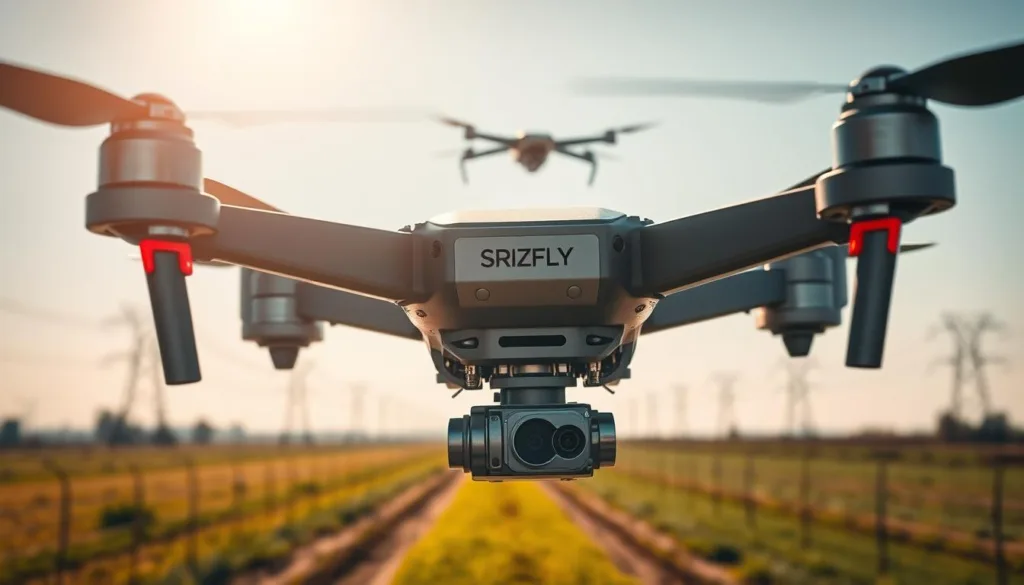
Safety in complex airspace is non-negotiable. Modern systems use 360-degree sensing and millimeter-wave radar to spot obstacles over 200 meters away.
This technology ensures the aircraft maintains a safe distance from towers and lines. Anti-magnetic interference systems protect navigation from strong electromagnetic fields near high-voltage equipment.
Extended flight times, often 55 minutes or more, allow for covering long corridors efficiently. Powerful optical zoom, like 30x or 50x magnification, lets crews capture close-up details from kilometers away.
Software Tools and Applications for Drone Inspections
Transforming gigabytes of aerial imagery into clear maintenance actions requires sophisticated digital tools. These platforms turn raw sensor information into actionable intelligence for asset management.
Automated Flight Planning and Mission Management
Tools like Skydio 3D Scan enable autonomous capture of complex tower structures. They require minimal pilot input, ensuring consistent coverage while using smart navigation to avoid obstacles.
Mission management applications let crews pre-program entire survey routes. This includes setting camera parameters and defining image overlap, creating repeatable plans for entire networks.
AI-Powered Data Analysis and Reporting
Providers like Pix4D and Optelos offer AI-driven analytics. Their algorithms automatically detect defects and identify anomalies like damaged insulators or corrosion.
Mapping software, such as DJI Terra, processes thousands of images into detailed 2D maps and 3D models. This creates a digital twin of the infrastructure for comprehensive review.
Integrated reporting applications then generate standardized documents. These reports feature annotated imagery and prioritized maintenance recommendations, streamlining communication between field teams and engineers.
Cloud-based platforms allow for real-time data sharing and collaborative analysis. Multiple stakeholders can access results simultaneously, accelerating response times for critical issues found during assessments.
How Drone Simulation Software Improves Maintenance and Data Collection
Modern aerial tools deliver a comprehensive view of infrastructure health that was previously unimaginable. Specialized planning enables the simultaneous capture of diverse data types, creating a complete digital record for smarter asset upkeep.
Enhanced Data Collection Techniques
A single unmanned aircraft can carry multiple sensors. High-resolution RGB cameras spot visual issues like corrosion or animal nests. Thermal imaging finds hidden heat anomalies at connections.
LiDAR technology builds precise 3D maps of transmission corridors. It generates detailed “point clouds” containing spatial coordinates and color information. This allows for accurate measurement of vegetation clearance and structural geometry.
Capturing oblique imagery from multiple angles is another key technique. It reveals defects hidden from a ground view. Optimized flight paths ensure complete coverage, even in dense tree canopies.
This rich, standardized information transforms predictive maintenance strategies. Teams can address faults before failures occur. Consistent data quality also improves long-term analysis across different crews and regions.
Outsourcing vs. In-House Drone Powerline Inspections
Utilities face a key decision when adopting aerial surveys: build an internal team or hire external experts. This choice impacts budgets, flexibility, and long-term asset management strategies.
Cost Considerations and ROI
Hiring a service provider offers a pay-as-you-go model. Typical costs range from $300 to $2,000 per mile. Smaller projects may be priced between $150 and $500 per structure.
Establishing an in-house program requires a larger initial investment. Startup costs for professional equipment and software can reach $25,000 to $50,000. Annual operating expenses add another $10,000 to $20,000.
The return on investment favors in-house operations for frequent, large-scale work. For occasional assessments, outsourcing often has a lower total cost.
Training, Compliance, and Operational Readiness
All commercial inspectors must hold an FAA Part 107 certificate. Training for this and specific inspection courses costs $1,500 to $5,000 per person.
Ongoing maintenance of skills and equipment is crucial. Teams need regular practice to stay proficient. This ensures consistent, high-quality data collection every time.
Real World Case Studies and Success Stories in the U.S.
Real-world evidence from major energy providers highlights the transformative impact of modern aerial survey programs. These documented successes offer a clear picture of the gains possible.
Examples from Leading Utility Providers
State Grid of Zhejiang Electric Power Co. provides a striking example. Their team covered 872.83 km and 1,659 transmission towers in just three days.
Previously, they managed only 3 km per day. A project manager noted, “The biggest advantage is its efficiency.”
Other providers have seen similar results. State Grid of Guangxi completed checks across 20 km of mountainous terrain in poor weather.
China Southern Power Grid inspected 52 km of corridor and 142 structures in a mere two hours using LiDAR. This showcases the speed advantages of advanced technology.
At the Panyu power substation, manual inspections of rural powerline networks once took 160 man-hours per 100 km. Now, teams control autonomous UAVs from an office.
These cases demonstrate dramatic improvements in safety and data quality. U.S. utilities use these tools for vegetation encroachment monitoring and aging asset mapping.
The result is less time for inspectors in hazardous conditions and better information for maintenance planning.
Conclusion
The evidence is overwhelming: integrating advanced aerial systems fundamentally improves how we manage critical networks. This approach represents a complete shift in utility asset management.
It tackles old challenges by making surveys safer, faster, and more cost-effective. Teams avoid hazardous climbs and gain consistent, high-quality information.
Successful programs combine smart sensors, intelligent platforms, and skilled operators. This synergy optimizes workflow and delivers superior data for maintenance decisions.
The business case is clear, whether you outsource or build an in-house team. Real-world stories show utilities covering hundreds of miles in days, not months.
This isn’t a small upgrade—it’s a new standard for grid reliability. Your next step is to evaluate solutions that fit your specific needs and start this journey toward a more resilient future.
FAQ
Why is a digital simulation needed before flying a mission?
Using a digital twin of the environment allows teams to practice and perfect their flight paths in a risk-free setting. This is crucial for planning around hazards like vegetation encroachment and complex tower structures, ensuring both operational efficiency and crew safety during the actual data collection.
How does this technology improve safety for utility workers?
It significantly reduces the need for personnel to work at heights or in close proximity to high-voltage infrastructure. By simulating the entire operation first, pilots can confirm a safe distance is maintained, and ground crews can avoid unexpected dangers in the field.
What are the main cost benefits of using this approach?
The primary savings come from reducing expensive downtime. By identifying potential issues like obstacle avoidance paths in the software, you minimize failed flights and redeployment needs. It also cuts costs associated with traditional methods, like helicopter rentals or extensive ground crew labor.
What kind of data can these specialized drones capture?
Equipped with advanced sensors, these unmanned aircraft collect high-resolution RGB imagery, detailed thermal imaging to spot heat anomalies, and LiDAR data for precise mapping. This comprehensive dataset provides a superior analysis compared to visual checks alone.
Can the software help with managing vegetation near rights-of-way?
Absolutely. The simulation can plan flights optimized for capturing data on vegetation encroachment. This allows for accurate growth tracking and generates reports that help schedule precise trimming, maintaining required clearances more efficiently.
Is it better to outsource these services or build an in-house team?
The best choice depends on your scale and frequency of needs. Outsourcing offers quick access to expert pilots and advanced equipment like a DJI Matrice 300 with a Zenmuse H20T camera. Building an in-house program requires investment in training, certified pilots, and maintenance but offers greater long-term control and readiness.
How does AI-powered analysis help after the flight?
After data collection, AI algorithms can automatically scan thousands of images to detect defects, like damaged insulators or corrosion. This speeds up the review process, provides consistent reporting, and helps inspectors focus on critical anomalies that need immediate attention.