



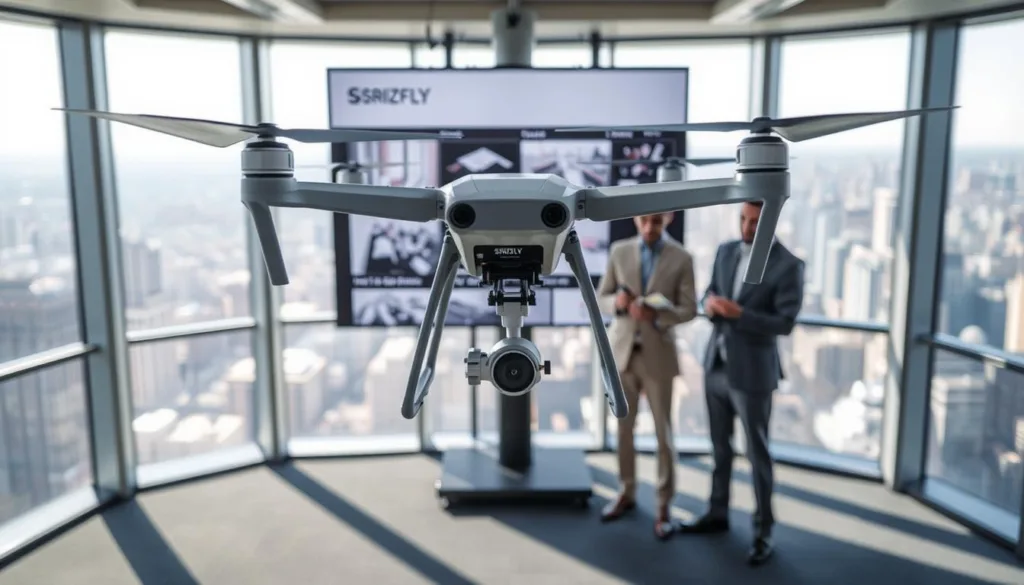
The future of window cleaning is here, thanks to SRIZFLY’s innovative training program. This drone cleaning simulation prepares operators for safer and more efficient work in the field. By practicing in a controlled environment, users can develop essential skills before tackling cleaning tasks around occupied buildings.
Lucid Bots, based in Charlotte, North Carolina, has made significant strides in this industry. With over 400 active operators across more than 40 states as of 2026, they have generated an impressive $75 million in drone cleaning service revenue. This opportunity showcases the potential for growth in the field.
Simulation training equips users to handle cleaning solutions, manage drone controls, and navigate building access safely. It allows operators to gain confidence without the immediate risks associated with working at heights. This article will connect simulator-based skills with effective drone cleaning operations, comparing traditional methods to modern techniques.
As we explore the advantages of SRIZFLY’s program, we will highlight how it serves as a practical first step for companies entering a lucrative market.
Key Takeaways
- SRIZFLY’s training enhances safety for operators in window cleaning.
- Lucid Bots has a growing network of operators across the U.S.
- Simulation prepares users for real-world challenges without height risks.
- Modern drone methods offer efficiency compared to traditional techniques.
- Operators can generate significant revenue in the drone cleaning industry.
Introduction to Drone Simulation and Window Cleaning
Innovative technology is transforming how we approach cleaning tasks. Simulator training offers a unique environment where operators can refine their skills. They can practice flight paths, nozzle positioning, and emergency responses without risking a live property.
For instance, consider a typical 20-story commercial building. Such properties may spend between $25,000 and $100,000 annually on facade maintenance. Traditional crews, consisting of 2-4 specialized technicians, often require several days to complete their tasks at height. A three-person crew, earning $50 per hour, can rack up a direct labor cost of $4,800 before accounting for supervision or safety measures.
Moreover, traditional equipment rentals can vary significantly. Swing-stage or bosun-chair rentals typically cost between $500 and $2,000 per cleaning session. In contrast, BMU or scaffolding rentals can reach up to $25,000 for multi-day projects. These costs highlight the importance of operational efficiency.
With SRIZFLY training, operators learn to plan routes and manage battery limitations effectively. This preparation supports safer decisions for property owners, workers, and cleaning companies before they begin live operations.
Overview of Drone Simulation Training
Benefits for Safe Flight Skills and Operational Efficiency
Window-Cleaning Drone Simulation: Advancing Skills and Efficiency
The evolution of cleaning technology is setting new standards in efficiency. SRIZFLY’s simulation training helps operators master essential skills. They learn to maintain consistent distances, control spray patterns, and follow precise paths across windows and facades.
For instance, a single trained operator can complete a 20-story project in just 1-2 days. This is a stark contrast to traditional methods, where labor costs can reach $4,800. With drone cleaning, the cost drops to about $600, resulting in a remarkable savings of $4,200.
Additionally, the simulator’s repetition enhances real-world performance. Callback rates for drone cleaning are typically below 3%, compared to 10%-15% for traditional cleaning. This improvement is vital for companies aiming to reduce rework and protect property.
Furthermore, drone systems can mobilize for urgent tasks within 24-48 hours. As Ryan Godwin notes, what once took several days on a lift now takes just one to one and a half days with a drone. This efficiency allows companies to schedule more jobs without increasing labor costs.
Comparing Drone Systems with Traditional Window Cleaning Methods
The landscape of cleaning services is evolving rapidly. Understanding the differences between drone systems and traditional methods is crucial for businesses. Cost analysis, technology, safety, and performance benchmarks play a significant role in this comparison.
When it comes to equipment costs, Lucid drones range from $20,000 to $40,000, with models like Lucid Pro and Lucid UltraClean catering to commercial needs. Apellix systems start at around $50,000, designed for high-rise applications. Aqualine offers adaptable options, costing between $15,000 and $30,000. DJI platforms begin at $10,000 to $20,000, with an additional $5,000 to $15,000 for cleaning customization.
In contrast, traditional methods incur higher rental costs, with session rentals between $500 and $2,000 and BMU or scaffolding costs reaching up to $25,000. This stark difference highlights the potential for cost savings when adopting drone technology.
| System Type | Price Range | Key Models |
|---|---|---|
| Lucid | $20,000 – $40,000 | Lucid Pro, Lucid UltraClean |
| Apellix | Starting at $50,000 | Air Wash, PrecisionClean |
| Aqualine | $15,000 – $30,000 | FlexiClean, MultiWash |
| DJI | $10,000 – $20,000 + $5,000 – $15,000 | Matrice 300, Inspire |
Additionally, drone operations can lead to a 40%-60% reduction in insurance premiums compared to traditional high-hazard work coverage. This improvement in the long-term cost profile is especially beneficial for high-rise buildings, where traditional methods may still be suitable for interior glass and lower structures.
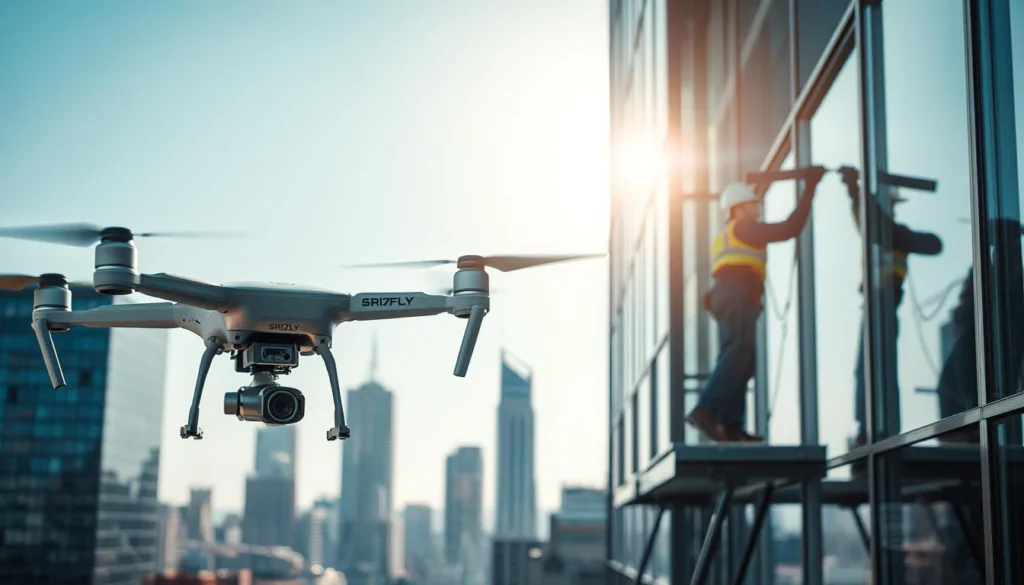
Innovative Solutions for Building Maintenance and Drone Operations
Advanced technologies are reshaping the landscape of building maintenance. By integrating flight control systems, calibrated nozzles, and specialized cleaning payloads, companies can achieve superior results. This modern approach ensures safety and efficiency in operations.
One example is Drone Wash, which supports multiple platforms, including Lucid, DJI, and Apellix. This drone-agnostic strategy allows franchise owners to focus on reliable results rather than getting tied to a single manufacturer. As Jay Hanna, co-founder of Drone Wash, notes, flexibility is key in this rapidly evolving industry.
Customization options for DJI drones also enhance their cleaning capabilities. Adding specialized payloads requires expertise, ensuring that operations remain effective and safe. This careful planning leads to consistent service, protecting properties and simplifying equipment management.
Since its founding in 2018, Lucid Bots has grown significantly, employing around 70 people and boasting over 400 operators across more than 40 states. Their operators have generated more than $75 million in revenue, marking a game-changing moment in the industry, as described by David Wheeler.
| Company | Year Founded | Employees | Active Operators | Revenue Generated |
|---|---|---|---|---|
| Lucid Bots | 2018 | 70 | 400+ | $75 million+ |
Conclusion
Emerging technologies are redefining the approach to building maintenance. SRIZFLY’s training program empowers operators to master essential skills like flight control and cleaning patterns before tackling real-world tasks. For example, a typical 20-story project can cost $600 in drone labor compared to $4,800 with traditional methods, resulting in a significant savings of $4,200.
Moreover, drone cleaning reduces project duration to just 1-2 days, while maintaining callback rates below 3%. Operators can also mobilize quickly for urgent tasks within 24-48 hours. While Lucid, Apellix, Aqualine, and customized DJI platforms offer diverse options, traditional methods still hold value for interior glass and low-rise buildings.
Building owners, cleaning companies, and prospective operators are encouraged to explore SRIZFLY training. This step is vital before investing in live equipment, ensuring a smooth transition into the future of building maintenance.
FAQ
What is a window-cleaning drone simulation?
A window-cleaning drone simulation is a training tool that allows operators to practice flying drones for cleaning windows in a safe, controlled environment. It helps enhance skills and prepares users for real-world applications.
How does drone cleaning compare to traditional methods?
Drone cleaning is often more efficient and cost-effective than traditional methods. It reduces labor costs, minimizes the need for scaffolding, and enhances safety by allowing workers to operate from the ground.
What are the benefits of using drones for window cleaning?
Drones offer several benefits, including increased safety, reduced operational costs, and improved efficiency. They can access hard-to-reach areas without the need for ladders or scaffolding, ensuring thorough cleaning of all surfaces.
Are there specific drones designed for window cleaning?
Yes, many companies customize drones, such as those from DJI, specifically for window cleaning. These drones are equipped with advanced cleaning solutions and technology to enhance performance and efficiency.
What training is required to operate a window-cleaning drone?
Operators typically undergo training that includes learning to navigate the drone, understanding safety protocols, and mastering the cleaning techniques. Simulation training can significantly improve skills before real-world operations.
How do drones improve safety in window cleaning?
Drones reduce the risk of accidents by eliminating the need for workers to climb heights. They allow for remote operation, minimizing exposure to dangerous situations while ensuring effective cleaning results.
What cleaning solutions are used with drones?
Drones can utilize various cleaning solutions, including eco-friendly detergents and specialized cleaning agents designed for glass surfaces. These solutions are often applied using advanced spray systems integrated into the drone.
How much can businesses save by using drone cleaning?
Businesses can save significantly on labor costs, equipment rental, and insurance. The efficiency of drone operations can lead to faster job completion, further reducing overall expenses in building maintenance.